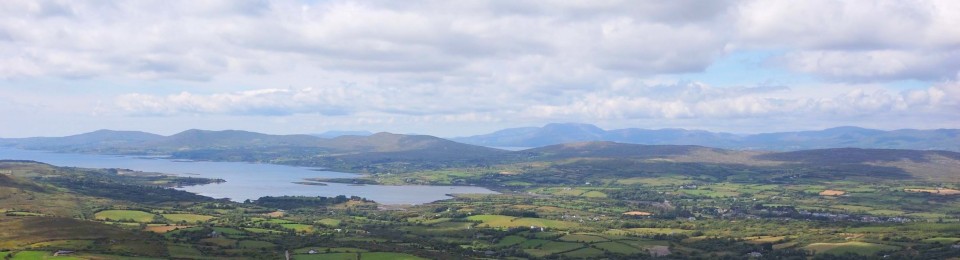
Pilgrimages in Medieval Ireland, including St. Bartholmew’s Holy Well at Ballynataggard (Baile na tSagart), Co. Cork
22 Wednesday Jan 2014
Posted in Uncategorized
22 Wednesday Jan 2014
Posted in Uncategorized
22 Wednesday Jan 2014
22 Wednesday Jan 2014
Posted in Uncategorized
James Hutchinson Swanton, 1815 – 1891, son of William Swanton, Ballydehob and Hanna Hutchinson, Clonee, Durrus. Her father, Hugh Hutchinson, landlord and Margaret O’Sullivan, Ballagahadown between Caheragh and Drimoleague. She is probably sister to Eugene O’Sullivan, Gent, middleman on a number of estates including Dunmanway Shouldham Estate. He is a church warden, Drimoleague c 1790. The Hutchinson major property owners in Bantry since at least mid 17th century. Not to be confused with Bantry Hutchins family. Slowly lands including Blackrock House now Bantry House acquired by Richard White (Ancestor of Lord Bantry). Estate sold Landed Estates Court 1850s.
Gortnagrough:
James Hutchinson Swanton, 1815 – 1891, son of William Swanton, Ballydehob and Hanna Hutchinson, Clonee, Durrus. Her father, Hugh Hutchinson, landlord and Margaret O’Sullivan, Ballagahadown between Caheragh and Drimoleague. She is probably sister to Eugene O’Sullivan, Gent, middleman on a number of estates including Dunmanway Shouldham Estate. He is a church warden, Drimoleague c 1790. The Hutchinson major property owners in Bantry since at least mid 17th century. Not to be confused with Bantry Hutchins family. Slowly lands including Blackrock House now Bantry House acquired by Richard White (Ancestor of Lord Bantry). Estate sold Landed Estates Court 1850s.
Magistrate:
James Hutchinson Swanton, Rineen Skibbereen, resident, April 1857, £143. Report on 1850 dinner for Sir Robert Kane, President Queens College. Prominent Methodist. From 1875 Carrisbrook House, Pembroke Ballsbridge. Businessman, miller. landowner, sitting Skibbereen 1861,
House at Rineen, in the 1901 census the house was…
View original post 86 more words
21 Tuesday Jan 2014
Posted in Uncategorized
It is hard even at a remove of 300 hundred years to conceive of the evil of the Penal Laws. The administrative and judicial class of England who have given the world the rule of law, nascent democracy a free press among other gifts have the penal laws as an eternal blot to their memory. It was clearly designed to extirpate the Irish people as a separate cultural, religious and administrative entity. Thankfully the objective has not suceeded
http://library.law.umn.edu/irishlaw/
There is however a different view that it must be interpreted in the context of the 17th and early 18th century for example the French imposed even more sever restrictions on their fellow countrymen who were Protestant. It has been suggested that the Penal Laws were characterises as a series of multiple petty tyrannies.
It had a modern echo in the behaviour of the West Pakistani regime in East Pakistan to suppress the Benhali rebellion in the early 1970s. There was a deliberate policy of annihilating the cultural and intellectual elite to cut the head off the Bengalai Nation. Needless to say it did not succeed. Bangladesh although very poor today rates very highly on a whole range of indicators.
A manifestation of the Penal Laws is the reported renunciation of Popery in Bantry church before Pastor Davies in the 1730s I think Maziere Brady refers to it.
In fact it was an elaborate charade entered into by all concerned to safeguard their mutual commercial interests.
The Galwey and Meade families were prominent in Cork pre Reformation as merchants and landowners. They were extensively involved in the Bantry fishing business in the 18th century. Pastor Davies had a wide range of interests, fishing, land, smelting and religion was probably a type of hobby. He was a partner with the Galweys, Meads, Jagoes, and Youngs among others in shipping cargos of fish from Bantry they each had shares calculated as one sixteenth. Some time after the remounciation the Meads and Galweys of Bantry were subscribing to funds to oppose the Penal Laws.
Their position would be analogous to the Moranos, the Crypto-Jews who ostensibly converted to Christianity but secretly continued their prohibited worship:
http://en.wikipedia.org/wiki/Crypto-Judaism
Another manifestation of the unintended consequences of the Penal Laws was the development in Dublin of a cluster of firms of Attorneys specialising in conveyancing, using elements of the Penal Laws to subvert them and continue the de facto ownership of land in Catholic hands. Recent studied have estimated that through various legal stratagems and trusts devices Catholics controlled up to 25% of land as opposed to the earlier accepted figure of 10%
21 Tuesday Jan 2014
Posted in Uncategorized
1610 Map of China, by Chinese Cartographer in Java, finding the sea route to China, the Law of the Sea and the emergence of London as a Global City 1549-1689.

These issues are discussed in a recent review of 2 books in the Economist Magazine.
20 Monday Jan 2014
Posted in Uncategorized
From Claire Santry’s Blog:
The Ulster Scots Community Network (USCN) has published three new e-titles, each available for free download. Two of them will be of interest to researchers with ancestors in Canada and Pennsylvania, as these books are focussed on emigrants (or their descendents) who settled in those locations after leaving the northern province.
This trio of new publications joins a growing bookshelf of titles from USCN. You can download them all from the USCN Publications page. Hard copies are also available.
The Ulster-Scots Community Network was established in 1995 to promote awareness and understanding of the Ulster-Scots tradition in history, language and culture, and to highlight the significant contribution of the Ulster-Scots community to the development of life in Northern Ireland, the border counties of the Republic of Ireland, and the wider Ulster-Scots diaspora. The organisation has more than 400 member groups.
– See more at: http://irish-genealogy-news.blogspot.ie/2014/01/trio-of-new-ulster-scots-titles-for.html#sthash.qVmzQeBv.dpuf
20 Monday Jan 2014
Posted in Uncategorized
William Jennings (1837-1922), Toughbaun, Dunmanway, West Cork and Bairnsdale, Victoria, Australia.
From Family History:
When William Jennings was just 21 years old he married Jane Jennings who was 19 years in Cork, Ireland, and set sail to gather a fortune at the Australian Goldfields and return home in a few years. They brought little more than a trunk of essential clothing. During the 3 month voyage to Melbourne, smallpox broke out and Jane was desperately ill and frantically worried as to her appearance and a possible rejection by her young husband. She lost the sight of one eye as a result.
They travelled by boat from Melbourne to Port Albert and then by bullock dray to the Omeo area.
No tales were told of the goldfield days, which were obviously a fiasco. In 1862, William found a secure position as the resident Mounted Constable in charge of Bruthen Station. Bruthen was a supply centre for the Omeo Goldfields. His record with the Victorian Police (1862-1872) describe him as follows: Mounted Constable, resident in charge of Bruthen Station, a steady well conducted man. Height 5’7″, brown hair, blue eyes, fresh complexion, intelligent appearance, married, Church of England, farmer. Country of origin: Ireland.
He resigned after 10 years and they resided on the land at Broadlands where they stayed and reared their family. Four boys and 3 girls survived out of a family of twelve.
Pre-immigration family history in England and Ireland reveals the family’s appreciation of the privileges and stability attached to land ownership. While in the poorest times they could retreat to virtual subsistence living, the land guaranteed them a social position based on their stability as land holders.
Jane was a neat, quick moving, capable little lady, an excellent mother, housekeeper and gardener. Like other women of those days living in an isolated area she must have spent many anxious hours waiting for the return of her husband from his duties which often took him far from home. She was always busy, she helped in the dairy, sewed for her young family, occasionally for neighbours, by hand at first and then with a hand operated sewing machine. She knitted, mended, and filled pillows and eiderdowns with feathers. In the home there were sheepskin mats and possum skin rugs. Daughters were trained to follow a similar pattern of the practical use of available commodities. Butter, eggs and fruit went regularly to the grocers in exchange for groceries. Trained dressmakers and milliners, they were considered among the best dressed girls to walk the streets of Bairnsdale as they shopped and greeted friends.
In the affluent 1880’s the new home “Estella Park” was built as an addition to the original 4 roomed weatherboard cottage and was connected by a breezeway abutting the fernery. The old English style cottage garden was restricted. Landscaping was not “in” when land was needed for production. Trimmed box hedges grew against white painted gates and picket fences. Roses, carnations and old world annuals grew in small neat beds. Climbing roses, jessamine, and honeysuckle grew on the verandah posts and pergolas with asperdesporas and ferns in pots in shady areas.
The orchard and vegetable garden was more extensive with fruit trees, berries, grapes, passionfruit and a small commercial peach orchard. All varieties of vegetables were grown in abundance. Fruit and vegetables were preserved and meat salted down.
In spite of the rugged conditions a standard was maintained and things improved with constant endeavour. The land provided abundance for the table and hospitality was a feature of entertainment. Food was set out with starched tablecloths and serviettes, hand embroidered doilies and tray cloths on English china dishes.
In her spare time Jane wheeled the youngest children several miles across the paddocks to join the hop pickers on the riverbank. Hop picking was as much a picnic and convivial gathering as anything else. Once on her return she was chased by a bull and just managed to tumble herself and child over the fence in time. Arriving home very upset she sat down to breastfeed the baby who died shortly after.
In her old age Jane was always busy gathering eggs, fruit, vegetables, setting a hen, feeding chickens and guinea fowl. She sat on a straight backed chair while she mended or knitted. On Sundays she read her Prayer Book while Aunt Essie drummed haltingly at hymns on the piano.
William was an affable old gentleman who teased his grandchildren and entertained them yarns of his early life in Ireland, the voyage on the sailing ship, bush rangers, encounters with blacks, riding with the gold escort and visits to the Magistrates Court. Jane warned him constantly to stop filling their heads with all that nonsense!
William died in 1922 at the age of 85 and was remembered as plump and bewhiskered, dressed in a comfortable tweed suit sitting on the east verandah reading, with a wary eye for neighbours and the chance of a chat over the fence.
Slow moving, short of breath in his declining years, he retained his interest in the farm, walking across to the cow shed with hot water for the separator and returning with the household milk. He was up with the chooks, called the boys for milking etc. then lit the fire and set the kettle for breakfast.
He was always well mounted and rode into town looking smart and prosperous. He enjoyed a ‘drop of the doings’ and at times his Irish pals had to assist him to mount for the homeward journey, singing as he rode, bringing a bag of boiled lollies for Jane.
On one occasion the matter of a disputed boundary with his neighbour, John Keyte, was most satisfactorily settled over a bottle of whisky as they sat on a nearby log and debated the matter. He was an avid reader of newspapers, stock journals, local & church news. The bookcase contained encyclopaedia, a large volume of Irish genealogy, the family bible & photo albums. Amongst the tales told there was always some reference to the flax mills on the river at Dunmanway and the Jennings millions in Chancery.
Sons, grandsons and granddaughters settled around William & Jane in neat homes on well formed holdings in the Broadlands area. Grandson John Jennings lived in the original homestead until 1970.
Great Grandma Jane and Great Aunt Essie moved to join George and his family in 1922 after William died. He had, for their benefit extended the sitting room to a comfortable bedsitter with a door opening onto the garden which was Essies pride and joy.
The Jennings family in Australia has now extended to six generations.
20 Monday Jan 2014
Posted in Uncategorized
19 Sunday Jan 2014
Posted in Uncategorized
Inventory of Books held by Mr. Ross, Housefield Lane. Castle St, Dublin 1772 including many in Irish complete set 430 pages of Brehon Laws very scarce, Táin Bó Culainge, Bishop’s Bedle Bible in irish, O’Brien’s Irish English Dictionary 1765, Galen Manuscript 1466.
In the Gaelic Manuscript Room, National Library, Kildare Street.
https://plus.google.com/photos/100968344231272482288/albums/5970750372449188449
19 Sunday Jan 2014
Posted in Uncategorized
Fileann an Feall ar an Feallaire; Deceit haunts the Fraudster, Seanfocal
http://www.irishgaelictranslator.com/translation/topic72911.html
http://www.daltai.com/proverbs/personal-qualities-types-of-people/filleann-an-feall-ar-an-bhfeallaire/
http://www.thisisirishfilm.ie/shorts/filleann-an-feall
http://www.araltas.com/services/motto.htmlhttp://www.boards.ie/vbulletin/showthread.php?p=53912916
http://wiki.answers.com/Q/How_do_you_say_come_to_bed_with_me_in_gaeilge?#slide=1


 West Cork History