• About
  • Customs Report 1821-2 (and Miscellaneous Petitions to Government 1820-5) and some Earlier Customs Data, including staffing, salaries, duties including, Cork, Kinsale, Youghal, Baltimore, with mention of Bantry, Crookhaven, Glandore, Berehaven, Castletownsend, Enniskeane, Passage, Crosshaven, Cove, Clonakilty, Cortmacsherry.
  • Eoghan O’Keeffe 1656-1723, Glenville, Co. Cork later Parish Priest, Doneralie 1723 Lament in old Irish
  • Historic maps from Cork City and County from 1600
  • Horsehair, animal blood an early 18th century Stone House in West Cork and Castles.
  • Interesting Links
  • Jack Dukelow, 1866-1953 Wit and Historian, Rossmore, Durrus, West Cork. Charlie Dennis, Batt The Fiddler.
  • Kilcoe Church, West Cork, built by Father Jimmy O’Sullivan, 1905 with glass by Sarah Purser, A. E. Childs (An Túr Gloine) and Harry Clarke Stained Glass Limited
  • Late 18th/Early 19th century house, Ahagouna (Áth Gamhna: Crossing Place of the Calves/Spriplings) Clashadoo, Durrus, West Cork, Ireland
  • Letter from Lord Carbery, 1826 re Destitution and Emigration in West Cork and Eddy Letters, Tradesmen going to the USA and Labourers to New Brunswick
  • Marriage early 1700s of Cormac McCarthy son of Florence McCarthy Mór, to Dela Welply (family originally from Wales) where he took the name Welply from whom many West Cork Welplys descend.
  • Online Archive New Brunswick, Canada, many Cork connections
  • Origin Dukelow family, including Coughlan, Baker, Kingston and Williamson ancestors
  • Return of Yeomanry, Co. Cork, 1817
  • Richard Townsend, Durrus, 1829-1912, Ireland’s oldest Magistrate and Timothy O’Donovan, Catholic Magistrate from 1818 as were his two brothers Dr. Daniel and Richard, Rev Arminger Sealy, Bandon, Magistrate died Bandon aged 95, 1855
  • School Folklore Project 1937-8, Durrus, Co. Cork, Schools Church of Ireland, Catholic.
  • Sean Nós Tradition re emerges in Lidl and Aldi
  • Some Cork and Kerry families such as Galwey, Roches, Atkins, O’Connells, McCarthys, St. Ledgers, Orpen, Skiddy, in John Burkes 1833 Commoners of Great Britain and Ireland:
  • Statement of Ted (Ríoch) O’Sullivan (1899-1971), Barytes Miner at Derriganocht, Lough Bofinne with Ned Cotter, later Fianna Fáil T.D. Later Fianna Fáil TD and Senator, Gortycloona, Bantry, Co. Cork, to Bureau of Military History, Alleged Torture by Hammer and Rifle at Castletownbere by Free State Forces, Denied by William T Cosgrave who Alleged ‘He Tried to Escape’.
  • The Rabbit trade in the 1950s before Myxomatosis in the 1950s snaring, ferrets.

West Cork History

~ History of Durrus/Muintervara

West Cork History

Tag Archives: barrack street cork ucc

Císte Mílis, Milk Bar, Barrack Street, Cork. Discussions UCC, 1950s about Guy De Maupassant, Con Houlihan (1925-2012)

05 Sunday Feb 2012

Posted by durrushistory in Uncategorized

≈ 1 Comment

Tags

barrack street cork ucc, con houlihan evening press


I see there is a band in Cork called Císte Mílis.  It brought back the cake shop of that name which used to be on Barrack Street.  The street had a dog’s leg at the corner opposite Evergreen Street.  The Císte Mílis was located there, a simple cake shop with a sit down area of formica tables.  Its stock in trade was cakes and glasses of milk.

When the Evening Press was running in Dublin the journalist Con Houlihan had a sports column on the back page.  One of the delights of the column was it strayed over literature on flights of fancy  I think some of the collected articles have been published in book form.

On one occasion Con digressed from the sport he was writing about to recall a date when he was a student in Cork at UCC in the 1950s.  He was on a date with a fellow student of French and the venue was sometime after 6 in the evening at the Císte Mílis, the piece wonderfully captured the era their discussions about Guy De Maupassant but alas for Con nothing came of the encounter.

Sometime in the 1970s the Corporation widened Barrack Street and the green fronted shop of the cakes went together with I think a jeweler’s shop and Kelleher’s potato store at the corner with the quay.  They used to deliver potatoes in an open backed cart pulled by a fast moving pony, later superseded by a van but operated by the same man.

Probably bottom left as the road protruded:
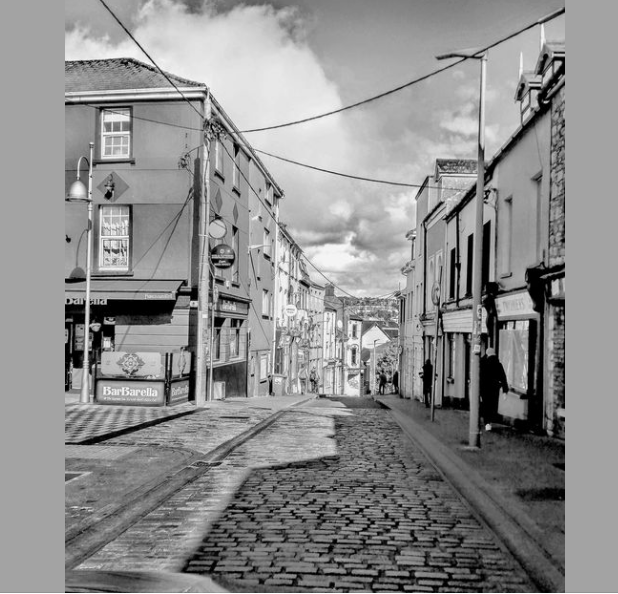
Císte Mílis, just over top right, from Anthony Barry’s Photos, courtesy Cork Archives :
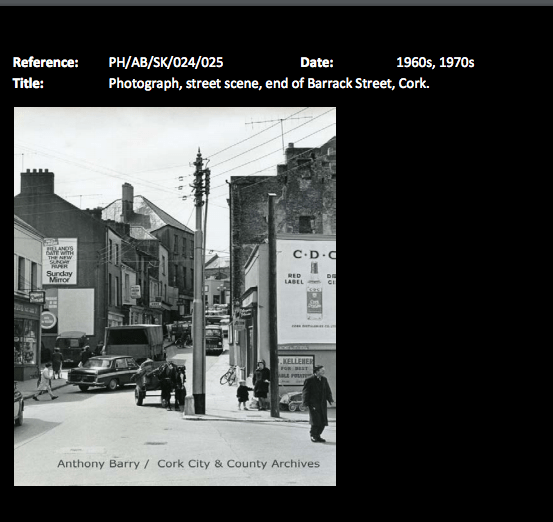
Click to access PH-AB-SK-webalbum3-_Part14.pdf

Potatoes are so cheap now in the supermarkets it’s hard to see how anyone could make a business of supplying them and delivering.

Around this time there was a great interest in stamp collecting, a man called Moss I think he was English had a shop just down French’s Quay, I think he used also buy used stamps. For a period it was a mecca for school boys after school.

..

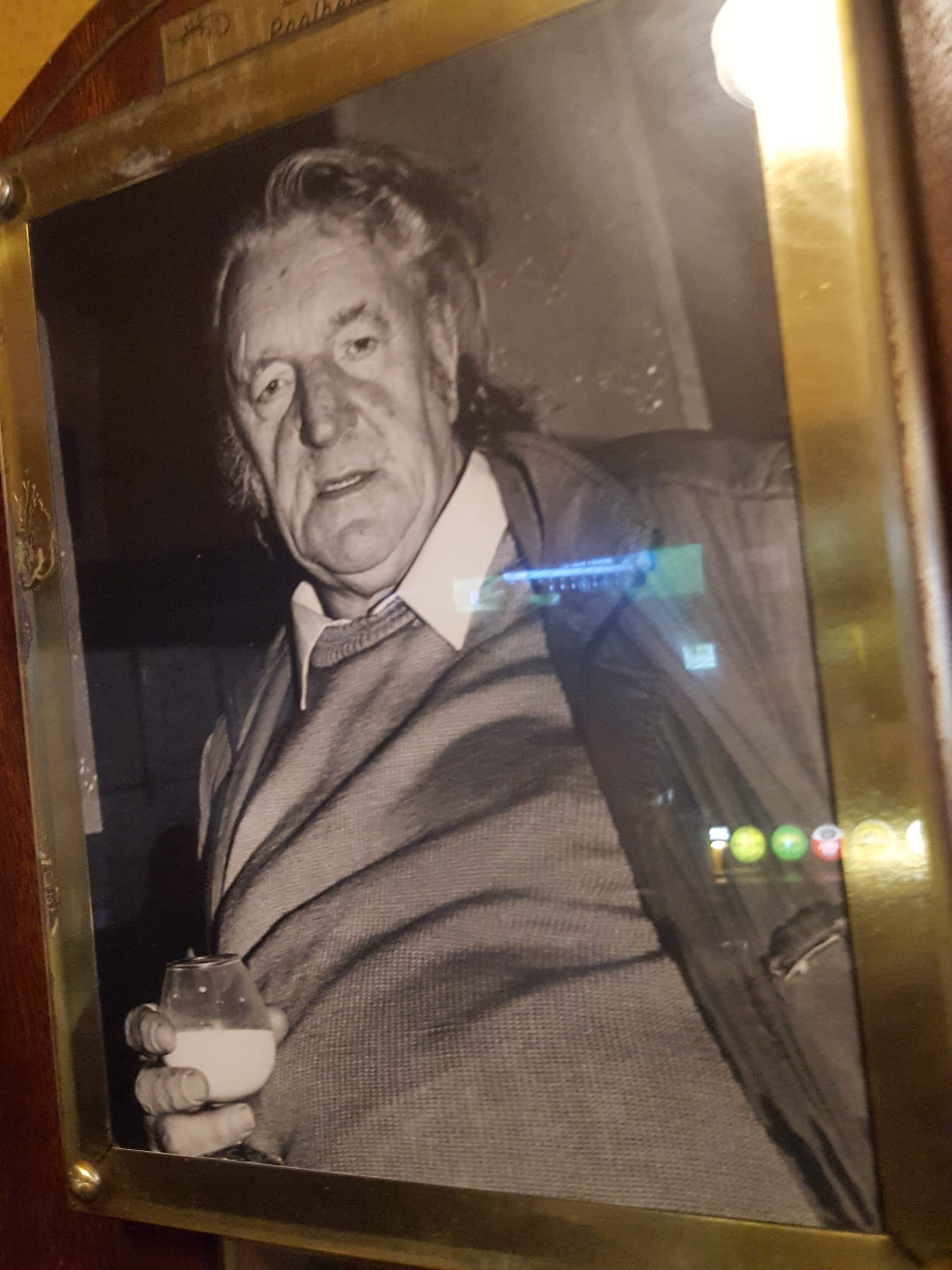
In Mulligans Bar, Dublin
20190516_181438
20190516_181452

..

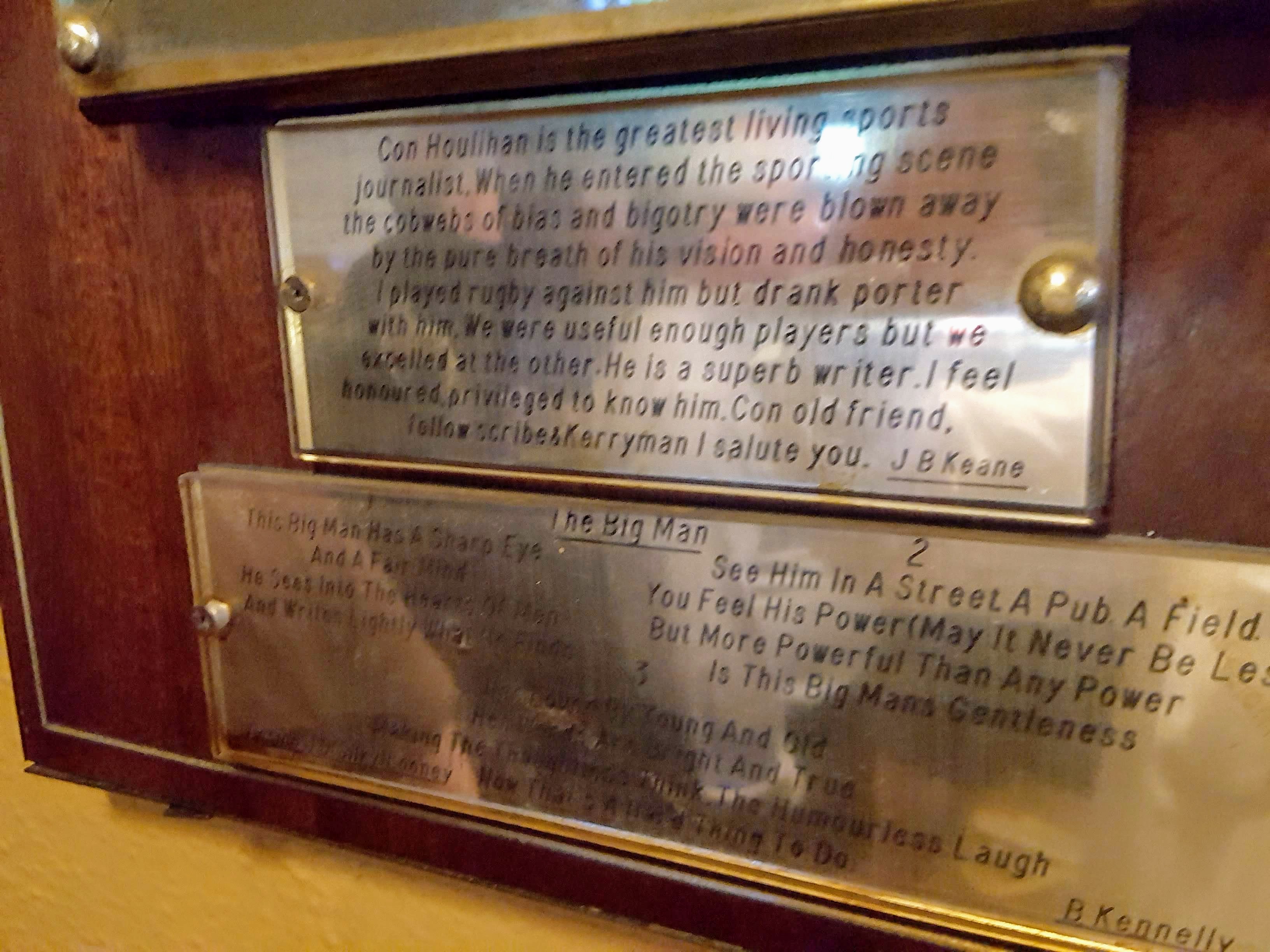
Some of Con Houlihan’s best words… On GAA supporters: “The hard core of those who follow Dublin Gaelic Football are like a little army. “They stand in the same spot on The Hill and they drink in the same pubs. The pattern has a little changed in recent years: Their favourite pubs used to be in Fairview; now most of that little army converge on Mulligans’, on Poolbeg Street, after Croke Park. After the bigger games, they overflow the old pub and take up much of the street. “This, of course, is illegal but there is nothing wrong with it. Kerry people drink there, too. And Mulligans’ has been known as the pub where many romances begin and where some romances end. Kerry’s followers for years used to drink in The Shakespeare on Parnell Street. “There, after a game you would see a row of pints on the long counter all ready for topping up. The followers now tend to drink in Moran’s on Gardiner Street, or in The Merchant on Merchant’s Quay, or in Chaplin’s on Hawkins Street. “Whether in victory or defeat you can always expect great craic between the two lots of partisans. Dublin’s hard core have become accustomed to losing but they live in hope. What’s another year..? On his profession: “There was far more integrity in newspapers and among writers twenty or thirty years ago. Most reporters in the ’70′s and ’80′s had served their time in a local newspaper, which conditioned them to be honest and fair. “You couldn’t turn someone over in a small town because you would be ostracised. Nowadays in Dublin, as soon as a young pup sees his name in print, he reckons he’s made it. “There’s a few dirt-birds out there, maybe more so in the Sunday newspapers. Some have little talent but an awful lot of neck. 30 years ago, they wouldn’t last a week. I think daily newspaper journalism is a more honest pursuit. The best writers work on the daily beat. “That’s why I’m with the Sunday World.” On writing: “The worst thing for any writer (is) to be ignored.” On language: “Speaking in the company of other Gaelic speakers in West Kerry I’d feel very uninhibited. My pronunciation in English is a bit suspect, but not so in Gaelic. English is a funny language, but I love it of course. I grew up speaking Hiberno English: English woven on a Gaelic loom.” On the Evening Press: “Of course many of my happiest hours were in the context of The Evening Press. I loved that paper. Usually I worked the column out in my head during the night – occasionally in some congenial pub – and got up about four in the morning and wrote it. “By eight o’clock it was in the safe hands of the Sports Editor, Tom O’Shea, and I was in my favourite corner in The White Horse – the corner nearest the quay. “There I loved to read The Sporting Life and I sustained myself with a glass of milk mildly tinctured with brandy. So I had something in common with The Queen Mother: at eight every morning that same paper was brought to her bed accompanied by a large measure of gin and a bottle of tonic water.

..

Blog Stats

  • 840,565 hits

16th Regiment of Foot assisted female emigration australia ballyclough bantry bay caithness legion cavan regiment of militia cheshire fencibles coppinger's court inbhear na mbearc Irish words in use 1930s lord lansdowne's regiment mallow melbourne ned kelly new brunswick O'Dalys Bardic Family. o'regan Personal Memoirs rosscarbery schull sir redmond barry sir walter coppinger st. johns sydney Townlands treaty of limerick Uncategorized university of Melbourne victoria

16th Regiment of Foot assisted female emigration australia ballyclough bantry bay caithness legion cavan regiment of militia cheshire fencibles coppinger's court inbhear na mbearc Irish words in use 1930s lord lansdowne's regiment mallow melbourne ned kelly new brunswick O'Dalys Bardic Family. o'regan Personal Memoirs rosscarbery schull sir redmond barry sir walter coppinger st. johns sydney Townlands treaty of limerick Uncategorized university of Melbourne victoria
Follow West Cork History on WordPress.com

Enter your email address to follow this blog and receive notifications of new posts by email.

Join 518 other subscribers

Feedjit

  • durrushistory's avatar durrushistory

Archives

  • December 2025
  • November 2025
  • October 2025
  • September 2025
  • August 2025
  • July 2025
  • June 2025
  • May 2025
  • April 2025
  • March 2025
  • February 2025
  • January 2025
  • December 2024
  • November 2024
  • October 2024
  • September 2024
  • August 2024
  • July 2024
  • June 2024
  • May 2024
  • April 2024
  • March 2024
  • February 2024
  • January 2024
  • December 2023
  • November 2023
  • October 2023
  • September 2023
  • August 2023
  • July 2023
  • June 2023
  • May 2023
  • April 2023
  • March 2023
  • February 2023
  • January 2023
  • December 2022
  • November 2022
  • October 2022
  • September 2022
  • August 2022
  • July 2022
  • June 2022
  • May 2022
  • April 2022
  • March 2022
  • February 2022
  • January 2022
  • December 2021
  • November 2021
  • October 2021
  • September 2021
  • August 2021
  • July 2021
  • June 2021
  • May 2021
  • April 2021
  • March 2021
  • February 2021
  • January 2021
  • December 2020
  • November 2020
  • October 2020
  • September 2020
  • August 2020
  • July 2020
  • June 2020
  • May 2020
  • April 2020
  • March 2020
  • February 2020
  • January 2020
  • December 2019
  • November 2019
  • October 2019
  • September 2019
  • August 2019
  • July 2019
  • June 2019
  • May 2019
  • April 2019
  • March 2019
  • February 2019
  • January 2019
  • December 2018
  • November 2018
  • October 2018
  • September 2018
  • August 2018
  • July 2018
  • June 2018
  • May 2018
  • April 2018
  • March 2018
  • February 2018
  • January 2018
  • December 2017
  • November 2017
  • October 2017
  • September 2017
  • August 2017
  • July 2017
  • June 2017
  • May 2017
  • April 2017
  • March 2017
  • February 2017
  • January 2017
  • December 2016
  • November 2016
  • October 2016
  • September 2016
  • August 2016
  • July 2016
  • June 2016
  • May 2016
  • April 2016
  • March 2016
  • February 2016
  • January 2016
  • December 2015
  • November 2015
  • October 2015
  • September 2015
  • August 2015
  • July 2015
  • June 2015
  • May 2015
  • April 2015
  • March 2015
  • February 2015
  • January 2015
  • December 2014
  • November 2014
  • October 2014
  • September 2014
  • August 2014
  • July 2014
  • June 2014
  • May 2014
  • April 2014
  • March 2014
  • February 2014
  • January 2014
  • December 2013
  • November 2013
  • October 2013
  • September 2013
  • August 2013
  • July 2013
  • June 2013
  • May 2013
  • April 2013
  • March 2013
  • February 2013
  • January 2013
  • November 2012
  • October 2012
  • September 2012
  • August 2012
  • July 2012
  • June 2012
  • May 2012
  • April 2012
  • March 2012
  • February 2012
  • January 2012
  • December 2011
  • November 2011
  • October 2011

Blog at WordPress.com.

  • Subscribe Subscribed
    • West Cork History
    • Join 518 other subscribers
    • Already have a WordPress.com account? Log in now.
    • West Cork History
    • Subscribe Subscribed
    • Sign up
    • Log in
    • Report this content
    • View site in Reader
    • Manage subscriptions
    • Collapse this bar
 

Loading Comments...