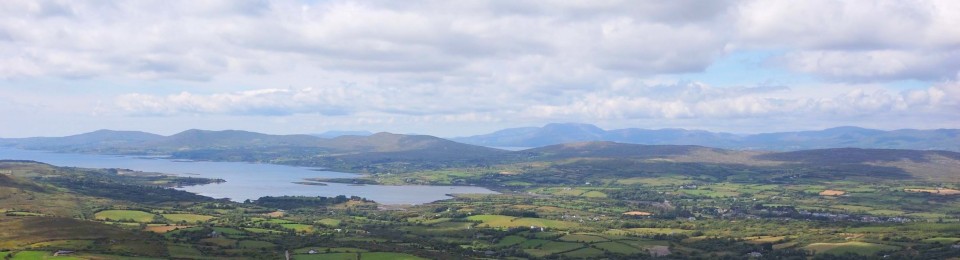
Marthene Williamson of Nova Scotia has put a significant amount of time researching families many of whom come from the Rossmore/Brahalish area of Durrus. More like Beamishes come from Mizen. It is interesting that through the Canadian and other records you can in effect get births from 18th century Ireland.
Another feature of the Canadian census records is language. Many of the Cork Protestant families put Irish into the box for language. It is not possible to say if it was Irish or the variation of English spoken in Ireland. Accounts of descendant speak of a soft brogue and language spattered with phrases and words from Irish. Even when they were speaking English they were almost speaking irish with english words using a different syntax than that used in England.
It is interesting that the free language app Duolingo has Irish in the top 10 with the largest market North America.
Picton, Ontario:
https://www.google.com/maps/d/viewer?oe=UTF8&vpsrc=6&source=embed&ctz=0&msa=0&mid=zpToGqj0GcYM.kXaXtDtRSH9E
Mizen:
https://www.google.com/maps/d/viewer?oe=UTF8&vpsrc=6&source=embed&ctz=0&msa=0&mid=zpToGqj0GcYM.kXaXtDtRSH9E
This is an e mail extract:
My father Robert Williamson, the second youngest son, told me stories he would have heard from his father, Robert Alexander Williamson, a youngest son. And Alexander’s father Richard Robert Williamson (or R Robert) came to Canada as a four year old boy out of Ireland in 1835.
I only heard that the family came from County Cork, or from Skibbereen.
My father has been gone for almost 30 years…so I started the research about 5 years go to see what could be worked out.
I’m pasting here a transcript I typed out of the old Williamson family Bible. At one point I thought it must be accurate, but I can see discrepancies now. (note: I will send the original as a scan separately)
For example, I can see from what is there and what is not, when the record was likely written, and people had already been gone for quite a few years. Still, it was a huge help in getting started. Likely written down between 1913 and 1924
This is a record from the Williamson family Bible likely written c 1925, after the death of Rachel Jane Carr Williamson at 90. She was my father;s grandmother, wife of R Robert Williamson, and a descendent of the first settlers to Prince Edward County who arrived after the American War of Independence. The family was likely feeling its mortality, and wanting to get things down. Of course, that allows for errors.
—————————————————————————————————————————————————-
(note- Copied as written.
-I changed one transcription error- Louise from Lousie,
-and a long time ago changed my father’s birth date- carefully and in pencil- to 1910 from 1911. That was when I was a kid, and before I realized one should let documents alone. Mea culpa.
-There are some errors in these dates marked (*), and I’ve added(*) dates which weren’t there-MW)
p1.
Williamson Family Record.
Richard Williamson, son of Mary Williamson, born in County Cork, Ireland about 1800, (died June 1878, age 78 years)
married
Susan Baker, daughter of Elizabeth Baker, about 1824, and immigrated to Canada and settled in Prince Edward County, Ontario in 1835. (died 1891, age 91 years)
There were 7 children of which Robert was the second. He was born in the town of Skibberean, County Cork, Ireland, and came to Canada with his parents at the age of 4 years.”
p2
Richard Williamson-Susan Baker
l
Robert Williamson (Born June 26, 1831, immigrated to Canada 1835 , died June 1887, age 56 years)
Peter Carr-Mary Ann Smith
l
Rachel Jane Carr.(Born in Prince Edward County, Ontario Aug. 25, 1835, died Grand Forks North Dakota, January 17, 1925, age 90 years))
Married 1855.
——————————————————————-
(*Children of Robert and Rachel. Born Died)
Mary Elizabeth Williamson, Dec 20, 1856 May 21, 1895 (* 1896) Prince Edward County, Ontario
Richard Albert, Sept. 20, 1858 – Dec. (* 10,) 1924 Moose Jaw, Sask.
Maria Louise, April 12, 1860 Aug. – 1901 (*Sept 22, 1900 Winnipeg, Manitoba
Sarah Ann, -*Nov 22, 1861 – *Feb 19, 1863 Hallowell, Prince Edward County, Ontario
Eliza Varney, May 9, 1863 -*Sept. 29, 1950 Winnipeg, Manitoba
Phoebe Jane, August 3, 1865 – *Jan 10 1958 buried in Forest Lawn, Los Angeles, Calif.
George McCullough, May 21, 1867 -*Dec. 12, 1950 Grand Forks, North Dakota
Robert Alexander, July 31, 1869 -*Feb 12, 1945 Winnipeg
Helena Maud, June 1, 1871 (*1881) Jan 4, 1891 * 1893 Winnipeg, Manitoba
Robert Alexander Williamson, born July 31, 1869 in Township of Hallowell, Prince Edward County, Ontario, came to Winnipeg, Manitoba, April 1, 1889, married
Margaret May Clark, (* born April 10, 1874, Winnipeg, Man died April 13, 1948 Winnipeg.) daughter of John B Clark and Mary Kenny, June 30, 1897.
—————————————————————-
(*Children of R. Alexander and Margaret.)
Doris Irene April 28, 1898 – * May 29, 1979 Stony Mountain, Manitoba
George Albert May 11, 1901 -*Oct 18, 1957 Phoenix, Arizona
Mary Helena Feb, 1 1903 – * Jan 2, 1995, Victoria, BC
Margaret Annabelle Oct 13, 1906 -* Sept 8, 1990 Victoria, BC
Phoebe Kenny Dec. 16, 1908 – * Sept. 7, 1988 Victoria, BC
Robert Dorland Sept. 22, 1910 – *June 10,1986 Dorval, PQ
Walter Alexander Feb. 15, 1913 – *Nov .21, 2008 Victoria, BC
_________________________________________________________________
Thoughts from the Censuses and Church records I’m going through:
As I work with the Ontario Censuses from the 1850’s on, I see families settling next to each other, and sometimes marked “mother in Law” etc. When people appear as sponsors for a christening, it establishes kinship too.
The church records I copied last summer also have lots of good family clues. It’s too bad I didn’t copy more of the early years, and I will need to next time I’m there. There will be at least one more trip, now that I know some of what I missed.
An example: I have a church record from St Mary Magdalene for Rebecca (Williamson) Barker widow, 84, died Hallowell, PEC, Jan 14, 1859. (sent as separate attachment). There was also a Barker family in the area, but Rebecca does not fit their line. And she is identified as Williamson maiden name. Barker is likely a recorded error. There are other places in church records where Barker and Baker get mixed. Perhaps they pronounced it closer to Barker…
The Williamson family Bible record gives Susan Baker’s mother name as Elizabeth.
I spent time last night trying to see if these people were somehow the same, and it is possible. However, it is also possible that they were sister’s in law.
Rebecca Williamson could certainly be a sister to Robert Williamson c 1775-c1830, husband of Mary (Minnie) Williamson, my gr gr gr grandmother (of grave photo) That would make her the aunt of Richard Williamson” cousin”. And the mother of his neighbour Sarah Baker Beamish.
In the census of 1851 of Percy, Northumberland, Ontario, these two households next to each other are full of clues:
1) Richard Williamson 33 and Sarah Williamson 23,
Rebecca Williamson 16
Mary Williamson 1
2) Sarah Baker 30 , husband Henry Beamish 29,
two children Robert Beamish 3 and John Beamish 1
widow Rebecca Baker 60.
Household 1, notes:
-Richard Williamson is called cousin to my gr gr grandfather Richard Williamson in a baptismal record of 1846.
-Richard Williamson /cousin and Sarah Williamson married on March 7, 1848 St Mary Magdalene.
-Their child Mary – I don’t have her baptismal record. It is likely in a different church and I was concentrating on home base/Hallowell. I have a few records from a different church nearer Percy, but not this one..
-Rebecca Williamson in the household is the daughter of gr gr grandfather Richard Williamson and his wife Susan Baker. Likely helping with the new baby. Rebecca was definitely not in her parents household for the 1861 census. And definitely back later on. She is mentioned in her father’s will. ( a story for another day)
Household 2 notes:
Sarah Baker/ Beamish and Henry Beamish
marriage
Ireland, Civil Registration Marriages Index, 1845-1958
Sarah Baker
Date of Registration: 1846
Registration District: Bantry
Volume: 2
Page Number: 642
FHL Film Number: 101241
to Henry Beamish
Re Sarah Baker/ Beamish and Henry Beamish children’s baptisms: my family is showing up. Richard and his mother Mary Williamson were sponsors for Sarah Jane Beamish born Feb 3,1853 baptized March 3, 1855,; also a Sarah King.
Household 3, New family King
To add to the Baker mix, there is a third family in the neighbourhood :Mary Baker, married to Thomas King . According to censuses, they were married in Ireland in 1833 . Their first two children , John 1834 and Ellen 1836 may have been born in Ireland or Canada. There is little I know yet. These children both died fairly young.
Their third daughter, Sarah, 1838-1927 has a profound look of my father when she was an old lady. Uncanny.
I will be working more with this family, which is definitely connected to the same Bakers, and also showing up as sponsors to Williamson events. I would say they are kin for sure.
Irish Records Extraction Database about Thomas King
Name: Thomas King
Sex: Male
Marriage: 1832
Marriage Place: Diocese of Cork & Ross, County Cork, Ireland
Spouse: Mary Baker
Source: Albert Eugene Casey, Eleanor L. Downey-Prince, and Ursula Dietrich.. Index of O’Kief, Coshe Mange, Slieve Lougher and Upper Blackwater in Ireland. 16 vols. Birmingham, Alabama: Knocknagree Historical Fund, 1952-1971. See
Thomas King and Mary King are witnesses to various Williamson christenings.
It seems to be shaping up that the Widow Rebecca Williamson Ba(r)ker , b c 1775 d Jan 14, 1859 is mother to :
Sarah Baker Beamish
and Mary Baker King
and likely aunt to my Richard Williamson/Susan Baker.
———————————————————
as well there is a Michael Baker witnessing things, but that’s for another day.
————————————————————————–
Other neighbours in Percy Northumberland County are Sullivans. I’m working on the Daniel ‘O’Sullivan Mary Ann Williamson line through Daniel’s will, where he identifies nieces and nephew. A brother is likely Patrick. A sister married a Holland. Another married a
————————————————-
A long answer, KILMOE OR DURRUS?
Where would the Bantry marriages indicate?
——————————————————————————————————————
I will keep picking away at this. It takes time to go through each family, as I try to find all the children, and the grandchildren, and see what ( or who) is showing up in death records, and if there are more specific references to place of origin. I am only getting County Cork so far.
I also find I have to be able to see the human error. We have a photo of Susan Baker Williamson, from a fellow researcher, who said it was her grandmother’s grandmother, Susan Baker Williamson.
However, someone had clearly labelled the photo Mrs Robert Williamson, and Susan was Mrs Richard Williamson, older brother of Robert.
We sweated over it for some months. Death records for Susan’s daughter showed that her parent’s names had been given as Robert and ? So the granddaughter who labelled it wrote what she knew: “Mrs Robert Williamson”.
But it is Susan Baker.
Looking at the Williamsons do you think they are Kilmoe or Durrus I see the Baker name which is local to Durrus Williamsons and the combination occurs in Rochester New York.