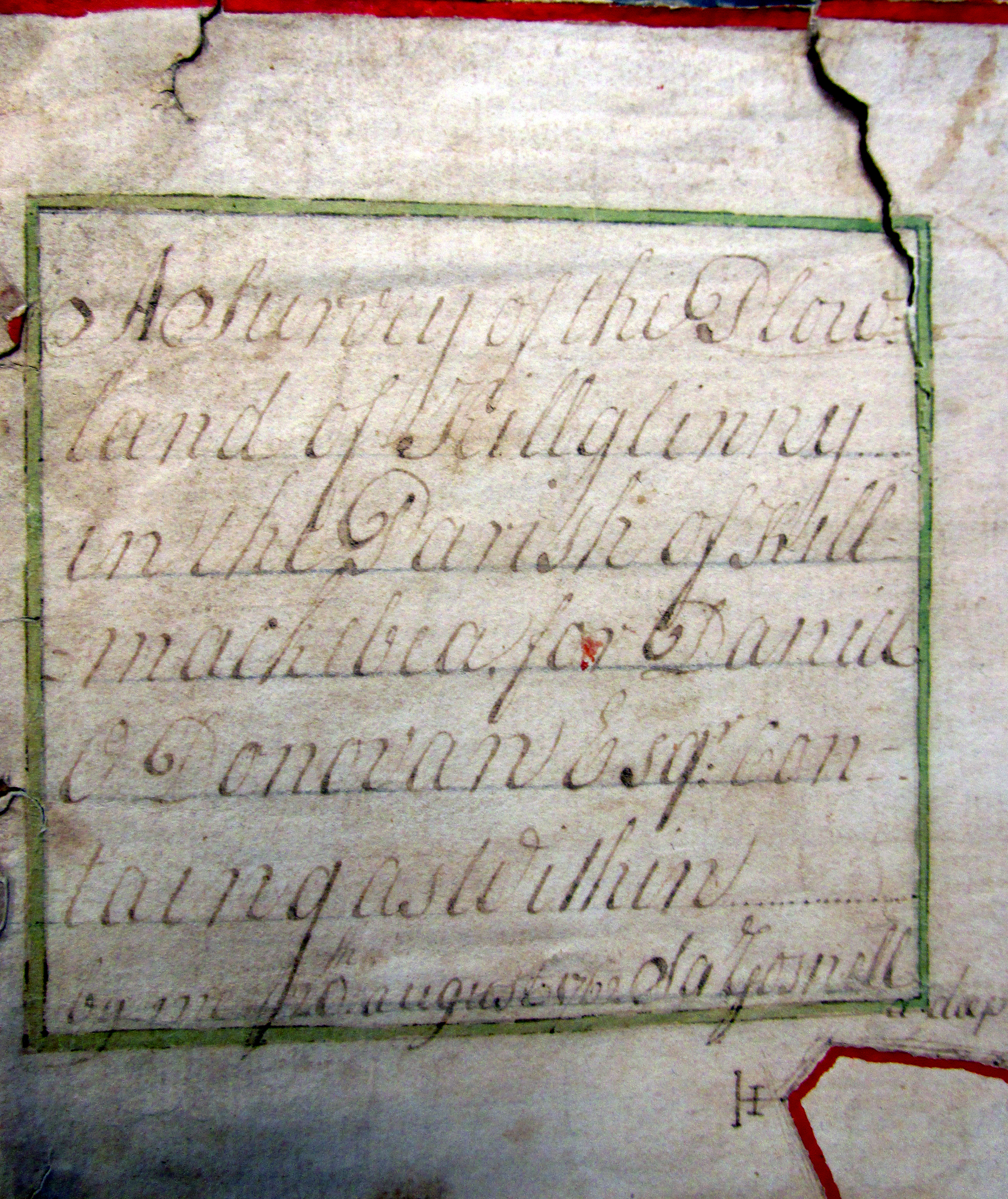
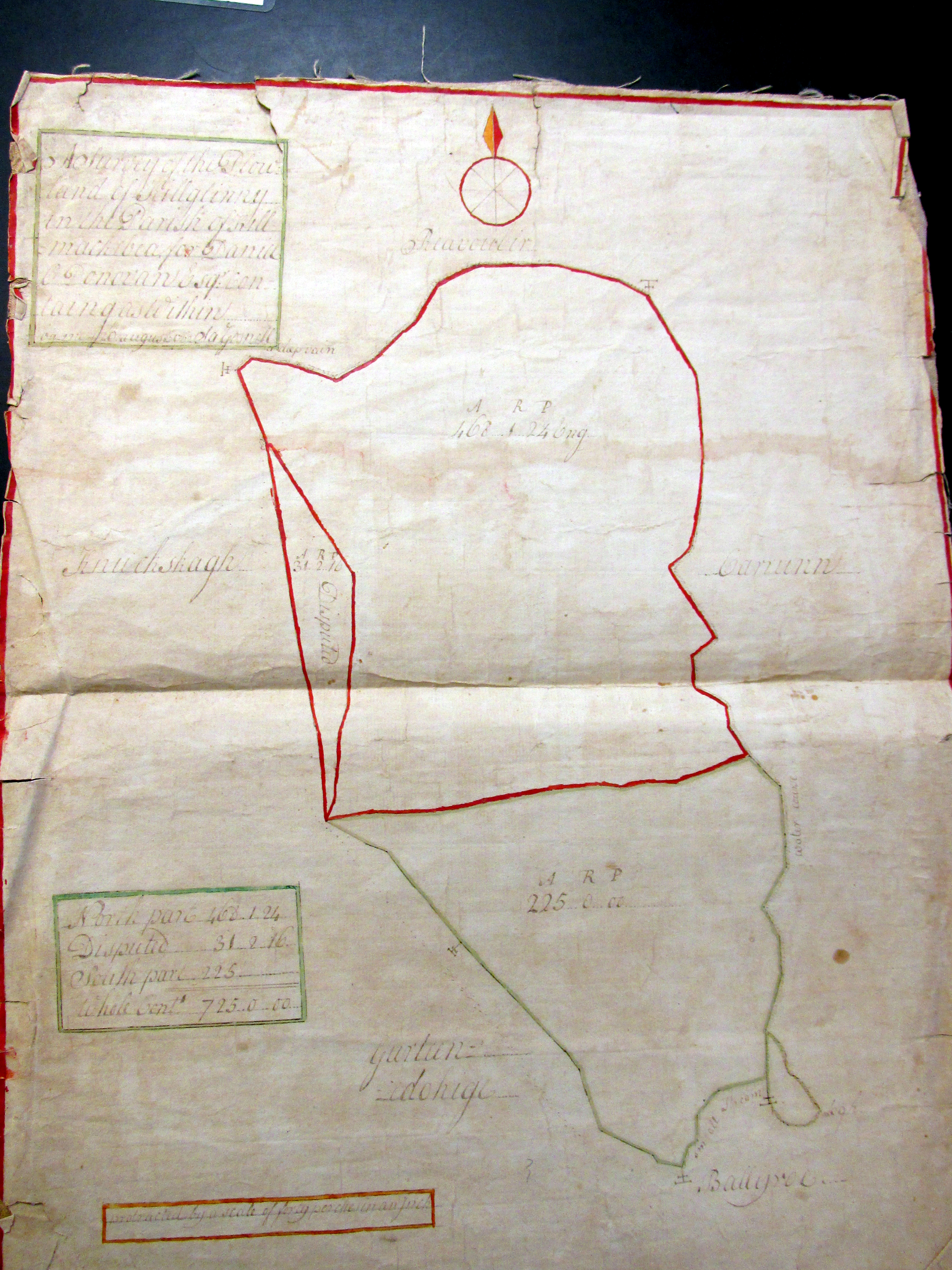
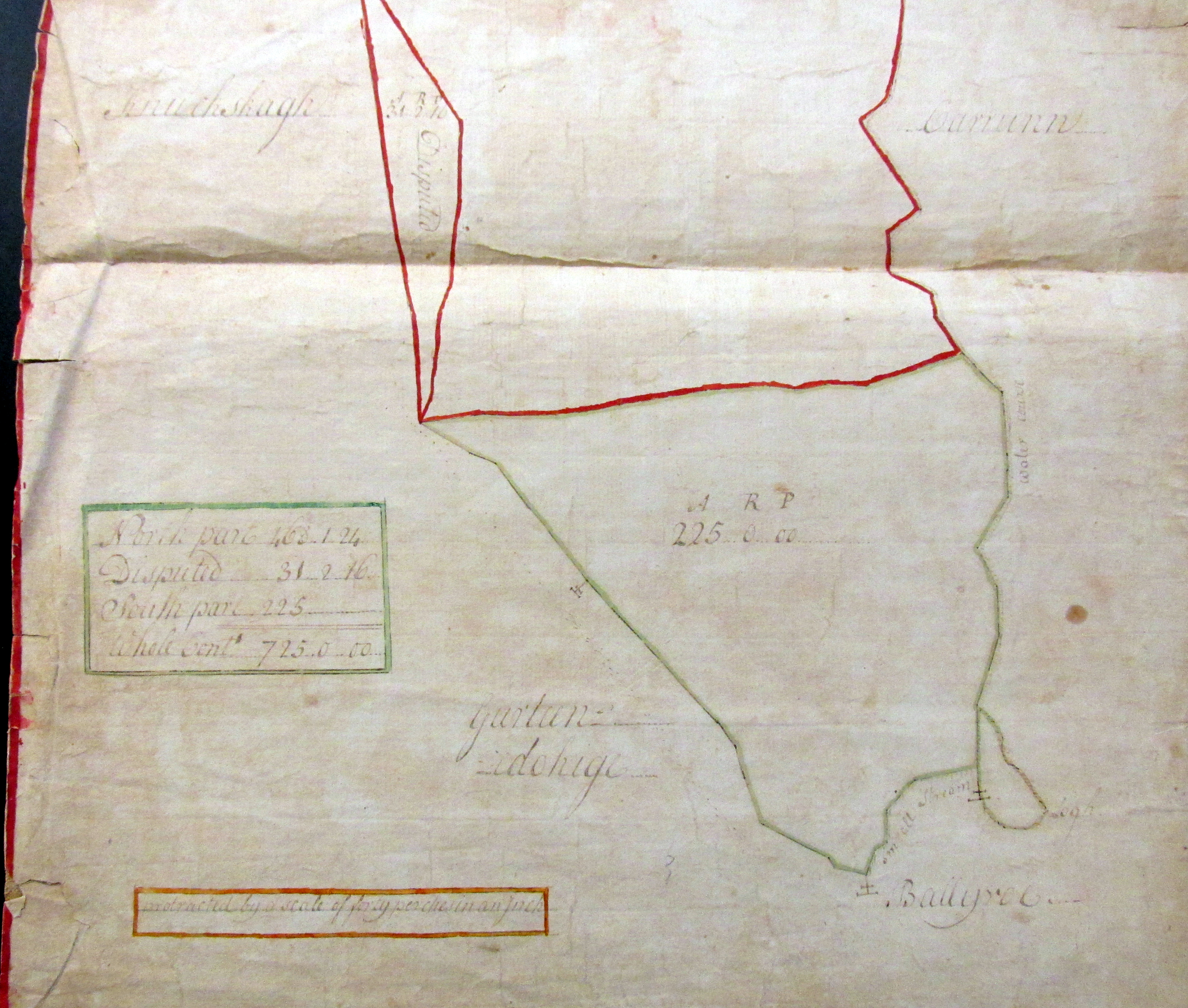
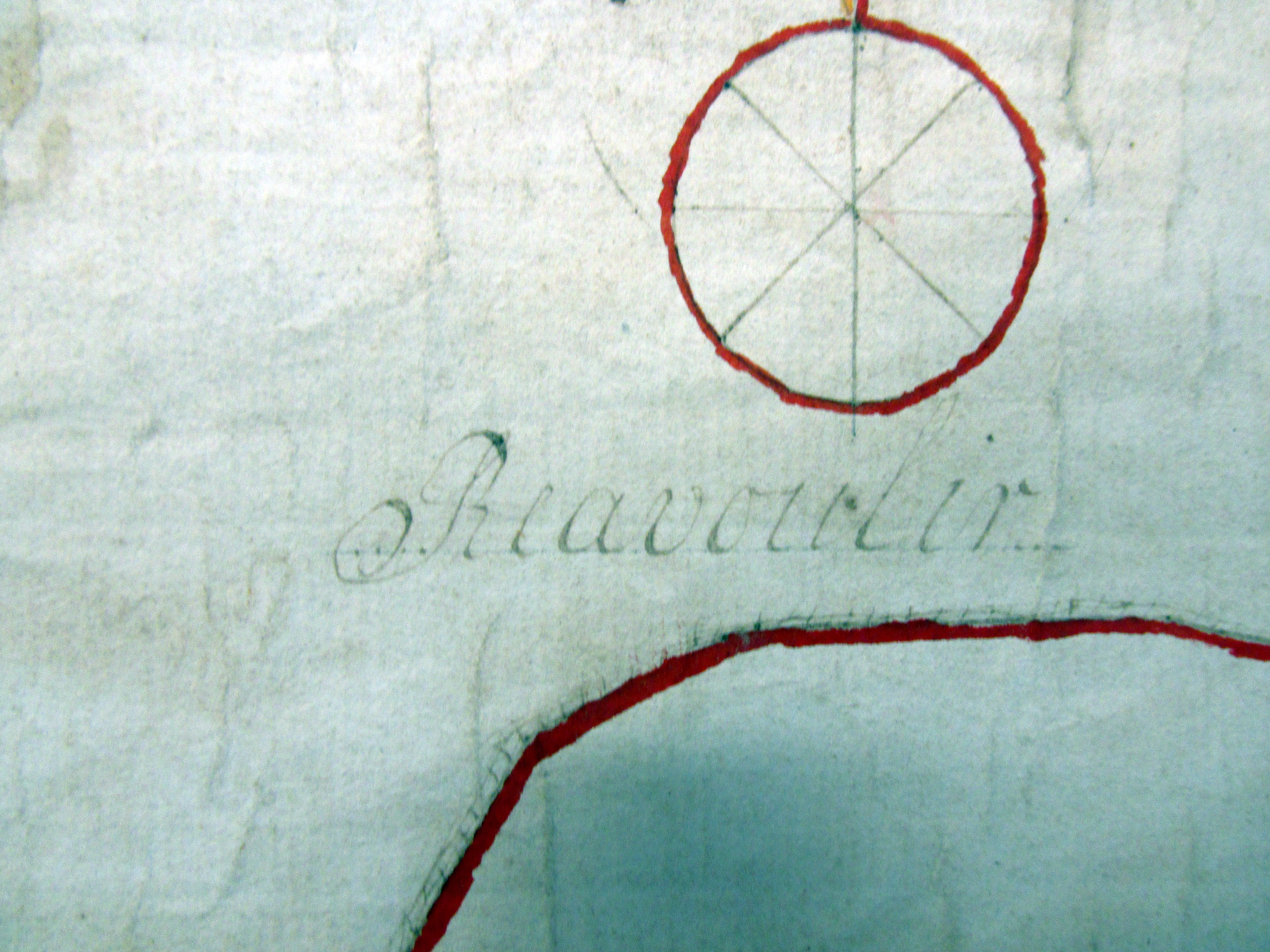
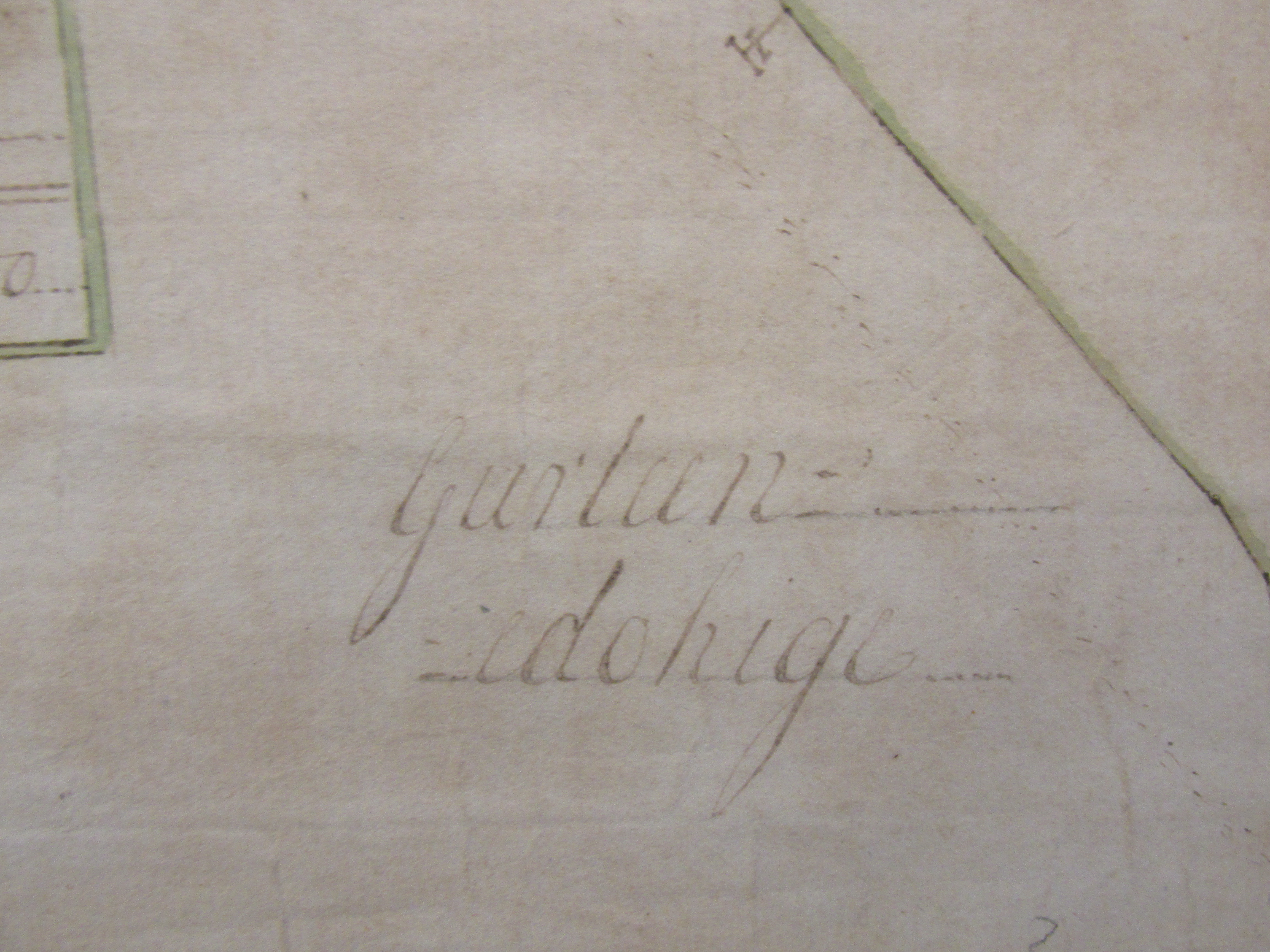
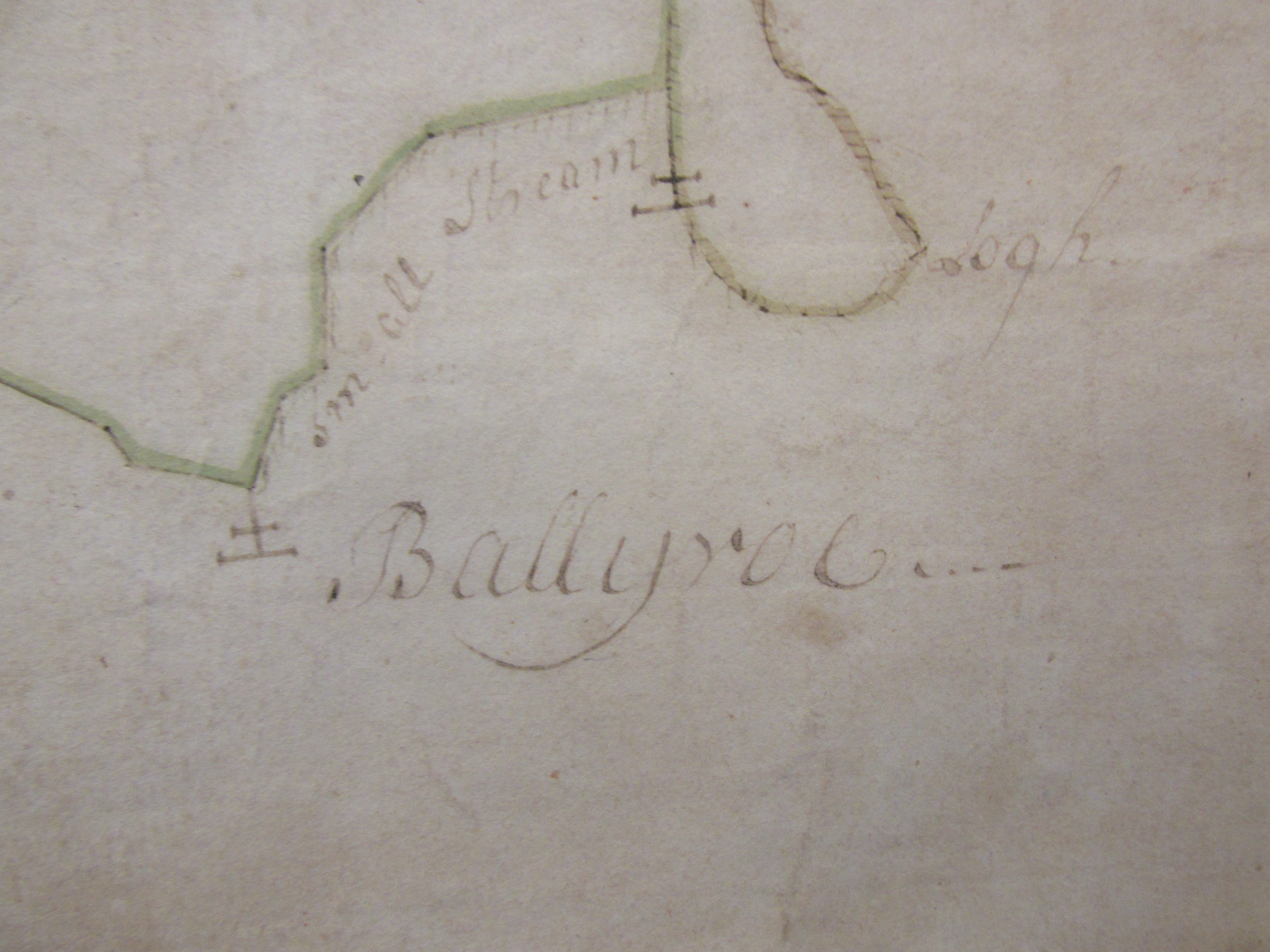
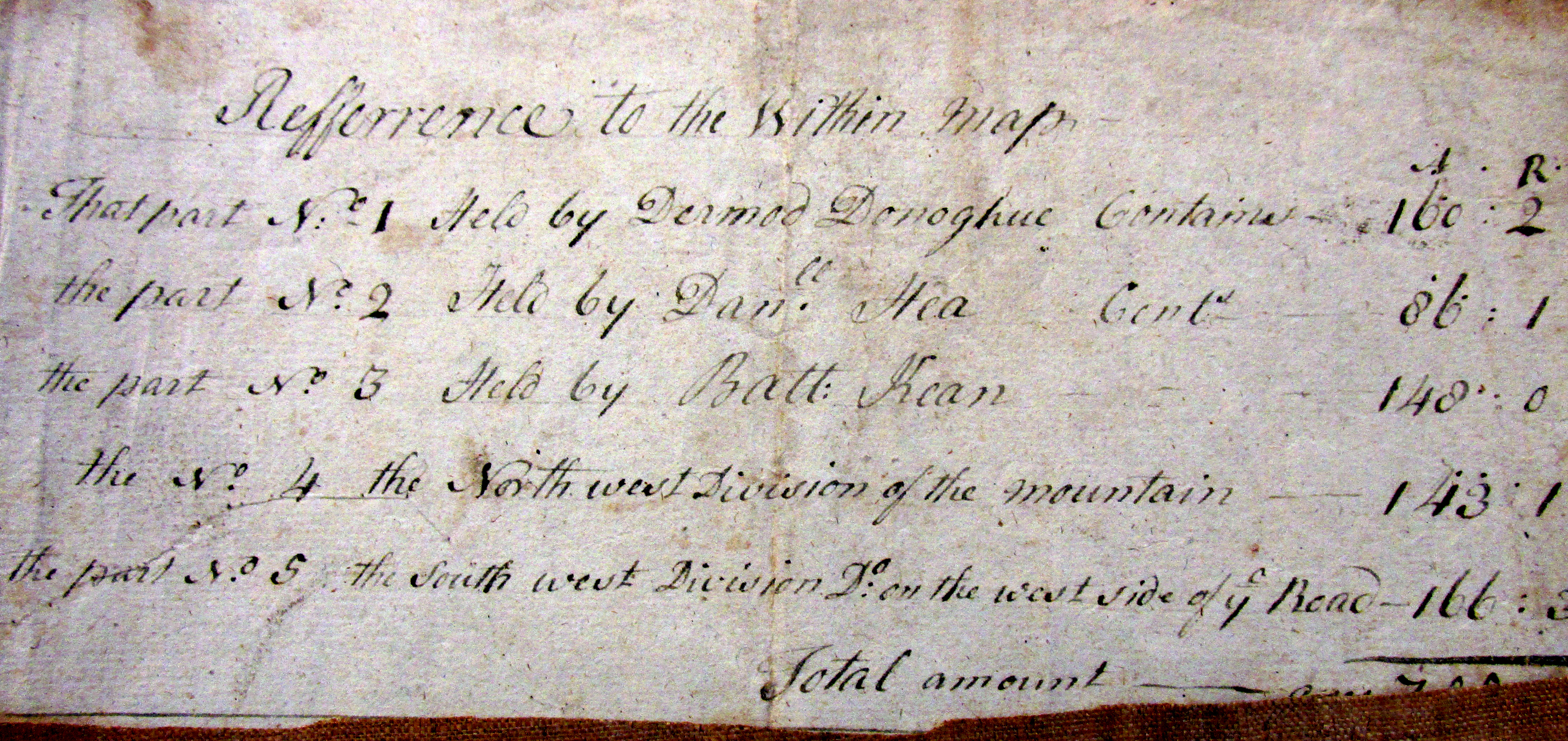
Survey of Estate of Daniel O’Donovan, Esq., 725 acres (31 in dispute) by Samuel Gosnell (Ancestor of Dr. Richard Caulfield, Cork Antiquarian), 20th June 1762 , at Knuckskagh, Currunn, Gurteeneddige, Ballyroe, Reavoulir referred to
Samuel Gosnell
This could possibly the maiden surname of Samuel’s mother and it recalls the fact that Pender’s 1659 Census of Ireland shows a Mrs Gosnold and a Richard Hayes as titulados of Bearnahely, near Cork City. Samuel was referenced to a WILL in 1781. Samuel Gosnell was a surveyor for a large landowner (Lord Baltimore) and as such was involved in some surveys in the area of Baltimore near Skibbereen. Samuels great grandson was Dr. Richard Caufield circa 1860. Note: the use of the Christian name Samuel among the Skibbereen-area Gosnell.. It is very possible that Samuel’s father “John” was a son of Nathaniel’s, and the older John “Goslin” of Ross Parish ; and that Nathaniel was in turn a grandson or great-grandson of the first Henry
Survey by John Mollowny, 1st June 1769 of Estate of Daniel O’Donovan Esq., East Carbery, at Killyling, consisting of 705 acres Townlands mentioned Carran, Gorteenadooge, Knockadagh, Ballyaroo and Lagh and 1801 survey of Rectory Lislee Barony of Ibane by John Moloney.
Molollowny/Moloney and the O’Donovans were probably related there was a marriage in France late 18th century between two of the branches. Mononey surveyed many estates in West Cork in the period.
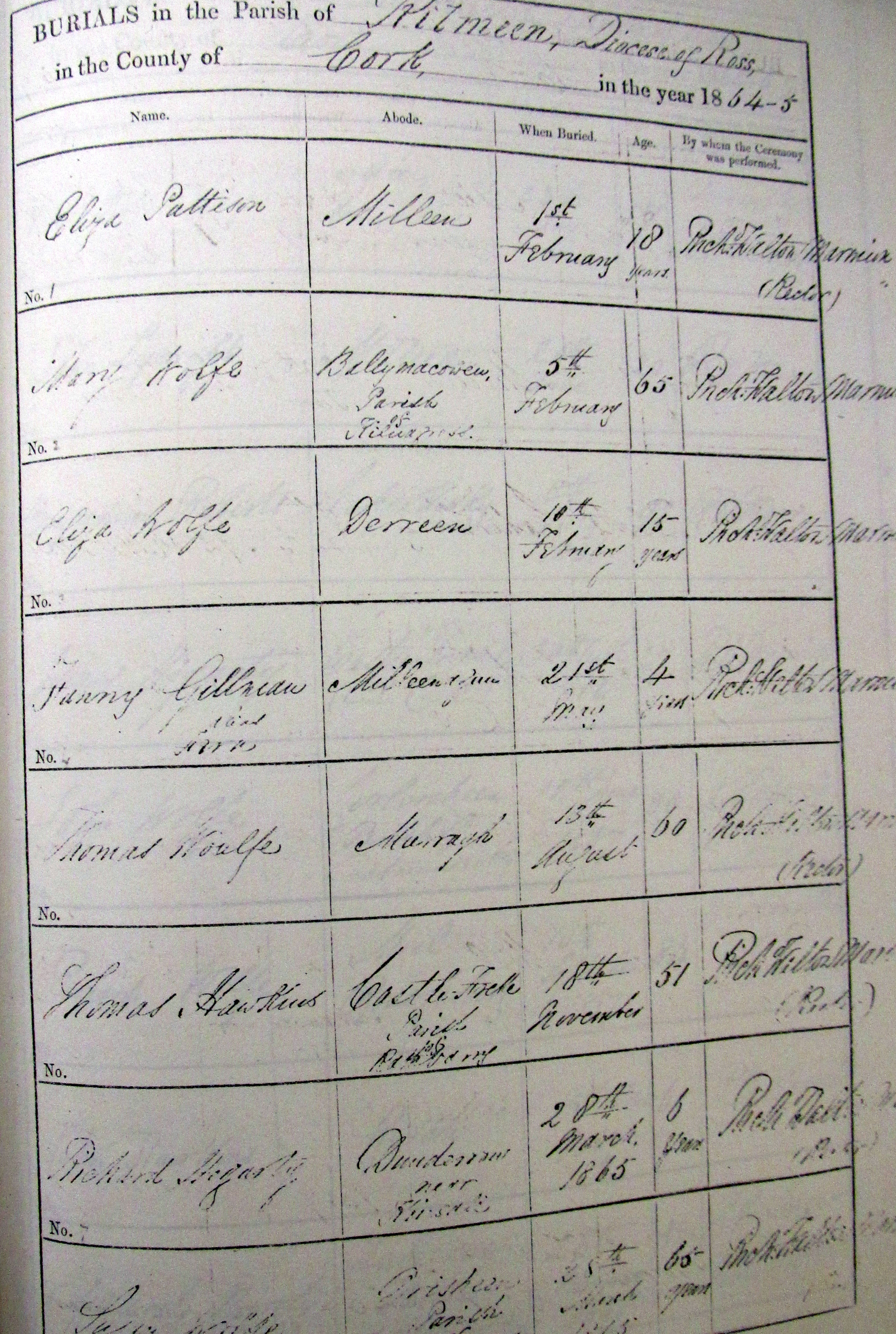
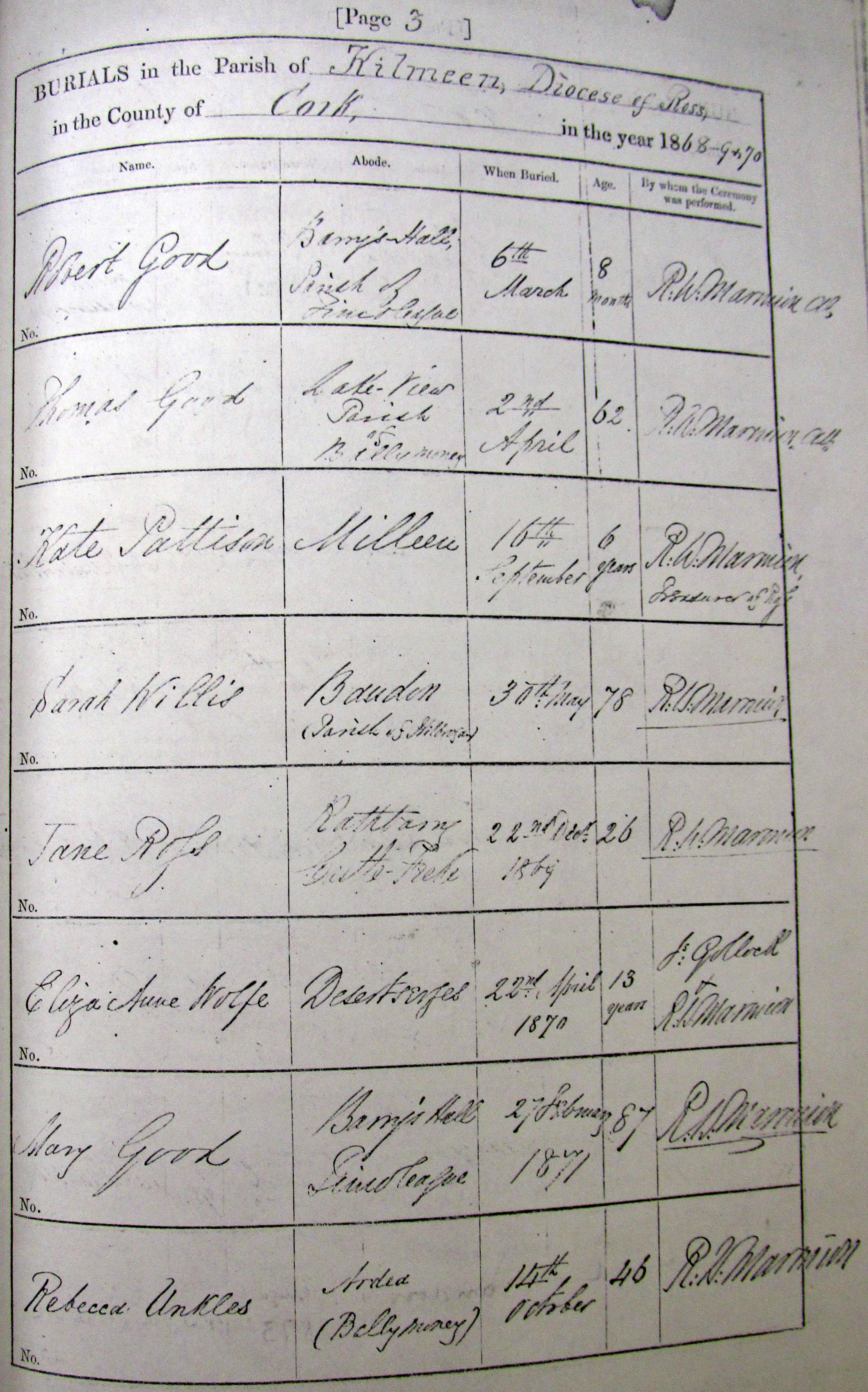
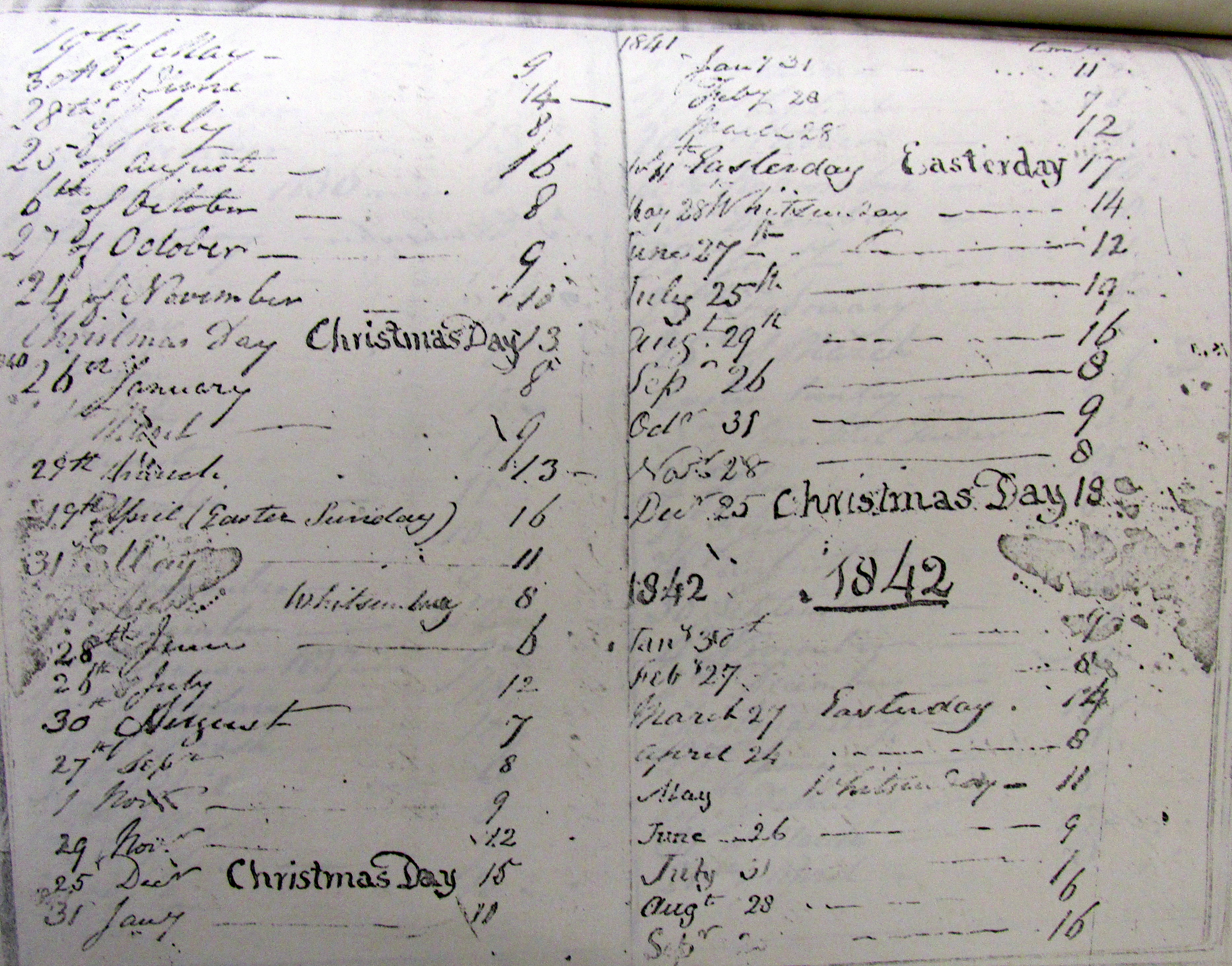
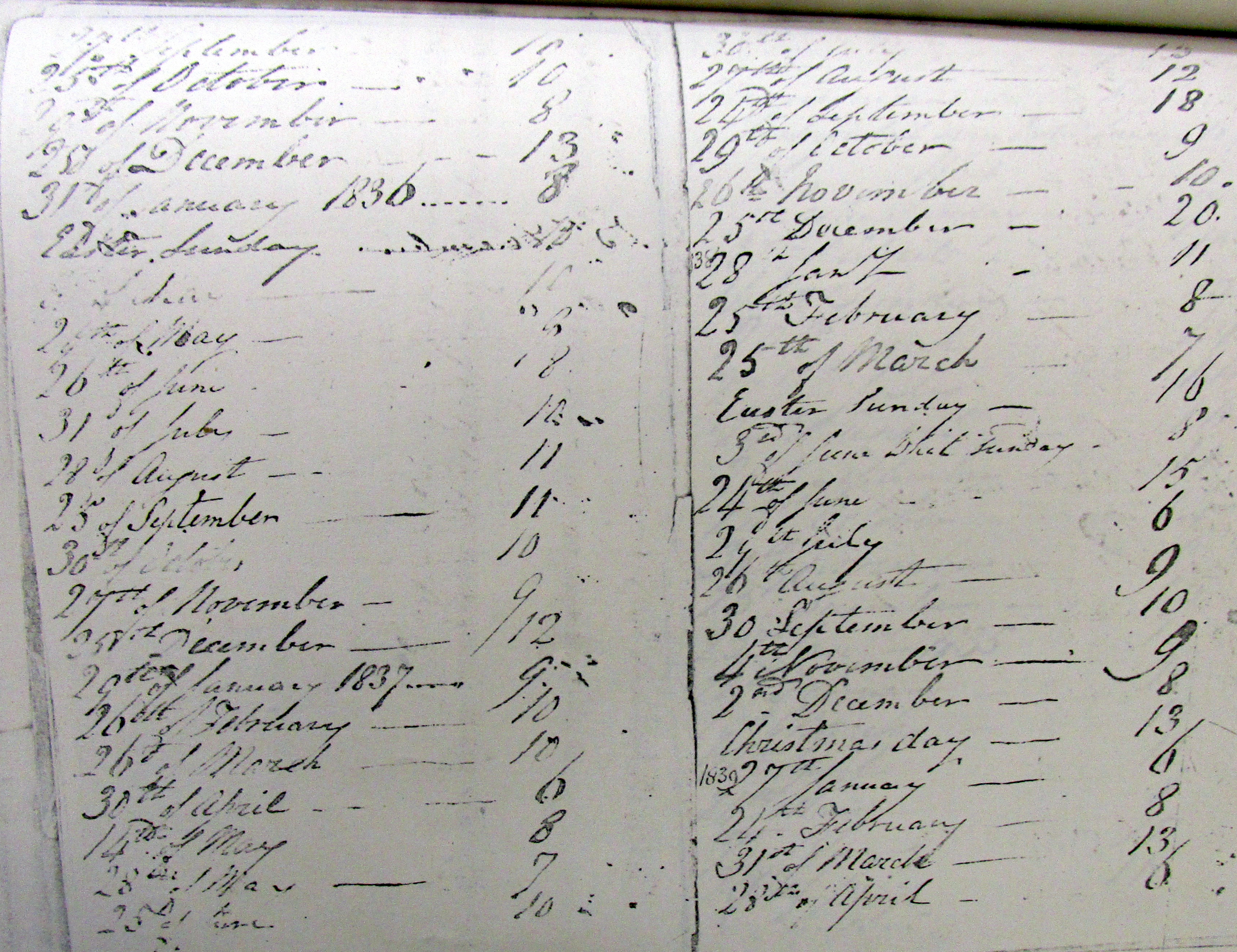
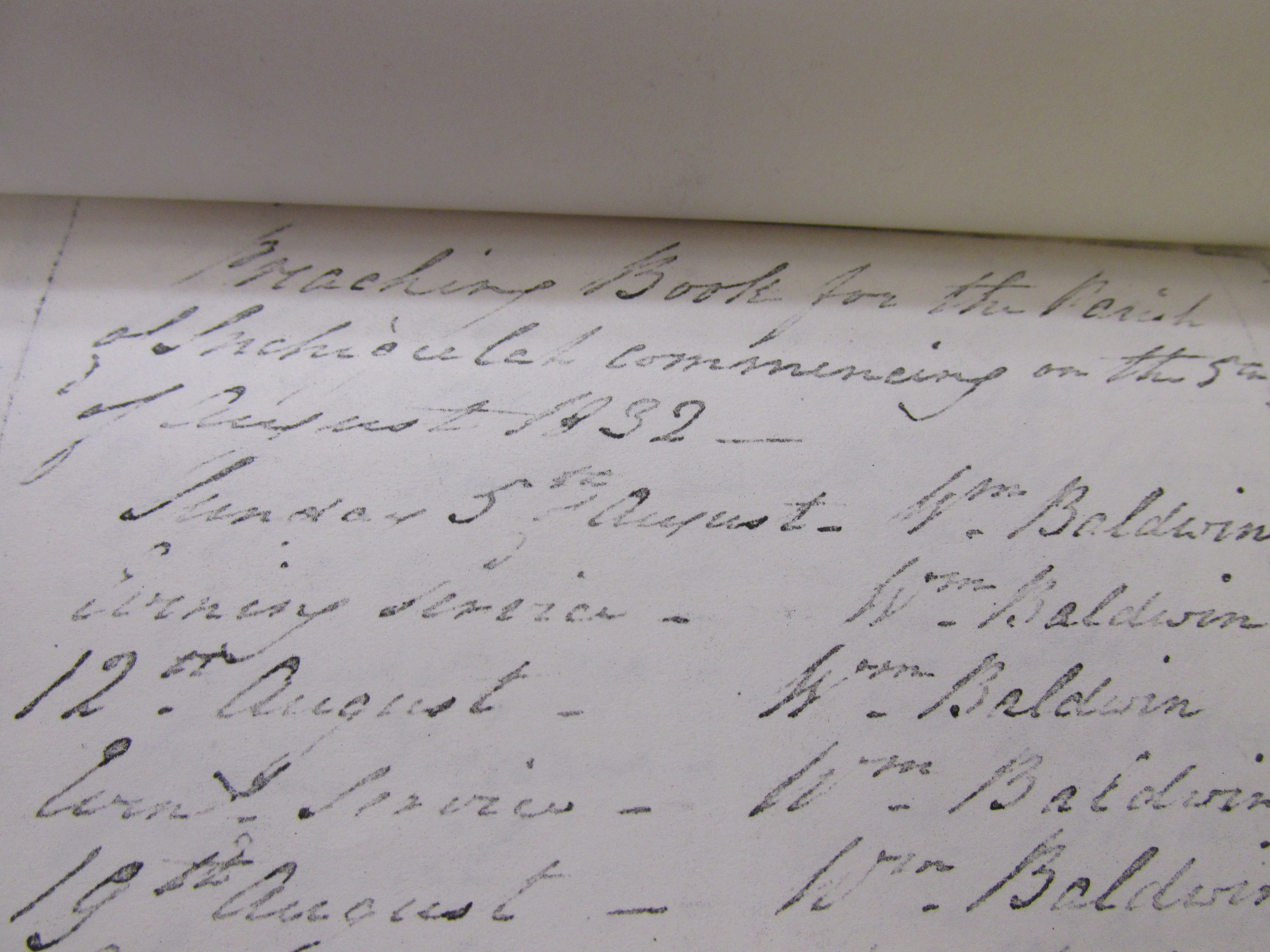
The Preacher Book merely states the name of the Rector and Preacher.
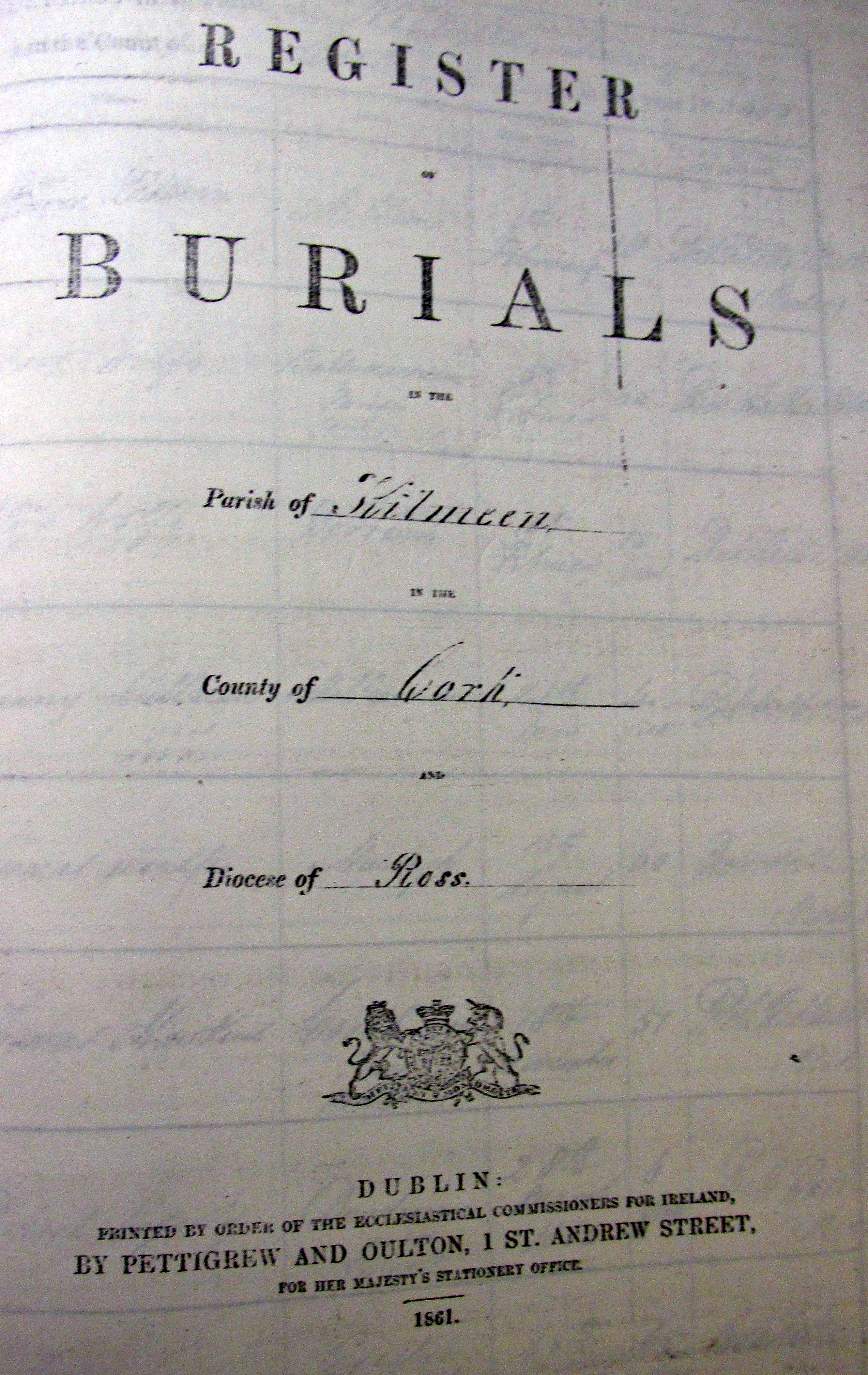
It is interesting that these documents seem to be on a standard pro forma book prepared by William O’Hara, Stationers , 3 Patrick St., Cork presumably to the Dioceses. It is possibly that they follow the format of other such records destroyed in 1922.
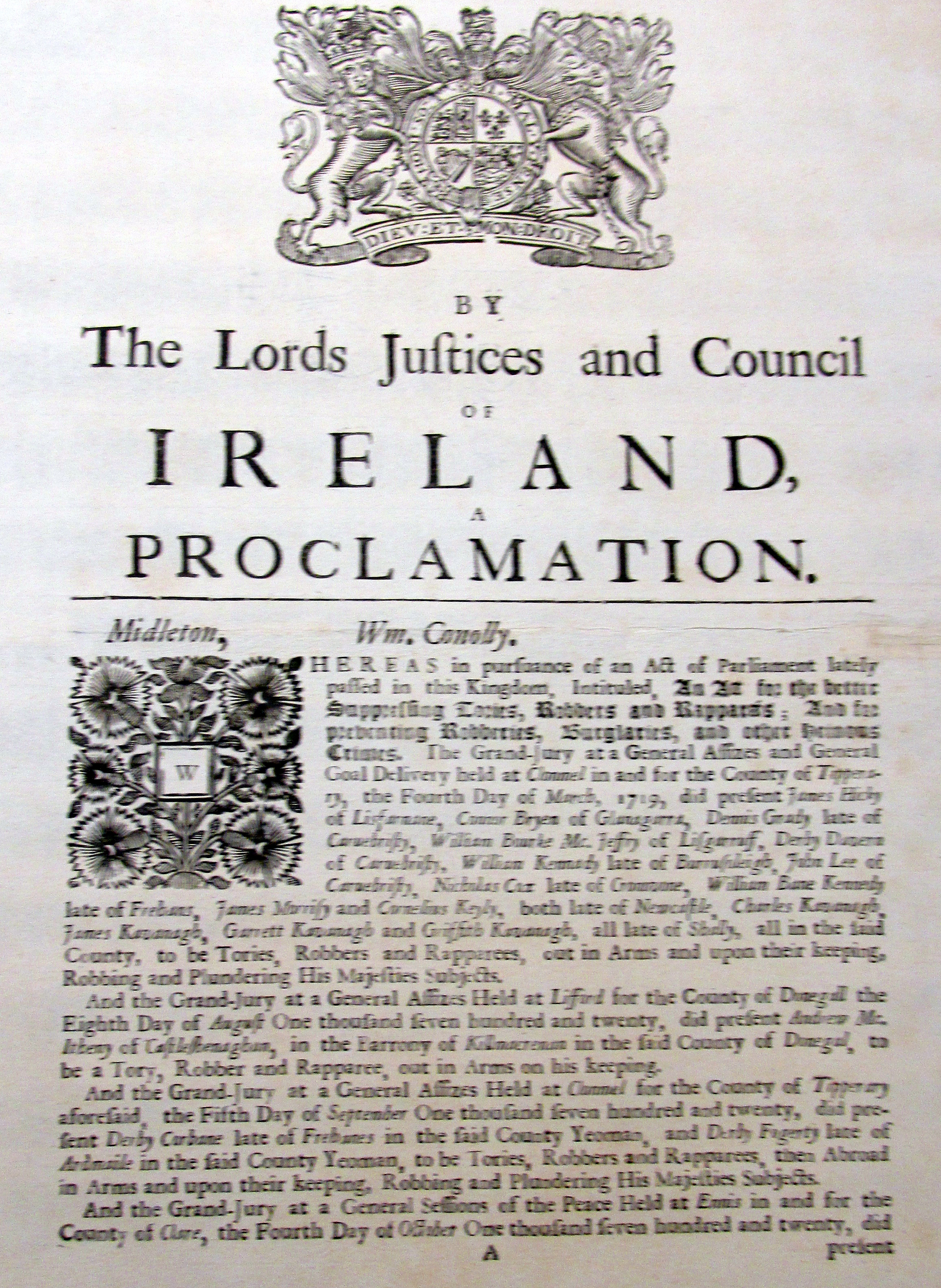
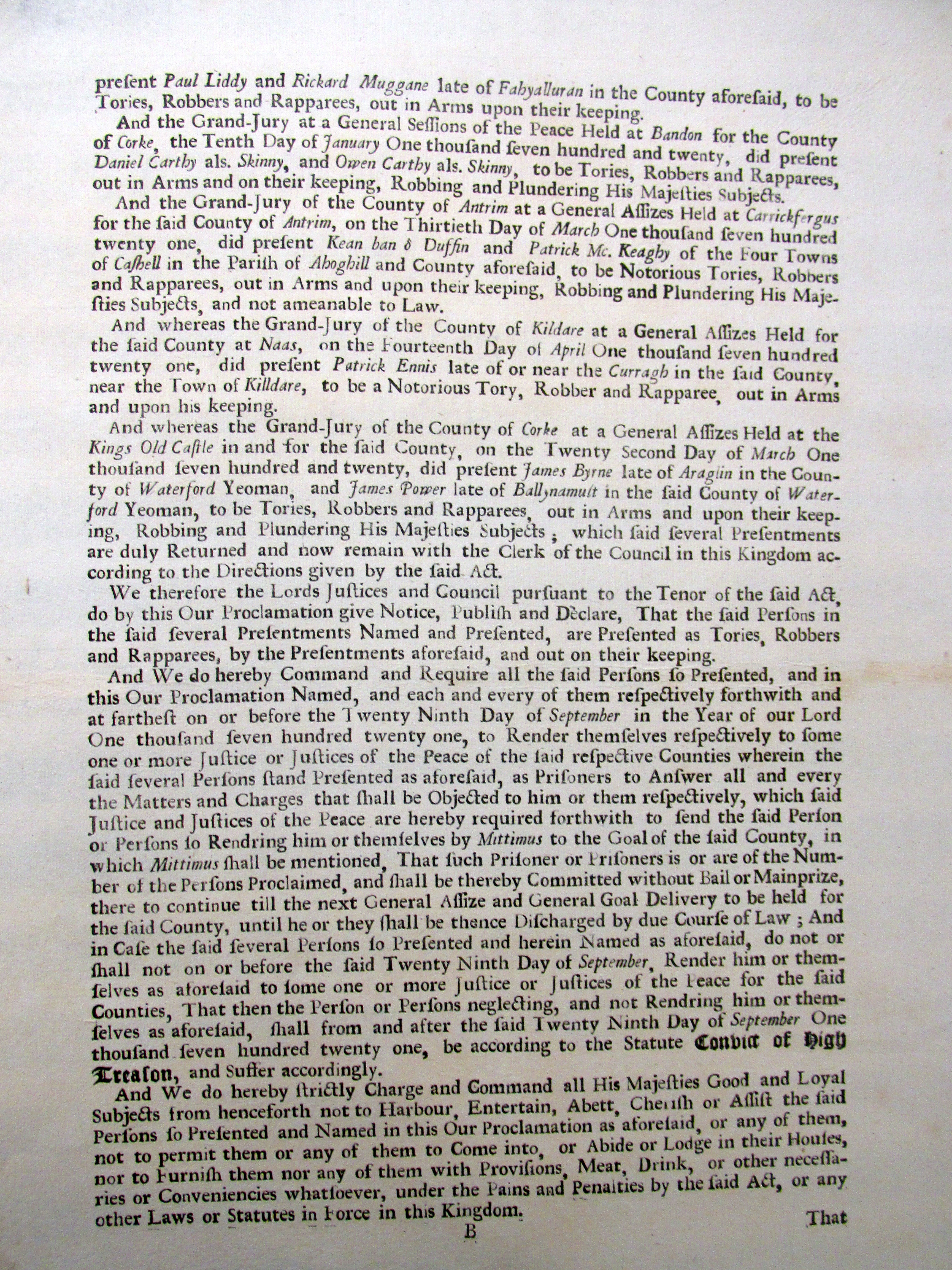
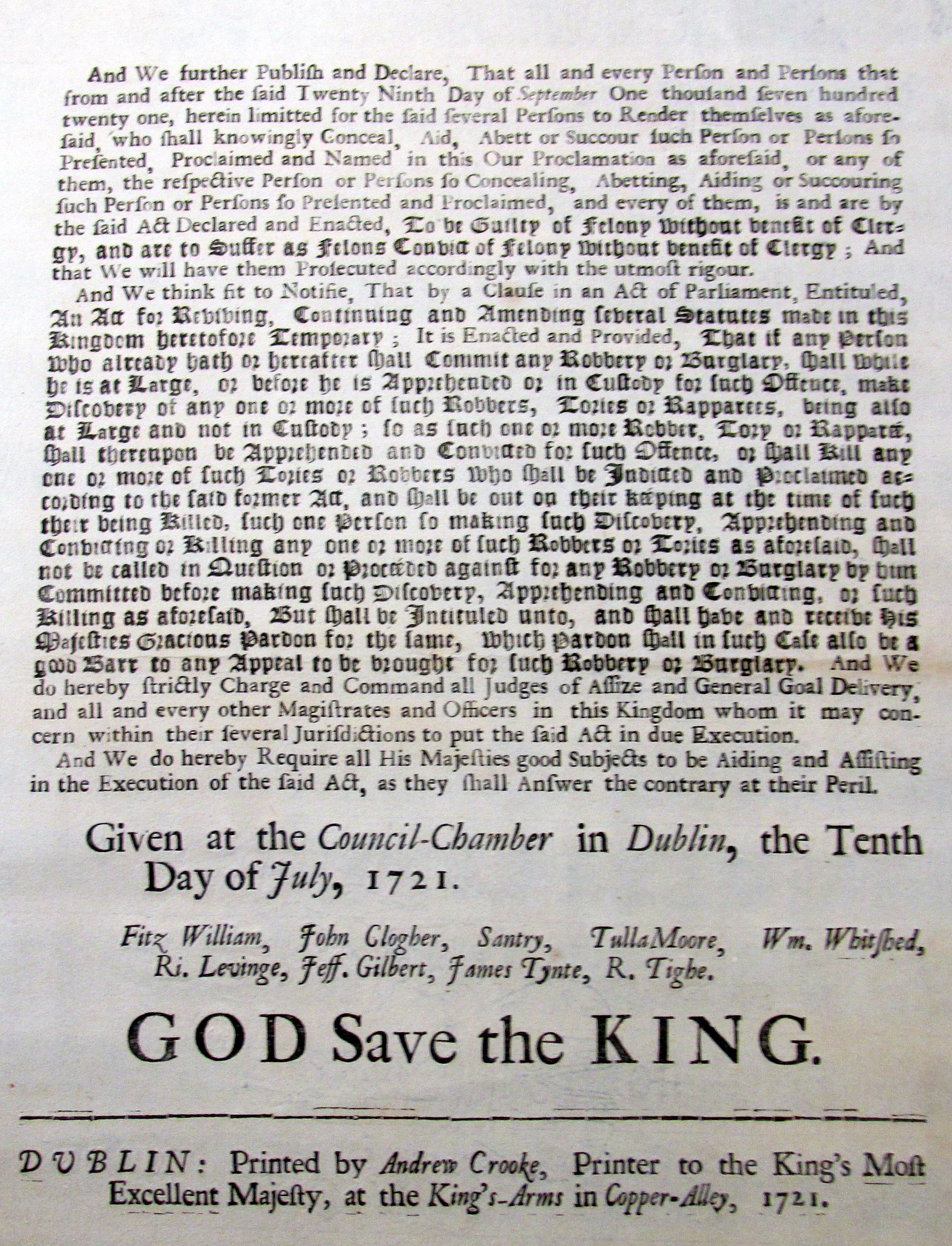
Proclamation arising from Grand Jury sitting on the 10th January 1727, in Bandon Co, Cork Sessions of the Peace declaring Daniel Carthy and Owen Carthy both alias ‘Skinny’ to be Outlaws, Robbers and Rapparees
Daniel O’Connell addresses Monster Meeting of 500,000? on Repeal in Skibbereen, June 1843, and Bandon, Skibbereen and Bantry connections with O’Connell with O’Donovan Rossa’ Recollections of ‘Wandmen’ at the Meeting.
O’Donovan Rossa’s recollections:
I told you I shook hands with O’Connell when he was coming from the great meeting in Skibbereen, in the year 1843. I remember the morning the Ross men were going to that meeting. Some of them had white wands. I see Dan Hart having one of those wands, regulating the men into line of march. Those wandmen were the peace-police of the procession. Paddy Donovan Rossa was prominent in command, giving out new Repeal buttons. Some years after, he was in New York with his wife and his six sons — all dead now: all belonging to him dead now, 1 may say. Meeting him here in the year 1863, I said to him — “Uncle Paddy, I remember you, the time you had all the Repeal buttons in Ross to free Ireland.” I was sorry for saying it, for the tears ran down his cheeks. The movement I myself as connected with ended no better, and we are in no position to say anything hurtful to O’Connellites. We all turned out to be O’Connellites, or Parnellites, which is much the same ; all putting our trust in England to free Ireland for us — “without striking a blow.” No, there were not ten men of the whole Fenian movement, and the whole I. R. B. movement in America, that did not turn in to the Parnell movement……
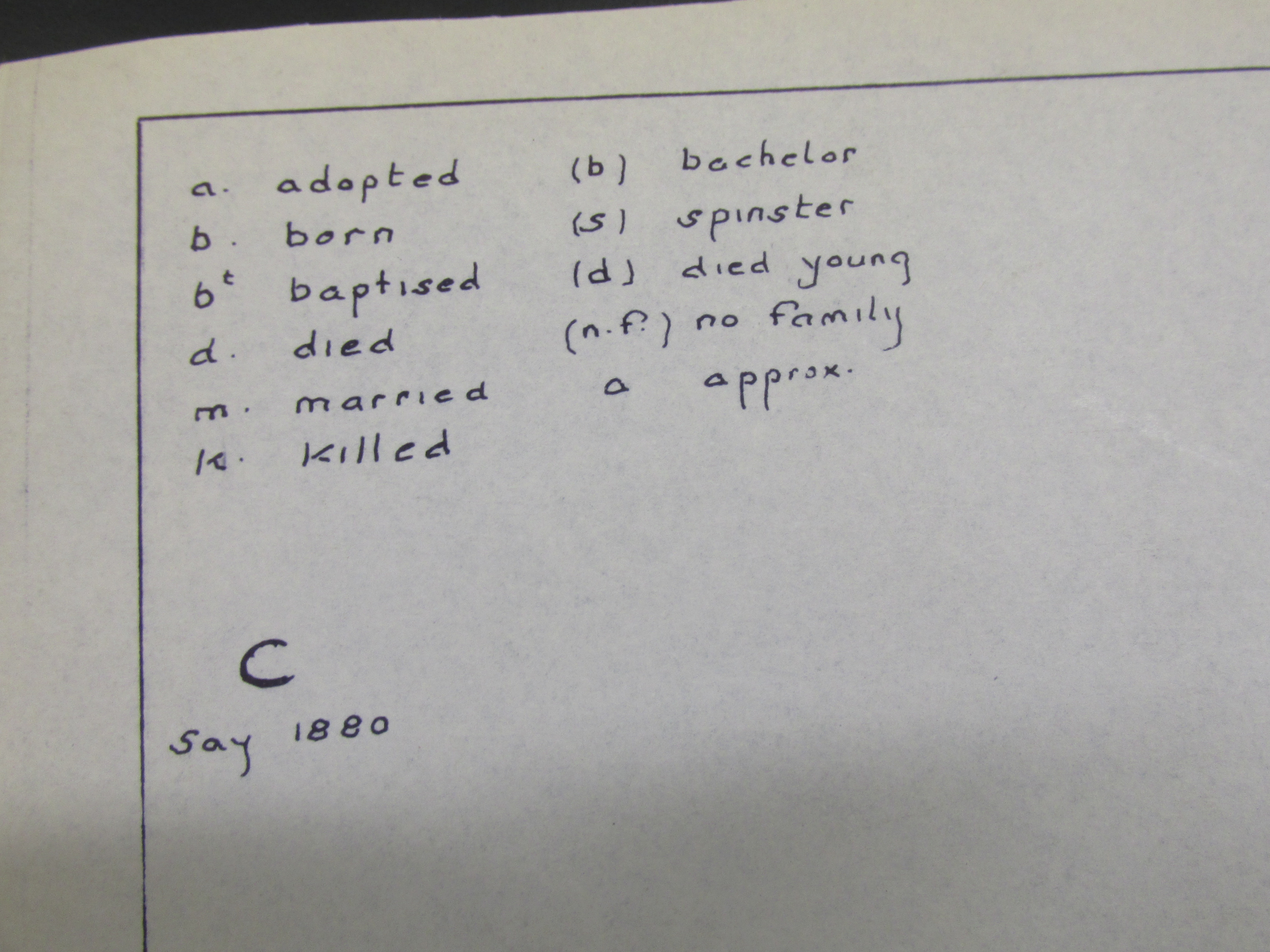
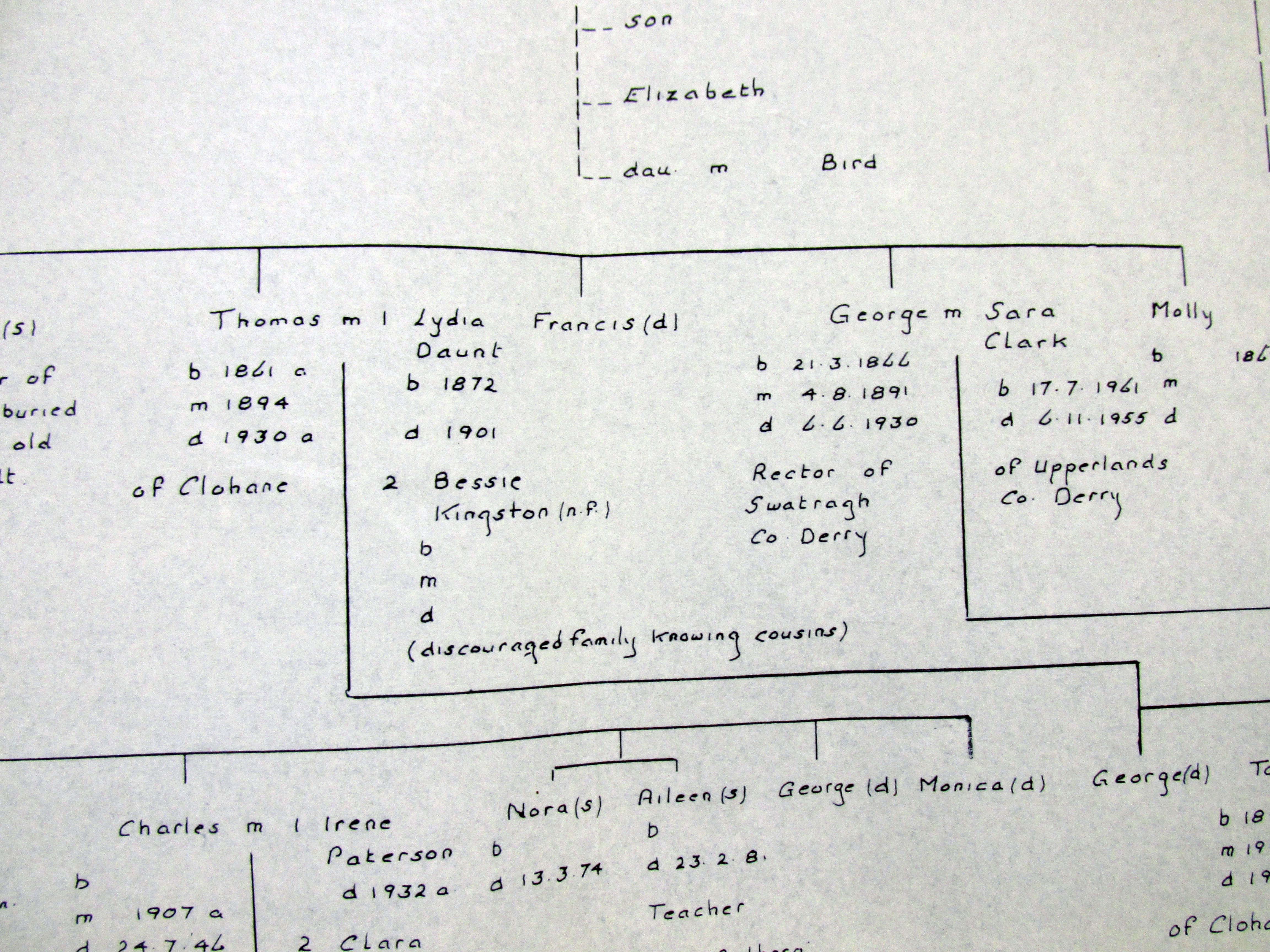
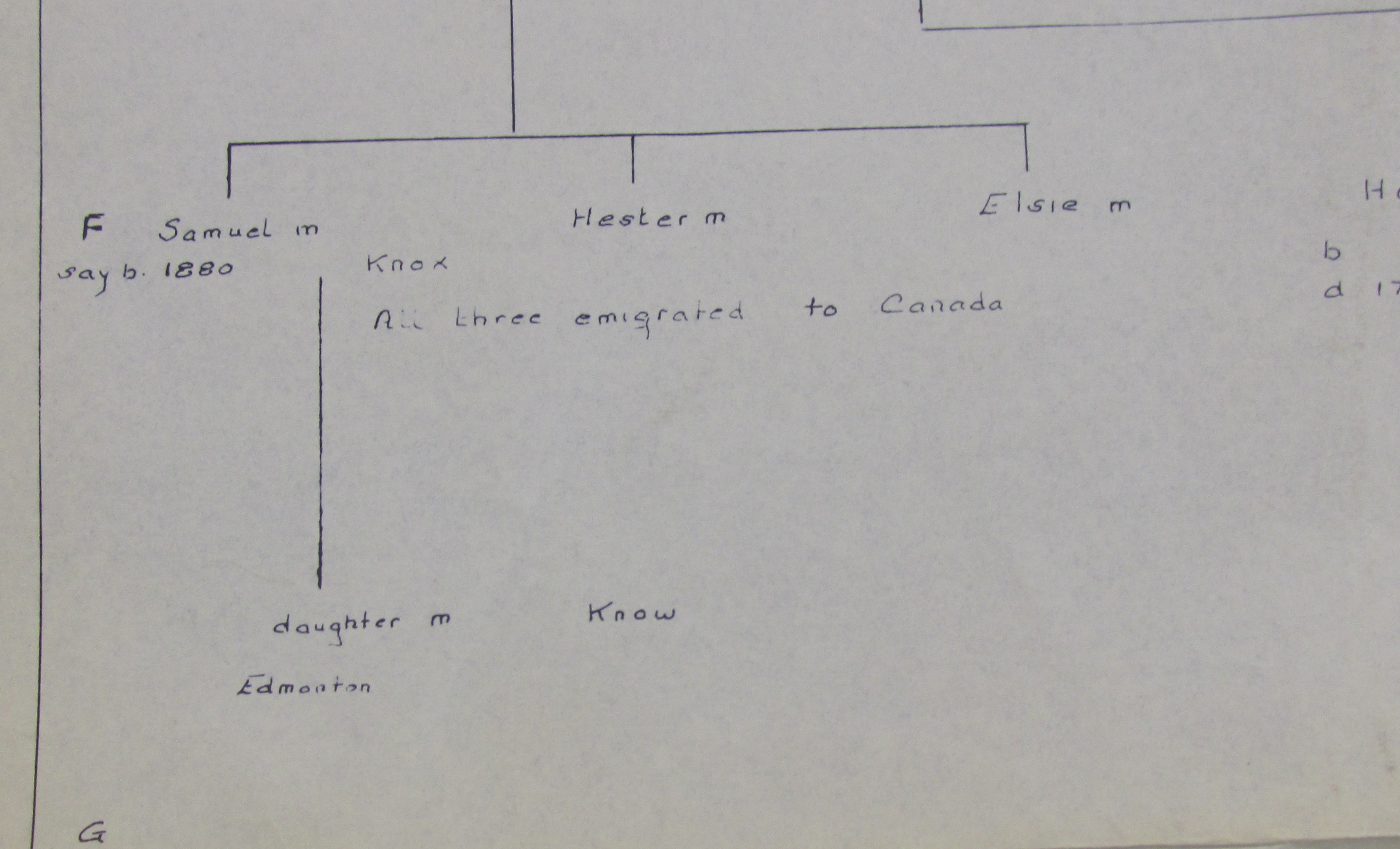
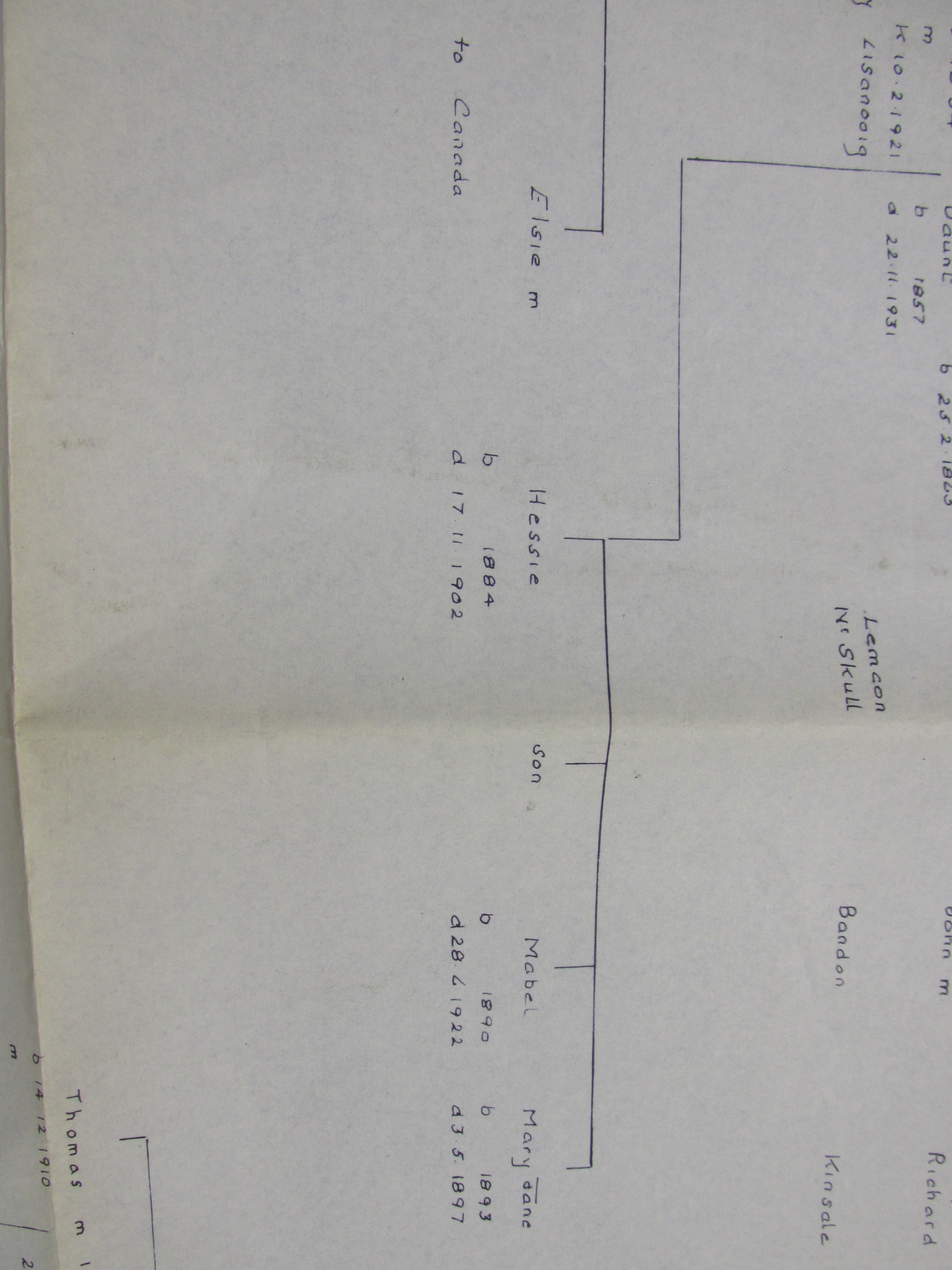
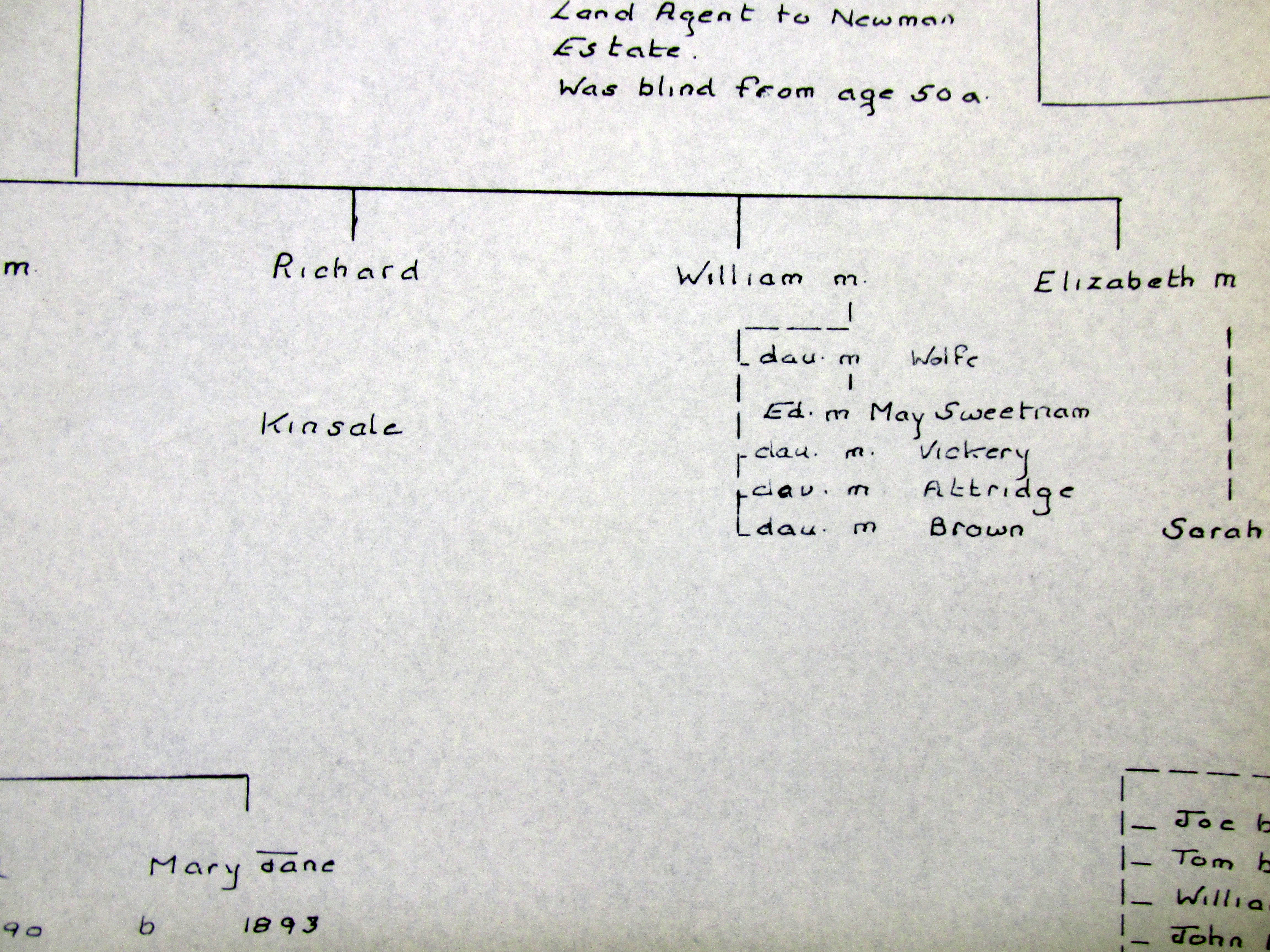
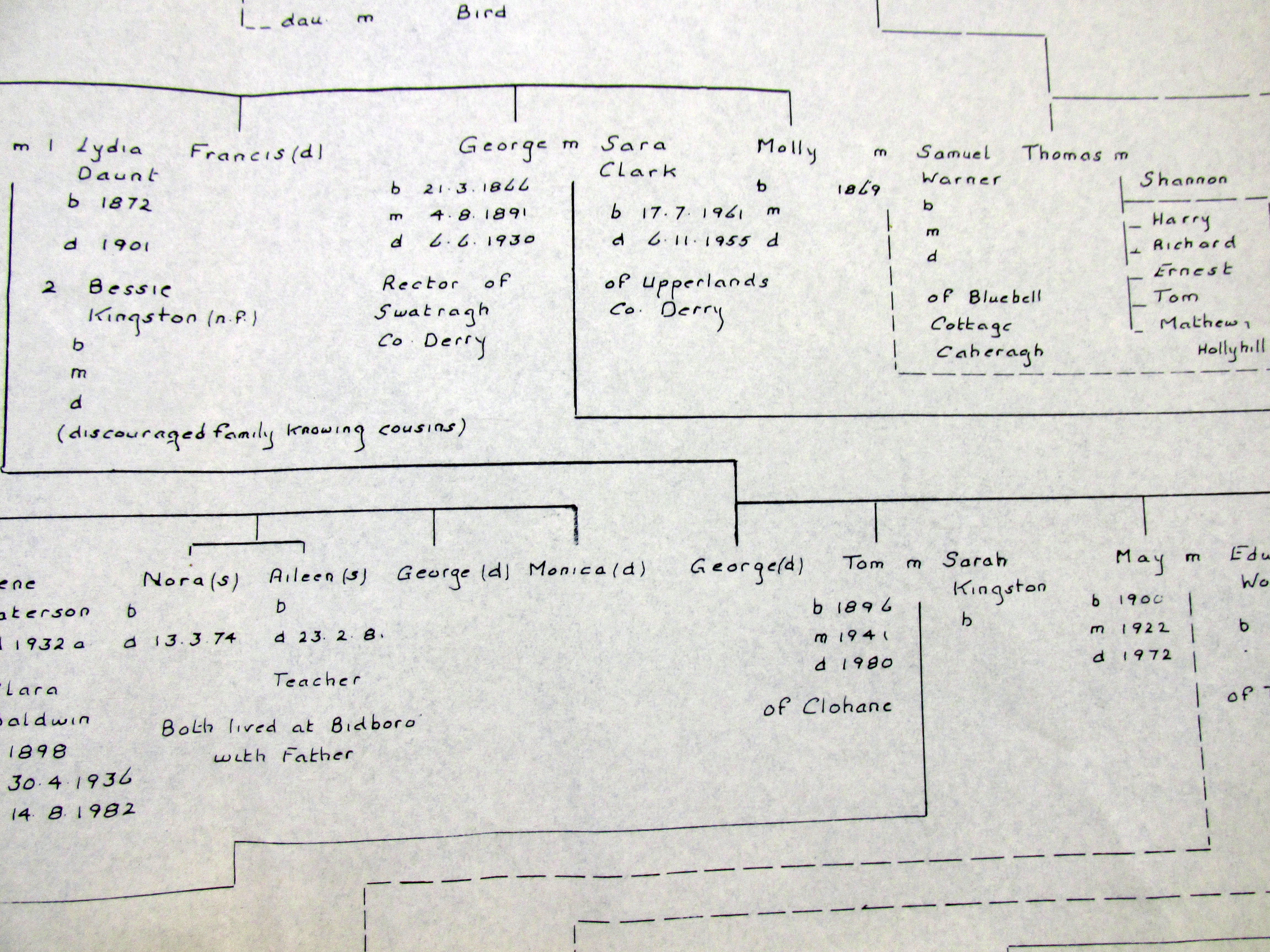
Genealogy of Sweetnam family of Clehane/Cloghane, Caheragh, West Cork, arising from Marriage 1812 of Matthew Sweetnam (Murrahin) to Elizabeth Connell with descendants, USA, Canada, Australia, England, Northern Ireland compiled 1952 revised 1988. Sweetnams of Kinsale 1676.
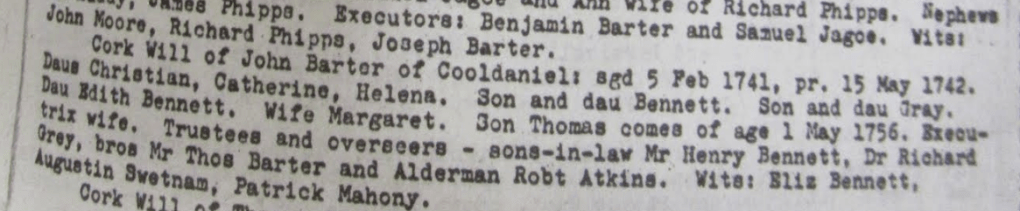
1741 Augustin Sweetnam witness to will of John Barter Cooldan, Kilmichael.
Matthew James Sweetnam (1845-1916), 1893, Leamcon House, Schull, listed 1895, 1913. Farmer, wife Frances Eyre Becher (1843-1920) probably of Landlord family she C of I, he Methodist. Many of Sweetnams agents to Hull and Becher Estate. Both buried Altar, (Teampol na mBocht). Possible brother in law Hungerford. Extended Sweetnam family agents to Becher Estate.
1822, 1830
John Sweetnam
Seneschal Aughadown and Schull Manors,
Daughter Frances Gertude married William Clerke (1766-1820) possibly Skibbereen Mills. 1824. Letter from John Sweetman, seneschal of manor court of Bridgestown, Skibbereen, County Cork, to Chief Secretary’s Office, Dublin Castle, acknowledging directive for removal of four prisoners to the county gaol and communicating discomfort at prospect of releasing two debtors for fear of being sued for debts owed by the men; includes memorial from Swicham to Henry Goulburn, Chief Secretary, Dublin Castle, requesting clarification on application of a recent prison act to manor courts, especially as it relates to prisoners ‘confined for any sum not Exceeding ten pounds’, with response to same from John Sealy Townsend, KC and legal advisor to Chief Secretary’s Office, Dublin Castle.
Died February 1824 at Mardyke House, Skibbereen. Ffolliott
1823. Letter from William Hull, Lemcon, Skibbereen, County Cork, to Henry Goulburn, Chief Secretary, Dublin Castle, referring to his former letter, emphasising the need to provide a simpler and less expensive means for the lower classes to recover small debts owed to them. Encloses, in support of his claim, a document entitled ‘ “a Manor Court Decree” taken by Richard Connell against Edward Butler, both of Kealfada, County Cork, demonstrating that the legal costs far outstrip the amount of the original debt; decree originally signed by John Sweetnam, seneschal [of Aghadown and Schull Manors], 4 October 1823.
A assigned to C & D as trustees, lands of Dromadua & Coolnagarrane & tythes of Abbeystrowery, and assigned his home at Mardyke to his son B, subject to payment of an annuity to his father.
Prior to his marriage to B, A assigned to C&D, a one thrid share of the lands of Callasontra & Goleen.
MS
MS
Date registered
7 May 1832
Date abstract added
20180403
Type of deed
Date of current deed
8 Dec 1879
Vol
Page
Memorial
Post Nuptial Settlement
Date of earlier deed
187956
261
187956261
No
Role(s) in earlier deed(s)
Role in current deed(s)
Family name
Forename
Place
Occ or title
A
A
P1
VICKERY
John
of
Ballycomane, Co Cork
Senior; farmer
A
B
P2
VICKERY
John
of
Ballycomane, Co Cork
Junior; farmer; eldest son of John Vickery [A]
A
C
P3
SWEETNAM
Thomas
of
Clohane, Co Cork
farmer
D
P3
SULLIVAN
James
of
Rooska, Co Cork
farmer
E
mentioned
SULLIVAN
Mary
of
Rooska, Co Cork, in 1877
Spinster in 1877
F
mentioned
VICKERY
George
of
son of John Vickery Snr [A]
G
WD WM
WRIGHT
Thomas Richard
of
Clonakilty, Co Cork
Solicitor
A
H
WD WM
KENNEDY
Michael David
of
Clonakilty, Co Cork
Assistant to Messers Thos R Wright
A
Abstract
A assigned to B, 140 acres of Ballycomane, confirming an 1877 agreement to assign same lands to C & D, in trust, subject to a provision for F if he should freach age 24.