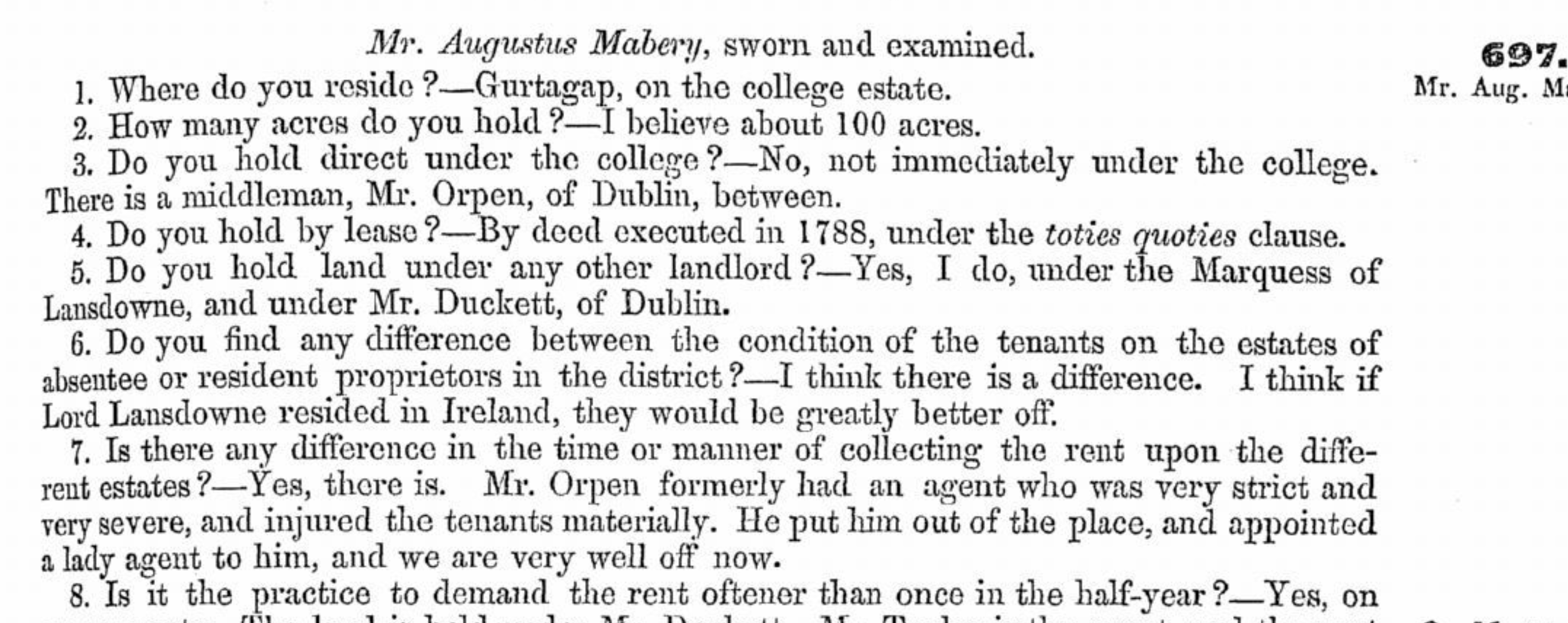
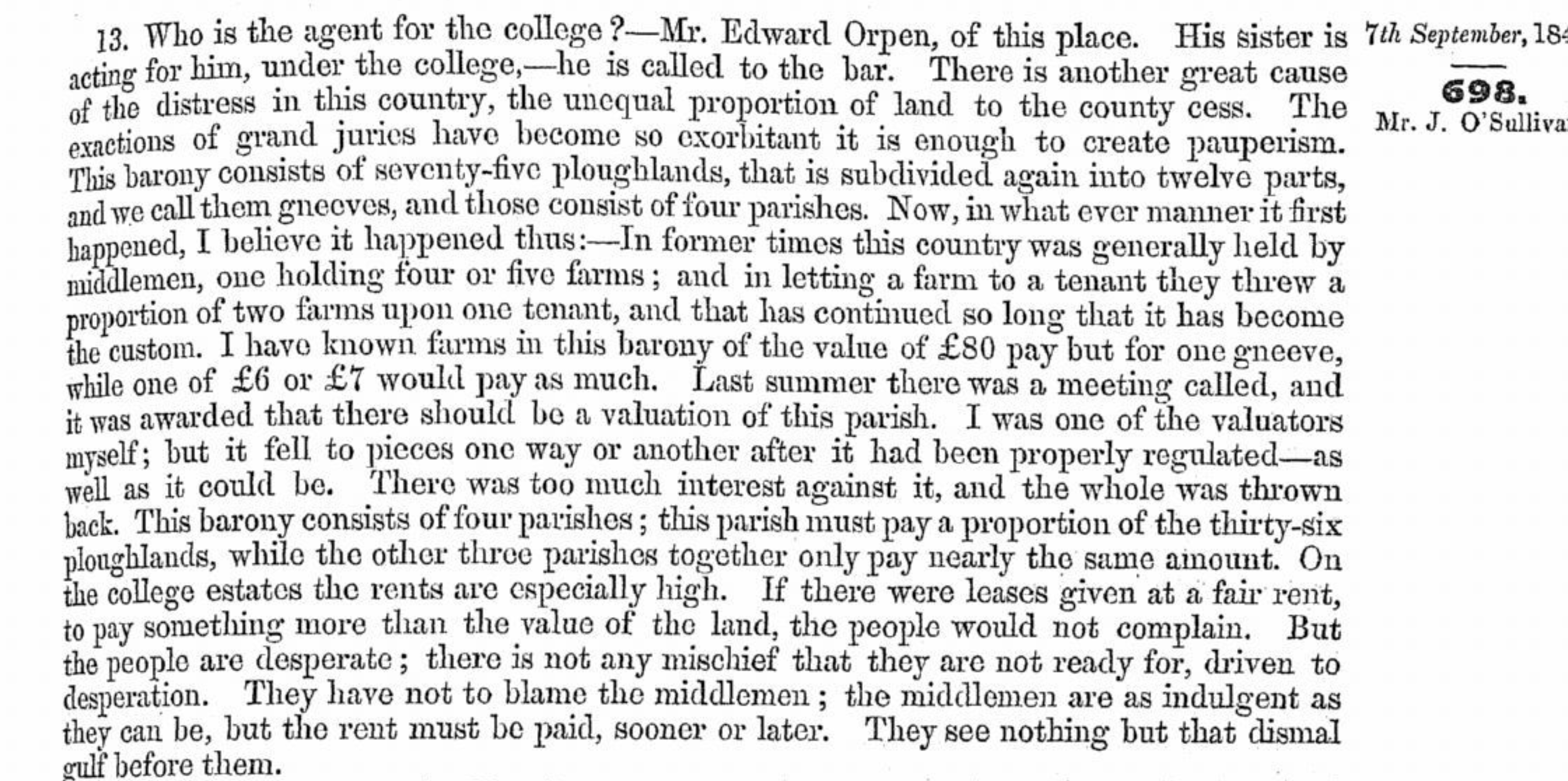
Re the above first time I have seen a reference to a female land agent. The Orpens here are the system of the DublinLegal family and artist Willaim Orpen. Related by marriage to Hutchinsons of Durrus, family of Eugene O’Sullivan, Ballygahadown, Drimoleague/Caheragh and Swanton of Ballydehob. During the minority of Artur Hutchinson of Durrus landlords one of the Orphans acted as his trustee.
William Orpen the artist spent part of his honeymoon about 1905 in Kealkil outside Bantry where a relation was a dispensary doctor and a number of paintings of the area recently surfaced.
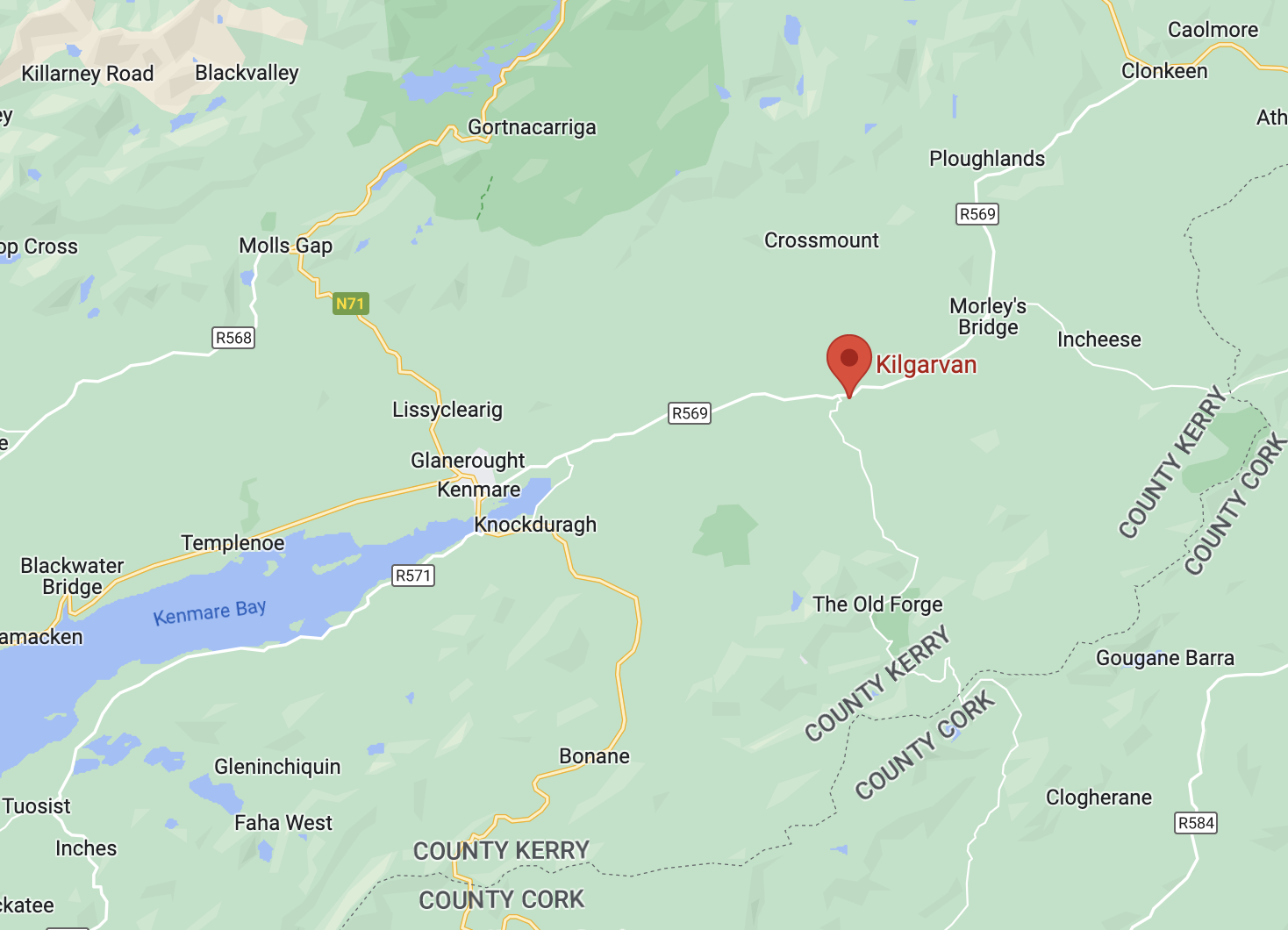
Burke describes the Orpen family as claiming great antiquity. They settled in Ireland after the Cromwellian wars and married into some of the other influential families in county Kerry including the Herberts. Richard Orpen was agent for Sir William Petty on his county Kerry estates. Over 4000 acres of the estate of Richard Becher Opren in the barony of Glanarought were offered for sale in the Encumbered Estates Court in November 1852. The petitioner was John B. Warren, who later acquired parts of the Orpen lands in this area. Over 10,000 acres of the estate of Adrian Taylor, in which members of the Orpen and Warren families had an interest, were offered for sale in the Encumbered Estates Court in May 1855. Richard J.T. Orpen was one of the principal lessors in the parishes of Kenmare and Kilgravan at the time of Griffith’s Valuation. In the 1870s the estate of the late Sir Richard Orpen amounted to over 12,000 acres in county Kerry as well as 300 acres in county Cork. The representatives of F.H. Orpen were the proprietors of 800 acres in county Kerry at the same time.
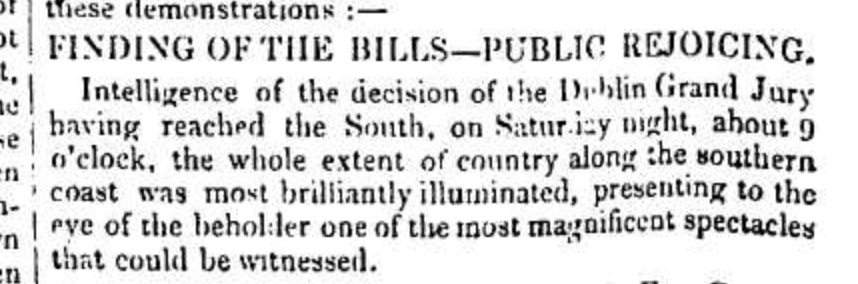
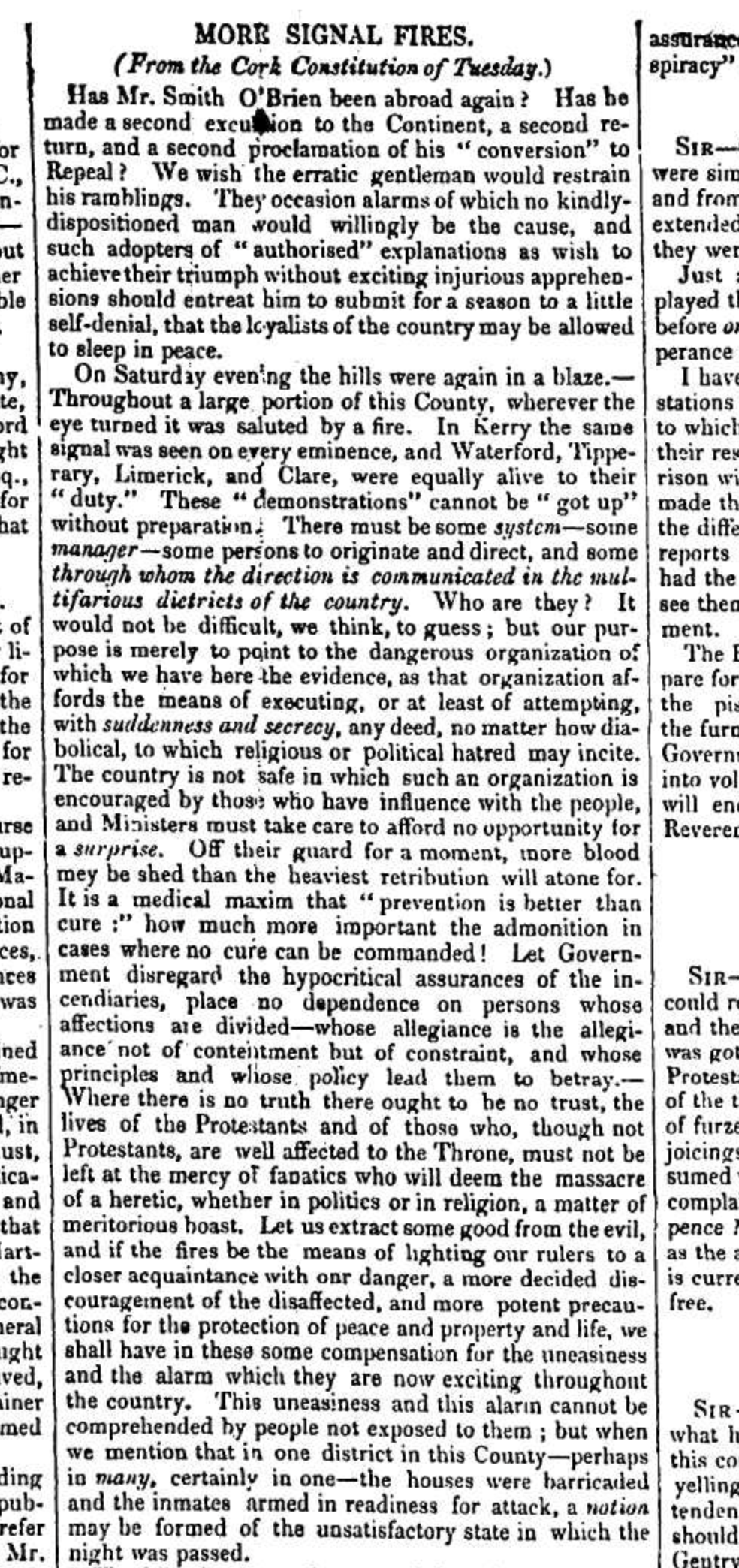
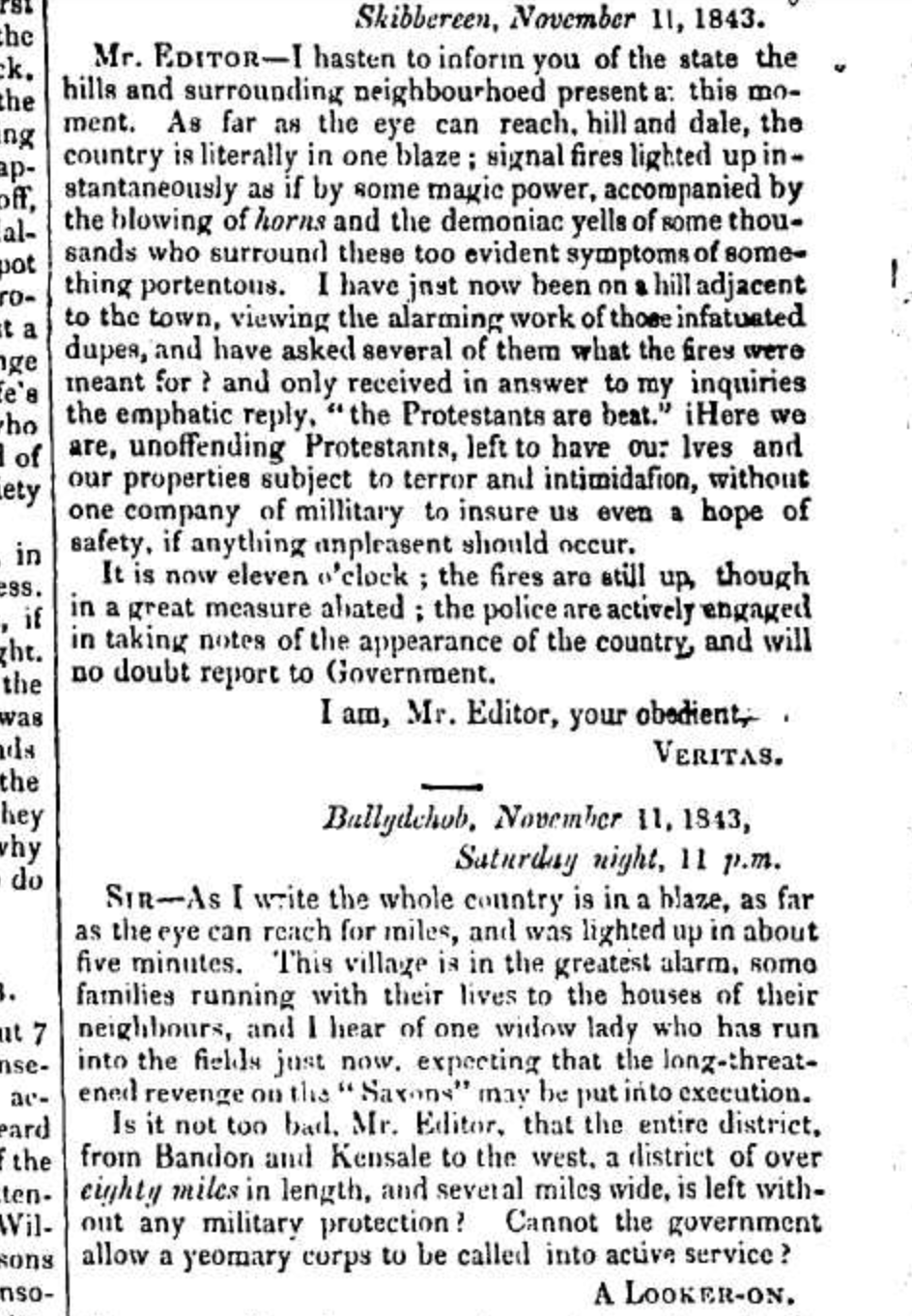
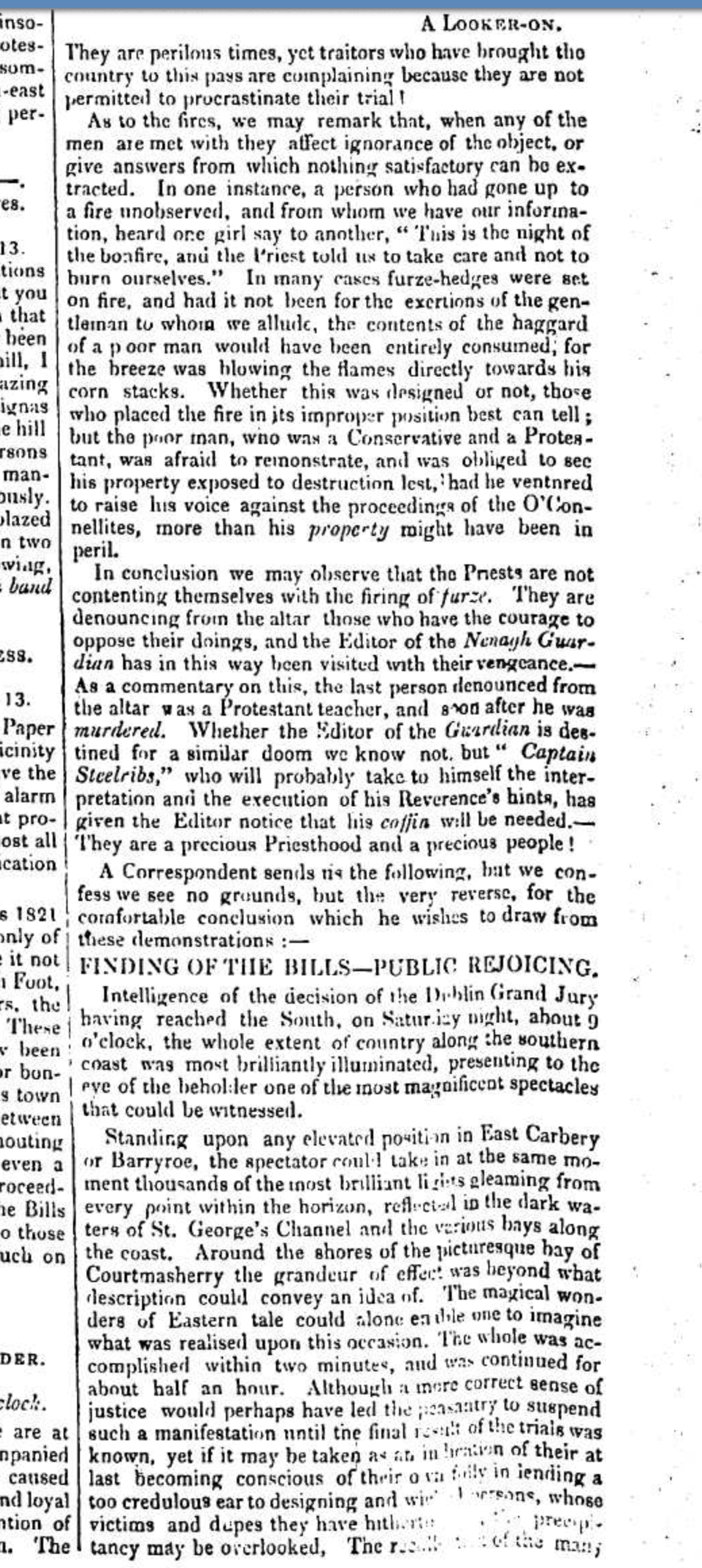
Yet if the Repeal campaign was not to collapse completely under the weight of government prosecutions, it needed to adapt to changed circumstances. For O’Connell himself, perhaps the most successful Irish barrister of his generation, the courtroom was a familiar stage on which to perform. The long-drawn-out drama of the state trial process, from the grand jury’s finding of the indictment in November 1843, through the jury selection and trial proceedings of January and February 1844, to the sentence of a year’s imprisonment on 30 May and the quashing of the convictions on appeal in September, attracted intense public interest. The court galleries and approaches to the Four Courts in Dublin were frequently thronged; detailed accounts appeared in the press and were serialised as pamphlets.
On the 1st July the Lancaster Gazette carried a report on the Monster Meeting addressed by Daniel O’Connell. Quoting the ‘Cork Examiner ‘, it repeated the reputed number of attendees of 500,000.
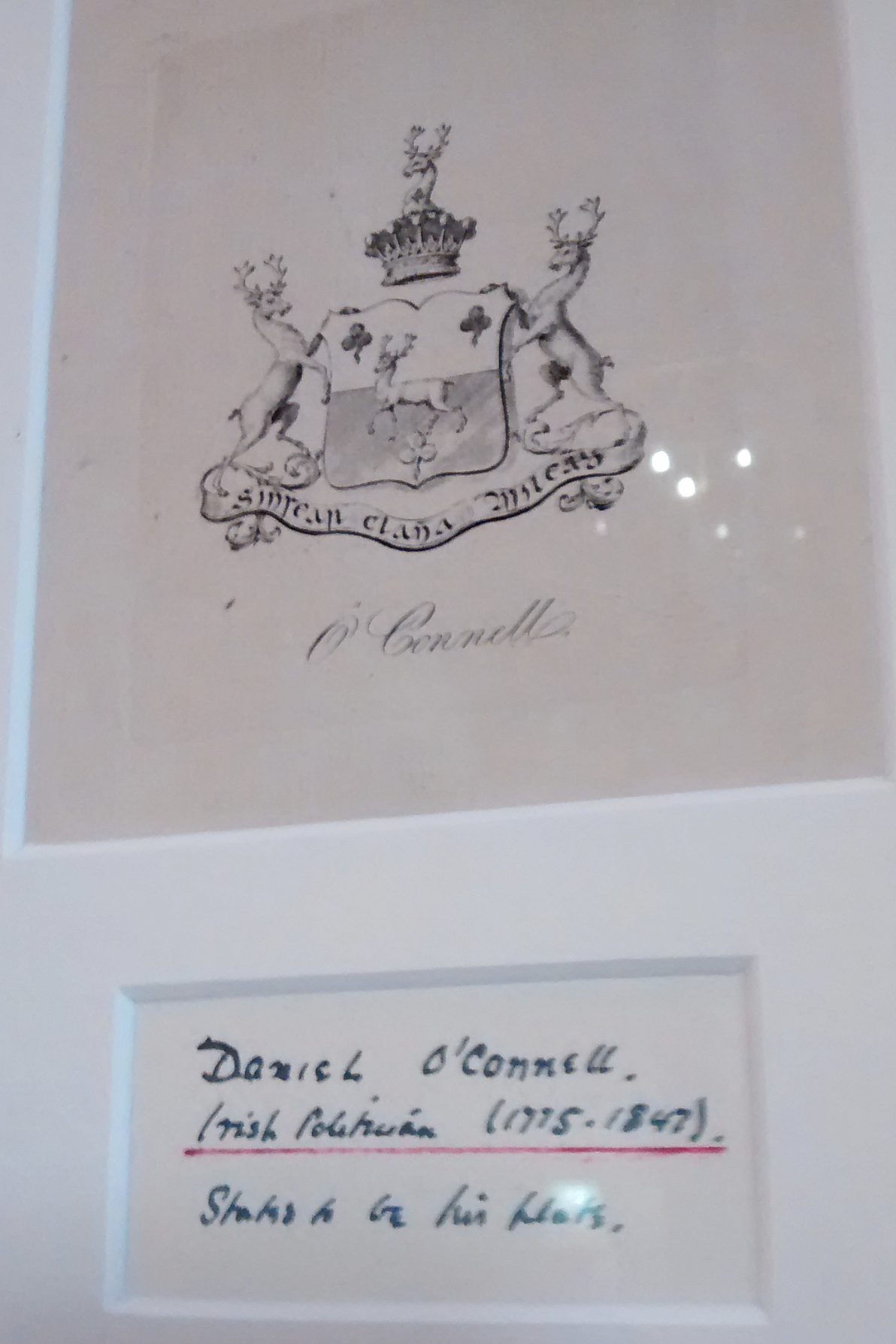
Daniel O”Connell arrived heading four stage coaches and a battalion of bands. Parishes from all over West Cork were represented by crowds headed by the respective clergy of each parish.
1833 Survey of Townlands Parish of Kilcatherine addressed to the Rev. Somers Payne by Agent Patrick O’Sullivan, Millcove, Castletownbere, p.1-4
Berehaven Mining Company, including projected trials at Coolagh 1869, p.4-6
Patrick O’Sullivan, Millcove, p. 6-25
..
1833 Survey of Townlands Parish of Kilcatherine addressed to the Rev. Somers Payne by Agent Patrick O’Sullivan, Millcove, Castletownbere
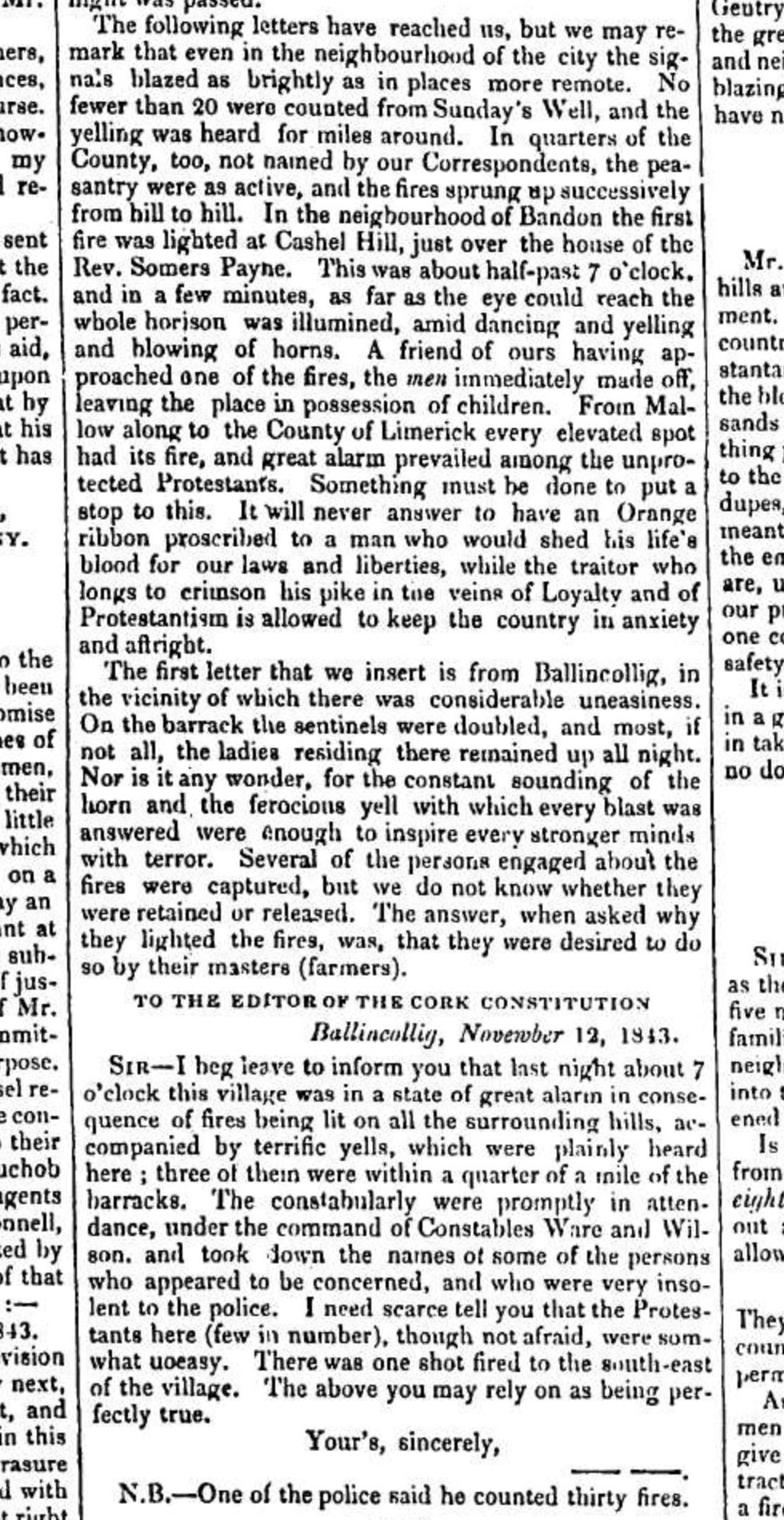
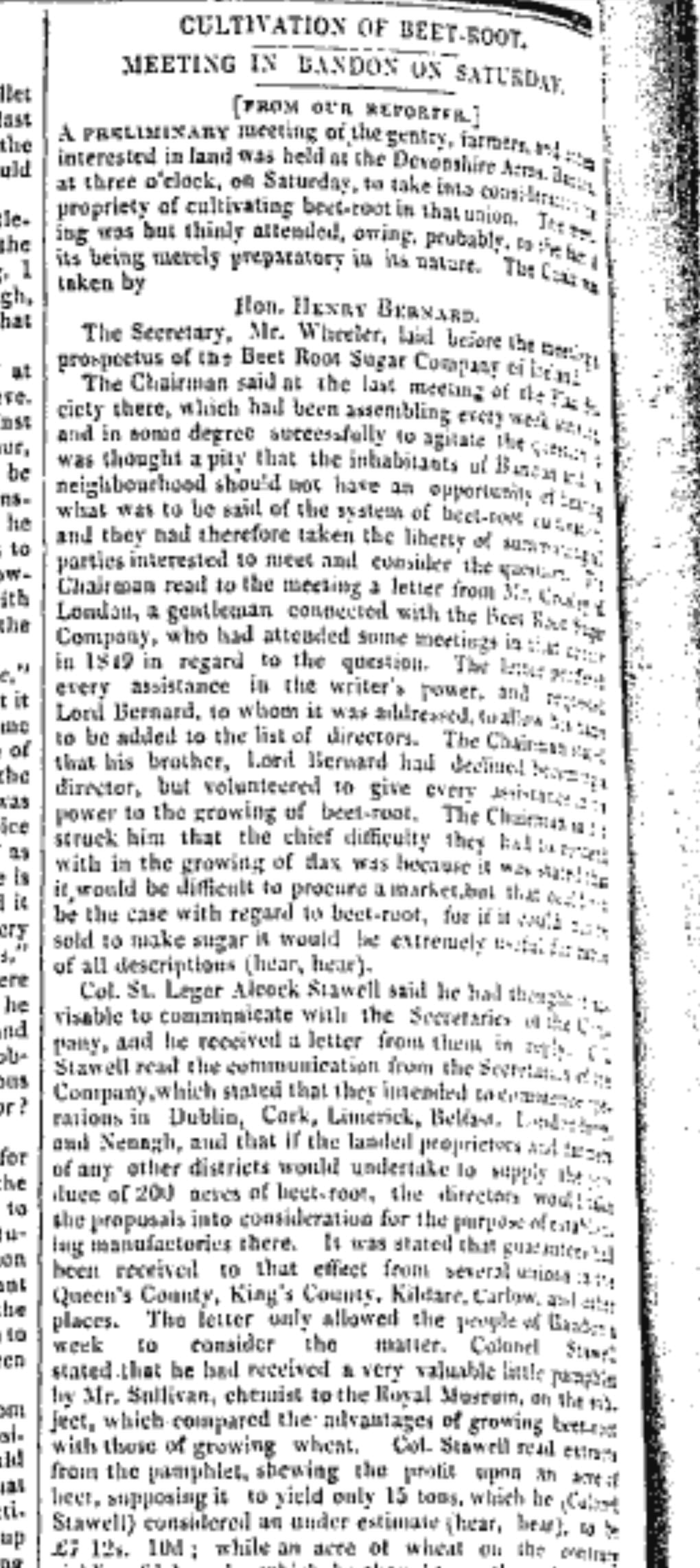
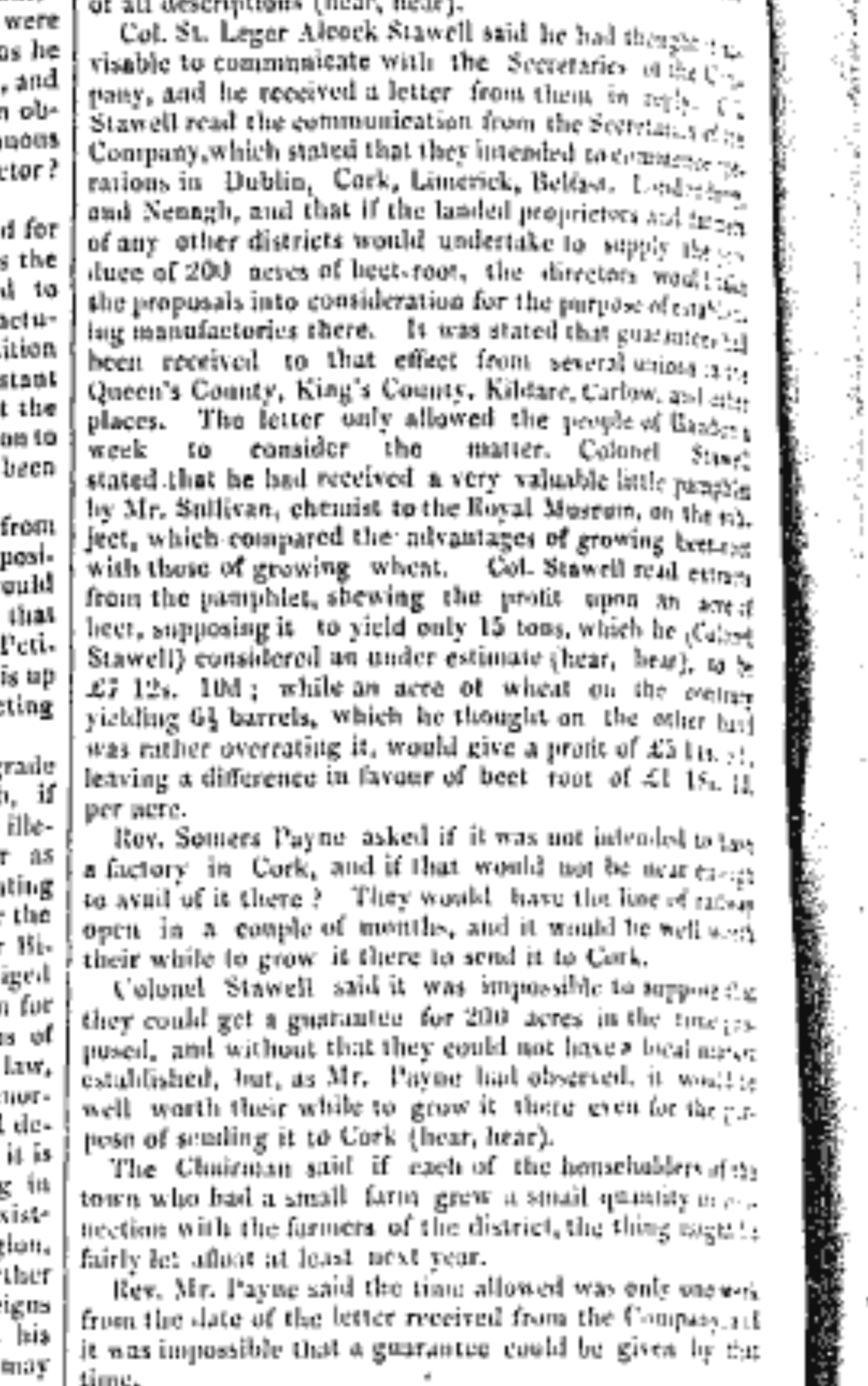
Rev. Somers Payne (1785-1857), TCD, son of James, physician, Pre 1815, 1823, Ardagh as Rev. S.H. Payne, Upton, Grand Master Orange Order, Co. Cork. Ordained 1810. Sons Rev. Henry, James, John Warren daughter Mary married Nash. Voted for Hutchinson 1826 election. Bandon Brunswick Constitutional Club 1828, sitting Bantry and Bandon, 1835, Provost of Bandon. Agent to Lord Berehaven since 1820 son Augustus agent to Lord Bantry. 1828 Bandon Quarter Sessions. Following a large Protestant meeting 1834 at Castlebenard nominated to prepare a petition to the British King and Parliament with the Rev. Somers Payne, Councillor Mannix, Lords Berehaven and Bandon. Parliamentary Commission sitting Bantry 1845 showed sympathy for labourers and cottiers. The Rev. Somers Payne’s mother was sister of John and Henry Shears, Barristers in the City of Cork, who perished on the scaffold for alleged ‘high treason’ at the opening of the ‘present century’. 1835 Subscriber Lewis Topographical Dictionary of Ireland 1837. Promoter Bandon to Bantry Railway 1845. A grandson mentioned in the will of Eliza Gethin, Cork, 1801 property for him held in trust by Dr. Boyle Coughlan and Gilbert Henry Fleming, attorney, Dublin. His son Augustus died 1844 leaving £450 he was executor but in 1858 as he was dead his son’s estate was administered by James Henry Payne, Beechmount, Co. Cork. Died in Bantry of famine fever around the same time Augustus Warren Payne aged 27 his brother a year younger the Rev. Percy Gethin Payne died of fever at his father’s house. His Upton property became a Reformatory School under the Rosminian Fathers in 1860. Land record, 1870, 653 acres. Sir Augustus Louis Carre Warren succeeded to the baronetcy in 1811. He and his wife Mary had two sons and two daughters. They were Augustus, born on 17th May 1791 and John Borlase, born on the 13th September 1800. The daughters were Esther and Charlotte. Esther married James Colthurst of Dripsey Castle on the 30th July 1808, which linked the family by marriage into two of the most powerful families in Cork: the Bernard’s and the Colthurst. Esther died on the 22nd July 1872. Charlotte married Reverend Somers H. Payne of Upton House.[68] Sir Augustus Louis Carre Warren died on the 30th January 1821. Listed 1856 as Rev. Somers H. Payne as having 21,050 trees planted in Brinny. The Brinny estate was previously lived in by Rev. William Lewis Beauford. Surety for Patrick O’Sullivan, Collector of Bantry Public Cess (dismissed amid allegations of fraud c 1842), with Daniel F. Leahy. 1835 commenting on good conduct of the military in 1835 elections. Son of James Payne, physician. Nephew of executed United Irishmen, Shears Brothers. Head of Orange Order in Cork felt Order a safety valve to reduce drunkenness in lower orders of Protestants. Land agent to Lord Bantry in evidence to pool Law enquiry somewhat surprisingly sympathetic to labourers and cottiers. Member Provisional Committee projected Bandon to Bantry Railway 1845. Major political operator. Praised for his management of Warren Estate, Kilmurray.
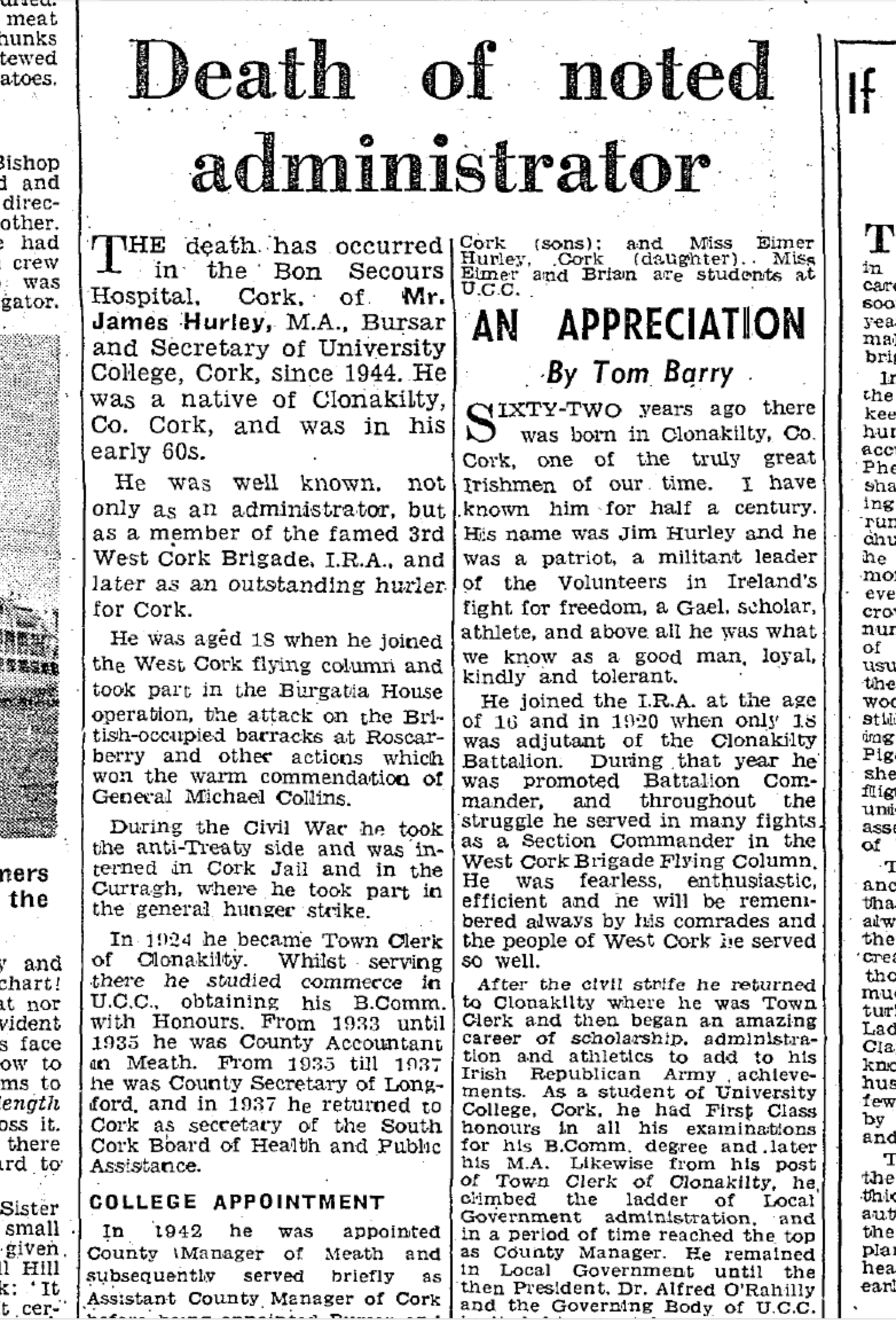
Members of the Second Battalion of the West Cork Brigade under the leadership of Jim Hurley attacked a patrol of six RIC men when they were ‘on mess duty’ within about a hundred yards of the RIC barracks at Rosscarbery. See FJ, 2 March 1921; Abbott (2000), 204-5. A local newspaper reported that on 28 February 1921 Constable Brock ‘was walking past a butcher’s shop in the centre of Rosscarbery [when] he was fired at by civilians, said to have been in hiding close by, and dangerously wounded in the stomach’. He died early the following morning (1 March). Brock had taken ‘a prominent part in the recent sensational battle at Burgatia [House]’, where soldiers and police had almost trapped an IRA party planning an attack on the RIC barracks in Rosscarbery. See CCE, 5 March 1921. Brock had seven months of service with the RIC; he had previously been a soldier and a labourer.
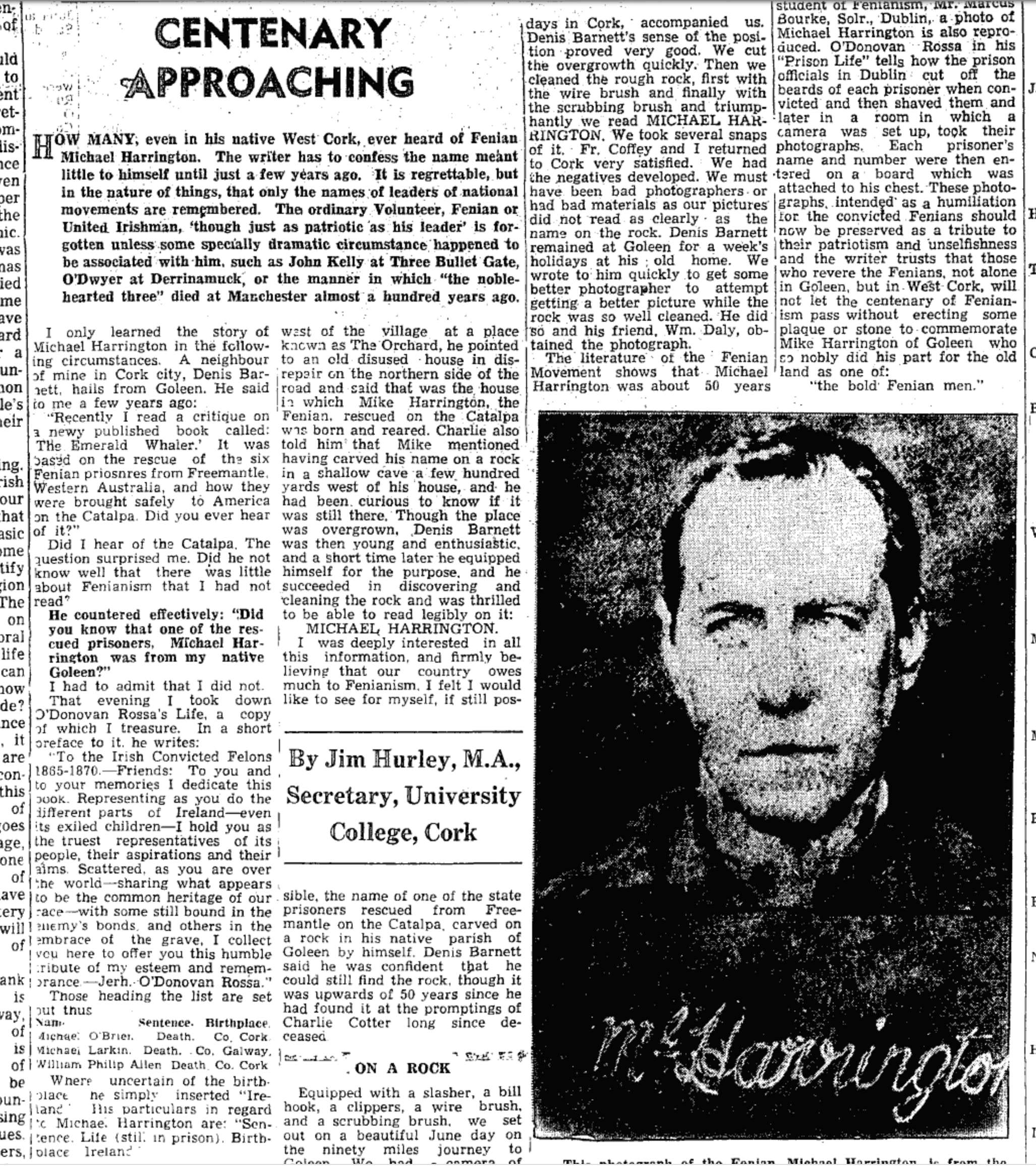
im Hurley was born in Clonakilty, County Cork on 26 February 1902. In his youth, he became involved in the Irish struggle for independence. He played a prominent role in the War of Independence as leader of a flying column in the Third Cork Brigade. Following the publication of the Anglo-Irish Treaty, Hurley took the republican side in the subsequent Civil War. He was later interred in Cork and the Curragh but was released in 1924. Following this, Hurley returned to his native Clonakilty where he became town clerk and shortly afterwards, he enrolled as a night student at University College Cork. It was here that his sporting career began in earnest as he won a Fitzgibbon Cup medal with UCC’s hurlers.
Following his retirement from inter-county hurling and football, Hurley had a distinguished career as a public servant. In 1932, he graduated from UCC with a BComm degree and was appointed County Accountant with Meath County Council. He later moved to Longford where he worked as County Secretary. In 1937, Hurley returned to Cork and studied for an Arts degree in UCC. He graduated in 1942 and returned to Meath as County Manager. In 1944, Hurley returned to Cork and was appointed Secretary and Bursar of UCC, a position he held until his death.
His return to his native county coincided with a great era for Clonakilty’s and for Cork’s footballers. Hurley was a selector on the Cork football team that won the All-Ireland in 1945 and he was largely responsible for Jack Lynch’s selection on that team. He was also involved as a selector when Cork reached the All-Ireland finals of 1956 and 1957, and he was a selector on the Cork hurling team in the early 1960s.
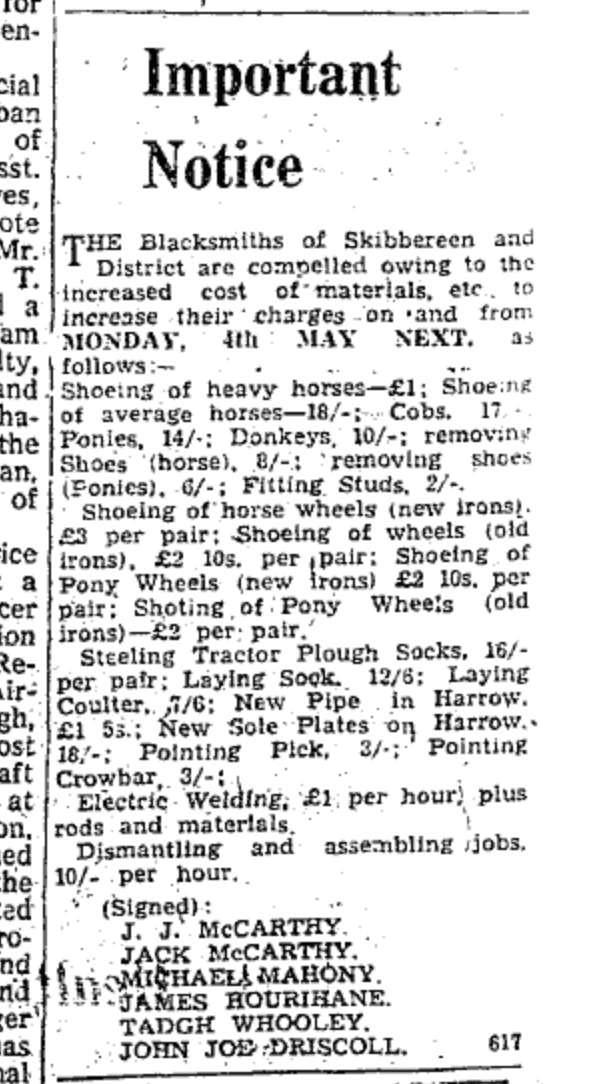
I spent many happy hours with the blacksmiths in the lane near my home in Skibbereen.
Jack McCarthy was particularly welcoming and involved me in simple tasks which made me feel important. Cranking the bellows was really exciting and handing him tools, first in a confused state when asked for and later handing each tool before any request.
I still love to watch people with skill in their hands at work.
Note how welding has crept in
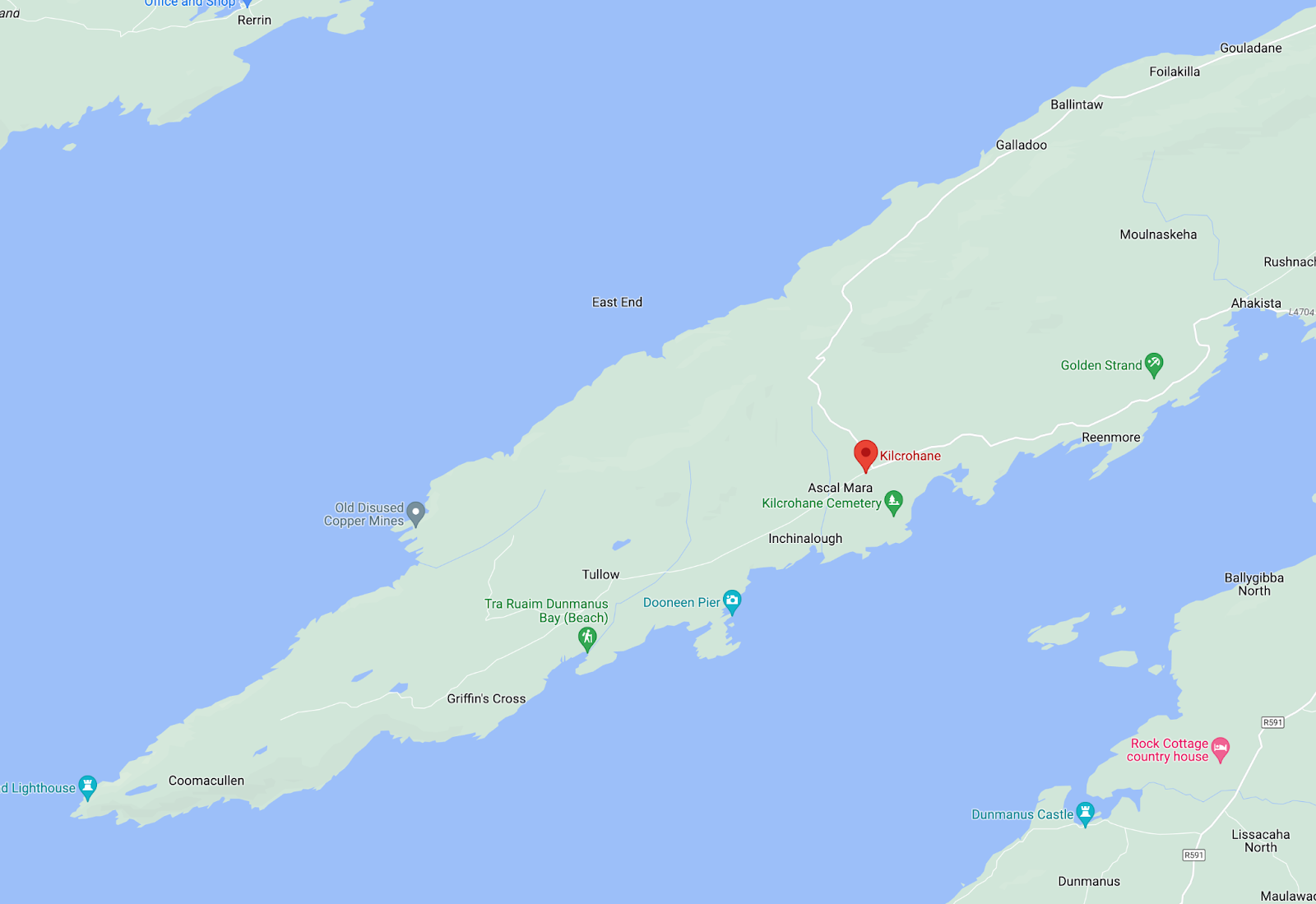
Blacksmiths Durrus, Kilcrohane, Schull and Tumbarumba, New South Wales:
Elihu Burritt (1810-1879), ‘The Learned Blacksmith’, of Boston, USA, Visit to Skibbereen, West Cork, 1847 to ‘Fathom The Cause of Extent and Cure of Ireland’s Misery, his Pamphlet ‘Four Months in Skibbereen’ raised $100,000 for Famine Relief and his Project the Jamestown Relief Effort.
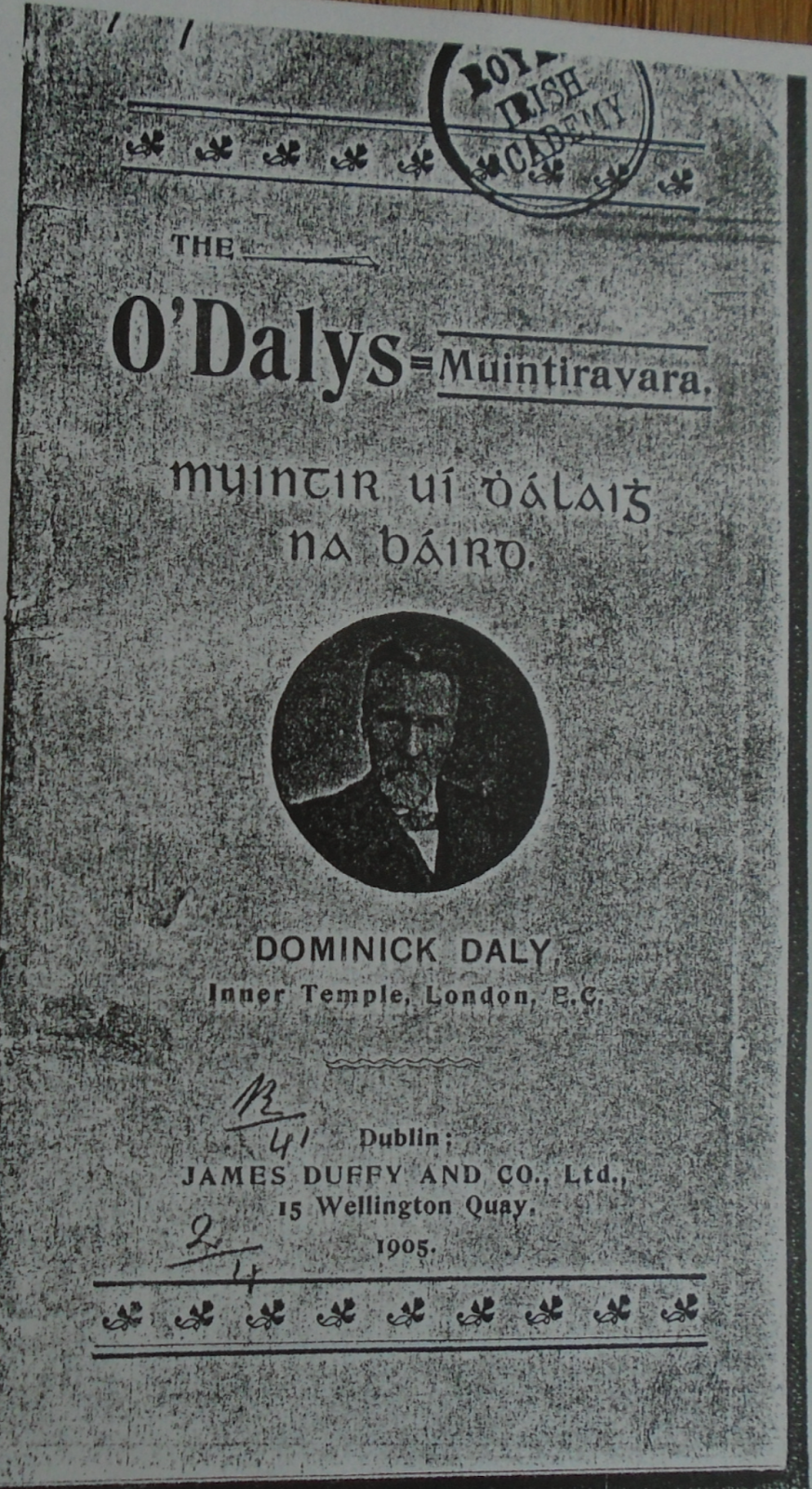
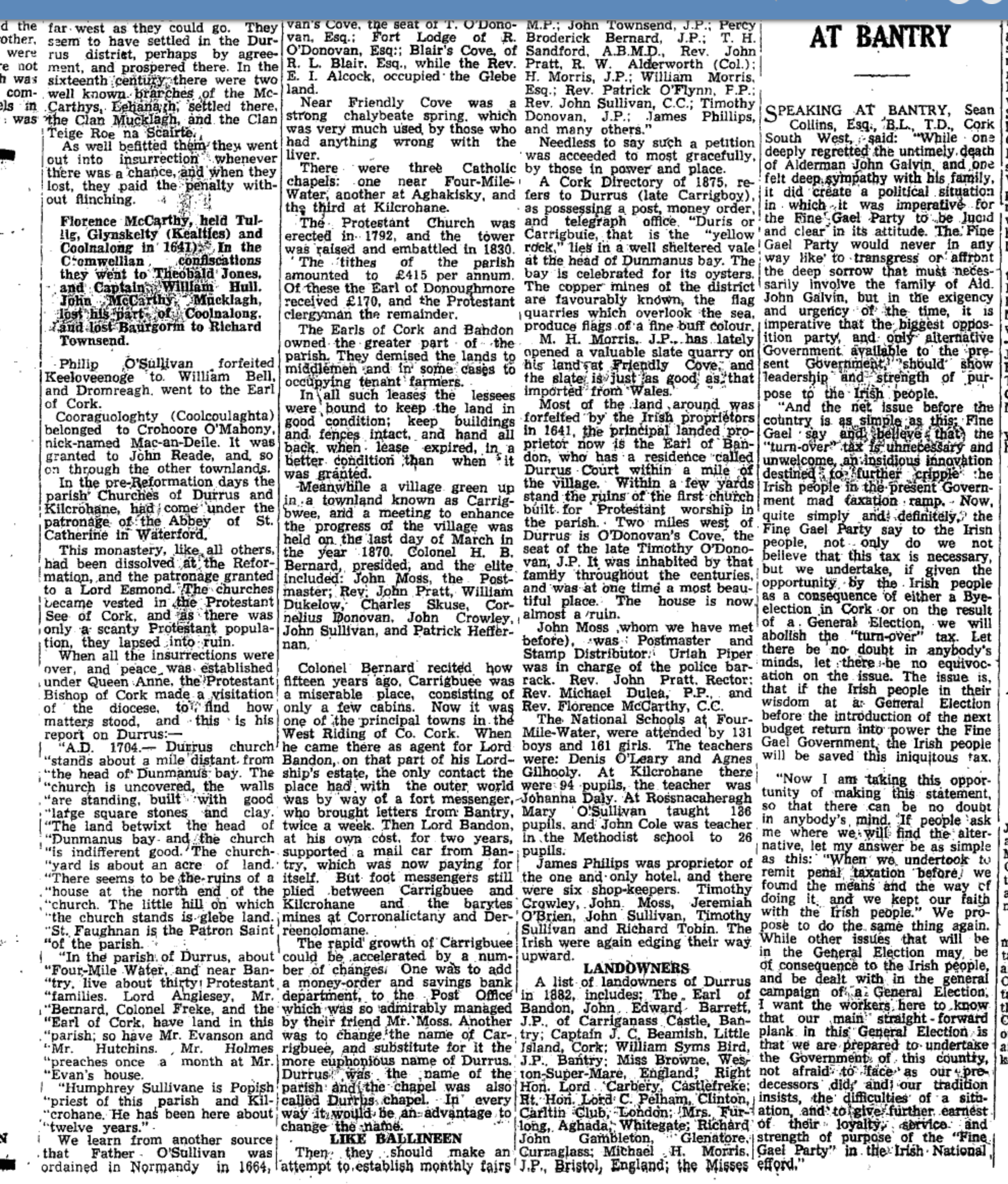
1905 The O’Dalys of Muinteiravara, Kilcrohane, West Cork, by Dominick Daly, Barrister of The Inner Temple London.
Background, p. 1
1905 History, p.2-41
Probate, Kings Inns Entrym, p. 42
Dalys Distillery, Cork, p. 42-44
West Cork Daly clusters, p. 44
Marriage Licence Bonds, p. 44
TCD admission, p. 46
Daly Cork Magistrates, p. 47
Memorials of Daly Deeds, p. 47
In memory of Vincent Daly, businessman and genealogist of the O’Daly family of Dromnea, Kilcrohane. Vincent spent an enormous amount of time tracking worldwide their descendants and comparing their DNA. He had got back as far as 1740.
In relation to Dominick Daly’s history his legal training made him careful where possible to rely on verifiable and primary documentary sources. A lot of this will come as a surprise to family members. Such as the descent of the O’Dalys from Niall of the Nine Hostages as do quite a number of West Cork families such as the Crowleys, Gallaghers, Hegartys, O’Donnells, O’Neills.
He was descended from James Daly who died in 1776 in Carrigtwohill a trader and landowner and was locally regarded as head of the Sept and claimed ownership of the family tomb in Kilcrohane he in turn was the grandson of Cornelius Cam O’Daly, Chieftain of the Sept in the 17th century. HIs son James established the successful Daly Distillery in Cork about 1820.
He put it himself aptly ‘These fragmentary records and memoirs will not survive my lifetime if I did not make an effort to preserve them for posterity. Hence this production of 50 copies.


















 West Cork History