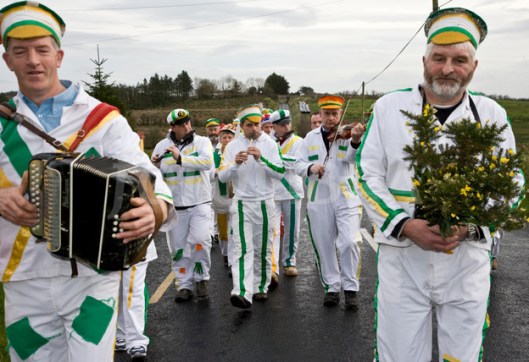
Wren Boys An Irish Christmas Tradition


The Silver Voice's avatarA SILVER VOICE FROM IRELAND

A Troupe of Wren Boys in Ireland (Image Creative Commons) A Troupe of Wren Boys in Ireland (Image Creative Commons)

When I first came to live in Limerick some 30 years ago, I was totally astonished to have dozens of musicians and dancers arriving into my house throughout  St Stephen’s Day, 26 December. From about 10 am onwards, they arrived. The earliest were  small groups of local children with their musical instruments, often as young as 5 or 6 years of age. The great cultural network of Comhaltas Ceoltóirí Éireann, active across much of Ireland, ensures that there are musicians in abundance of all ages to take part in events. In parts of Ireland, St Stephen’s Day,or Lá Fhéile Stiofán in Irish, is known as ‘Lá an Dreoilín’, meaning the Day of the Wren or Wren’s Day. Announcing their arrival by loudly playing the bodhran (an Irish drum) as they make their way towards the door, and with barely enough time to shut the startled…

View original post 695 more words
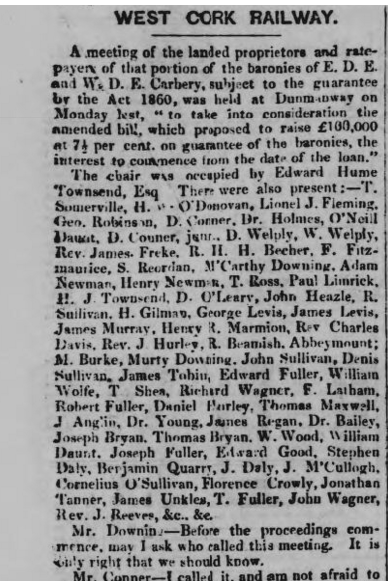
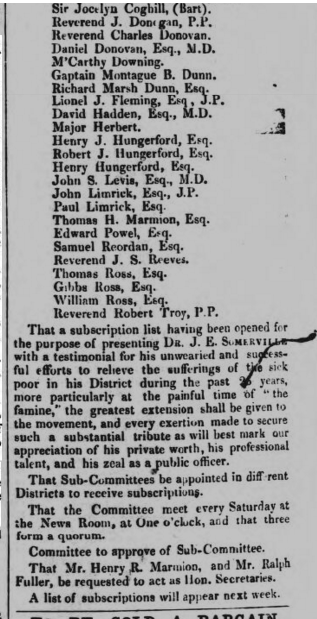
1862, Meeting at Dunmanway by Land Owners of Part of Barony of Carbery Affected by proposed Parliamentary Bill to Raise £100, 000 to extend Railway from Bandon, Co. Cork.


1862, Meeting at Dunmanway by Land Owners of Part of Barony of Carbery Affected by proposed Parliamentary Bill to Raise £100, 000 to extend Railway from Bandon, Co. Cork.


Long after a portion of rents charged to tenants contained an element noted ‘Railway Guarantee’


Screen Shot 2015-12-24 at 16.22.19

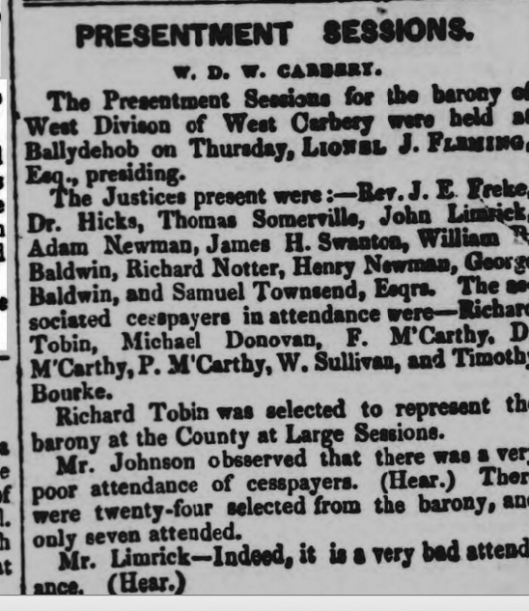
January 1862, Presentment Sessions held At Ballydehob, West Cork, for West Riding of Barony of West Carbery for Public Works Approval, Magistrates and Cess payers in Attendance.


January 1862, Presentment Sessions held At Ballydehob, West Cork,  for West Riding of Barony of West Carbery for Public Works Approval, Magistrates and Cess payers in Attendance.


Richard Tobin is probably fro Kilcrohane living in durrus major property owner and businessman.  Family had what is now Rossses pub in Durrus.


Screen Shot 2015-12-24 at 13.37.34.png

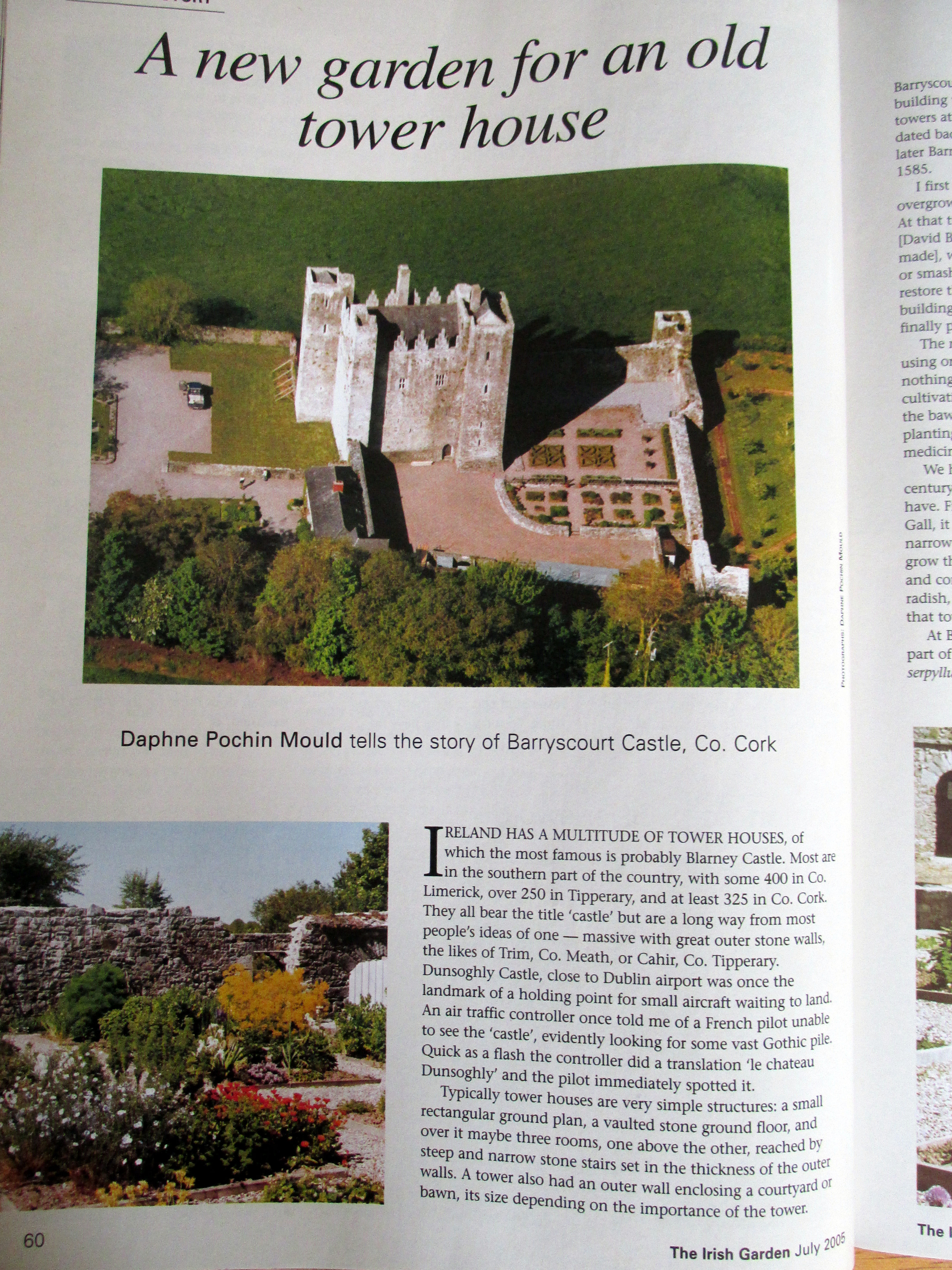
Lay out of kitchen garden at Irish Monastery 9th century from St Gallen in Switzerland in Tower House of Barryscourt Castle, East Cork.


durrushistory's avatarWest Cork History

Lay out of kitchen garden at Irish Monastery 9th century from St Gallen in Switzerland in Tower House of Barryscourt Castle, East Cork.

Daphne Pochin Mould (http://en.wikipedia.org/wiki/Daphne_Pochin_Mould) an article in the ‘Irish Gardener in July 2005 wrote about the conversion of the Bawn of Barrycourt Castle in East Cork. Using records from St. Gallen it was deduced that the contents of a Monastic garden would include onions, leeks, garlic, shallots celery and coriander, parsnips with cabbage, lettuce, chervil, chard, radish, dill and poppy.

1-IMG_5804

1-IMG_5800

2-IMG_5801

3-IMG_5802

4-IMG_5803

View original post

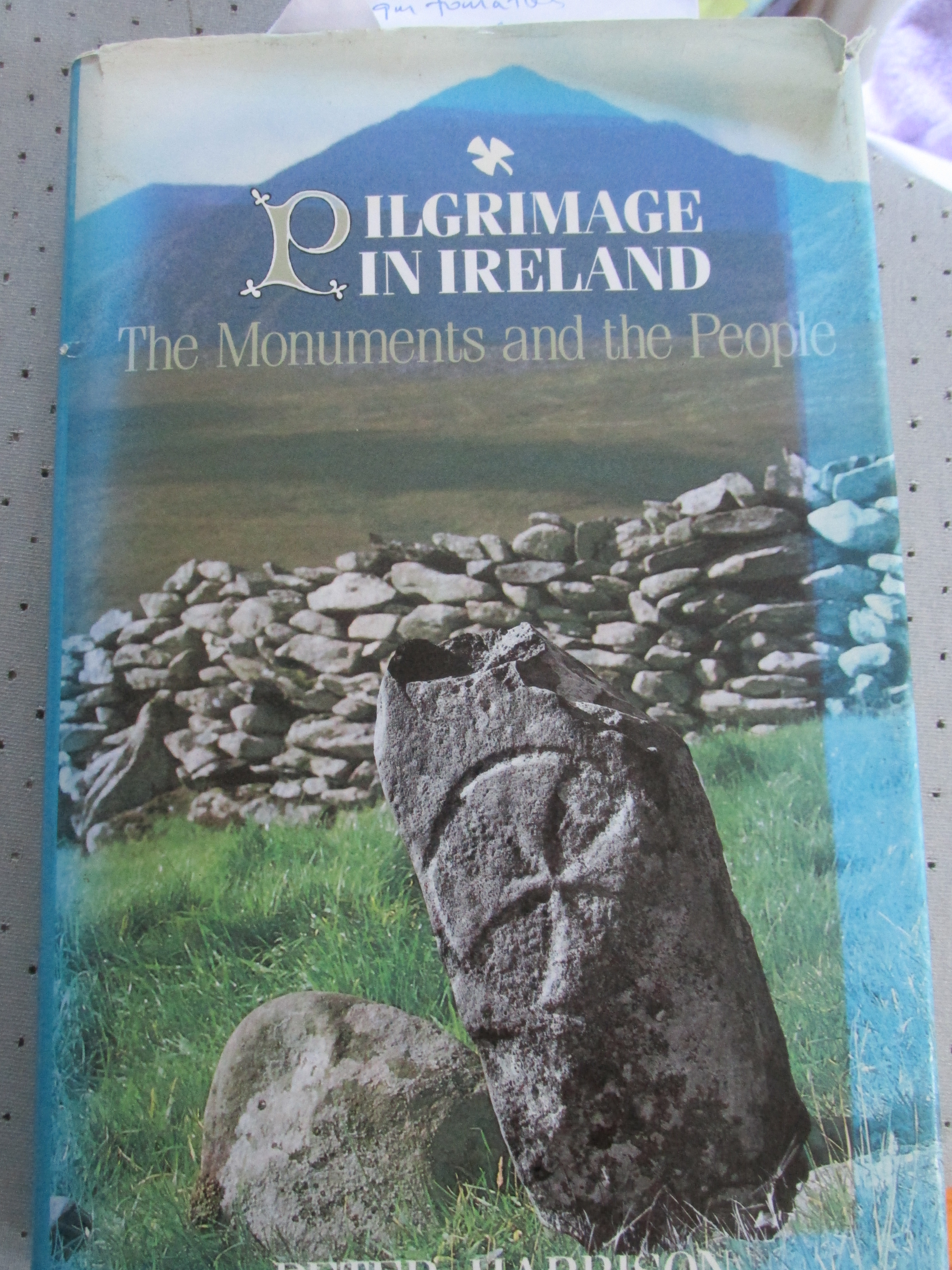
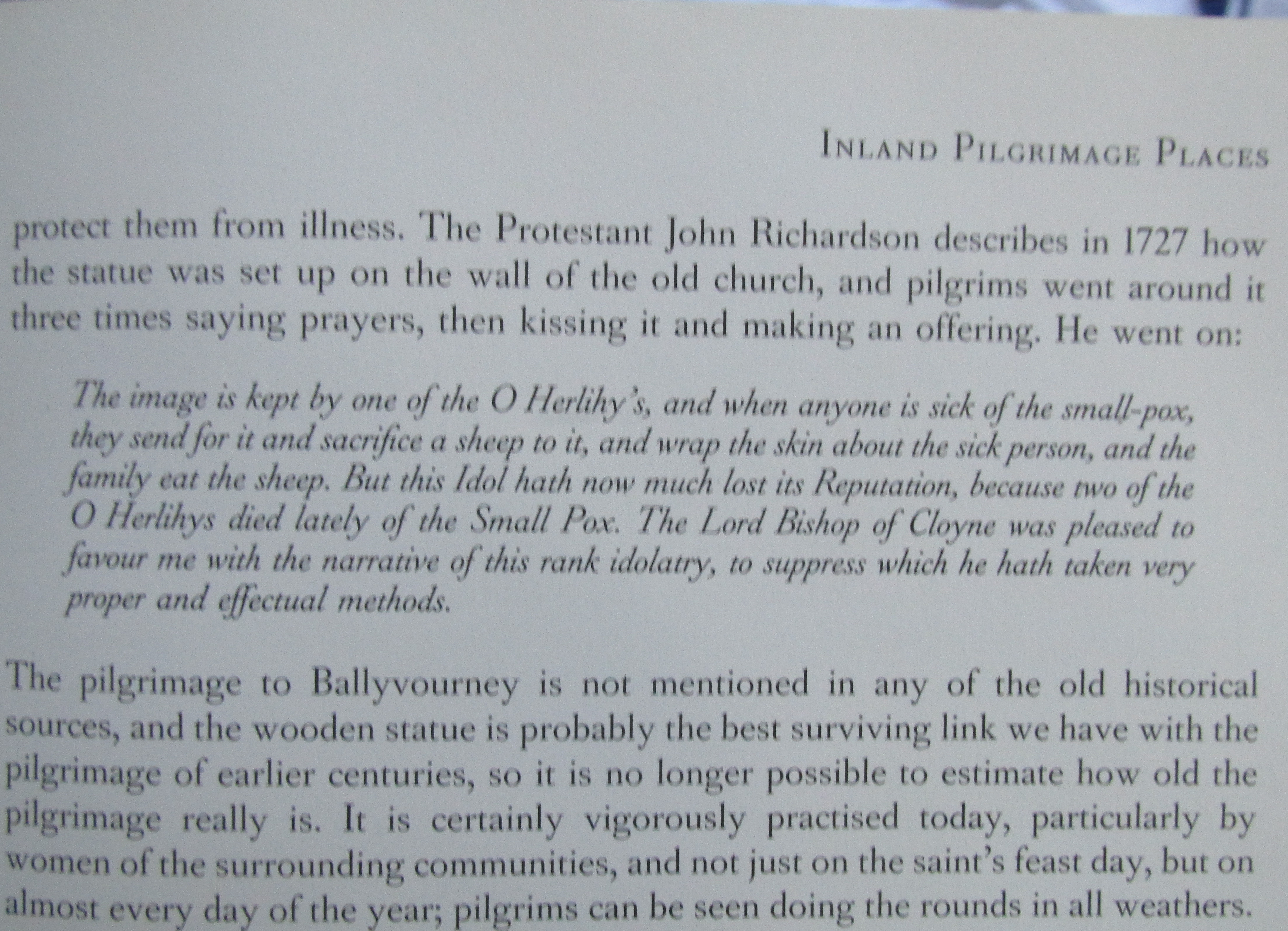
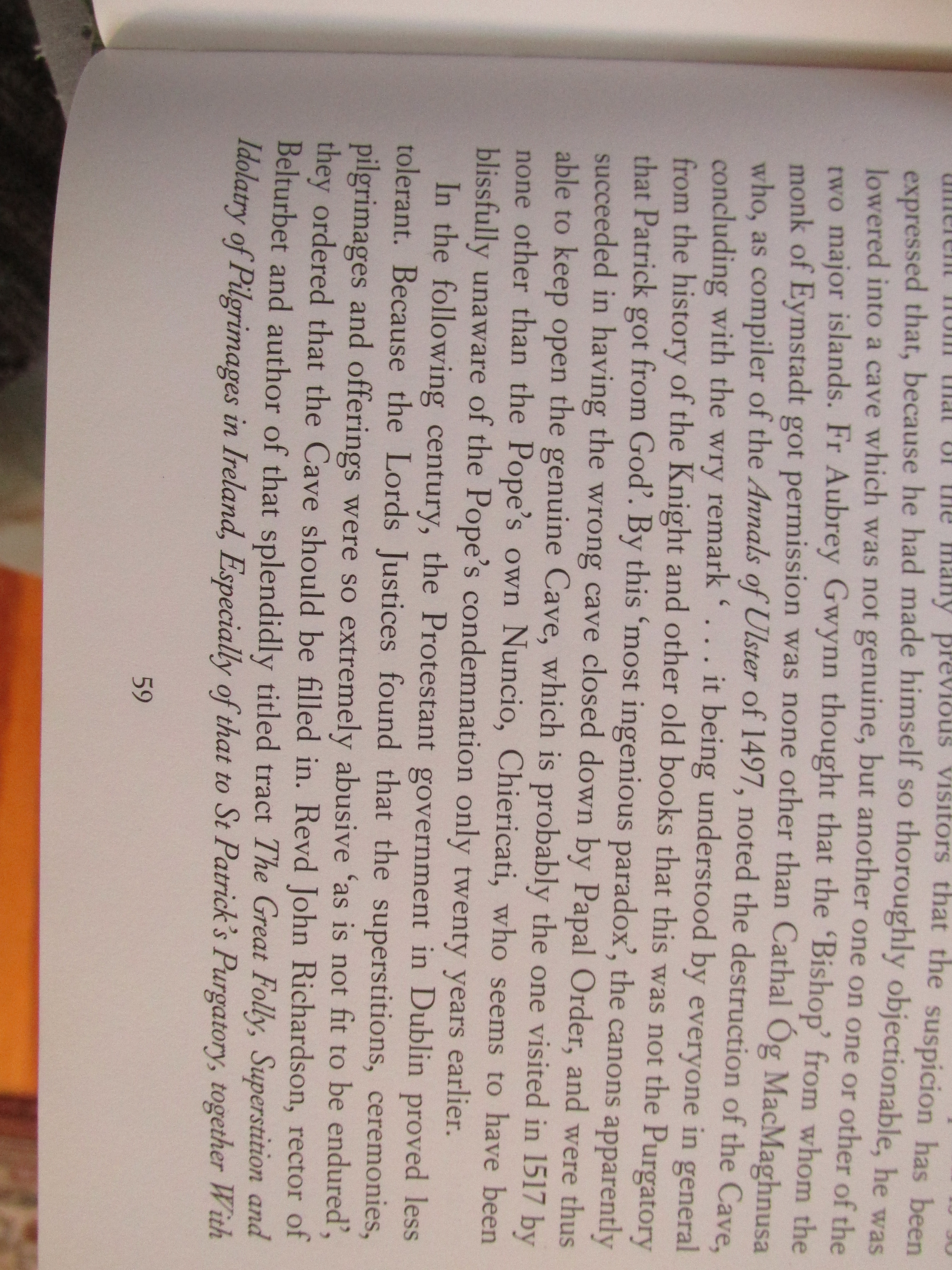
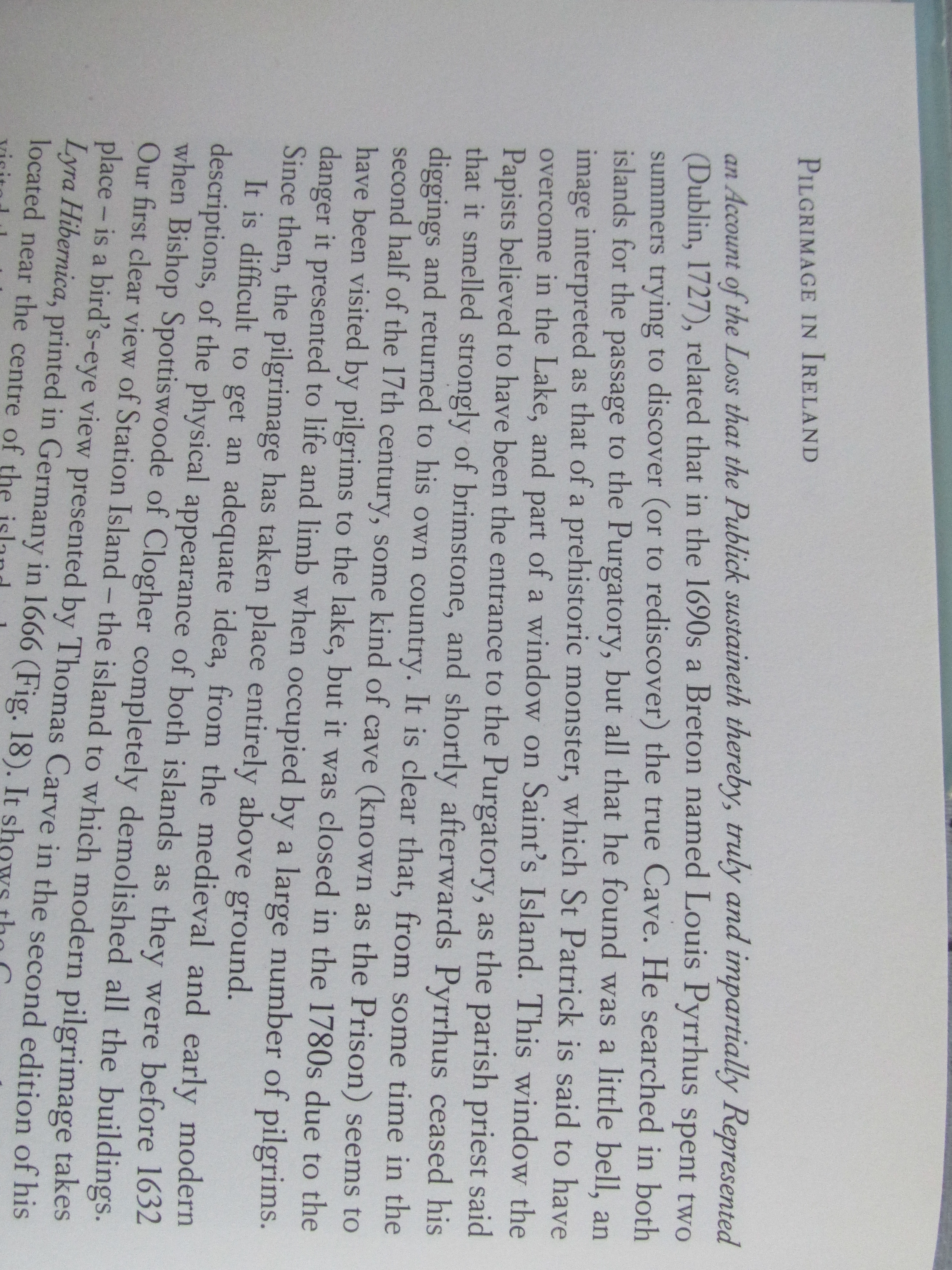
The Reverend John Richardson, Rector of Belturbet, Co. Cavan, author of ‘The Great Folly, Superstition and idolatry of Pilgrimages in Ireland, Especially of that to St. Patrick’s Purgatory, together With an Account of the Loss that the public Sustaineth thereby, truly and impartially Represented his account at Ballyvourney, Co. Cork, 1727 of 13th century wooden statue of St. Gobnait (Patroness of Bee Keepers) as an antidote to small pox being kept by the O’Herlihys.


durrushistory's avatarWest Cork History

The Reverend John Richardson, Rector of Belturbet, Co. Cavan, author of ‘The Great Folly, Superstition and idolatry of Pilgrimages in Ireland, Especially of that to St. Patrick’s Purgatory, together With an Account of the Loss that the public Sustaineth thereby, truly and impartially Represented his account at Ballyvourney, Co. Cork, 1727 of 13th century wooden statue of St. Gobnait (Patroness of Bee Keepers) as an antidote to small pox being kept by the O’Herlihys.

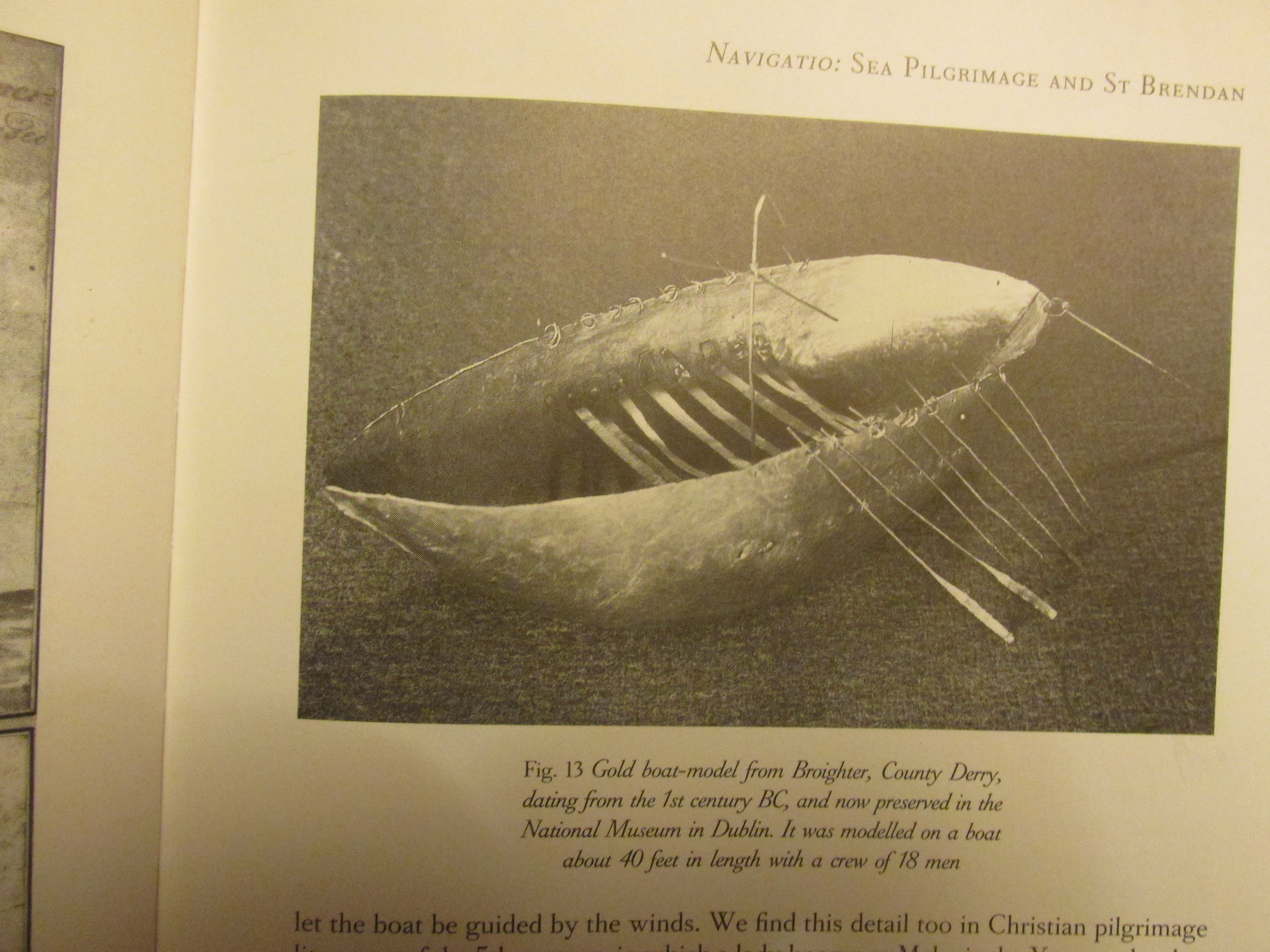
Courtesy Pilgrimages in Ireland. Peter Harbison Barrie and Jenkins 1991

1-IMG_5806

2-IMG_5803

3-IMG_5804

4-IMG_5805

View original post

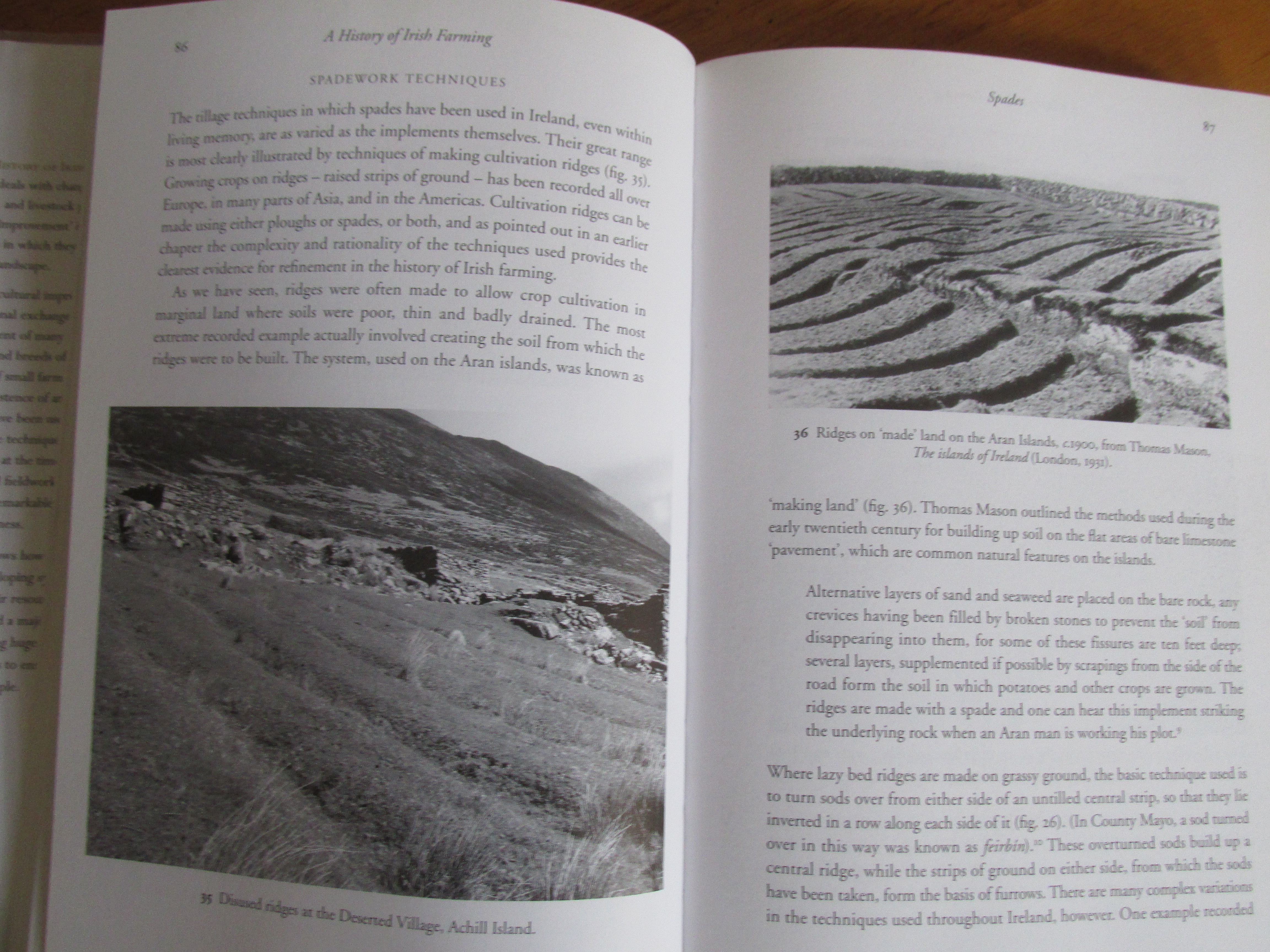
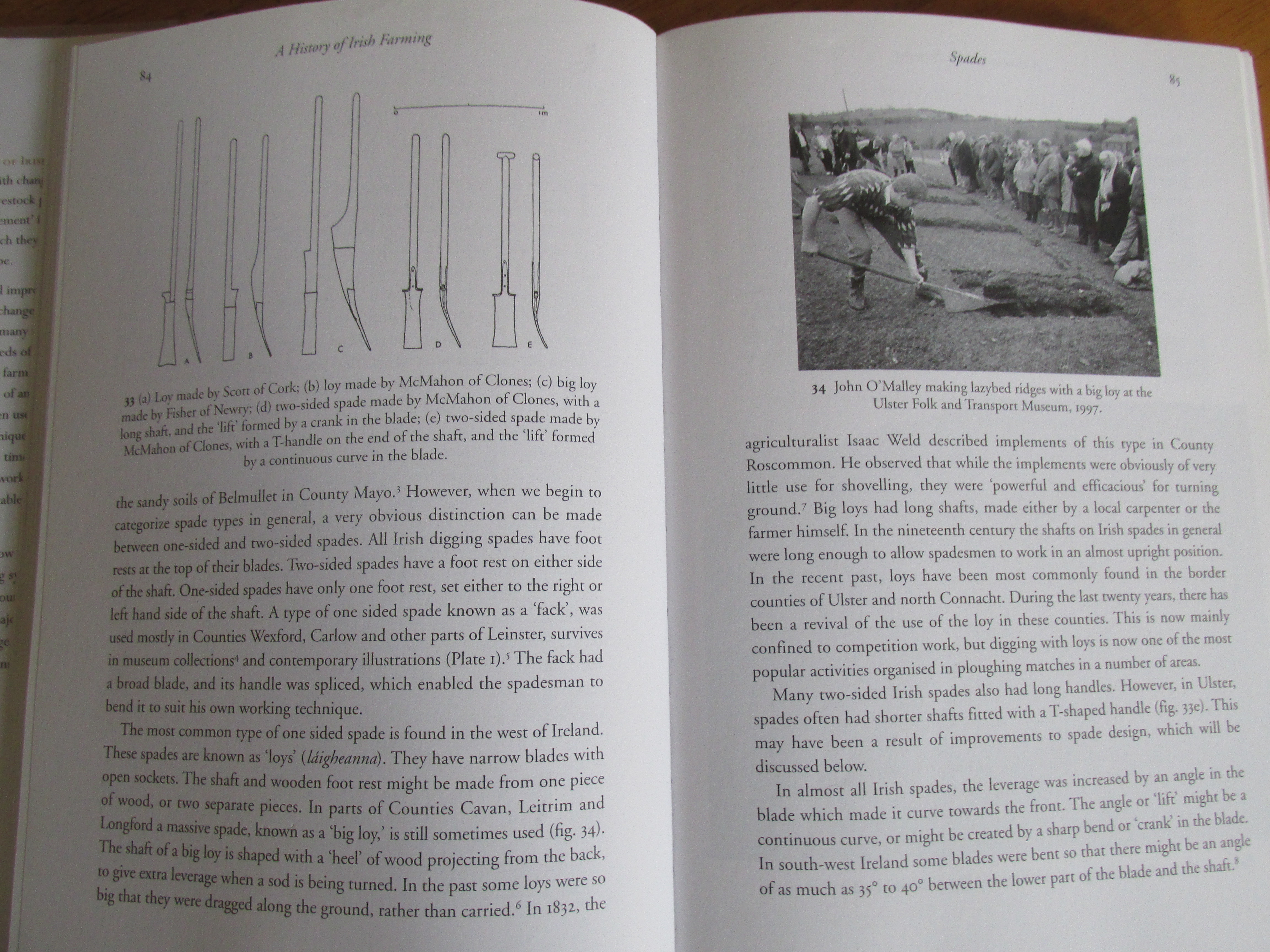
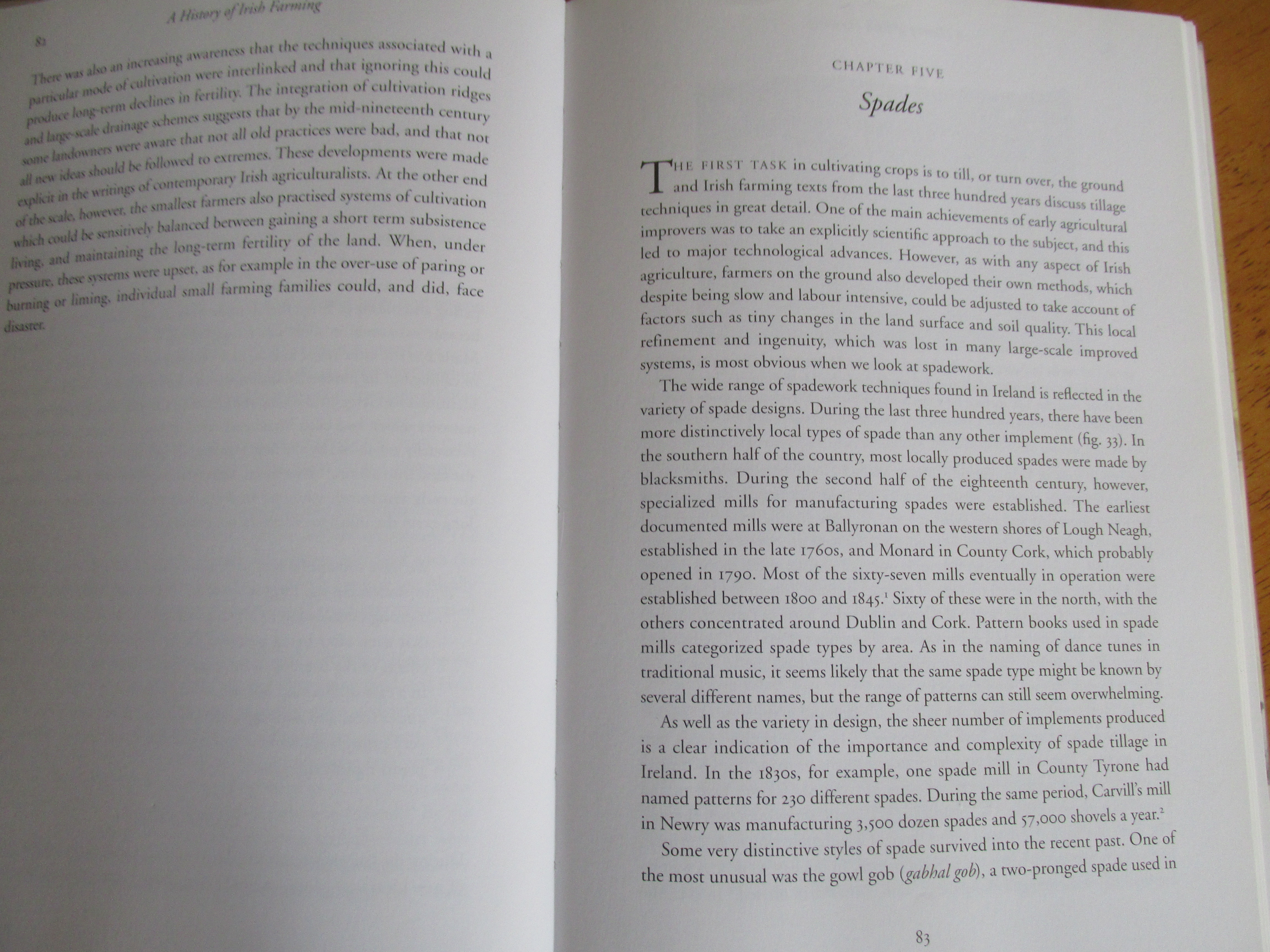
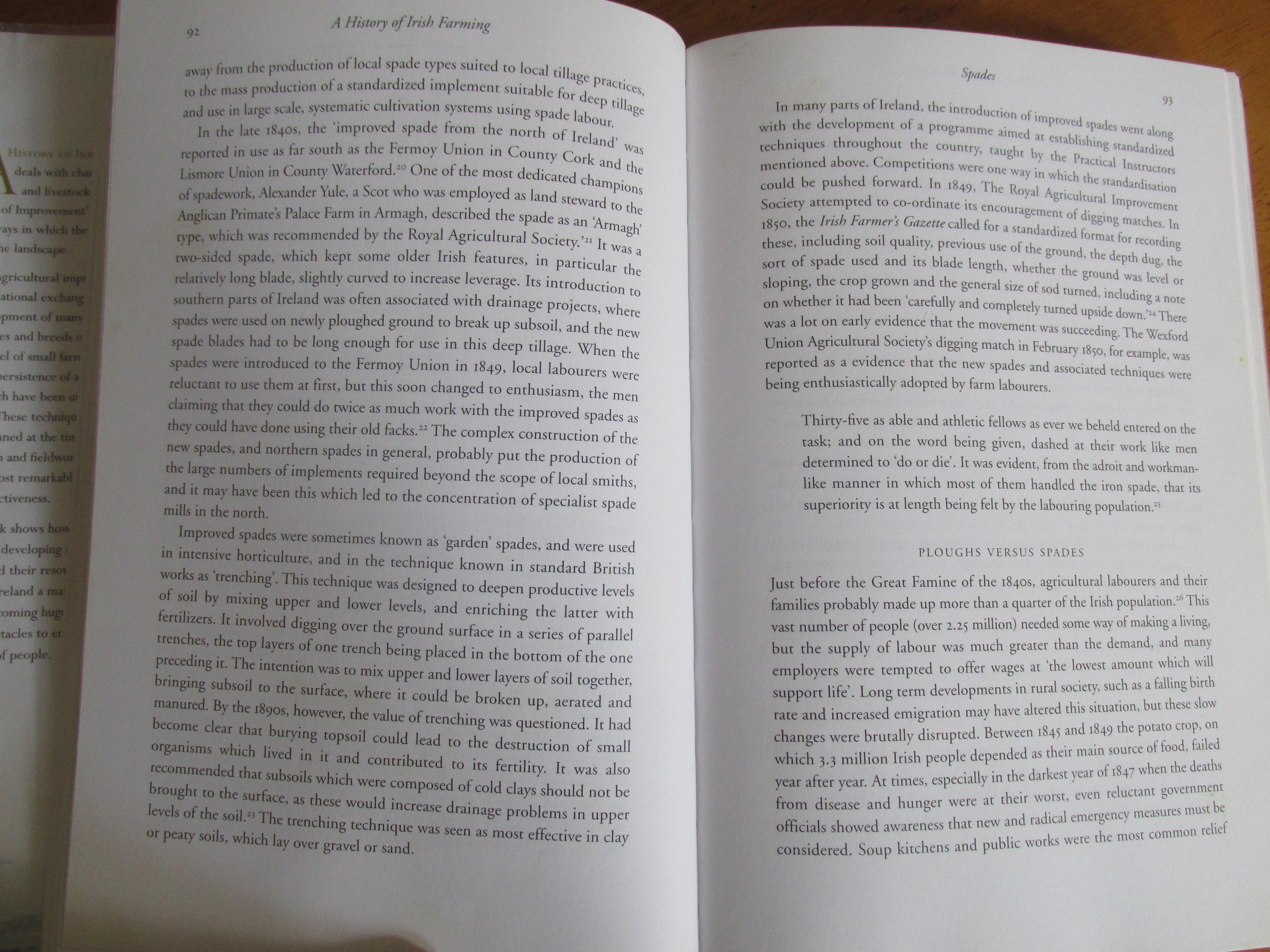
Traditional farm spade by Scotts of Cork and spadework on olden farms.


durrushistory's avatarWest Cork History

Traditional farm spade by Scotts of Cork and spadework in olden farms.

Cork antiquarian and businessman Robert Day married one of the Scotts and took over the business.

Scotts of Patrick’s Quay/McCurtain St. Cork supplied a range of garden and farm implements and tools. When the firm burnt down in the 1960s McCurtain St never recovered. It is unclear if the firm had their own spade mill or sub contracted their supply. There was a mill in Monard a few miles outside the city under a Viaduct on the Dublin railway.

The artist and architect Patrick Scott who died recently in his 90s was of this family.

https://durrushistory.wordpress.com/2014/11/24/discovery-of-primitive-bog-oak-spade-beneath-12-foot-peat-in-farm-of-mr-w-kingston-near-ballydehob-west-cork-1890s-7th-century-king-of-connaught-assailed-by-men-cutting-turf-who-killed-him/

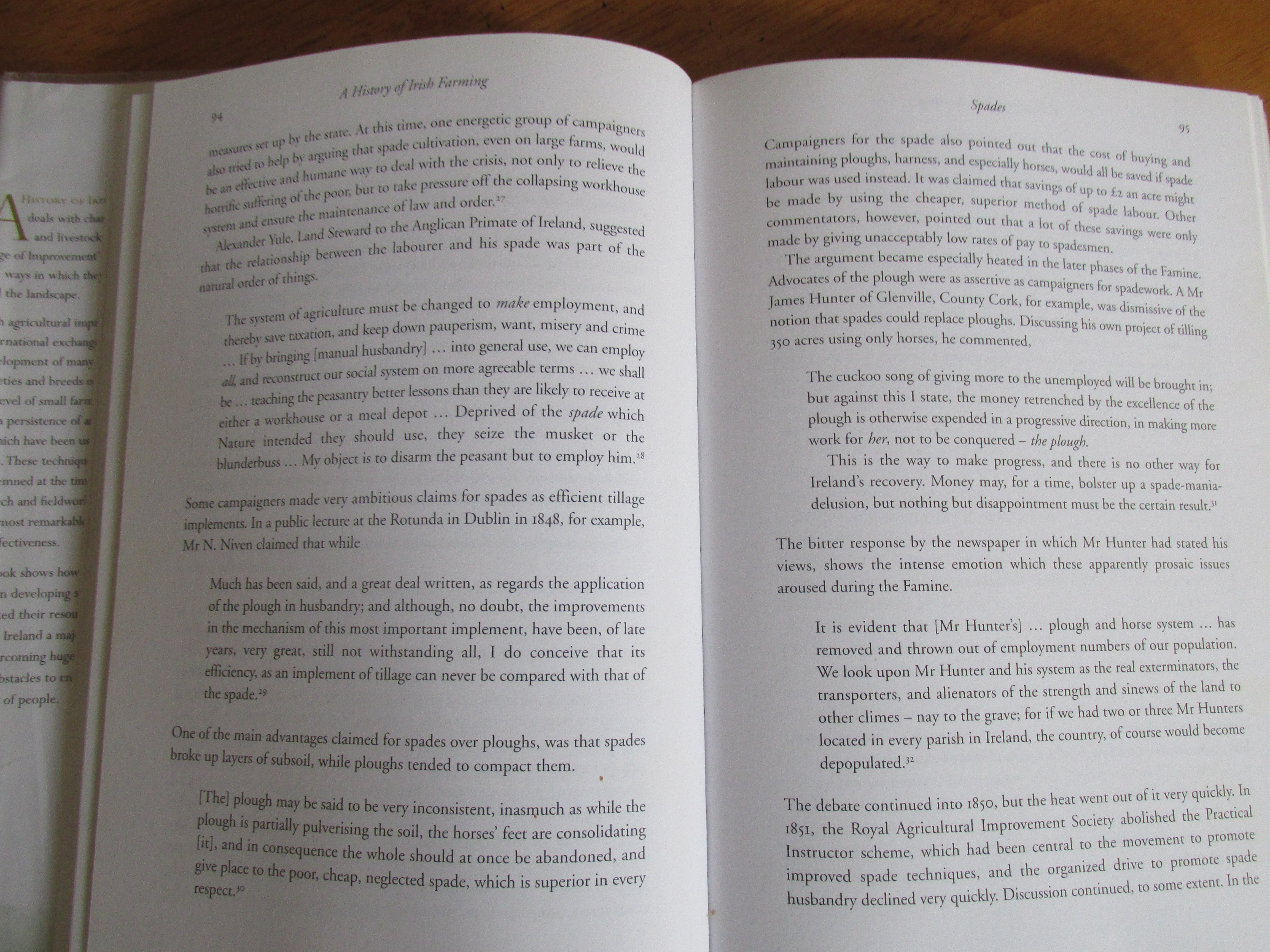
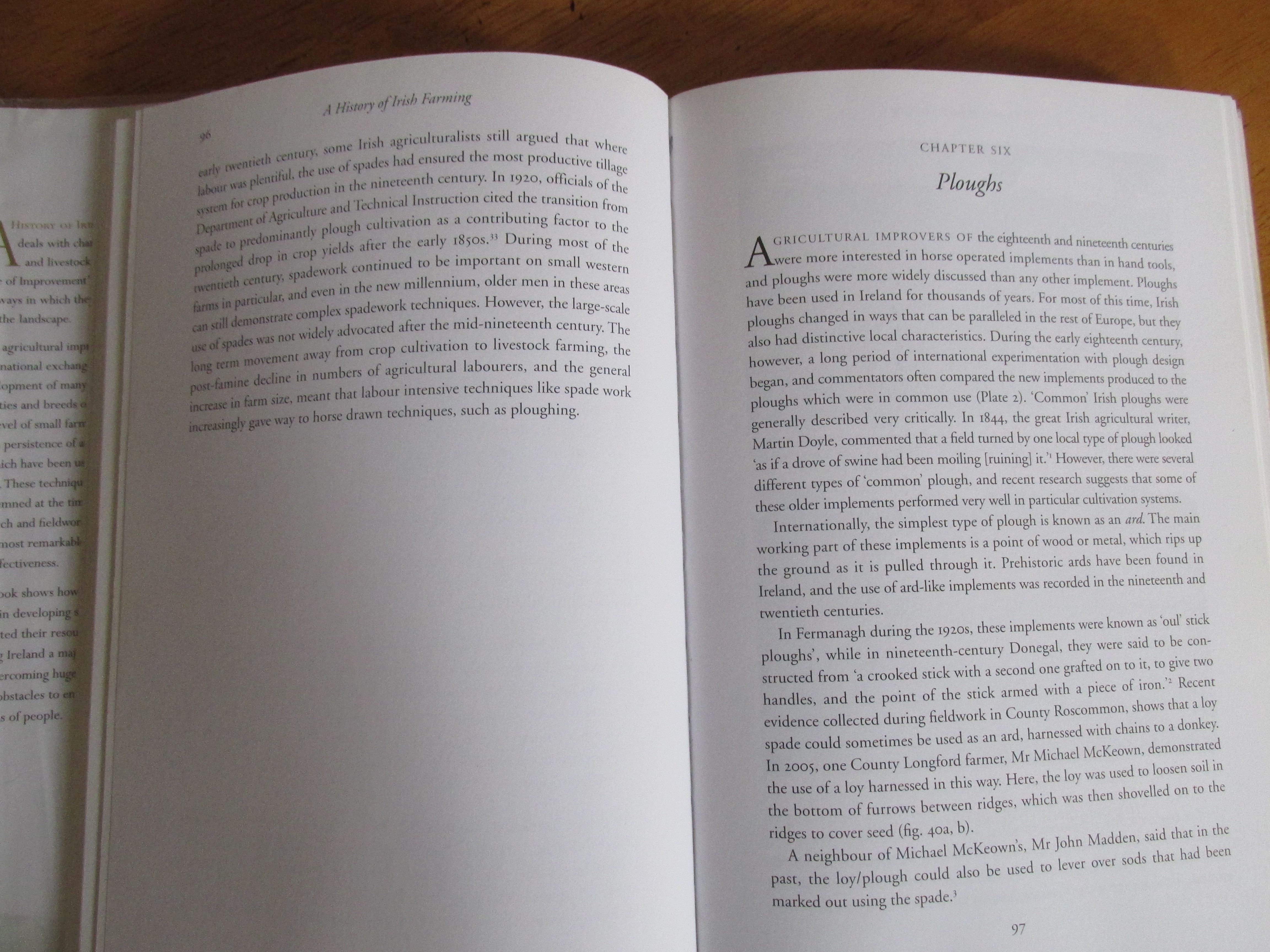
The article from the History of Irish Farming deals with traditional spadework.

5-IMG_5878

1-IMG_5875

4-IMG_5877

3-IMG_5876

6-IMG_5879

2-IMG_5884

1-IMG_5880

2-IMG_5881

3-IMG_5882

4-IMG_5883

View original post