
This gallery contains 13 photos.
Originally posted on Roaringwater Journal:
A joint post by Finola and Robert On Friday, the Blue House Gallery in Schull launched…
12 Monday Sep 2016
Posted in Uncategorized
This gallery contains 13 photos.
Originally posted on Roaringwater Journal:
A joint post by Finola and Robert On Friday, the Blue House Gallery in Schull launched…
12 Monday Sep 2016
Posted in Uncategorized
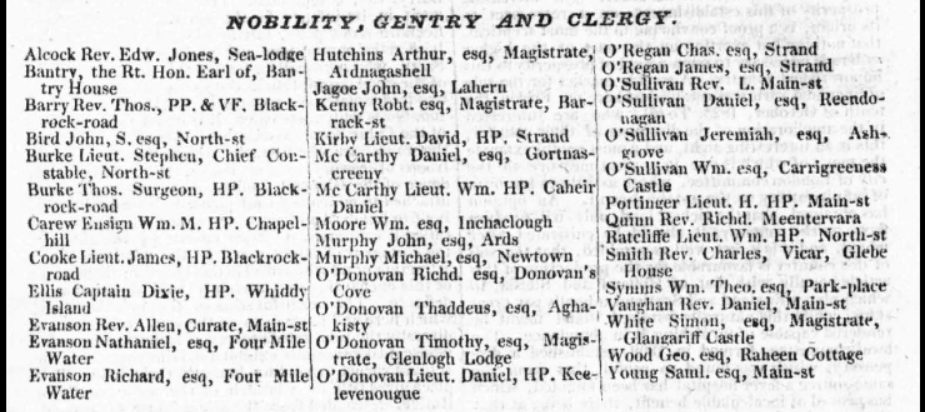
1824, Half Pay Officers from Napoleonic Wars Bantry District.
The initial HP is half pay. Lieutenant Daniel O’Donovan may have been the last survivor of the Irish Brigades. After the French Revolution they were give the option of transferring en masse to the British Army retaining their rank.
Post Napoleonic War Officers on Half Pay Bantry, West Cork 1824 and Lieutenant Daniel O’Donovan, Keelevenougue, last of the Irish Brigade d 1830s.
On the Catholic Gentry and Middle Class in 1828 some months before he was elected to the British Parliament, Daniel O’Connell giving evidence to a Select Committee said that most of the cash on deposit and most of the shares in the Bank of Ireland was held by Catholics. He was complaining that of the management staff only four trainees were Catholic. This was an enormous change. c 1780 a listing of the Bank of Ireland shareholders shower the La Touche family as the largest with over 20% followed by the great landed magnates.
Pigot’s Directory lists,
Lieutenant Stephen Bourke, Chief Constable, North-street,
Lieutenant Thomas Bourke, Surgeon half Pay, Blackrock Road. (it may have been with him that JJ Callanan the poet stayed and composed ‘Gougan Barra’
Ensign William Carey, Ensign, Chapel Hill,
Lieutenant James Cooke, Blackrock Road,
Lieutenant David Kirby, Strand,
Lieutenant William Mccarthy, Caheir Daniel,
Lieutenant Daniel O’Donovan, Keelevenouge, area on north of Muintervara peninsula opposite Beara where Carew embarked re Siege of Dunboy. He when he died it was said he was the last of the Irish Brigade. He was probably a relative of Timothy O’Donovan, of O’Donovan’s Cove, on the Peninsula a small landowner and one of the first Catholic Magistrates,
Lieutenant H Pottinger, Main-street,
Lieutenant William Ratcliffe, North-street.
The Bantry historian Paddy O’Keeffe said there were 12 half pay officers in Bantry in the period.
Before the French Revolution many of the old Gaelic families sent their sons to serve in the various Continental Irish Brigades. This changed with the French Revolution and the relaxing of the Penal Laws. From around 1790 many young men from this class joined the British Army or Navy.
In a somewhat disparaging remark in the Kenmare Estate papers 1760 (online Irish Manuscript Commission, it was said of the Catholic Middle men that they rack rent their tenants, have no interest in improving only in getting daughters married, sons in the Irish brigade or as priests.
In the Bantry area and Kerry many of the old families continued on the Bantry and Kenmare and Petty Estates as agents or middle men.
Military Service some West Cork personnel:
https://docs.google.com/spreadsheet/ccc?key=0AqhnQGE3ANjzdEY1U09tUm4zUWNvcFBmTllEdVZMaEE#gid=0
ntry-west-cork-grievance-of-opulent-catholics-excluded-from-quarter-sessions-juries-in-preference-to-protestants-having-no-property-but-a-half-pay-of-40-a-year/
| 1810, 1831, 1840, 1846 | Dr. Thomas Burke | 1824, Surgeon, HP, Blackrock-road (NGC). Possible The Square, 1810 Thomas Burke Half Pay Surgeon married Margaret McCarthy, (1784-1831), possibly through her he acquired lands at Caheragh, she was likely of the Muclaghs (Clann Tighe Roe Scartaigh) and the lands from McCarthy Gurtnascreena. | May be from Caheragh the person that poet JJ Callanan stayed with for around 2 years when he wrote Gougan Barra and Lamesnt to Morty Oge. memorial to Father Walsh PP leaving Bantry. Attending Great Meeting re Poor Law in 1840, Bantry, gave a speech promoting reclamation of waste, mine development, employment rather than charity. 1846 distress meeting Bantry. | 1832 contacted fever attending Cholera Hospital Bantry voteof thanks by John Y. Kingston.Southern Reporter and Cork Commercial Courier 28 April 1831.Viscount Berehaven expressed regret in 1841 at his resignation for 15 yearas as Dispensary Docotr. | The 1815 lArmy ist and from it I find that Thomas Burke joined the army on the 14th August 1808. His rank was Assistant Surgeon. He served in the 1st Garrison Battalion which most likely was based in Ireland (They manned the home Garrisons, Kinsale, Bantry etc) He was disbanded from the service in 1814 on the cessation of hostilities with France and the surrender of Napoleon.He appears to have been on 72% pay. Army surgeons often had no real medical training and they learned as they went. The saw was one of their main instruments. Thomas Burke did not go to Trinity but perhaps had some Medical Training in such place as the College of Surgeons. It might be worth contacting them. | Possibly Thomas Burke MD, Skibbereen, died 1859 estate £1,500 executors James Crowley Merchant Cork, Father Francis Casey, Curate, North Parish Cork. |
Macroom:
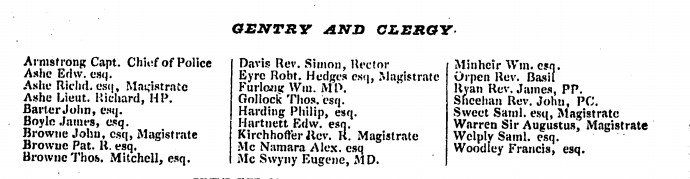
Clonakilty:
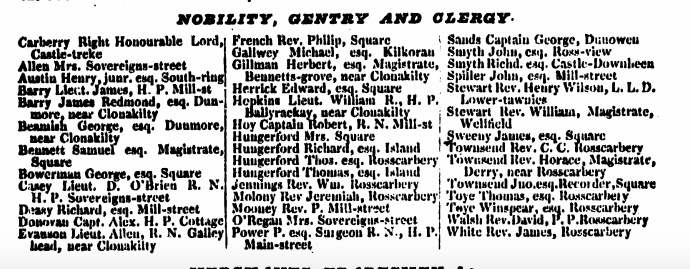
Kinsale:
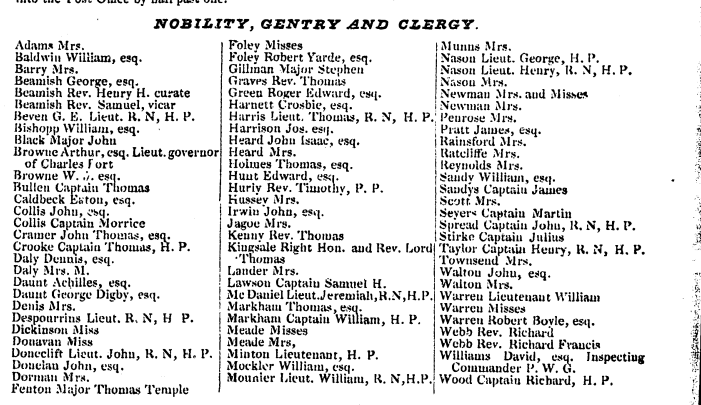
Skibbereen:

Bantry:
10 Saturday Sep 2016
Posted in Uncategorized
From 1854 Partial tenant Listing on Western Lord Bandon (Bernard) Estate, including Durrus, Dromnea Kilcrohane, part Caheragh, Dereenlomane Ballydehob and Bandon Bernards Magistrates.
The Bandon Estate was assembled by purchase starting with the earning of Francis Bernard a successful Bandon Lawyer in Dublin in the late 17th adn early 18th century. The western portion commenced on the outskirts of Bandon and included isolated pockets in Durrus, Dromnea Kilcrohane, part caheragh, Dereenlomane Ballydehob.
The Durrus lands were pre the Rebellion of 1641 in the control of the Mccarthy Mucklagh family of Scart later Gearhameen Castle (Coolnalong). On their land bring forfeit by rebellion it passed to Colonel Reid was bought by the Evansons who had been on Castledonovan on forfeit O’Donovan lands . They got into financial difficulty in the early 18th century and Francis Bernard purchased and leased back to the Evansons. Their lease expired c 1850 the Bernard recoved Durrus, levelled the mud cabins and laid out the present village.
Initially in 1850 a relation, Colonel Bernard managed the estate, he was replaced by the Bandon Wheeler Doherty firm of solicitors and land agents. By granting mortgages to the Bernard family in the 19th century they had effective control of the estate. In the early 1970s the records were acquired by the Cork Archives, major restoration work was done but the contents have not yet been catalogued. Transcription from the ledgers is slow and time consuming.
http://landedestates.nuigalway.ie:8080/LandedEstates/jsp/estate-show.jsp?id=2489
http://landedestates.nuigalway.ie:8080/LandedEstates/jsp/property-show.jsp?id=2672&estate_id=2489
Partial Tenant Listing:
https://docs.google.com/spreadsheets/d/1LVgcai4i4QWpyLFvKhEgQAMjtdhjI6VhRrBr2XMWC2U/edit#gid=0
Right Honourable Honourable James Earl of Bandon, Castlebernard, Subscriber Lewis 1837. Subscriber John Ryan, 1845 ’20 Years of Popish Persecution’. Member Commission on Magistrates 1838 subscriber, 2 copies, 1861 to Smith’s History of Cork. Bandon 1869.
Right. Hon. James Francis Earl of Bandon, (see also Bernard) K.P., 1871, Castlebernard, Chairman Irish Landowners Association 1910 Listed 1913, listed 1922.
Arthur Bernard, 1752, Bandon, probably son of Arthur who built Palace Anne in 1714 near Murragh and Ann Power (Le Poer), Mount Eglantine, Co. Waterford and brother of Judge Francis Bernard. In deed of 1717 lets land to Richard Croker, Nadrid. Subscriber of 1766 ‘The History of the Irish Rebellion’, Cork, 1766.
Arthur Beamish Bernard Esq., Palace Anne, Bandon, Pre 1822. Writing 1821 to i Chief Secretary seeking appointment of brother Adderley Beamish Bernard half pay Captain 37th Regiment as Chief Constable of Police, severely wounded serving under Duke of Wellington and he himself active in restoring tranquility to local area. 1828 with Sir Augustus Warren proposed Franklin Baldwin attorney Bandon as Coroner. Attending Protestant Conservative Society meeting 1832, Member 1832 Cork Friendly Club. Listed 1854, Subscriber Lewis Topographical Dictionary of Ireland 1837. Member Commission on Magistrates 1838
Francis Bernard, 1668, Bandon
Francis Bernard, Junior, 1728, Bandon
Francis Bernard, 1st Earl of Bandon (1755-1830), 1772, Castle Bernard, Bandon, only son James Bernard and Esther Smith d Percy Smith. M Lady Catherine Henrietta Boyle d Richard, 2nd Earl of Shannon. MP Ennis 1778-83, Delegate 1783 to Irish Volunteer convention. Requested to be president of Bandon Brunswick Constitutional Club 1828 donated £50. Bandonbridge in Irish Parliament to 1790. Lady Charlotte Bernard, 2nd daughter married 3rd Viscount Doneraile.
Francis Viscount Bernard, (1785-1856), 2nd Earl of Bandon, Pre 1838, Castle Bernard, son Francis 1st Earl of Bandon (1755-1830) and Lady Catherine Henrietta Boyle d Richard, 2nd Earl of Shannon. Deputy Lieutenant 1832. 1834 Member Committee Cork Protestants. Protestant Protest Meeting Bandon 1834. Member Commission on Magistrates 1838. Supporting Alexander O’Driscoll, JP suspended, Bandon 1841. Member provisional Committee projected Bandon to Bantry Railway 1845. Dining Cork Agricultural Dinner 1848 with ‘Big’ Patrick O’Sullivan Esq., Millcove, Beara, Agent to Lord Bantry and Seneschal voted in Conservative interest. Anti-Repeal Meeting, Dunmanway 1845. Married 1809 Mary Susan Albina Brodrick d Archbishop of Cashel Rev. Charles. listed 1854. MP Youghal 1806-7, 1818-20, Co. Cork 1807-18, Bandon 1820-6, Estate 40,000 acres, Joseph Devonshire Jackson seconded James Bernard 2nd Earl of Bandon 1841, as life member RDS. Attending Landlord Meeting Bandon Courthouse 1846. Lord of Manor Macroom, Kilcrea and Blarney appointed Seneschal 1837 Robert Borlease Warren a tenant and relation retained the right to appoint in Macroom even after selling estate there and being often resident in London.
Francis Bernard, 3rd Earl of Bandon (1817-1877), Castlebernard, son Francis 2nd Earl of Bandon (1755-1830) and Mary Susan Albina Brodrick. Chairing Famine Relief Meeting Dunmanway 1846. Member Irish Society Antiquaries 1861. Promoter flax growing West Cork 1850s. Promoting mineral development in West Cork including barytes mines on his Dereenlomane property, Ballydehob. Probate 1877, executor James Francis Bernard, 4th Earl £18,000
Colonel Henry Boyle Bernard, Castle Bernard, South Cork Militia, Coolmain, Kilbrittain in summer, 1876-6. Supporting Alexander O’Driscoll, JP suspended, Bandon 1841. Elected Conservative MP for Bandon in 1862 defeated Thomas Sullivan Kingston, Esq., Solicitor, defeated 1868, election by William Shaw, Bernard received no Catholic votes. Subscriber 1861 to Smith’s History of Cork. Cork Spring Assizes Juror 1863. Committee member Bandon Navigation Scheme 1842. Member provisional Committee projected Bandon to Bantry Railway 1845. Anti-Repeal Meeting, Dunmanway 1845.
James Bernard, 1762, Castle Bernard, witness to deed 1767.
John Bernard, 1767, Bernard’s Hall.
Morrough Bernard, possibly other way around. Seeking equality of endowment in Catholic education 1859.
Percy Broderick Bernard, 1866, Kilbrogan, Bandon, Non-Resident, £6
Roger Bernard, 1731, Pallace Ann, son of Arthur.
Roger Bernard -1774), 1768, Pallis Ann, son of Roger, Cambridge University 1761, died single will 1774
Thomas Bernard, 1782, Palace Anne, Enniskeane, sitting 1835, Bandon
Honourable Captain William Smith/Smyth Bernard, Pre 1831, The Farm, Bandon, listed 1824. Chairing Bandon Brunswick Constitutional Club 1828. Subscriber Lewis Directory 1837. Attending Protestant Conservative Society meeting 1832 presiding Magistrate 1845. Attending Landlord Meeting Bandon Courthouse 1846, listed 1854. Member Commission on Magistrates 1838
09 Friday Sep 2016
Posted in Uncategorized
View of Tempol na mBocht, (The Church of the Poor, Crookhaven), Mizen Peninsula, West Cork, with Parsonage and Sandboat in Foreground on Pamphlet from Rev. William Fisher 1851, setting out History of St. Brendan’s Church, Built 1714, by Bishop Brown, original Protestants gone over as Romanists their descendant ‘Bitter Romanists’ until lately few Protestants left on ‘Protestant Hill’, Plea for Funds, list of Subscribers.
https://plus.google.com/photos/100968344231272482288/albums/6123162131940641249
09 Friday Sep 2016
Posted in Uncategorized
1837. Partial Schedule of Tenants And Tenancies by Townland and Bantry Town Prepared for Receivers of Rents of Bantry (White) Estate.
https://docs.google.com/spreadsheets/d/1gJCLt_arMypC-JsFAjRRZbOEn8K43m9ai28I-iyKNS4/edit#gid=0
08 Thursday Sep 2016
Posted in Uncategorized
Some Dunmanway Births:
https://docs.google.com/spreadsheets/d/1ZlOKW3lYj9K8zdG12cC-X8h4JYEOgkrNHKG_TbIgJB0/edit#gid=0


08 Thursday Sep 2016
Posted in Uncategorized
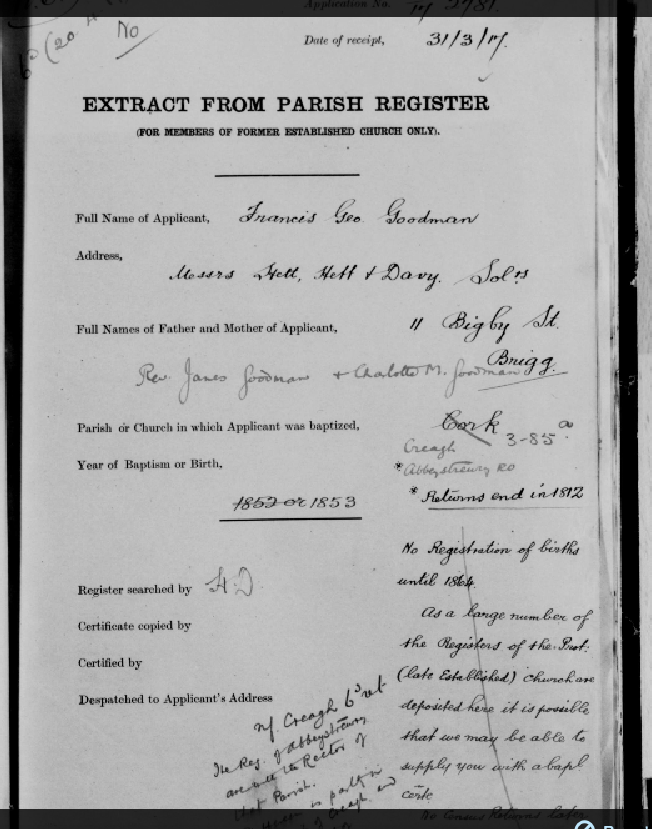
Pre 1922, Pension Enquiry Forms Church of Ireland Creagh (Skibbereen) West Cork.


08 Thursday Sep 2016
Posted in Uncategorized
1917 Confirmation by Public Records Office, Dublin of Deposit of Church of Ireland Registers all Destroyed in 1922 (Query on Family of Canon Goodman, Creagh, Skibbereen, Professor of Irish Trinity College, Dublin and Saviour of Irish Music).
08 Thursday Sep 2016
Posted in Uncategorized
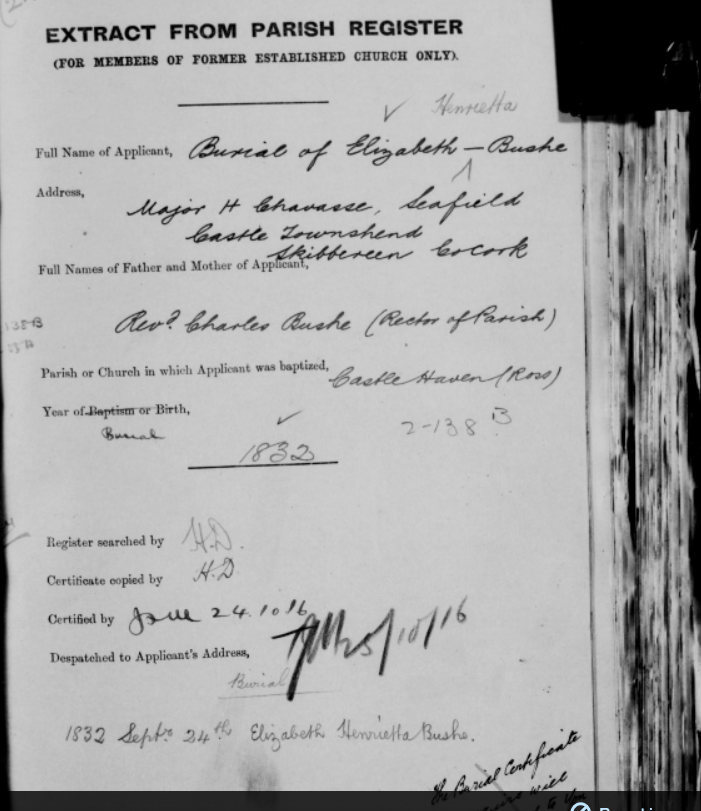
Pre 1922, Pension Enquiry Forms Church of Ireland Castlehaven, Castletownshend, West Cork.


08 Thursday Sep 2016
Posted in Uncategorized
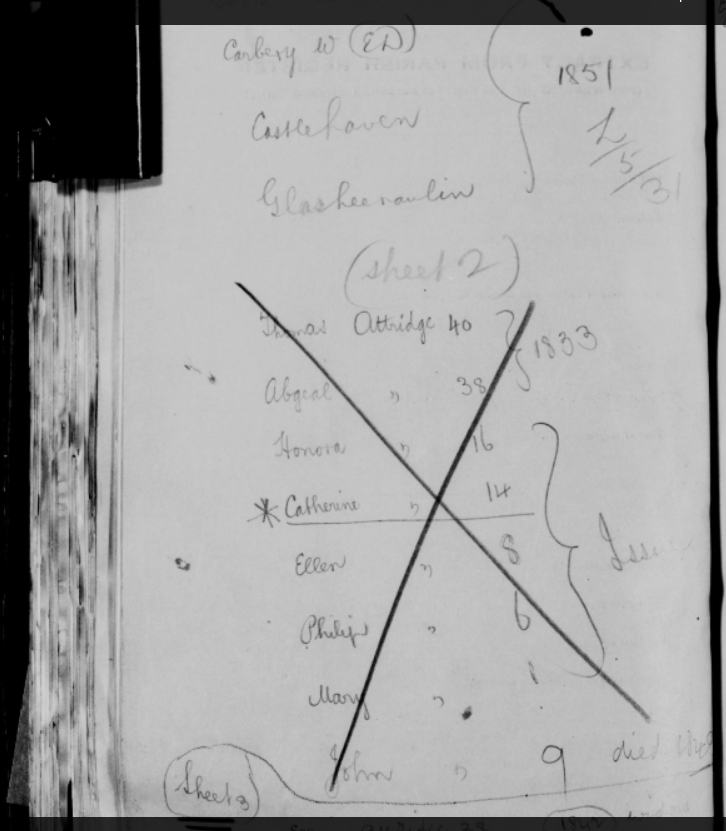
1851 Census Summary, Family of Thomas and Abegail Attridge, Glasheenaulin, Castlehaven, West Cork.

 West Cork History