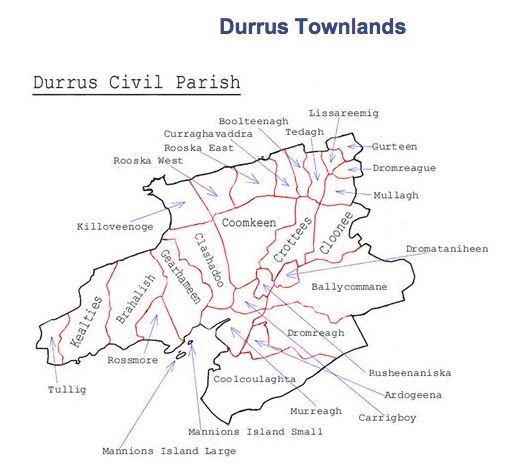
1835. Discovery of Ruins of Lost School at Sea Lodge (Gearhameen, (Irish: Gaortha mín, meaning ‘small wooded glen’), Durrus, West Cork. Master Timothy Daly, aged 24, Possibly from Dromnea. Kilcrohane.


1835.  Discovery of Ruins of Lost School at Sea Lodge (Gearhameen, (Irish: Gaorthan, meaning ‘small wooded glen’), Durrus, West Cork.  Master Timothy Daly, aged 24, Possibly from Dromnea. Kilcrohane.

Gearhameen (646 acres) (Irish: Gaortha min, meaning ‘small wooded glen’). On the east side is Coolnalong Castle seat of the McCarthy Muclaghs later the property of Lord Bandon.  On the Clashadoo side is Fahies (na Faithi) containing a disused quarry operated by the Spillane family used to provide stone for the Catholic church.  There was a Fullach Fia in a large field opposite Durrus Court removed during agricultural improvements in the 1950s. Location of 1835 school at Sea Lodge not on coast.
 

Screen Shot 2017-06-01 at 20.48.17


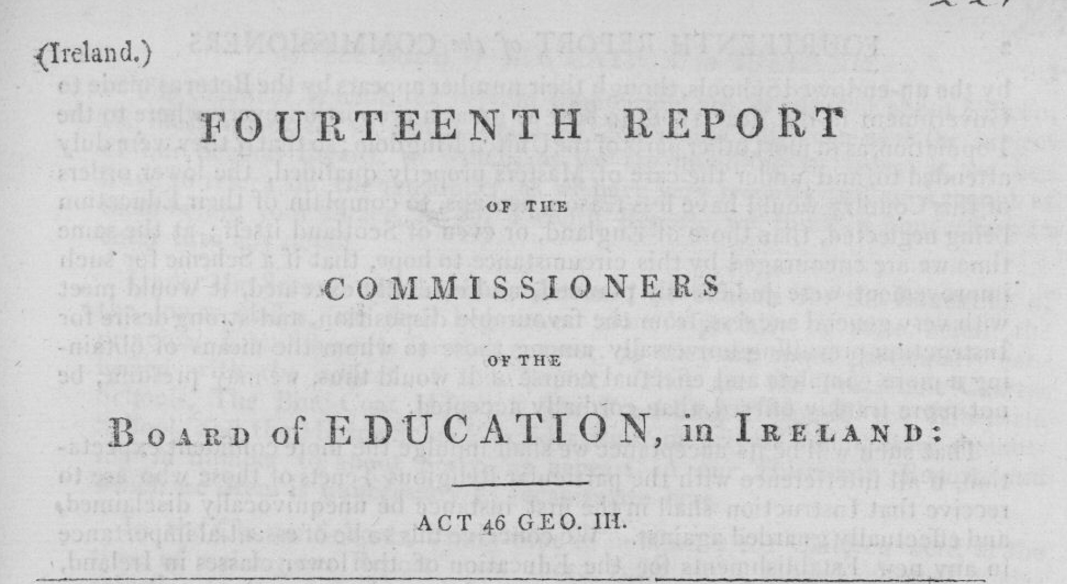
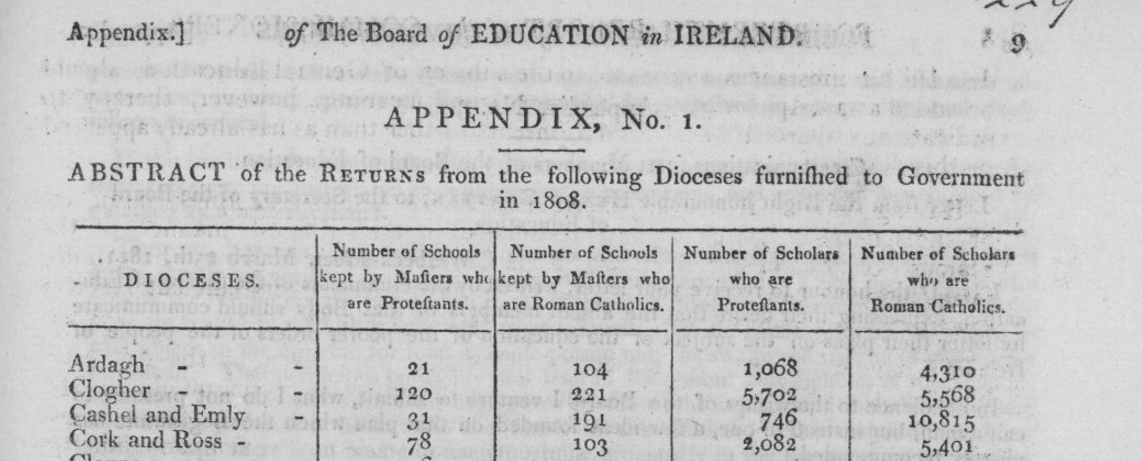
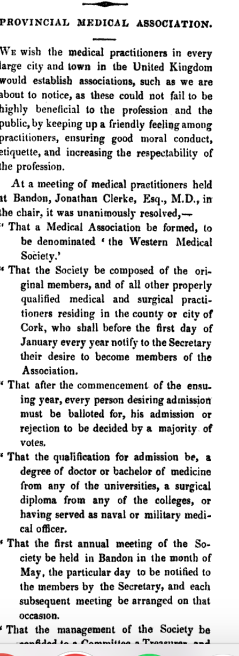
The Commission of Public Instruction, Ireland Report 1835

This sets out on a parish basis the provision of local education.  The following are the details for ‘Durruskilcrohane’:

Female school kept by Eliza Daly with an annual grant from the British and Irish Ladies School Society of £12, it had 83 females, average daily attendance of 55 and increasing. Instruction consisted of reading, writing, arithmetic, needlework, the scriptures, and Church catechism.

Day school kept by James Kingston (he is described a RC elsewhere), with an annual grant from the Association for Discontinuing Vice of £8; house, rent free, and an acre of ground from the Vicar.  30 males average daily attendance 22 stationary. Instruction consisted of reading, writing, arithmetic, the scriptures, and Church catechism to the Protestants.

Day school kept by Samuel Hatfield, subscriptions from the Vicar and others and the payment by the children of 1s. 6d. a quarter, males 29, females 16.  Instruction consisted of reading, writing, arithmetic, the scriptures, and Church catechism, established June 9, 1834.

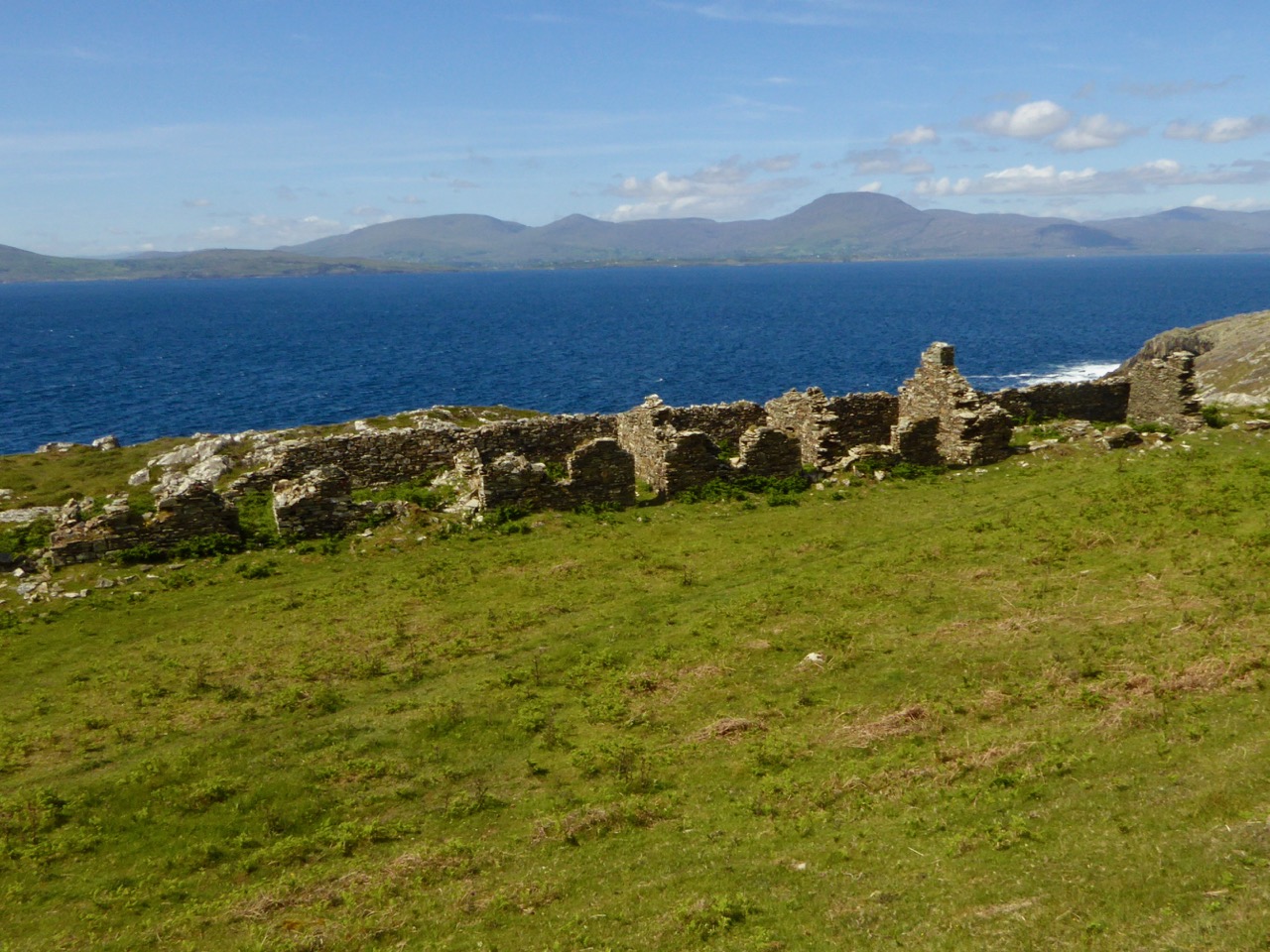
Day school kept by Timothy Daly, an annual grant from the London Hibernian Society of 1s. per quarter for each child, and payments by the children of 1s per quarter, established 1832.  91 males and 11 females average daily attendance 65 increasing. Instruction consisted of reading, writing, arithmetic, and the scriptures. This is probably the school at Sea Lodge grant aided by the Society for the Education of the Poor in Ireland in 1821.   Timothy Daly, a Catholic was 24 in 1824. Most of their schools in West Cork had Protestant teachers and the patrons were the local Church of Ireland clergy.   In this case the patron was Nathaniel Evanson. The walls of the school are still extant to the west of Durrus Court at Gearhameen.  

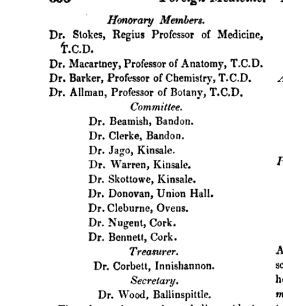
Sea Lodge was in the tithe applottments occupied by Nathaniel Evanson Junior some distance away Nathaniel Evanson Senior was at Durrus Court.   The school was located up a bridge path now overgrown off the former road from Durrus Court to Gearhameen now the Sheeps Head Way.  Given the involvement of the Evansons the landlords of Dromnea, Kilcrohane,  the location of the former Daly Bardic School the master Timothy Daly may be from there.

Not to be confused with Sea Lodge on the coast road nearby.

National School kept by John McCarthy, annual grant from the Board of £8, and payment of 6d. a quarter by the children.  61 males 39 females average daily attendance 55 increasing.  Instruction consisted of reading, writing, arithmetic, and the Roman Catholic Catechism.

Female school kept by Margaret Forbes, annual grant from the London Ladies Society of £12, 14 males 72 females average daily attendance 35 increasing.  Instruction consisted of reading, writing, arithmetic, needlework, and the scriptures.

Hedge School kept by Thomas Toomey, payment by the children, from 1s. 6d. to 3s. a quarter, males 58 females 10 summer attendance 40.  Instruction consisted of reading, writing, arithmetic, and the Roman Catholic Catechism

Sunday school books from the Sunday School Society males 25 females 55 average 40 increasing, the scriptures
20170527_235341


….

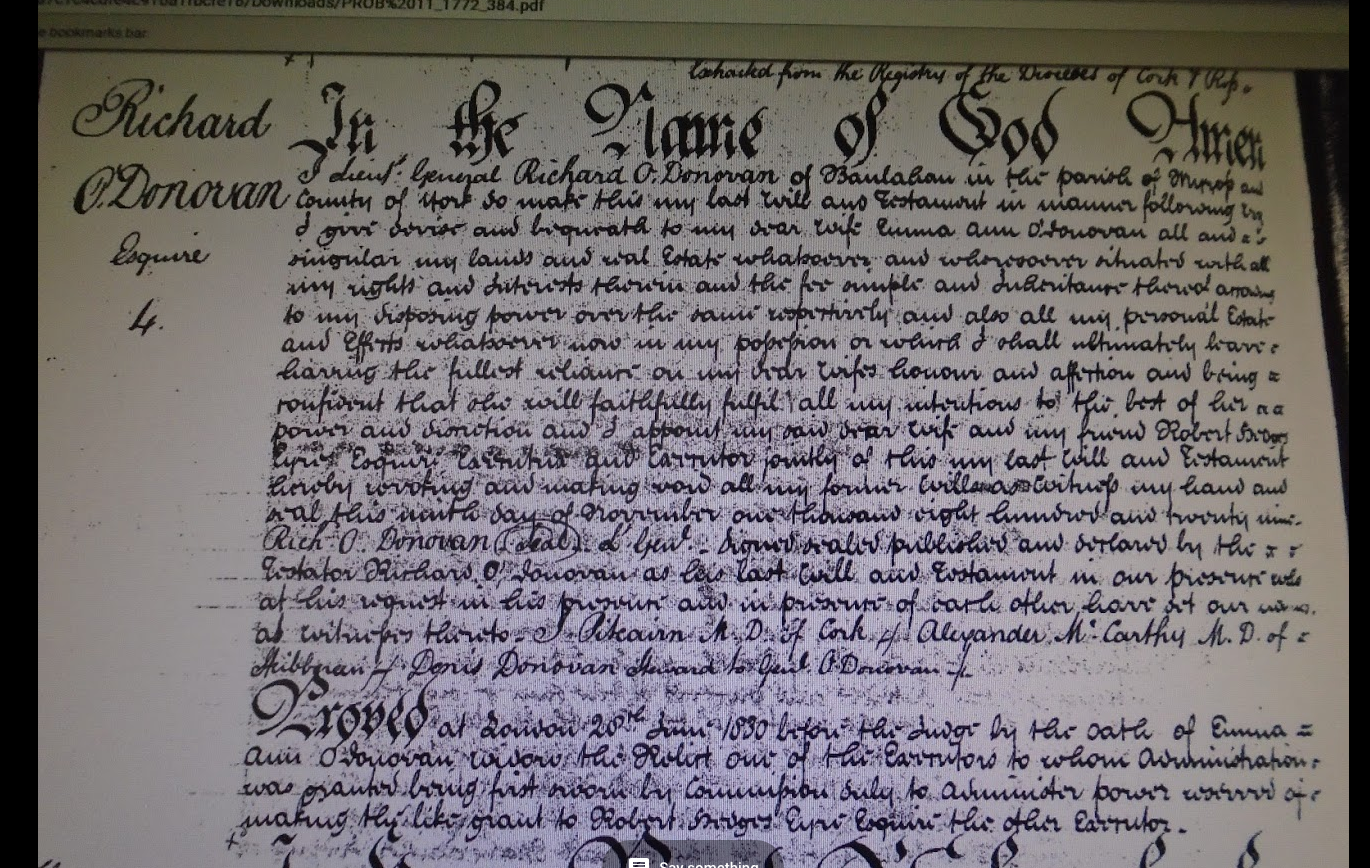
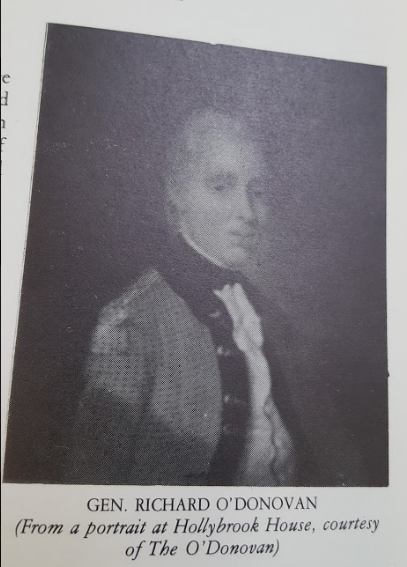
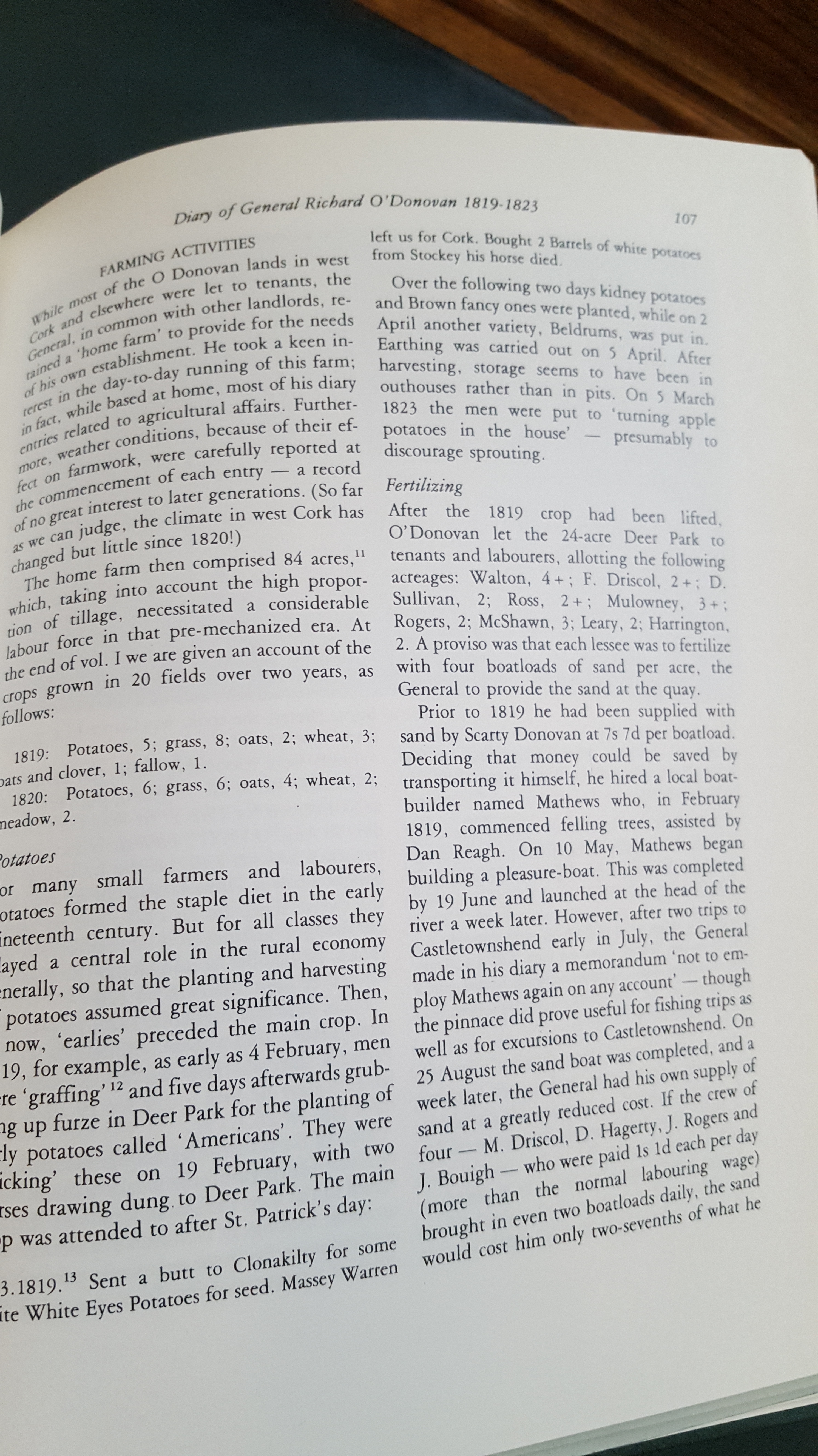
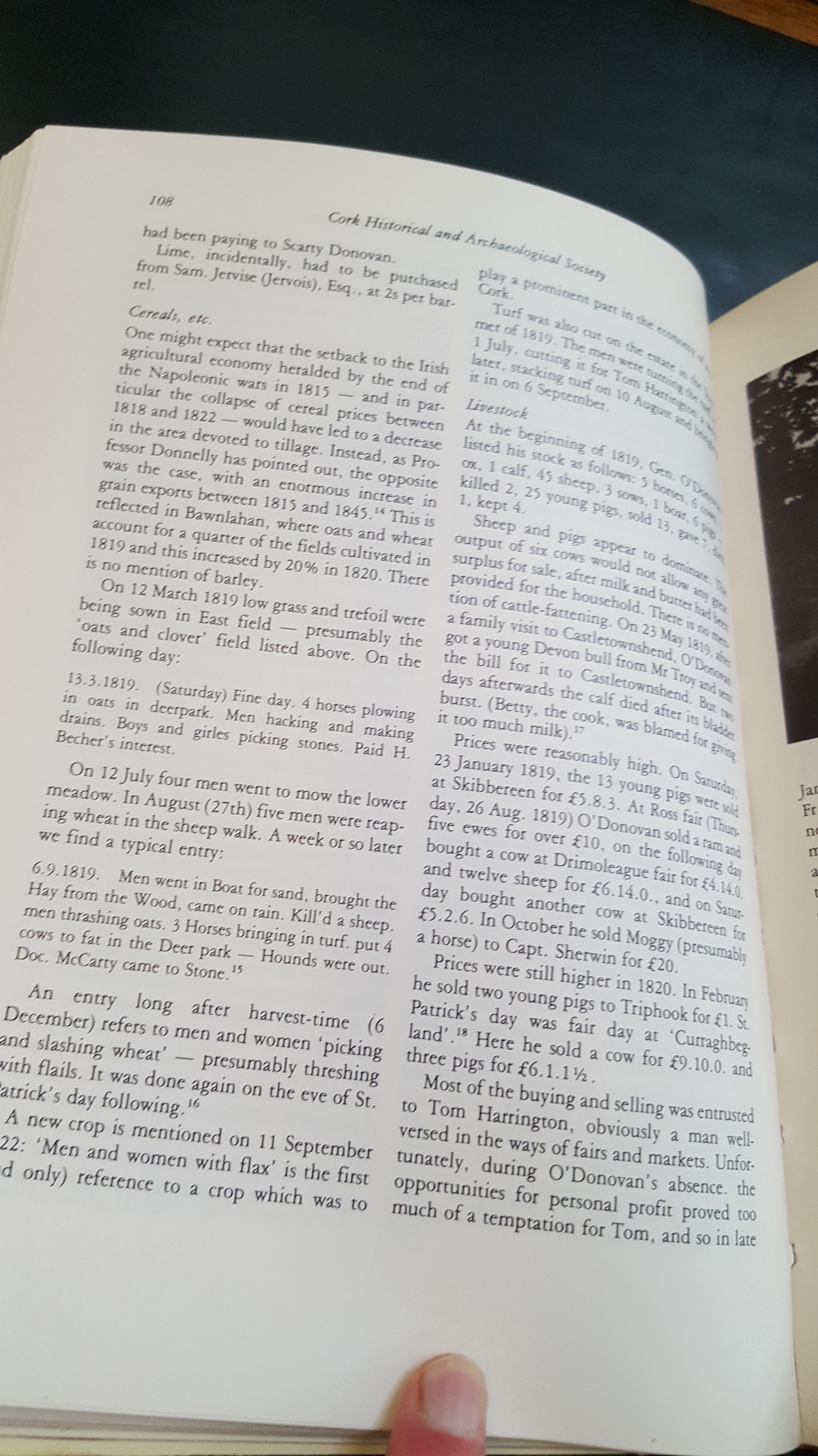
1819. At Bawnlahan, (Bán Leathan/Broad Lea), Skibbereen, West Cork, House of ‘The O’Donovan’, Liutenant General Richard O’Donovan (1768-1829), Potatoes, Using Grufán 4th February, Planting Earlies ‘American’ 19th February, Main Crop after St. Patrick’s Day, Kidney Potatoes, Brown Fancy, Beldrums, White Eyed Potatoes, 1823′ Apple Potatoes’. Using Sea Sand as Fertilizer.


https://www.google.ie/maps/place/Bawnlahan,+Co.+Cork/@51.5569393,-9.1741886,15z/data=!3m1!4b1!4m5!3m4!1s0x4845ae94a6f53007:0x2600c7a7bb4cc842!8m2!3d51.5574569!4d-9.1615702

..

1819.  At Bawnlahan, (Bán Leathan/Broad Lea),  Skibbereen, West Cork, House of ‘The O’Donovan’, Lieutenant General Richard O’Donovan (1768-1829), Potatoes, Using Grufán 4th February, Planting Earlies ‘American’ 19th February, Main Crop after St. Patrick’s Day, Kidney Potatoes, Brown Fancy, Beldrums, White Eyed Potatoes, 1823′ Apple Potatoes’.  Using Sea Sand as Fertilizer.

From his diaries at Bath (Avon) Reference Library transcribed Diarmuid Ó Murchadha, courtesy JCHAS, 1988.

….

1829. Death of The O’Donovan, General O’Donovan in his 61st Year, Bawnlahan, Skibbereen, West Cork. and Passing of Chieftainship of Clann Cathal to Montpelier (Douglas, Cork) Branch.

Lt Col Richard O’Donovan of Bawnlahan, Skibbereen, West Cork, son of Daniel O’Donovan, The O’Donovan of Clancahill’ and Jane Beecher, 1768; Major in 6th Dragoons 19 December 1799; Lieutenant-Colonel 2 May 1800; brevet Colonel 25 July 1810; subsequently Major-General 4 June 1813; Lieutenant-General 27 May 1825; Recognised at ‘The O’Donovan’, died Ireland November 1829.

1763. Magazine of Magazines [Limerick] April 1763 “At Corke, Daniel O’Donovan (The O’Donovan) of Banlahan (Myross, Skibbereen) to Miss Jane Beecher”

1639 Ode In Old Irish (Translated) to Daniel O’Donovan, Superintendent of the West of Munster…Illustrious Chieftain of the Corenian Blood. From the papers of Lieutenant General Richard O’Donovan (The O’Donovan), Bawnlahan (1768-1829)

Screen Shot 2018-07-16 at 17.03.34
Screen Shot 2017-06-01 at 21.25.34

….

20170601_152311
20170601_152320

….

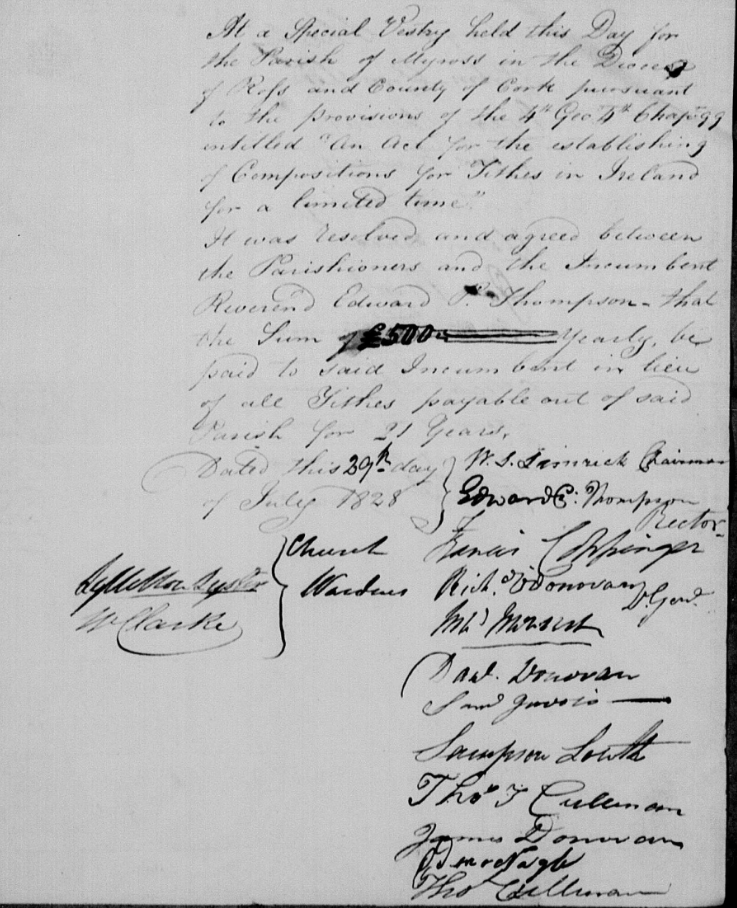
1825 Myross Select Vestry setting tithes at £500, churchwardens, Lyttelton Lyster, Glandore, William Clarke (Agent Rev. Thompson), Chairman W.S. Limrick, Rev. Edward. P. Thompson, Rector, Francis Coppinger (Magistrate), Myross Wood, The O’Donovan, Richard O’Donovan, Gent., Bawnlahan, Daniel Donovan, Samuel Jervois, Brade, Sampson Louth, Thomas F. Cullinane, James Donovan, Thomas Cullinane.

Myross Select Vestry re tithes note among vestrymen is a Catholic Magistrate:

Francis H. Coppinger Esq., Myross Wood, Rosscarbery, Pre 1830, 1832 tithes, sitting Union Hall,1835, Subscriber Lewis Topographical Dictionary of Ireland 1837.  Member Commission on Magistrates 1838. May be Francis Coppinger Esq., Parkmore for 1839 Bandon  dinner for Daniel O’Connell. Monkstown Dublin, 1870, 2,047 acres. Attending dinner Devonshire Arms Hotel Bandon for Daniel O’Connell 1839, listed Parkview, Bandon, listed 1843.  Bandon 1840 petition for Catholic Equality. Invitation by Henry Townsend DL, 1839, on behalf of The Reformers of the West Riding of Cork to Daniel O’Connell MP to Dinner in Bandon, Co Cork, with 200 Liberals in attendance including, Francis Bernard Beamish MP (1802-1868), Rickard Deasy (1766-1852) Brewer Clonakilty, James Clugston Allman Distiller Bandon, James Redmond Barry J.P., Commissioner for Fisheries, Edward O’Brien, Masonic Lodge Bandon, John Hurley Brewer, Major E. Broderick, Henry Owen Beecher Townsend (1775-1847), Major Mathew Scott J.P. (1779-1844), Philip Harding, Carrigafooka, Macroom, Richard Dowden (1794-1861) Unitarian, Frances Coppinger Esq., Parkview, Bandon.

 A meeting of the parishioners of Myross was held in the chapel in Union Hall on 24 February 1832, chaired by a member of the local gentry and Justice of the Peace, Francis Coppinger of Myross Wood. “It was fully attended.. ..about five hundred persons present, the bulk of the substantial farmers, many of the gentry and some squalid‐looking  with starvation staring out of their countenances. and covered with tatters, butall tithe payers” (SR). Evidence from many of those present spoke of the “great oppression of the tithes since Parson Thompson came to the parish” (SR) and the harsh methods imposed by his agent William Clarke on those unable to pay the tithe. The aim of the meeting was to agree and submit a petition to the British parliament regarding the unjust system of tithes in Ireland which was seen as a source of much distress and misery, especially in the parish of Myross.

This provoked an angry reaction from the more influential landed proprietors. “The combination entered into against the Rector of Myross stands now clearly revealed in all its blameable colours. The motive to it is particularly rancorous ‐ the behaviour of the contributors without a shadow of justice, or reason ‐ and the object of it to add if possible another unoffending victim to the list of persecuted and ruined Clergymen” (CC).

In response Francis Coppinger wrote to the editor of the Southern Reporter in which he provided copies of affidavits sworn before him; amongst them was one (No. 9) “County of Cork. DENIS HALLAHAN, BRYAN HOURIHAN and MARY HOURIHANE, widow, all of South Reen in the Parish of Myross, and in said County, came before me and voluntarily and severally on the oath of the Holy Evangelist, that in the autumn of 1830, Wm. Clarke distrained a quantity of dried fish, their property, for the money due to Mr. Thompson; that Clarke having brought the fish to his own house, deponents severally applied for their respective parts of it in order to take it to market for sale, at the same time offering Clarke security for the tithe if he would allow them to dispose of the fish; that  Clarke did not attend to their application, but kept the fish in his own possession, until deponents were obliged to let him have it at his own price, which was very little more than one‐half of what they consider its real value, and also charged them costs along with having the fish at his own price. Sworn before me this 10th day of March 1832. FRANCIS COPPINGER” (Southern Reporter). Thanks to Brian Limrick


..

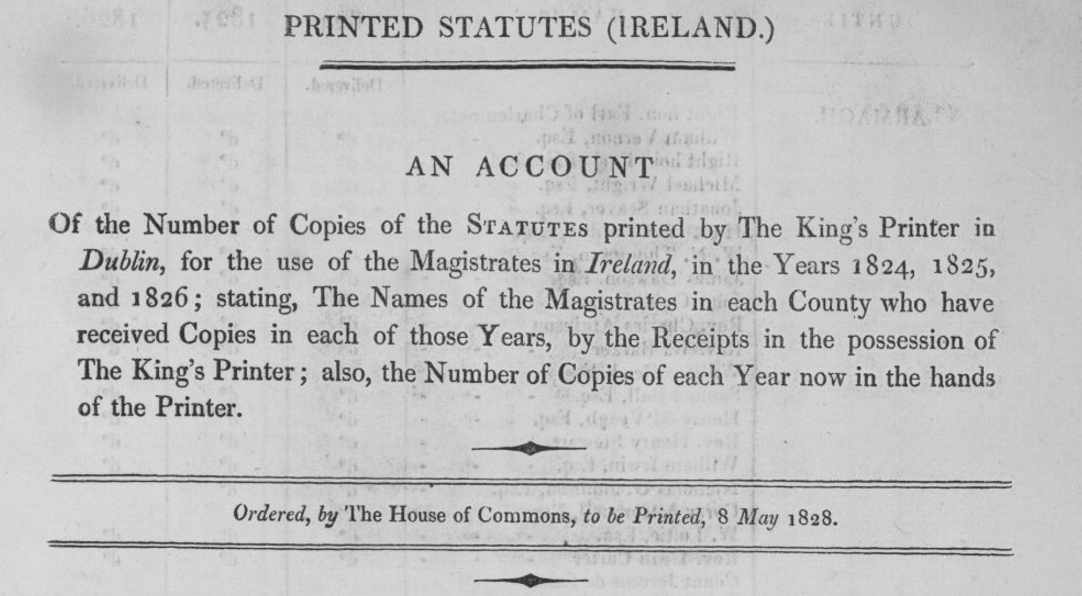
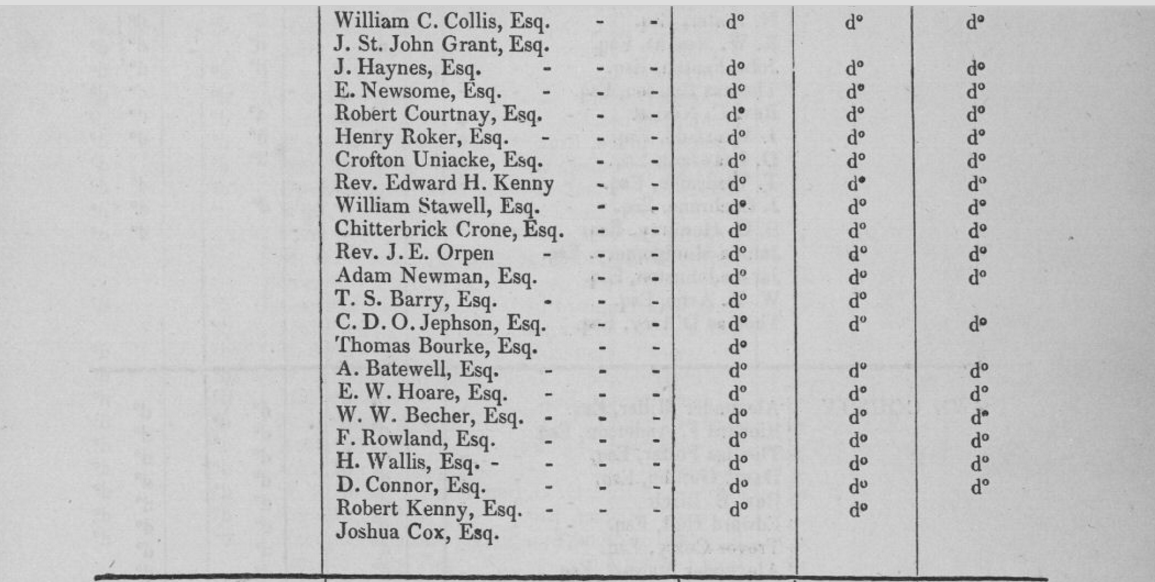
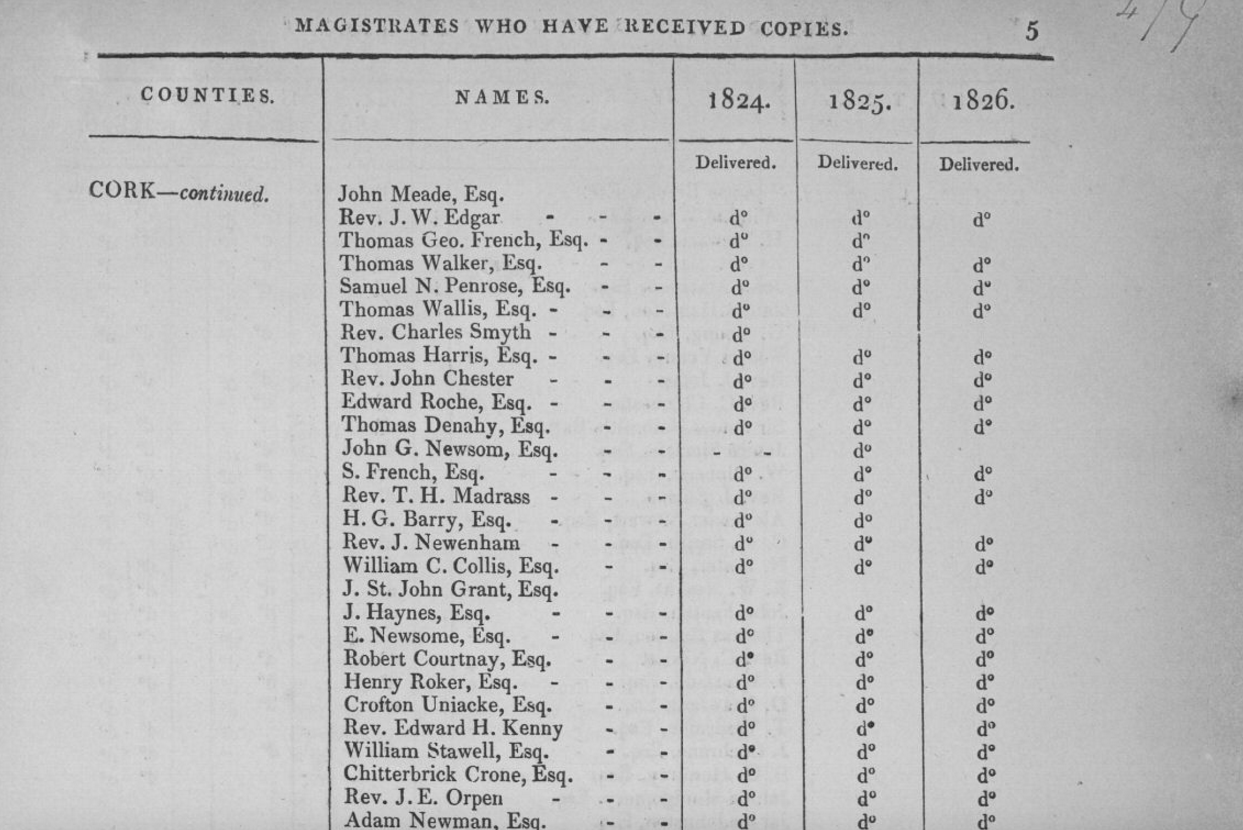
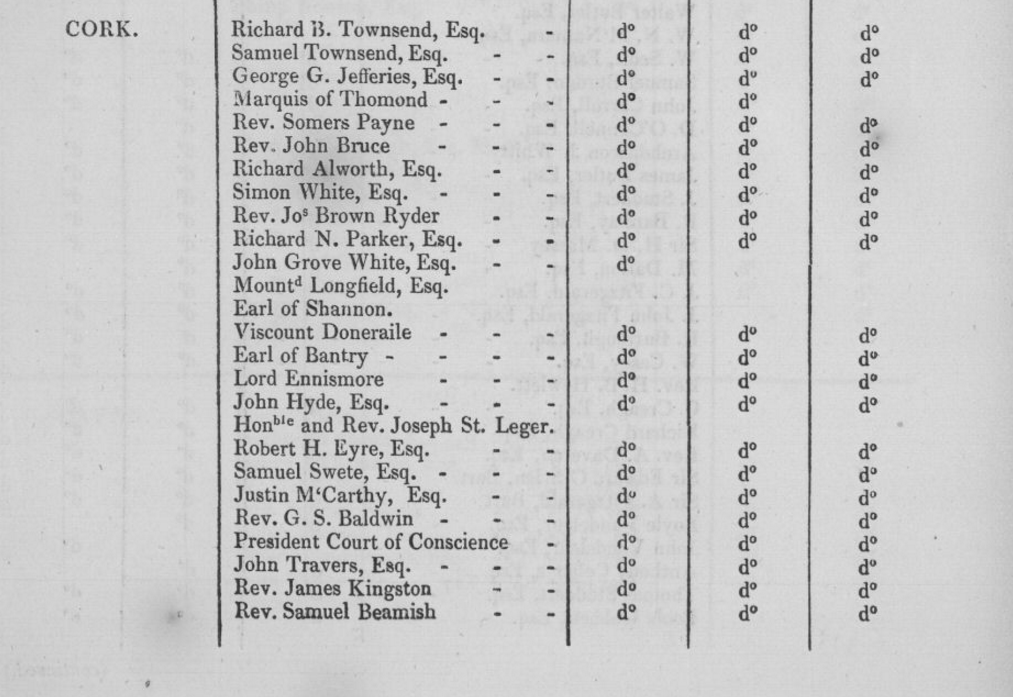
1824-6, Copies of The Statutes Printed by The King’s Printer Sent to Cork Magistrates.


1824-6, Copies of The Statutes Printed by The King’s Printer Sent to Cork Magistrates. Probably reflective of active Magistrates. Quite a number are Ministers of the Church of Ireland which at that time was Ireland’s State Church.


Cork Magistrates:


https://docs.google.com/document/d/1ZvT84JCKTIhMqqZjJsF_AUJLH8S820ksObykwOty3wg/edit?usp=drive_web


http://www.dippam.ac.uk/eppi/documents/10172/page/224939


Screen Shot 2017-05-29 at 09.08.07

Screen Shot 2017-05-29 at 09.07.47

Screen Shot 2017-05-29 at 09.07.35Screen Shot 2017-05-29 at 09.07.16

..


..


..


Sheep’s Head: Searching for Cornish Miners


Finola's avatarRoaringwater Journal

 Yesterday we did our favourite walk, along the Cahergal section of the Sheep’s Head Way. We had a goal – the remnants of the Gortavallig Mining Company which operated here briefly in the 1840s. Robert was researching this as part of all the West Cork/Cornwall connections related to the West Meets West Art Exhibition, which opens at Uillinn in Skibbereen next Friday (June 2).

Walking the Sheep’s Head Way, by Amanda Clarke, is our go-to book for everything on the Sheep’s Head. It’s an excellent resource and most of the information in this post comes from it. The stretch of the walk we did is described in two sections (as it’s part of the Way and also part of a loop walk), on pages 27 to 31, and pages 98-99 (Second Edition).

It was a fabulous day, sunny but not too hot – perfect for walking. The wildflowers…

View original post 810 more words

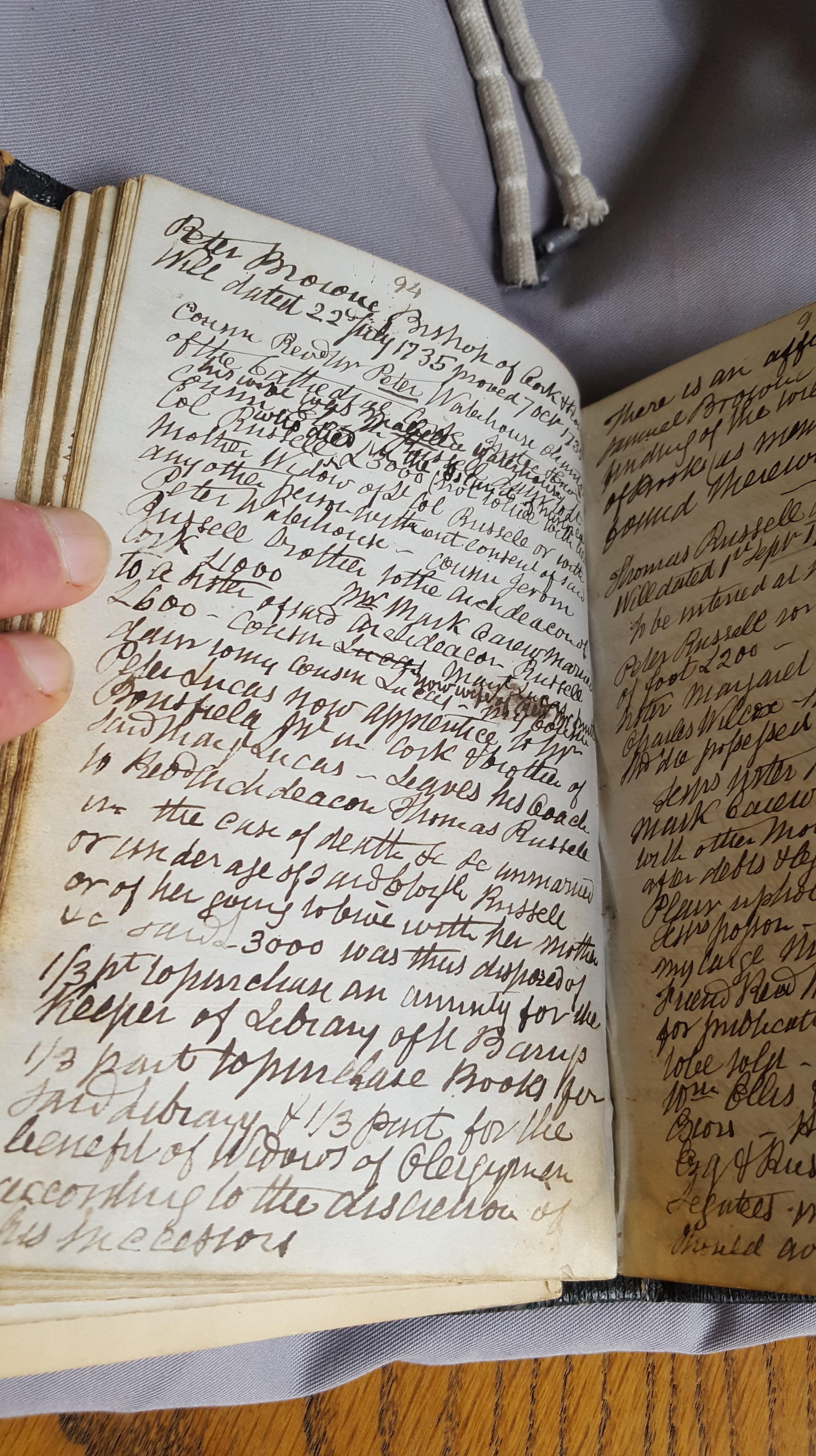
1735. Will of Bishop Peter Browne of Cork, £3,000 of which one third for the Keeper of the Library of St. Barrys, one third for the Purchase of Books. Peter Browne was responsible for creation of a ‘Publick library’ in the grounds of St FinBarre’s Cathedral in the 1720’s of what is today perhaps the oldest library building in Cork City.


1735.  Will of Bishop Peter Browne of Cork, £3,000 of which one third for the Keeper of the Library of St. Barrys, one third for the Purchase of Books.

This is the library of St. Finbrrs in Cork. Some years ago most of the contents were moved to the RCB Library, Rathgar in Dublin.

https://www.ireland.anglican.org/about/rcb-library

Included are the ledger rolls showing property rentals for various areas of West Cork, Letterlickey, Durrus, Ballydehob, Schull, Rosscarbery and the tithes 1780s for the South Liberties of Cork.  The library alos has extensive papers relating to Welply, Cork Genealogist.

Peter Browne was responsible for creation of a ‘Publick library’ in the grounds of St FinBarre’s Cathedral in the 1720’s of what is today perhaps the oldest library building in Cork City.

Bishop Peter Brown 1710-1735

https://en.wikipedia.org/wiki/Peter_Browne_(theologian)

The image is from the Ulster Office now in the Manuscript Section, Genealogy Collection, National Library.   Many old Cork wills are transcribed which were later destroyed in 1922.

20170523_172805


The Genetic Map Of Europe – Brilliant Maps


durrushistory's avatarWest Cork History

http://brilliantmaps.com/the-genetic-map-of-europe/

Finbar O Mahony21 June 08:07
I used this map in my presentation at Macroom last Saturday too. However, 110 million men in Europe share R1b – M269 so we need to drill much further down to find the more recently discovered SNPs that separate out the different septs in Ireland, particularly in Munster. We are getting there, however slowly.

View original post

West Cork Finally Gets a History Festival!


Finola's avatarRoaringwater Journal

For a place that’s dripping in history and archaeology, and with several active historical societies, it’s a wonder this hasn’t happened before.

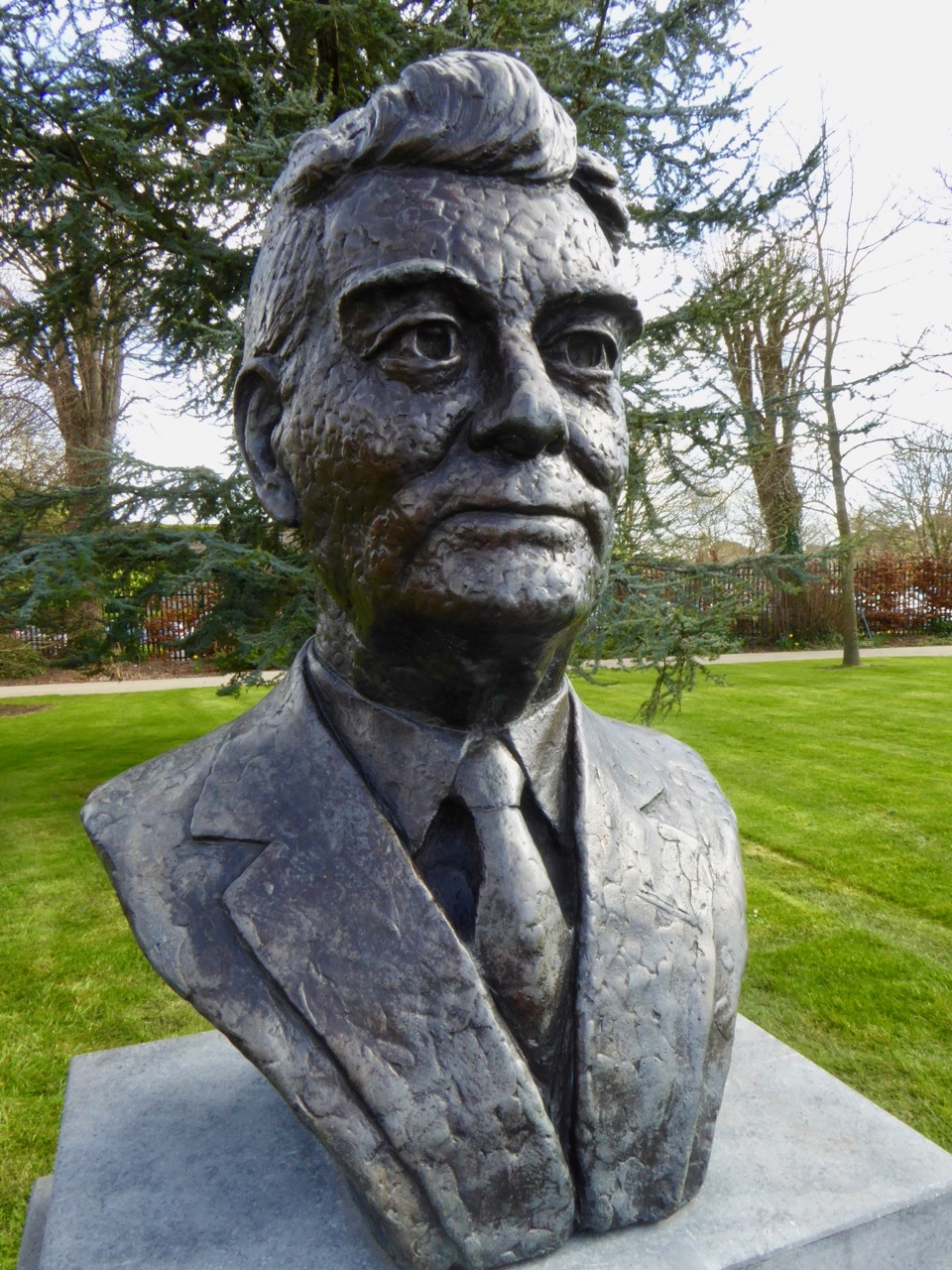
Tom Barry, bust by Seamus Murphy

The inaugural festival of the West Cork History Festival will take place just outside Skibbereen on the last weekend of July this year. Take a look at their website – it’s a great program, offering sessions from medieval to modern, from pirates and adventurers to soldiers, revolutionaries and poets.

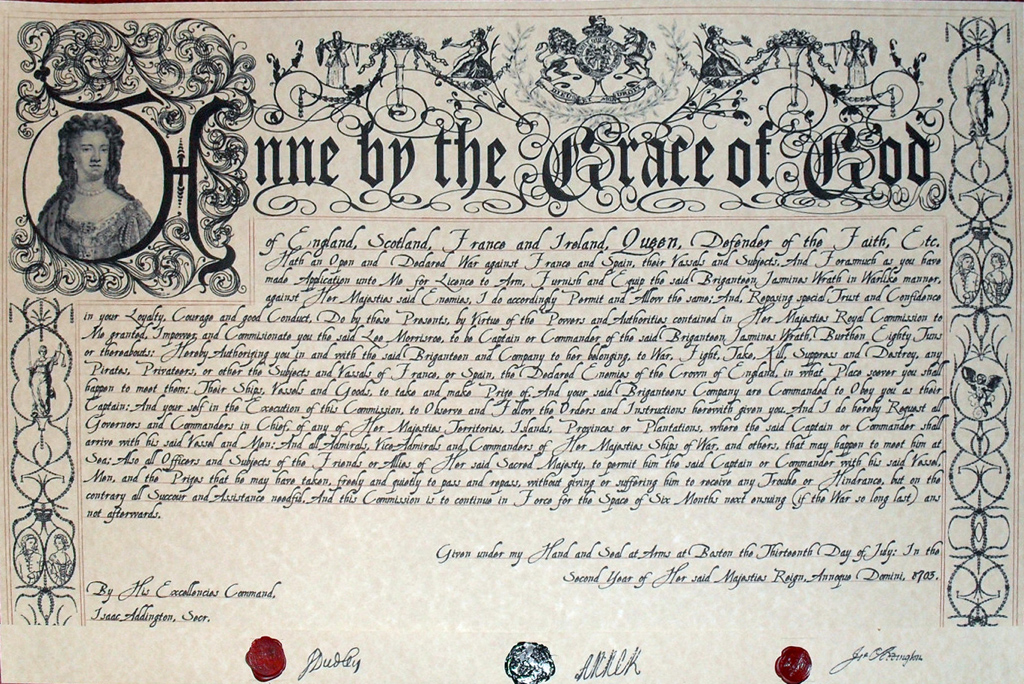
A Letter of Marque gave an individual permission to be a privateer – a form of legalised piracy

Although it’s got West Cork in the title, this is not only West Cork History. The organisers emphasise its eclectic nature and call it a festival of intellectual delights. National dimensions are obvious in discussions on the War of Independence and international ones in sessions on the First World War. West Cork gets a good…

View original post 637 more words

A Watery Tale


Finola's avatarRoaringwater Journal

Last year I got myself into trouble by saying how much I admired the new corten steel signs marking significant spots on the Wild Atlantic Way. My post – Showing the Way – produced howls of protest from many readers who had taken a dislike to them. I may well ruffle the same feathers again when I say that I’m impressed with the information boards which have now appeared to supplement those markers.

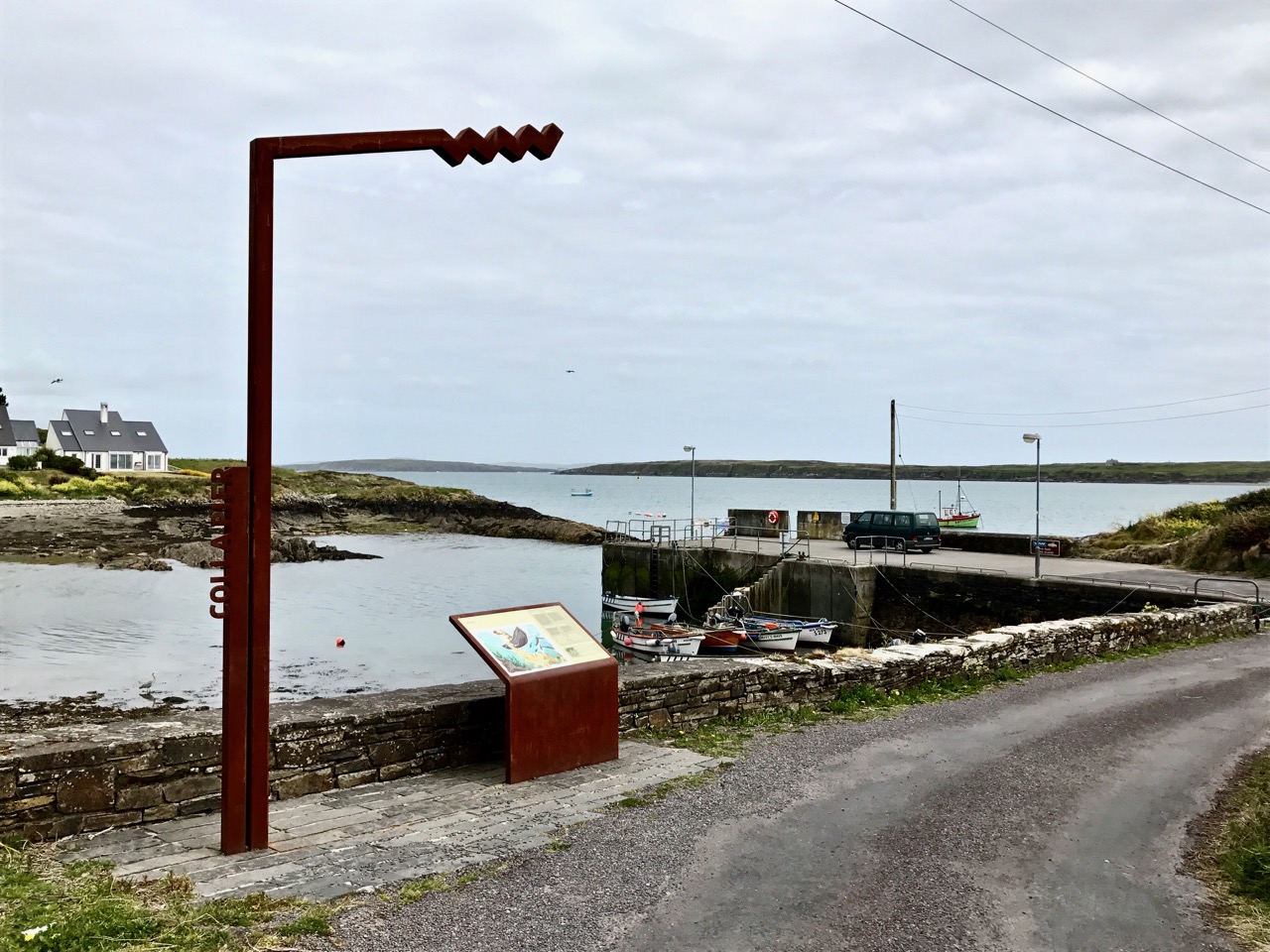
Wild Atlantic Way signage at Colla Pier, opposite Long Island

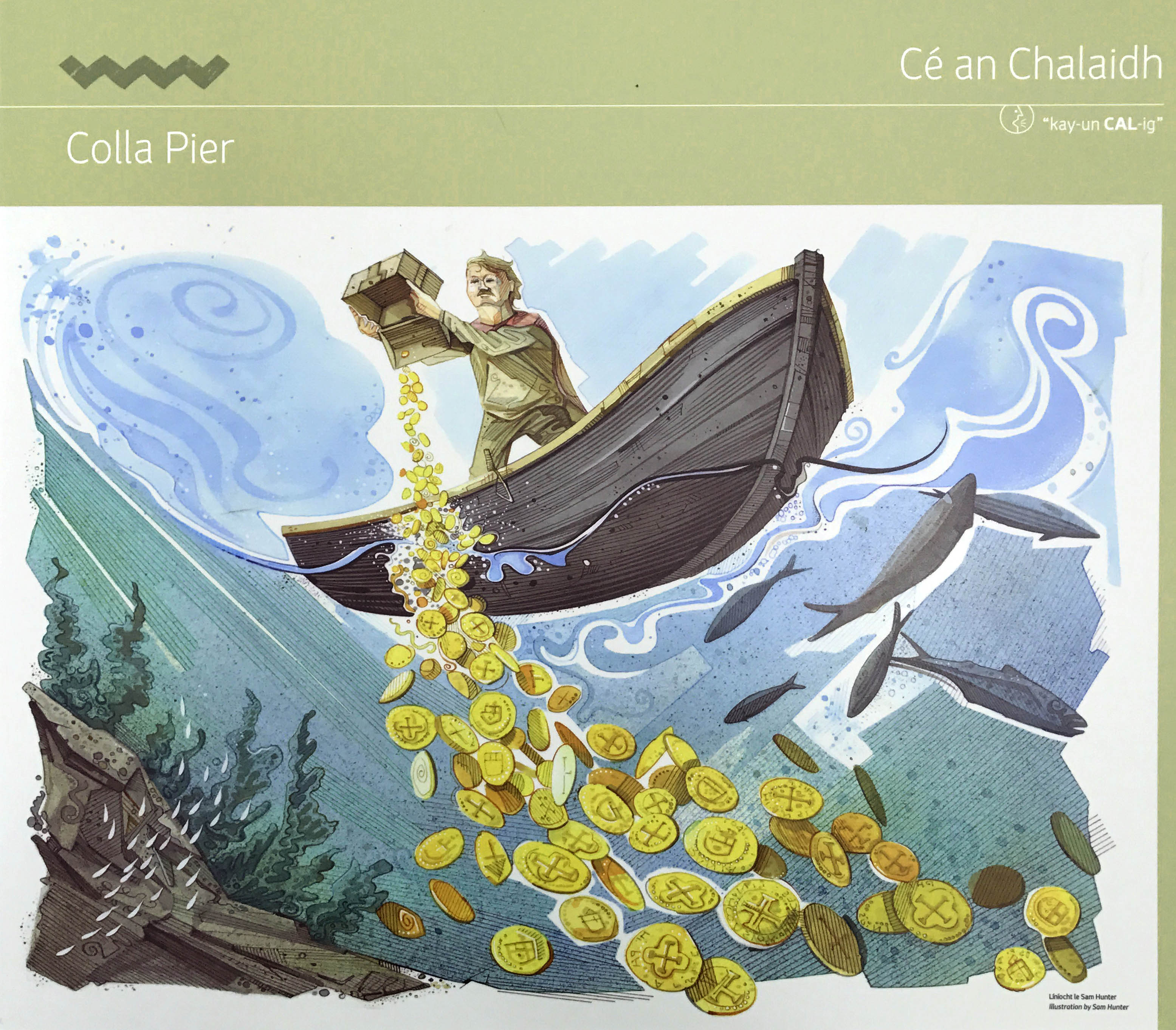
The example above, which we saw today, has appeared at Colla Pier, on the coast road running from Schull round to Crough Bay. The ferry serving Long Island sails from this pier. The board is mounted on a sturdy corten steel frame which should withstand all the elements. The illustration used on the new board (seen in our header picture) is by Sam Hunter and (to my eye, at…

View original post 407 more words