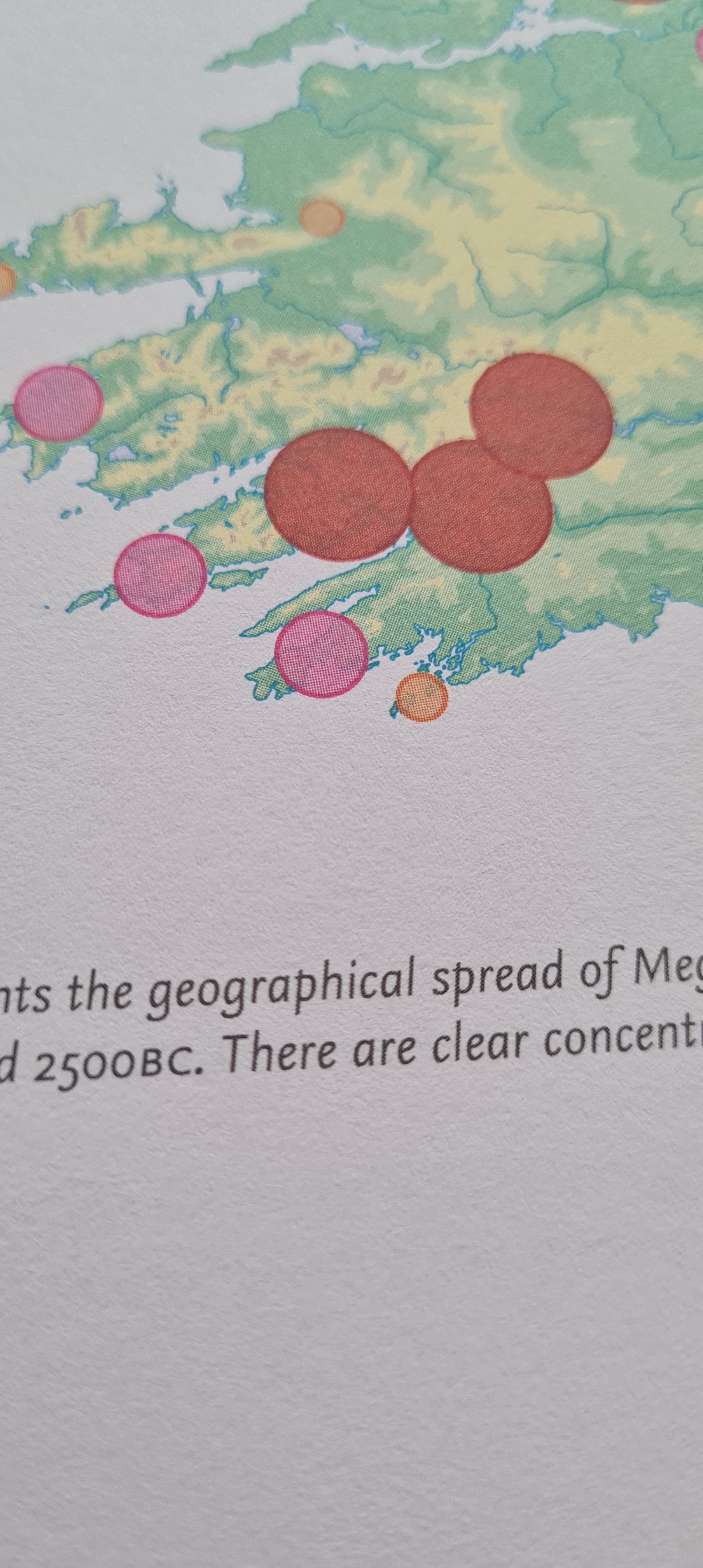
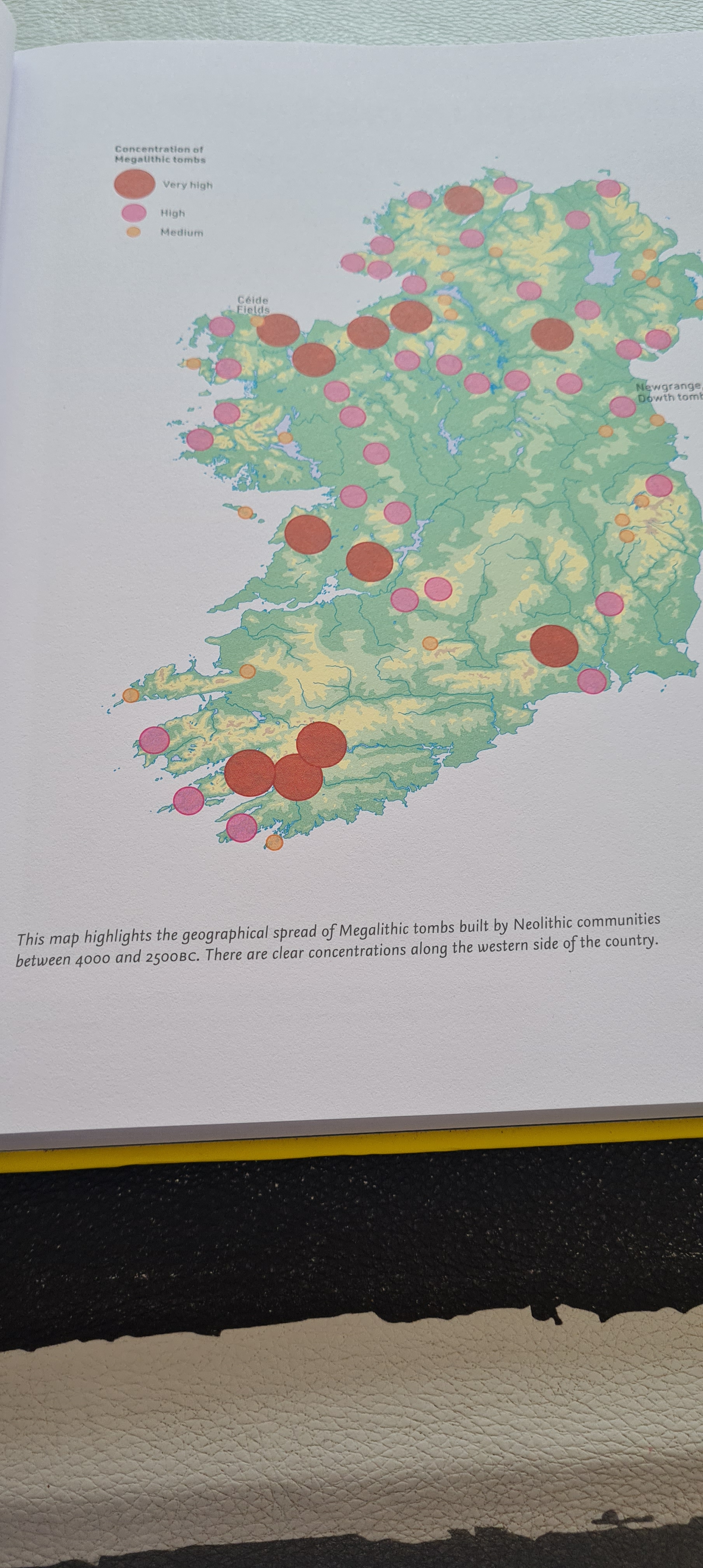
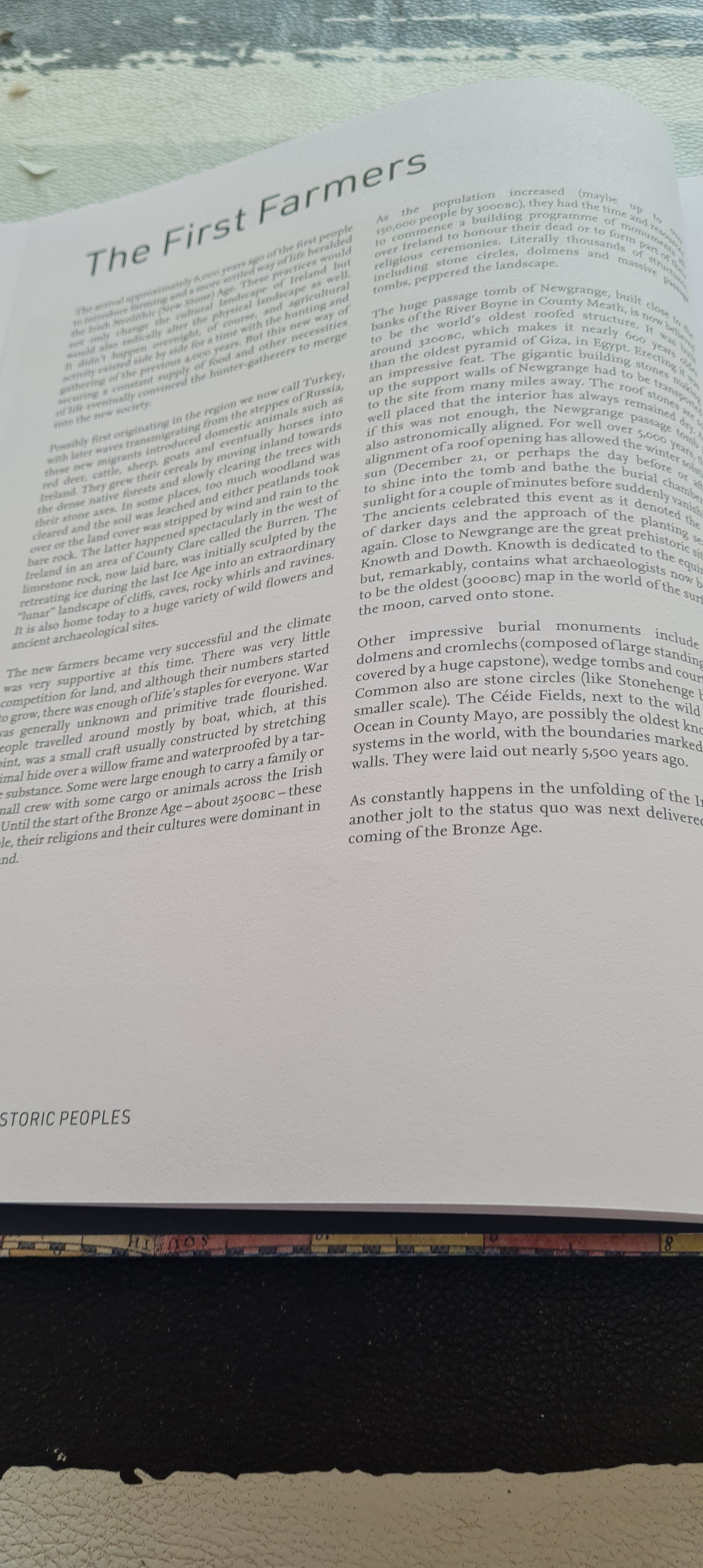
courtesy pat liddy.
07 Wednesday Feb 2024
Posted in Uncategorized
courtesy pat liddy.
01 Thursday Feb 2024
Posted in Uncategorized

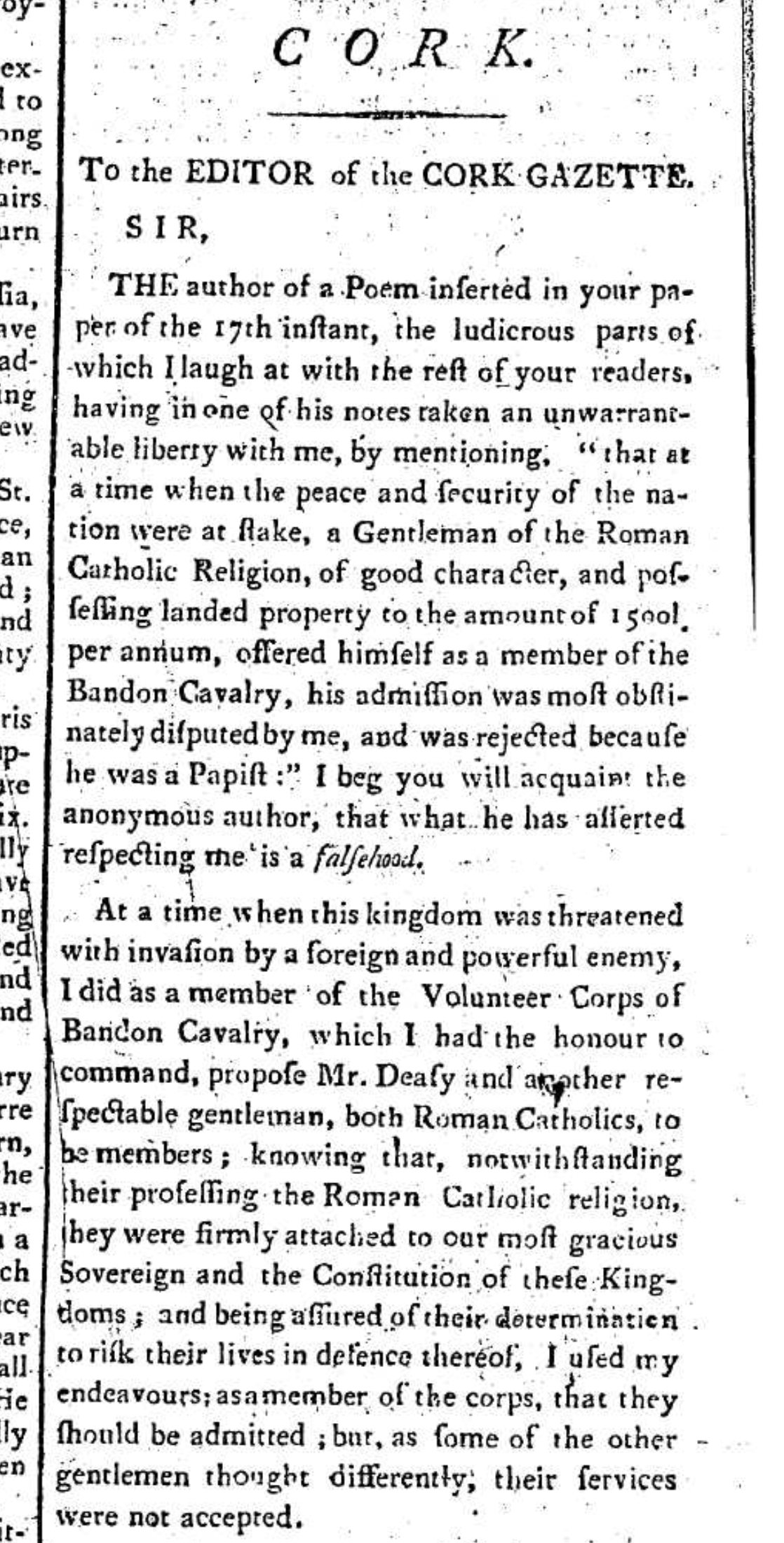
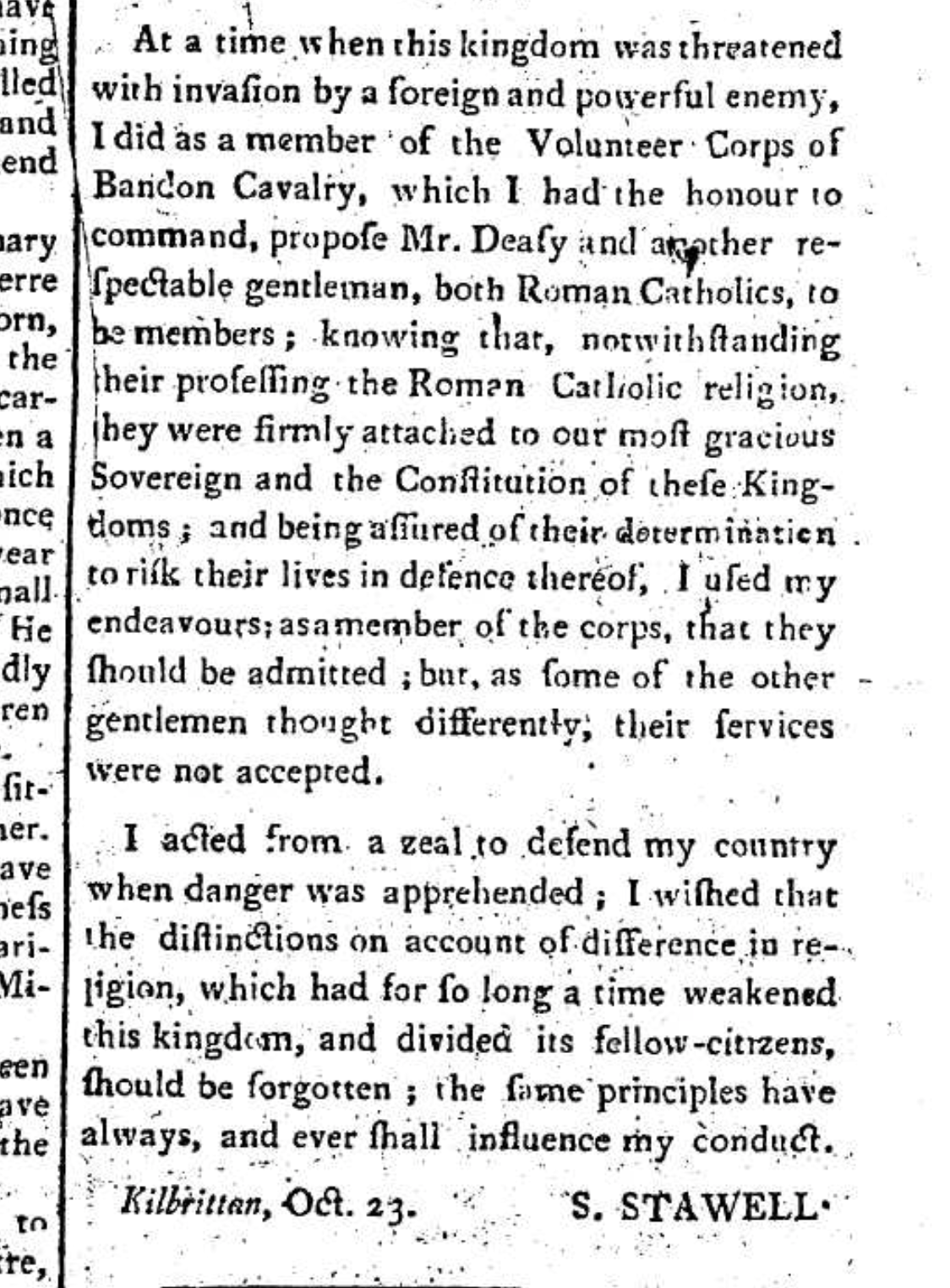
Proposer probably
Sampson Stawell (1741-1819), 1768, Kilbrittain, m. Hester Bernard, Castle Bernard, Bandon. Freeman of Cork 1768.Probably Timothy
Timothy Deasy The Elder (c 1739-), 1793, Barry’s Hall, Timoleague, 1793, Son Timothy and Ann Donovan m Honoria O’Donovan d Cornelius 1759, she had been housekeeper to her brother Rev. Daniel O’Donovn Parish Priest of Clonakilty their grandfather was Daniel O’Donovn of Glandore Castle who in the reign of King James 2 was an MP for Baltimore. His father held lands at Aghamonister, Lissycremin in the Parish of Lislee under the Earl of Shannon, when he was convicted of possessing arms around 1745 and jailed at the South Gate Prison in Cork. His lease was forfeit and the family moved to Clonakilty. Shown 1788 as owner of Pookeen townland, Parish of Drimoleague, adjoining lands Carbery Estate map of Sir John Freke, Bart. Listed supporter of Act of Union, 1799 Son Morgan Deasy Doctor of Physic joint owner of brewery concern with brother Richard his executor Dr. James Donovan M.D. Barry Hall. First Catholics to be J.P.s since the Treaty of Limerick. Family fortune is reputed to be based on smuggling. Daughter Ann married Dr. James Donovan son of Alexander of Squince head of the Clann Lochlann branch second in seniority to the Clann Cathal Sept. Founded brewery in 1807 at Shannon Square, Clonakilty. Superseded 1810-30. Author unpublished memoir re atrocities in Clonakilty in 1798 in particular Captain Hungerford of The Island, Clonakilty.. Son Timothy the Younger 1792 party of pre marriage deed with Anna Maria Barry of Leamara, Tim Deasy, the younger of London and Barry’s Hall, witness Charles McCarthy, Gortnascreena. Related to O’Donovans of Squince, Skibbereen, O’Donovans, O’Donovan’s Cove, Durrus
Rickard Deasy, Superseded 1822, Clonakilty, Brewing family. Deasy, Rickart, Esq., of Clonakilty, to Miss Cotter, at Millstreet – (CMC 8/9/1802). Father Collins, PP Bantry evidence to Parliamentary Enquiry that he had £2,000 per annum when half pay Protestant Officers on £40 per annum were preferred for Quarter Assizes Juries in Bantry. 1828 seeking reform of the House of Commons. Reinstatement supported by Dr John Richard Elmore, Clonakilty. 1822 local fishery committee. 1822 insisted that inquest be held into the killing of Patrick Buckley on a poteen raid commanded by Lieutenant Hungerford of Clonakilty later Yeomanry Sergeant acquitted. 1822 with Dr. Elmore and John Molony seeking Chief Secretary; support for harbour works for poor relief at Ring. Attending dinner Devonshire Arms Hotel for Daniel O’Connell 1839 listed as J.P. Chairman of meeting of Independent Liberal Electors thanking electoral personnel for Impartiality in 1835 elections. The Reformers of the West Riding of Cork to Daniel O’Connell MP to Dinner in Bandon, Co Cork, with 200 Liberals in attendance including, Francis Bernard Beamish MP (1802-1868), Rickard Deasy (1766-1852) Brewer Clonakilty, James Clugston Allman Distiller Bandon, James Redmond Barry J.P., Commissioner for Fisheries, Edward O’Brien, Masonic Lodge Bandon, John Hurley Brewer, Major E. Broderick, Henry Owen Beecher Townsend (1775-1847), Major Mathew Scott J.P. (1779-1844), Philip Harding, Carrigafooka, Macroom, Richard Dowden (1794-1861) Unitarian, Frances Coppinger Esq., Parkview, Bandon. 1849 Dunmanway Union publicly notified that he did not avail of a grant under Land Improvement and Drainage Act 1847 to improve his townlands at Pookeen, Gurrane, Inch and Cilleraine with over 200 paupers.
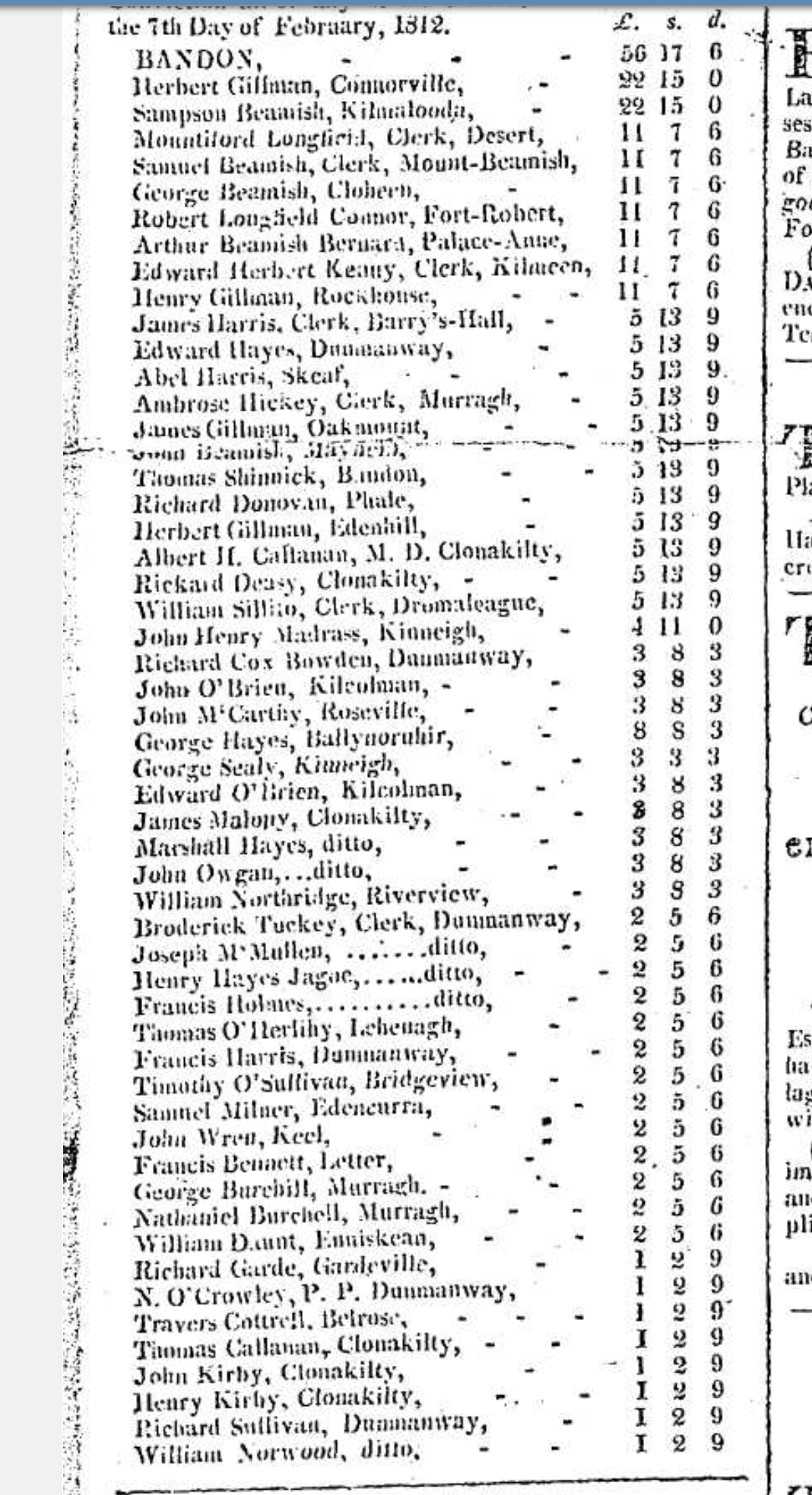
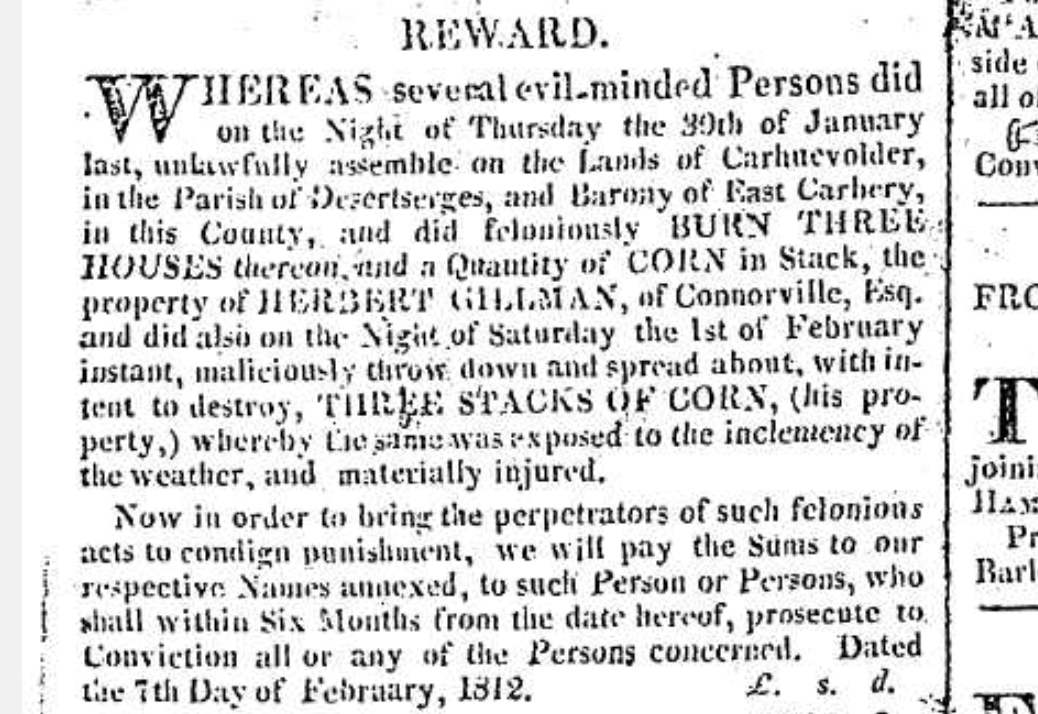
1812. All forgotten. One of a Group Including the Earl of Bandon Offering a Reward for the Apprehension of Those Responsible for House Burnings at Desertserges. Probably Timothy’s son Rickard.

28 Sunday Jan 2024
Posted in Uncategorized


26 Friday Jan 2024
Posted in Uncategorized
.
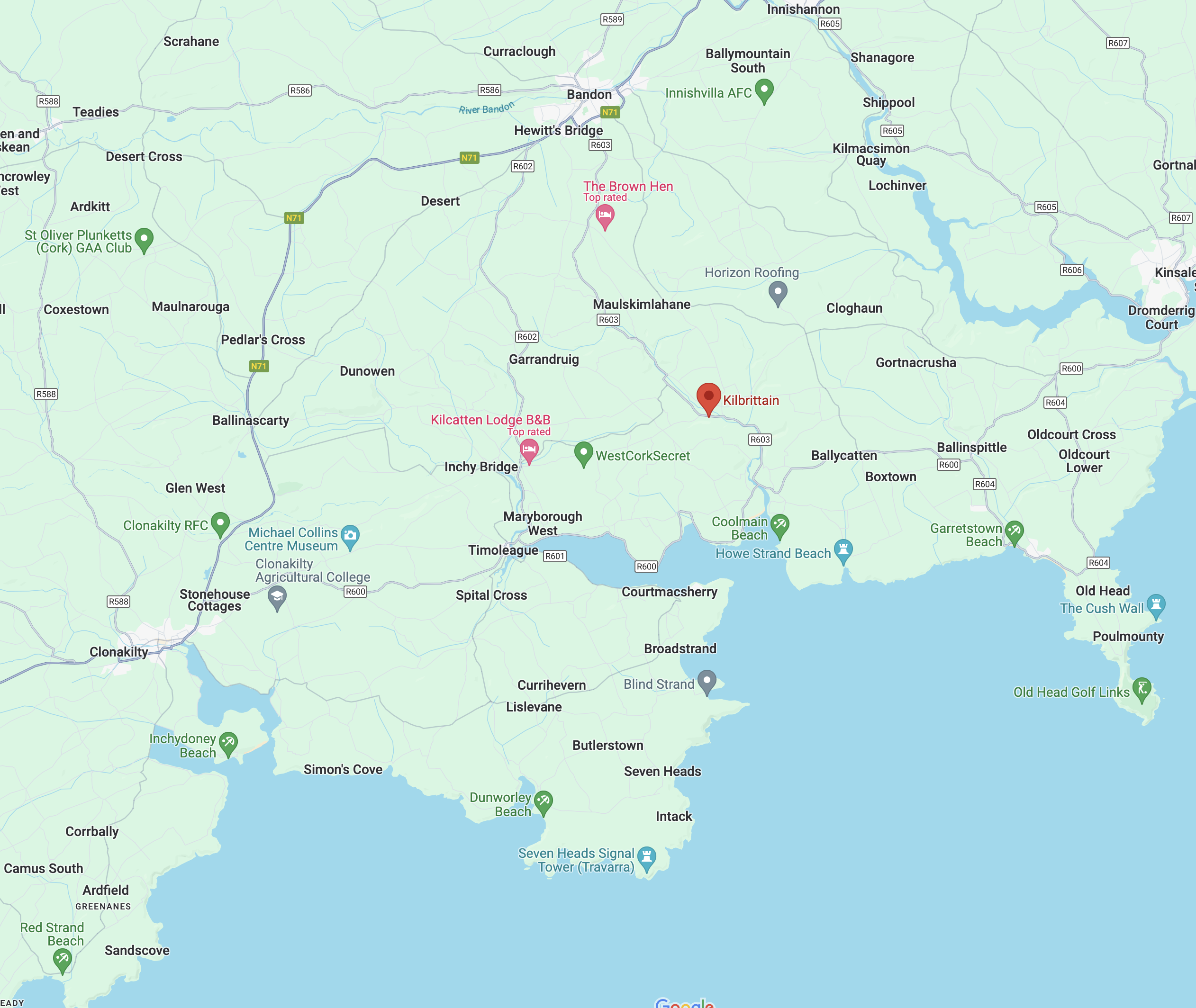
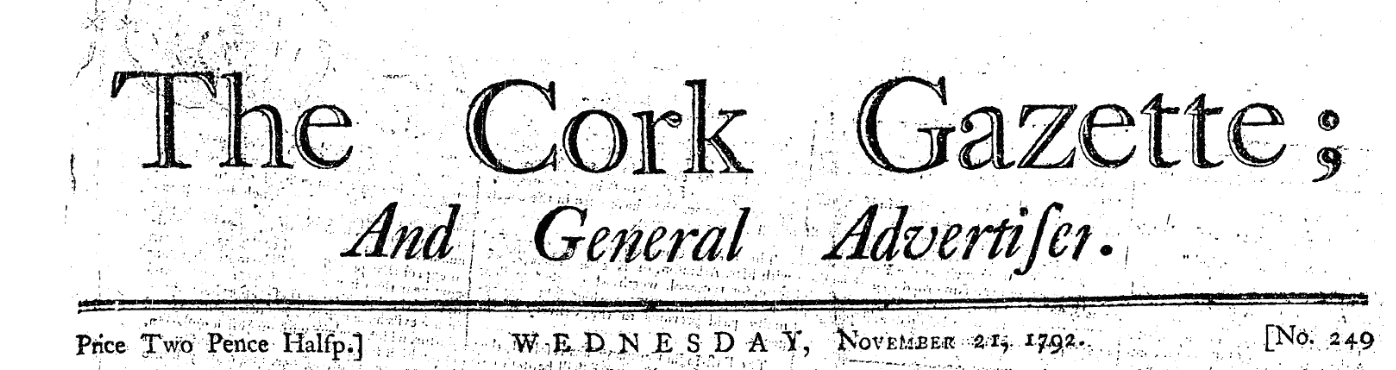
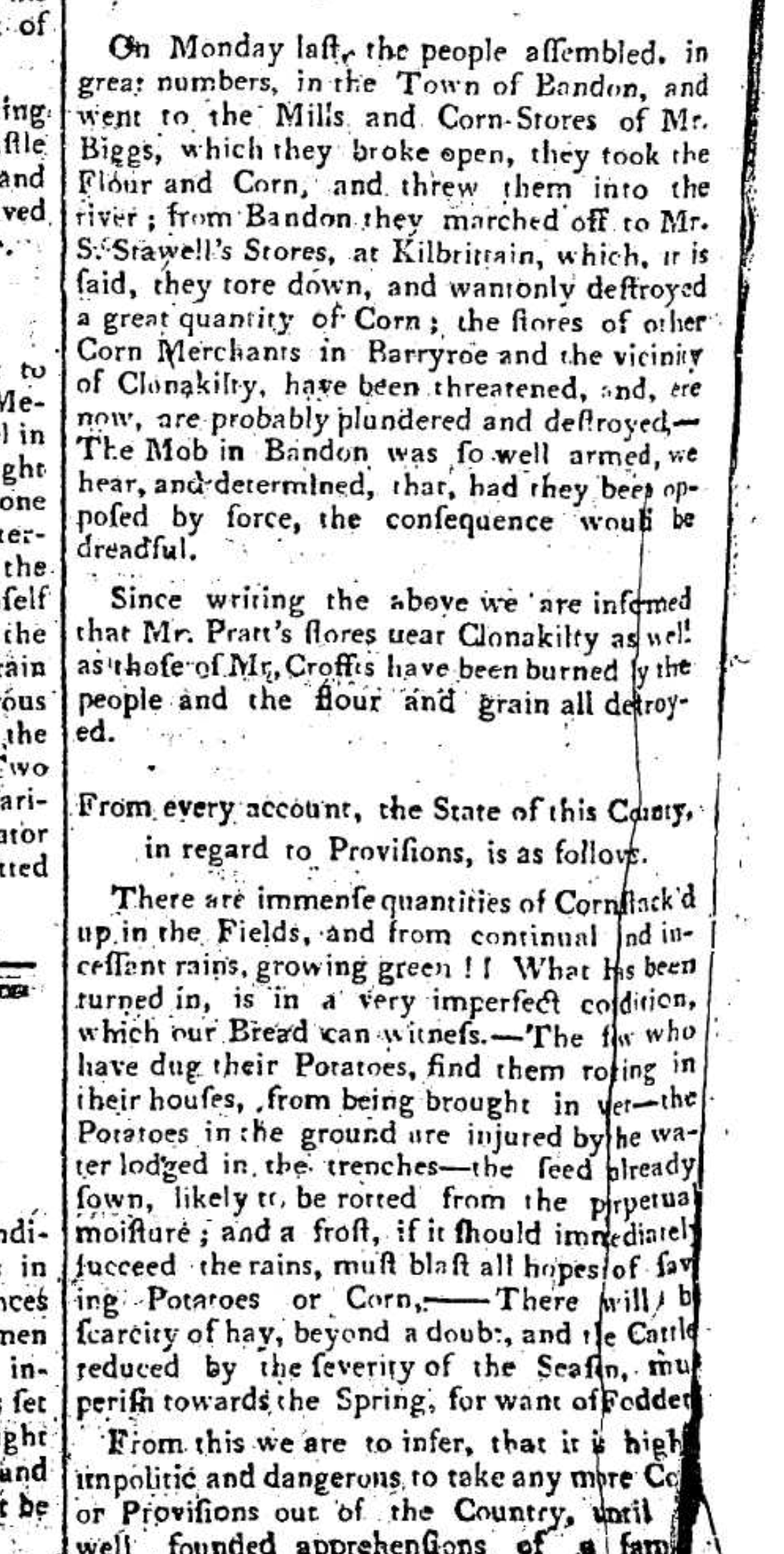
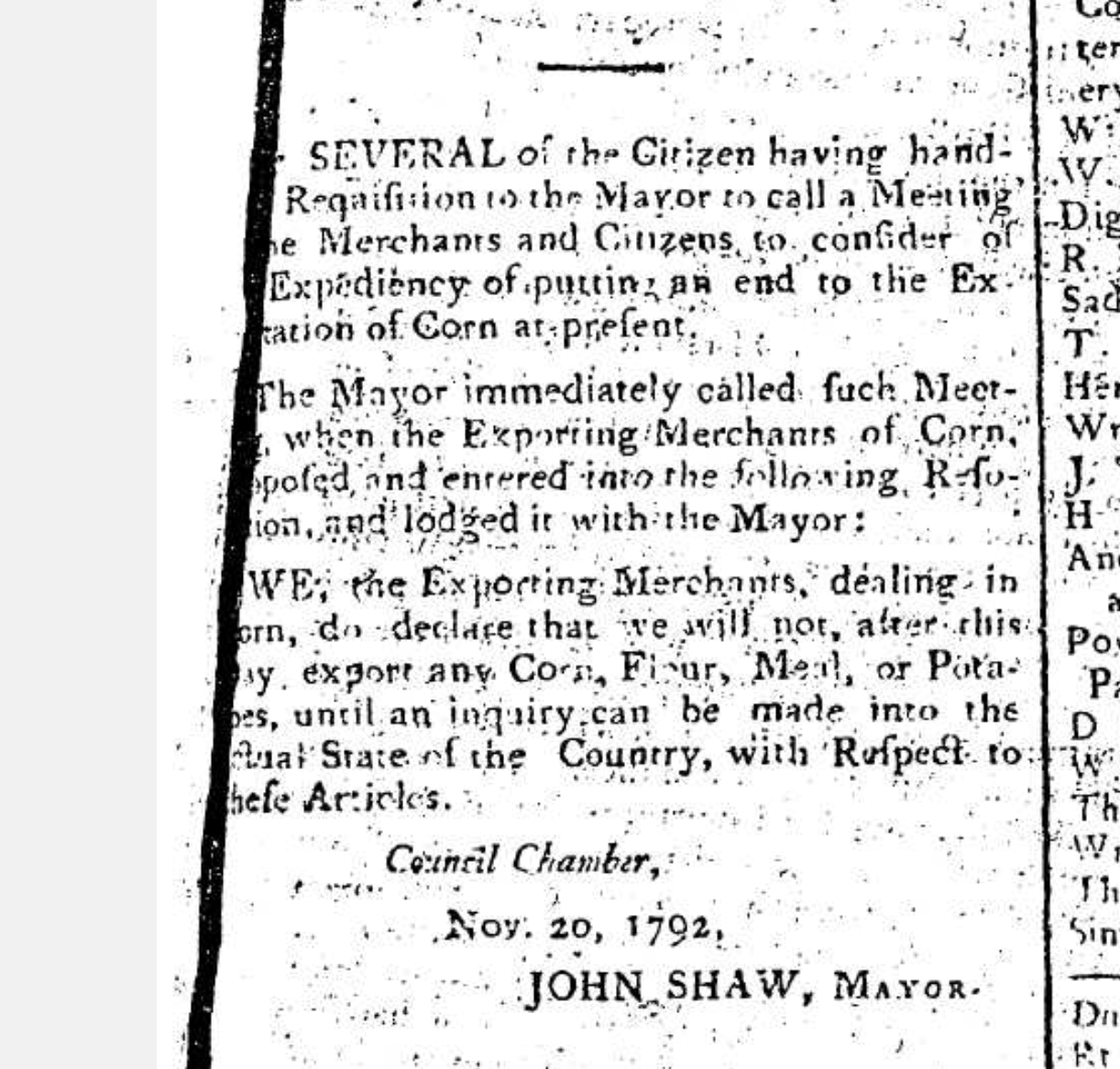

19 Friday Jan 2024
Posted in Uncategorized
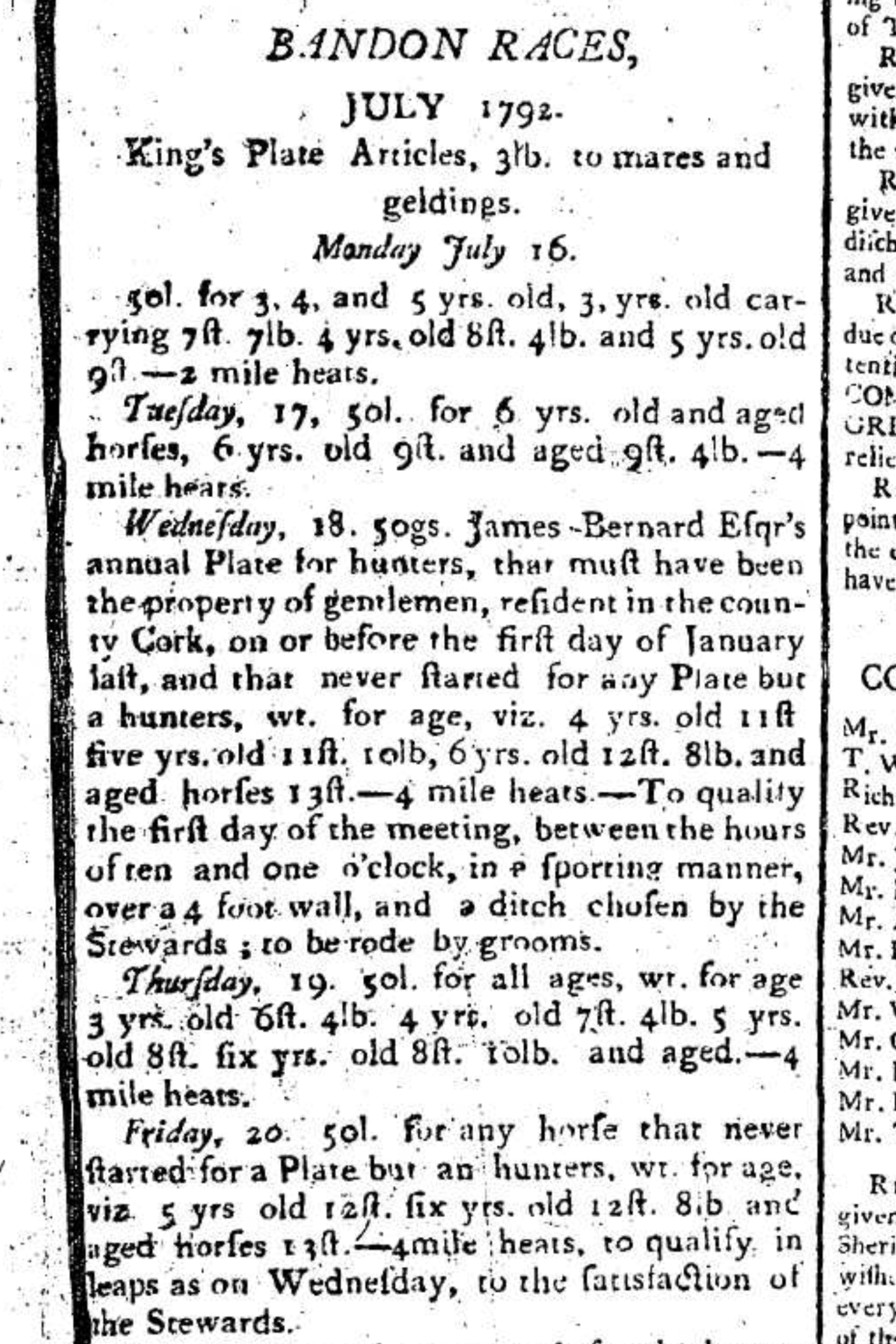
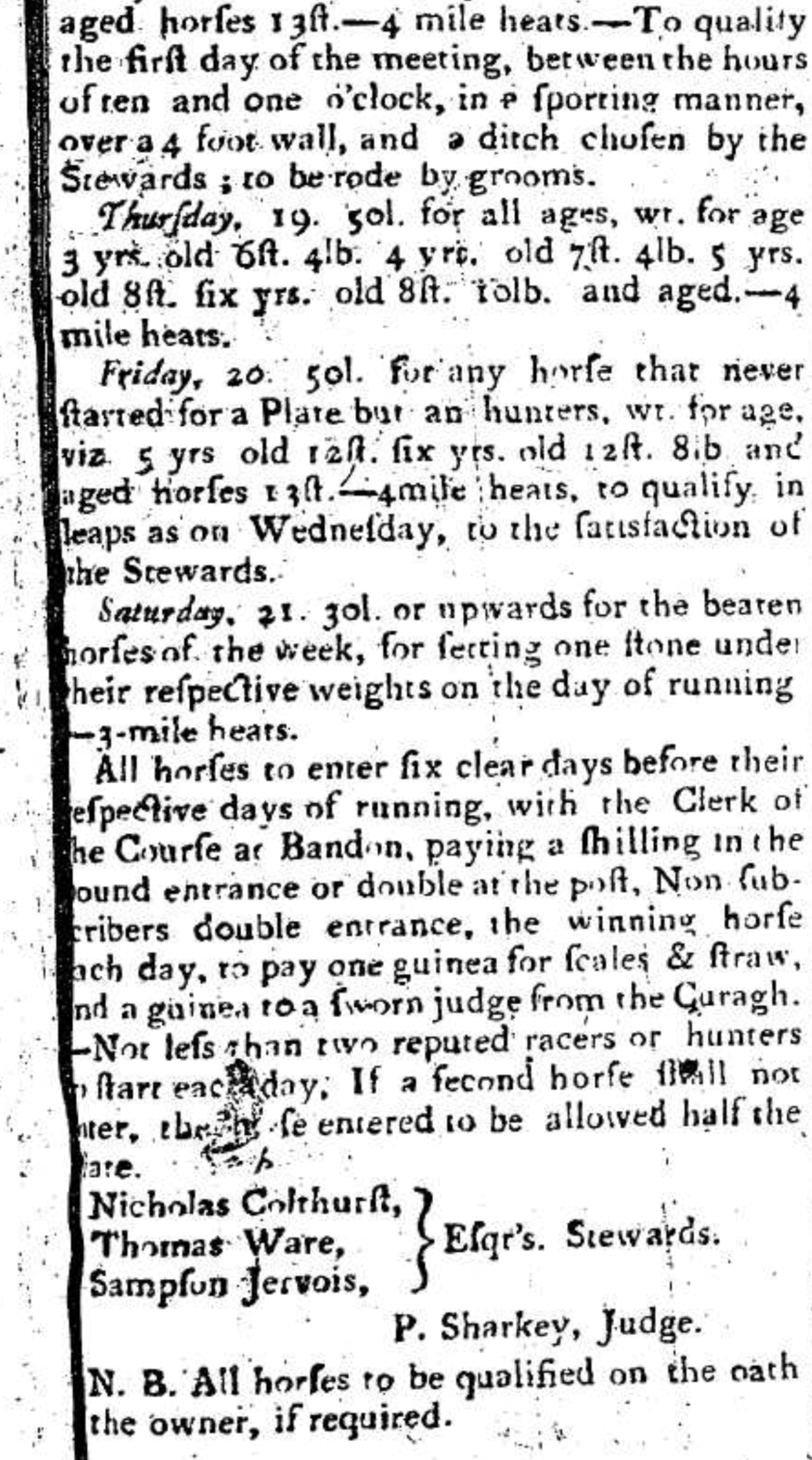

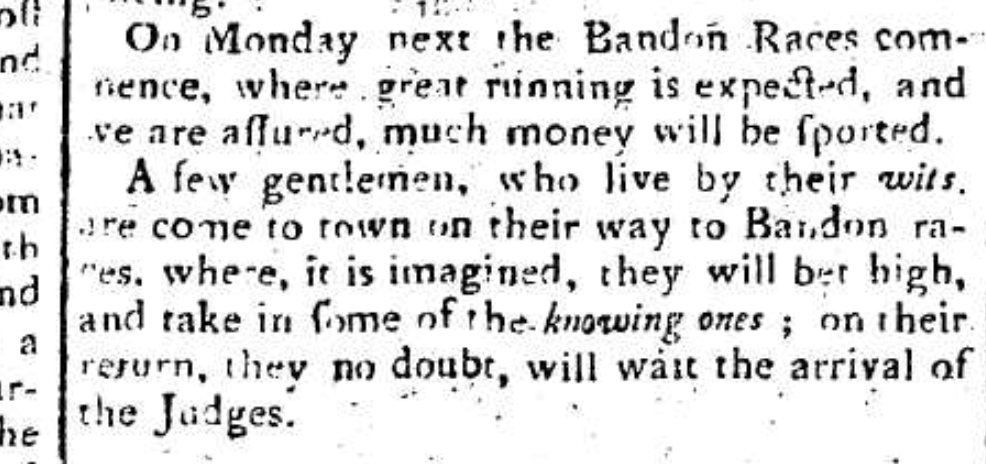
18 Thursday Jan 2024
Posted in Uncategorized
.

..
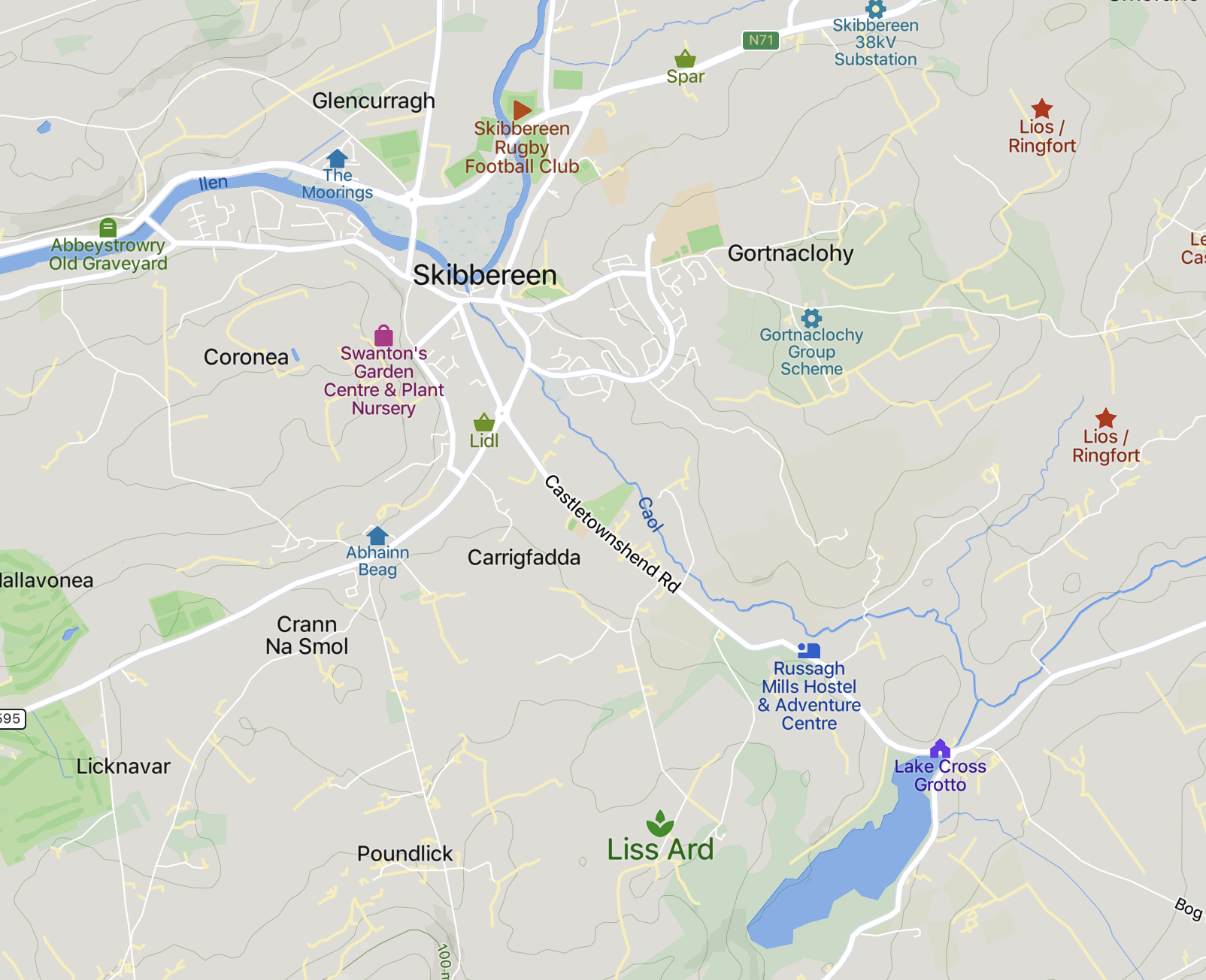
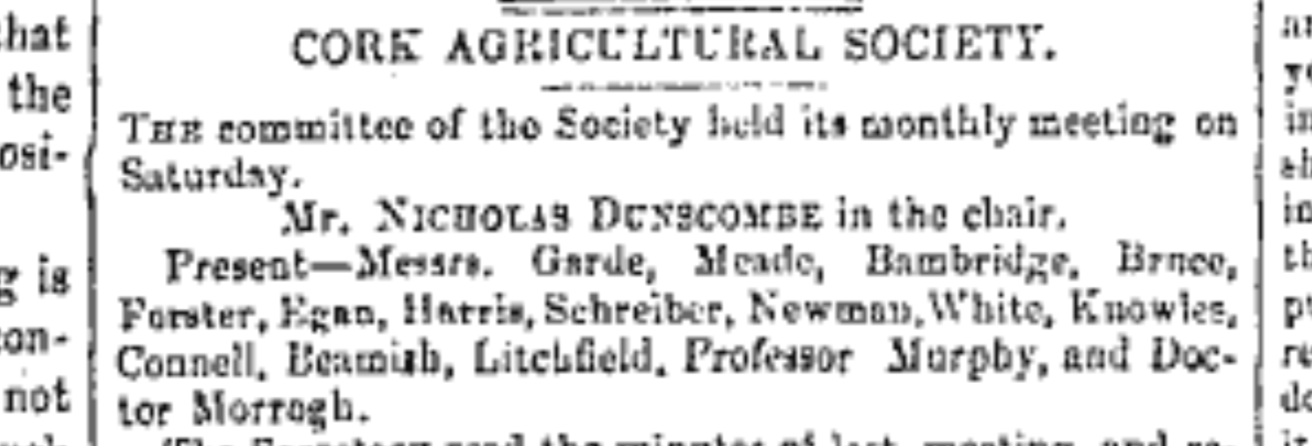
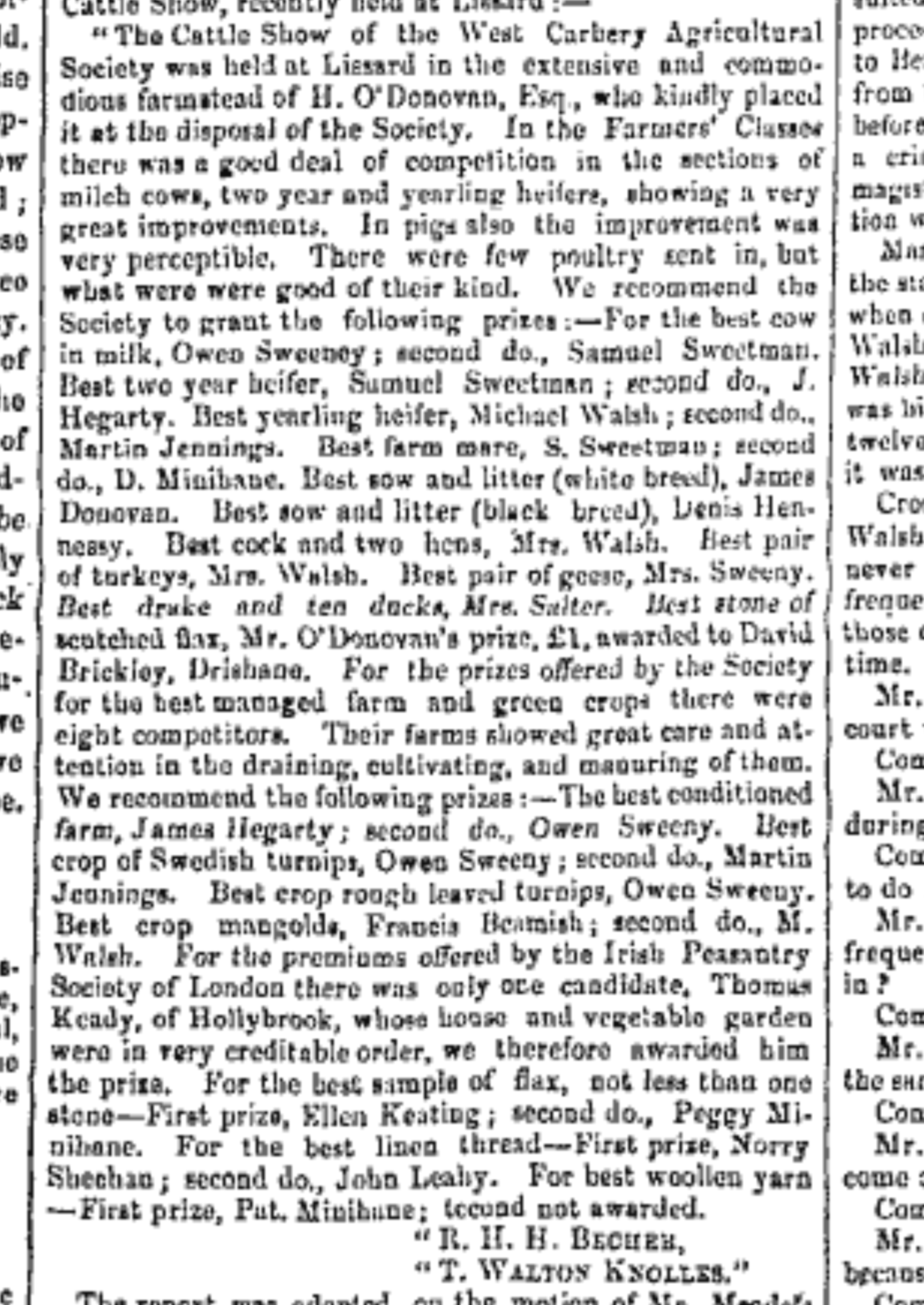
Henry Wintrop ‘The O’Donovan’ (1812-1890), TCD, MA, DL. Pre 1910, Clann Cathal, Lis Ard, Skibbereen, son Rev. Morgan, Cork ed Dr. Coughlan, m Amelia d ‘The O’Grady’, Courcy O’Grady, Kilbollyowne, Co.Limerick. Son Colonel Morgan William MA, J.P., ‘The O’Donovan’ and Alicia Jones. 1864 Cattle Show West Carbery Agricultural Society, Lissard, Skibbereen held in his grounds. Attending 17 Grand Jury presentments. Supporter Nicholas Leader, Conservative, 1865 County Cork Election. Interest in antiquities. Donor to the church bell fund, 1869, St. Nicholas, Cork. (Cork Daily Southern Reporter 26th March 1869). 1884, signed a protest against the dismissal of Lord Rossmore, head of Orange Order, Monaghan. Probate to Morgan O’Donovan, Lissard, Bishop Gregg, Cork, John Carson, Fellow Trinity College Dublin, £30,292.
Richard Henry Hedges Beecher Esq., (1799-1882), Pre 1838, listed 1838, Hollybrook, Skibbereen, sitting Skibbereen, 1835, Came into possession pre 1833 very neglected set about improving. In re organising compensated tenants according to Ulster Custom. Engaged in road building. Abolished rundale system. Grand Jury Presentment Sessions Schull, 1834. Subscriber Lewis Topographical Dictionary of Ireland 1837. Attending Protestant Conservative Society meeting 1832. Bandon Brunswick Constitutional Club 1828. Non resident Freeman voting in Cork 1837 election. Attending Dunmanway Conservative and anti Repeal Meeting 1845. 1845 promoter Bandon to Bantry Railway. 1843 Freemason, Skibbereen. Anti-Repeal Meeting, Dunmanway 1845. Skibbereen 1847 distress meeting. Presentment sessions Ballydehob 1845. Signed ‘No Popery Petition 1851’. 1866 Freemason Skibbereen 15th Lodge. Long litigation with Lord Bandon added to financial woes over the townland of Rathooragh near Mount Gabriel. Imprisoned but later freed by his creditors 1848. The Hollybrook estate was sold in the Encumbered Estates Court in 1851, 17,000 acres, 42 townlands, 8 parishes, debts in 52 charges amounting to £52,275. The sale realised £52,080. It was estimated that the rent of £4,500 per annum represents only 25% of the value of market rents but two thirds were given long leases on low rents with a capital sum in 1794 to families such as the Ballydehob Swantons. 1839 Freeman’s Journal 15 Feb 1839 “Marriages~On Tuesday last, in Cork, Richard H H Becher, Esq of Hollybrook in that Co., to Melian, daughter of the Rev Morgan O’Donovan of Montpelier (Ronayne’s Court, Douglas, Cork). Freeman of Cork. Melian, daughter of the Rev Morgan O’Donovan of Montpelier (Ronayne’s Court, Douglas, Cork). Freeman of Cork. He became the O’Donovan as did his son Henry Winthrop. 1864 officiated Cattle Show West Carbery Agricultural Society, Lissard, Skibbereen. He became the O’Donovan as did his son Henry Winthrop. Niece Susan Emily Becher Hungerford, informant of death, probate to Richard Becher Hungerford, £217.
1836-1970 West Cork Agricultural Societies and Shows
https://docs.google.com/document/d/1yoNjmDNQKT_pk3nvlCsT72YWYoDENcs–uaJxh2ber8/edit
16 Tuesday Jan 2024
Posted in Uncategorized
Click here:
https://docs.google.com/spreadsheets/d/193TpfHYRXIBQb0nzVLTs_Cl-oebYYnFAebmtxvDiYzY/edit#gid=0
This is only scratching the surface.
Over 90,000https://docs.google.com/spreadsheets/d/193TpfHYRXIBQb0nzVLTs_Cl-oebYYnFAebmtxvDiYzY/edit#gid=0
Over 90,000 Irish people served in the RIC. Mostly Catholic although the senior ranks were mostly but not exclusively Protestants. The pay was not great but the pension arrangement suited a lot of men who could retire early maybe from their lump sum buy a farm or a business. Men were allowed to go out with a girl after 5 years service and marry after 7 years.
The personnel files before photography contained a sketch letter of recommendation, family background and confirman from a priest or minister of birth, Prior to marriage the bride’s famu was checked out.
After independence more the 90,000 personnel files were removed to Ealing in West London. They were used to deal with pension queries and all but 4 were shredded in 1938.
07 Sunday Jan 2024
Posted in Uncategorized
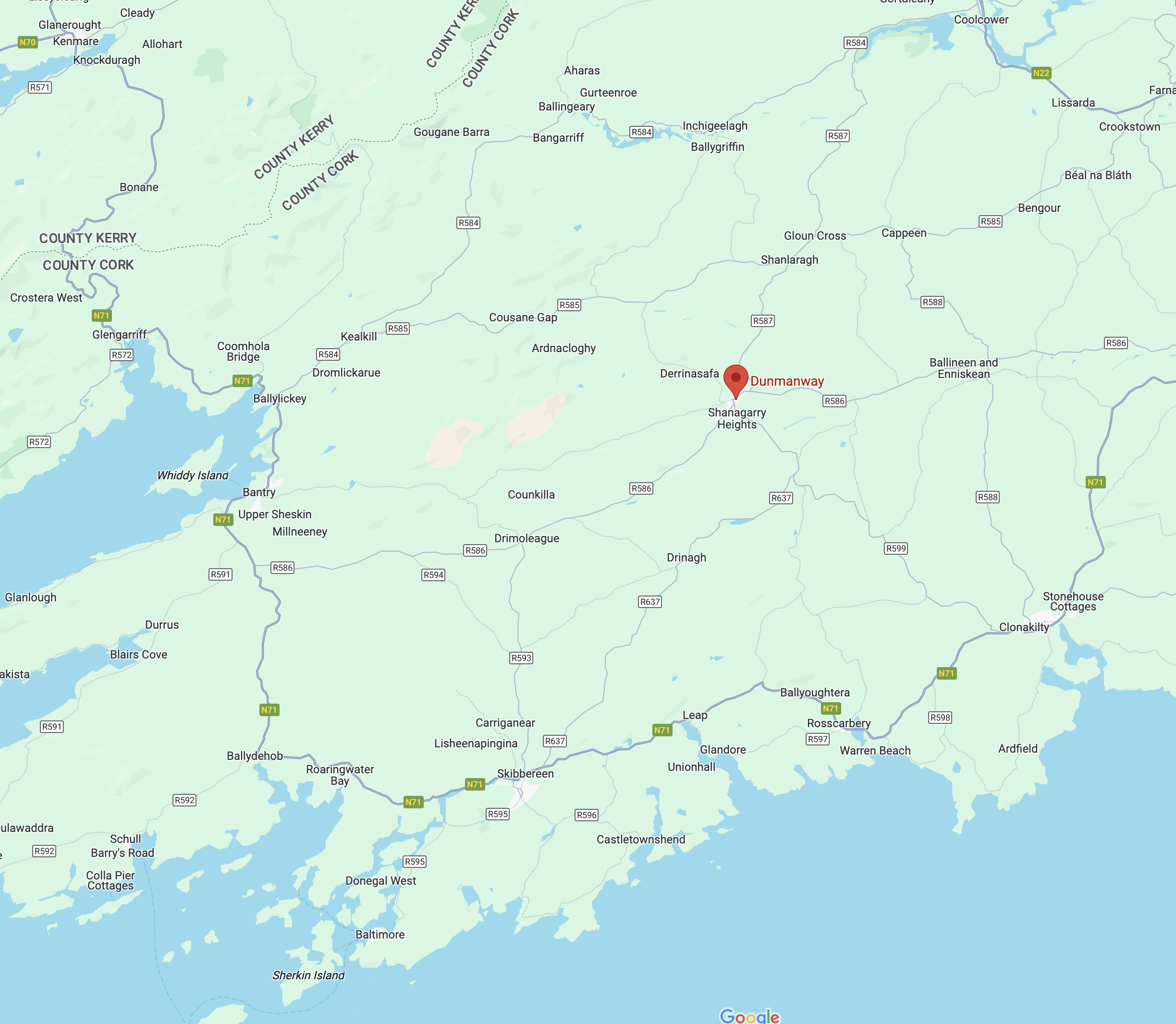
In 1902 it is likely that a fair proportion of the older people west and north of Dunmanway were either Irish speakers or bi lingual
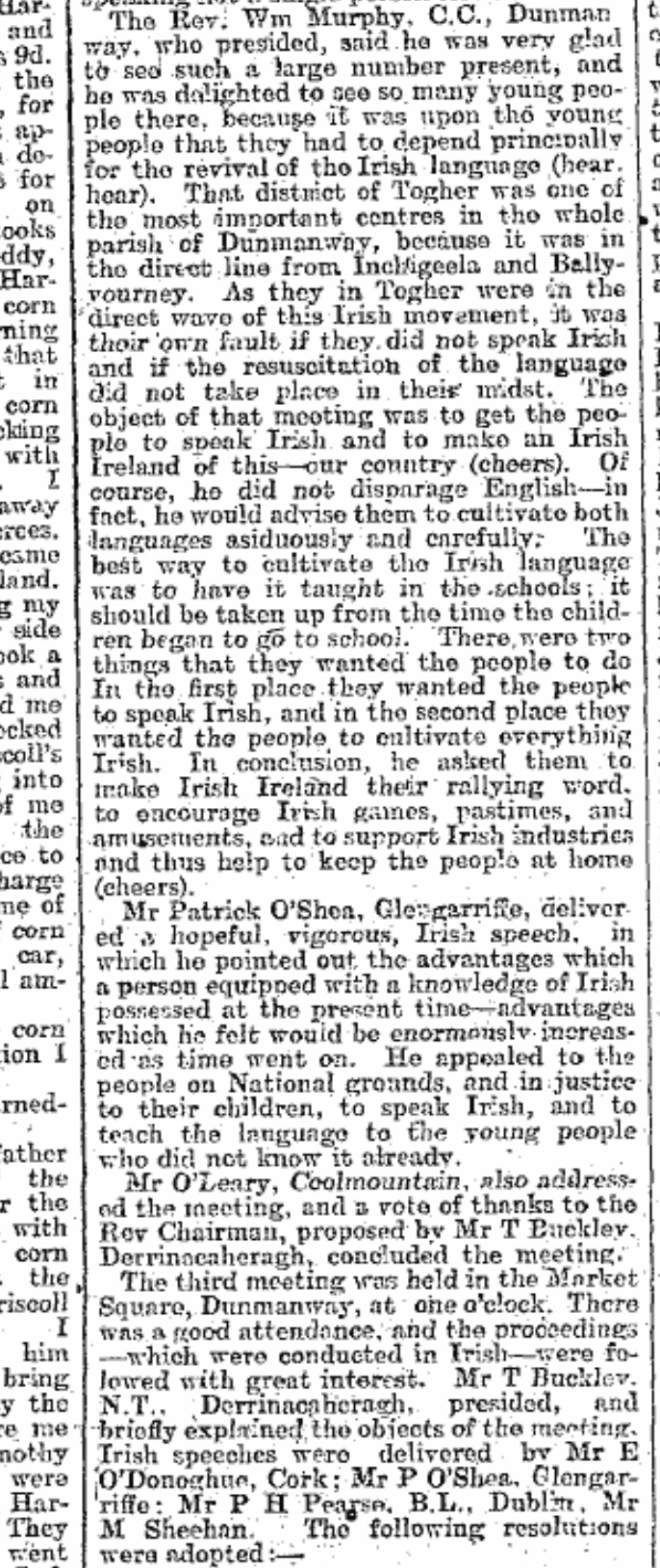
1902 Irish Day Dunmanway addressed by Pádraig Pearse
https://docs.google.com/document/d/1epwrrLWqweGO7gQJF-xycNKqqBwaeD9a2B6wFShhqfU/edit
Born in Dublin to an English father and an Irish mother, Padraig Pearse was a teacher, barrister, poet, writer, nationalist and political activist who was one of the leaders of the Easter Rising in 1916. Pearse joined the Gaelic League in its third year, in 1896, and between 1903 and 1909 served as editor of the League’s journal, An Claidheamh Soluis. He held a degree in Modern Languages and a B.L. from the King’s Inns. He worked as a teacher in various colleges until he and his brother Willie founded St Enda’s in 1908, a bilingual secondary school for boys. Pearse published several didactic short story collections in Irish as well as poems, plays and political pamphlets. These include Poll an Piobaire (The Piper’s Cave), 1905, Iosagan agus Sgealta Eile (Little Jesus and other Stories), 1907, and the play, An Rí (The King), which was produced in 1912. Pearse was a member both of the Irish Volunteers and of the secret Irish Republican Brotherhood, which he joined in 1913. As a member of the IRB’s Supreme Council, and its secret Military Council,he was involved in the planning for a rising during the First World War. On Easter Monday, 24 April, 1916, members of the Irish Volunteers, led by Pearse, and of the smaller Irish Citizen Army of James Connolly seized key locations in Dublin and proclaimed an Irish Republic from the steps of the General Post Office. The Rising was suppressed by the British military after six days of fighting, and Pearse as one of its fourteen leaders was court-martialled. He was shot at dawn on 3 May in the stonebreaker’s yard in Kilmainham Jail.
04 Thursday Jan 2024
Posted in Uncategorized
,
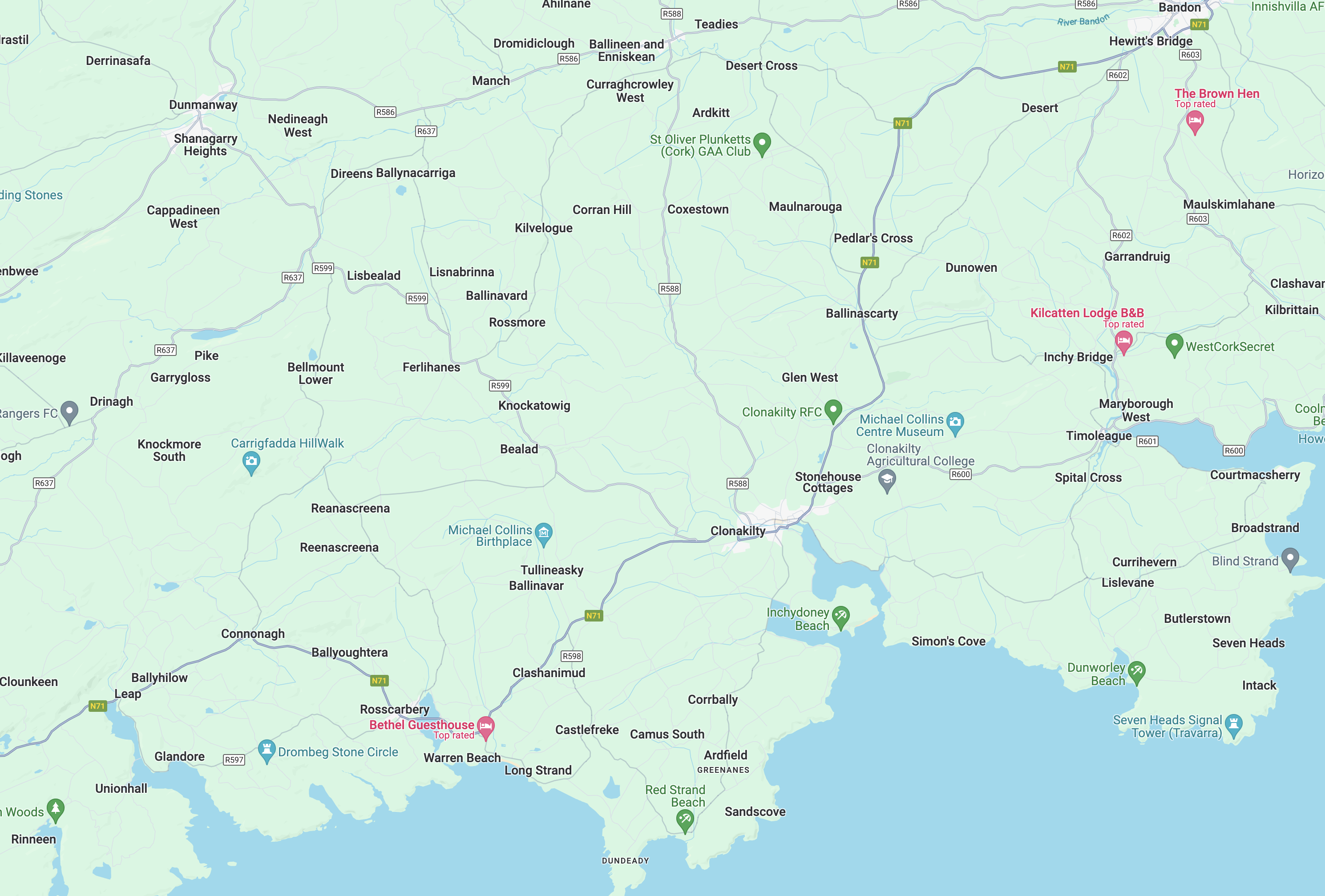

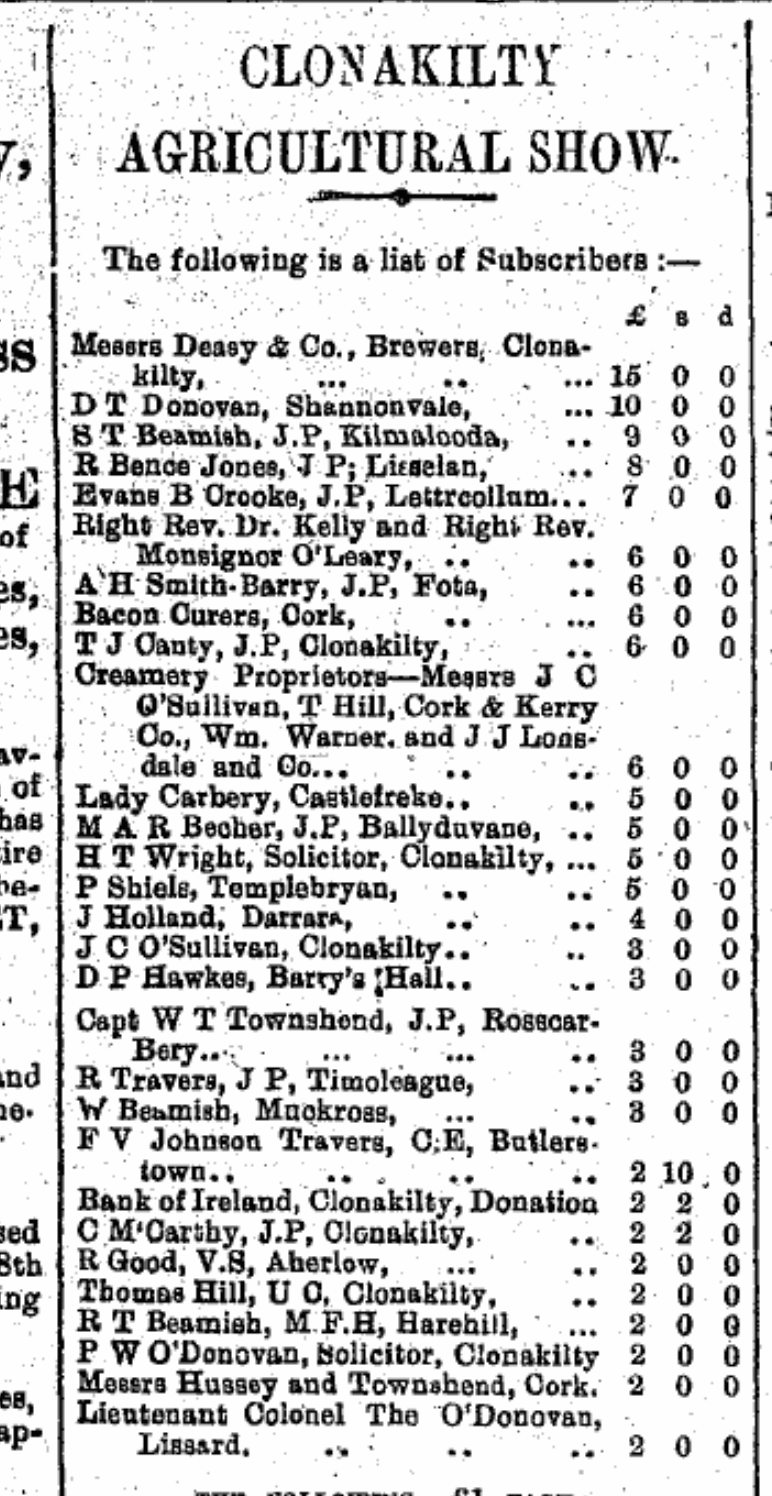
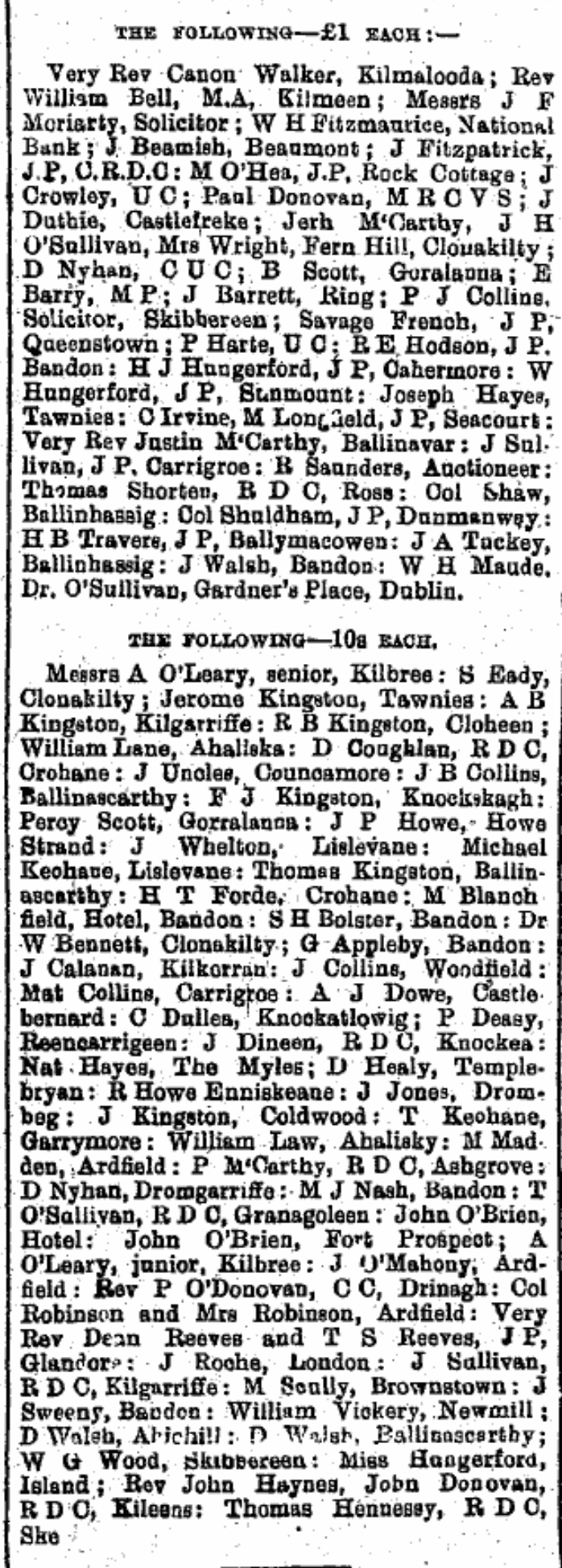
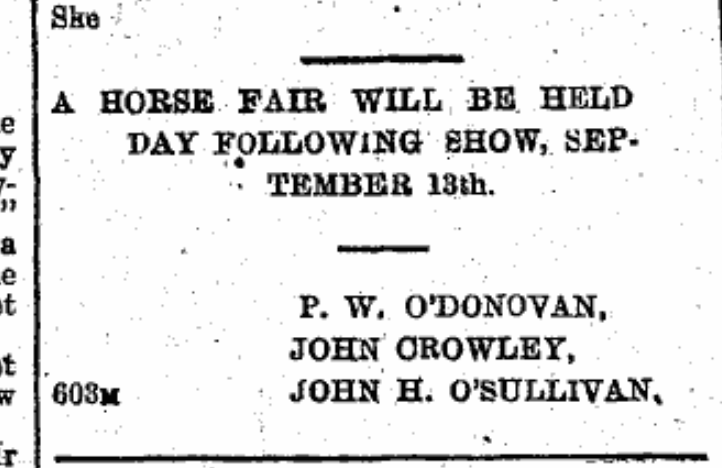
1836-1970 West Cork Agricultural Societies and Shows
https://docs.google.com/document/d/1yoNjmDNQKT_pk3nvlCsT72YWYoDENcs–uaJxh2ber8/edit
03 Wednesday Jan 2024
Posted in Uncategorized

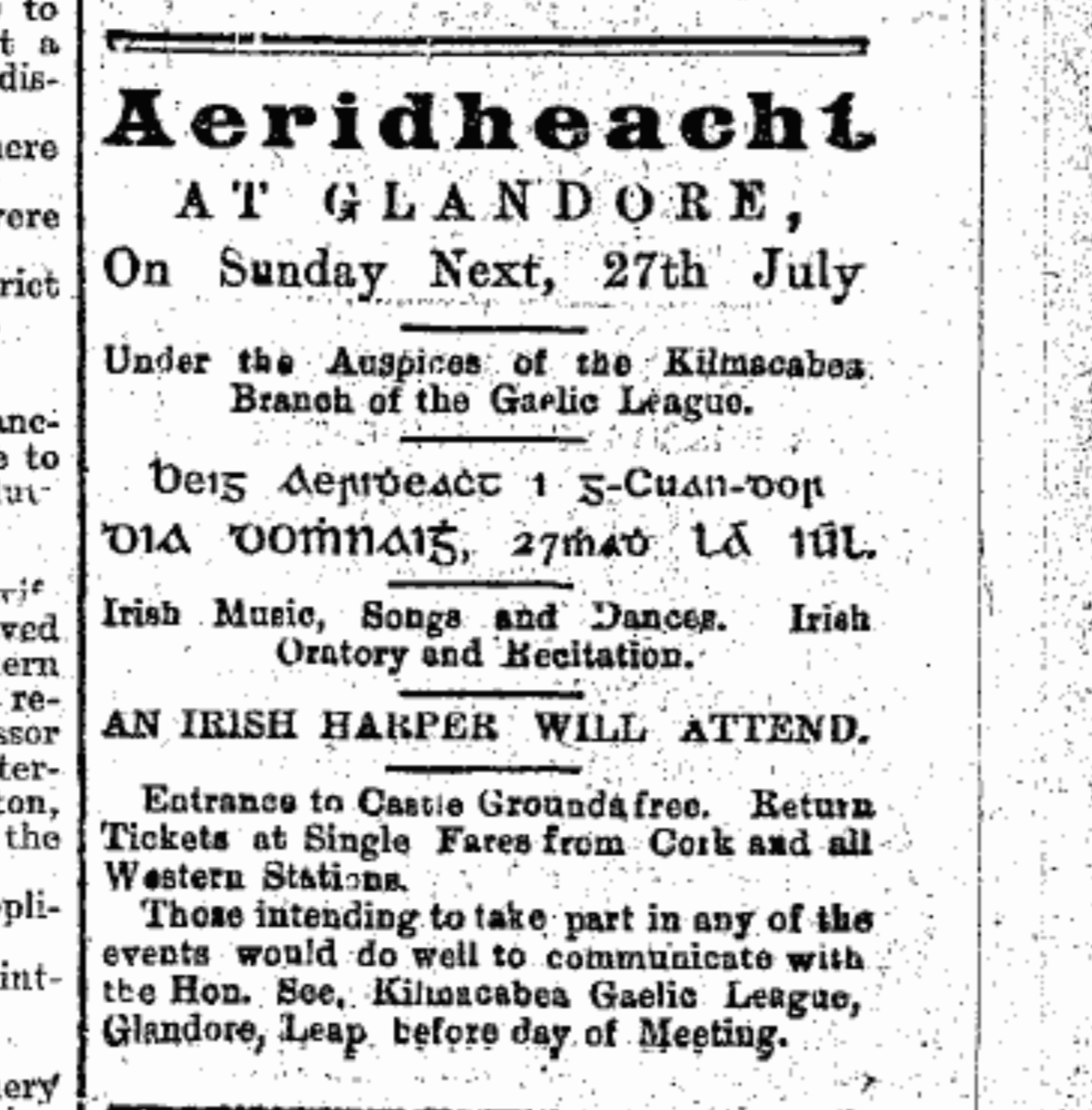
Ms. Carrie (Caroline Mary) Townshend, (1859 -1951). West Cork and Dublin. Popularity of the Irish Harp. Teacher of Irish. Giving evidence in America of British Brutality During Troubles in Ireland. Member Christian Science Church. 1915 Aeridheacht at Glandore with Madeline Townshend. The name Caroline Townshend is known to only a handful of people in Ireland but if any deserves to be a household name, surely it is hers, for it almost entirely due to her efforts that the ancient Irish harping tradition became firmly re-established.

 West Cork History