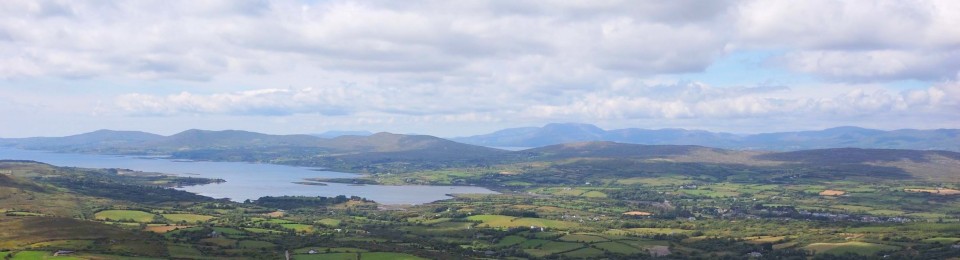
The original manuscript is held at the Lambeth Library in England and is written after the Battle of Kinsale and prior to the storming of the O’Sullivan Castle at Dunboy by SIR GEORGE CAREW to LORD DEPUTY MOUNTJOY. MS 624, p. 141 13 May 1602
These documents are held at Lambeth Palace Library
Former reference: MS 624, p. 141
4 Pages.
Supplementary information: Calendar of the Carew Manuscripts preserved in the Archiepiscopal Library at Lambeth, ed. J. S. Brewer & W. Bullen (6 vols., 1867-73), vol. IV, document 237.
Contents:
“Your letters by your servant Pavye, bearing date the 19th and 20th of April, I received the 12th of this instant; being sorry in my heart that I was gone from Corke before his coming, that I might have more fully answered every point of them.. and more precisely have obeyed your Lordship’s directions… Upon the messenger I can lay no blame, for he departed Dublin the 20th, and I rose from Corke the 23rd of April, whereby it was impossible for him to overtake me; and to follow me by land he could not, and by sea, before the wind served, he could not budge out of Kynsale…
“The general letter from your Lordship and the Council I have answered at large… By reason of the want of my papers and the officers of the munitions and victuals (.. one in Corke and the other in England) I am ignorant of the magazines of either of them, but.. have taken such a course as I hope will be pleasing to you, and, if your Lordship shall not so think it, I will at my return from Donboye accomplish your commandments to the uttermost I may…
“For the fortifications in the river of Corke.. I cannot give any directions in them until my return; and in the meantime Paul Ive will be sufficiently employed at Kynsale.”
I thank you for imparting the Lords’ letters to me, and do hope they “will redress the error in victualling, and give order for our payments in money since the contract for clothes is broken,.. for the soldier in the meantime both in back and belly is pinched.”
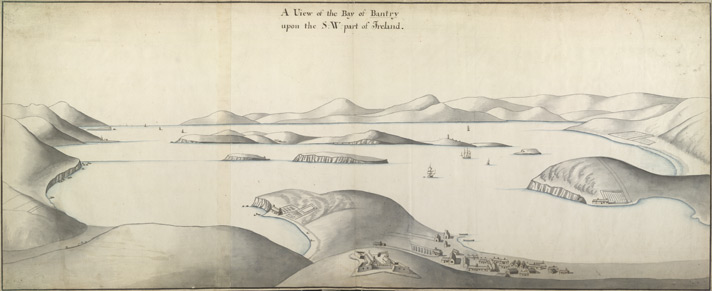
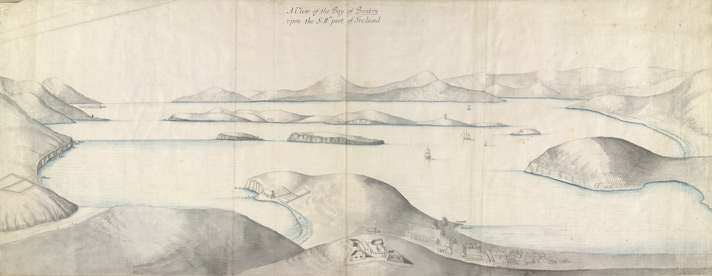
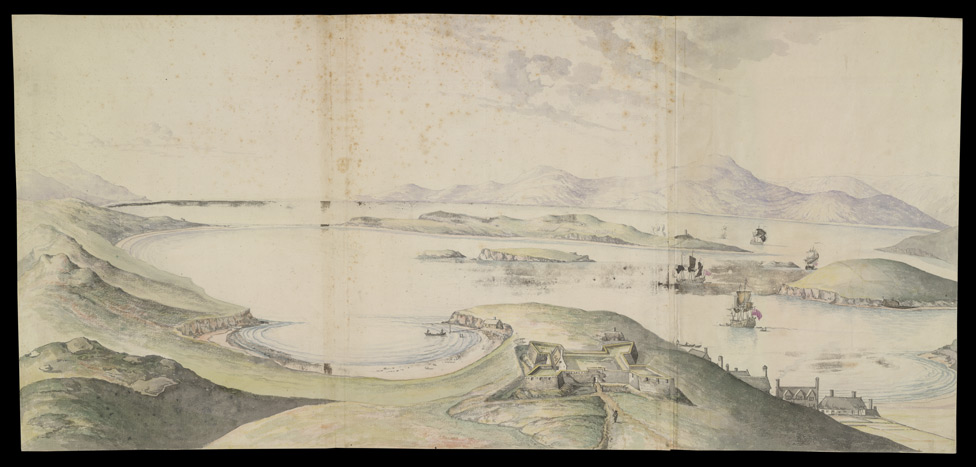
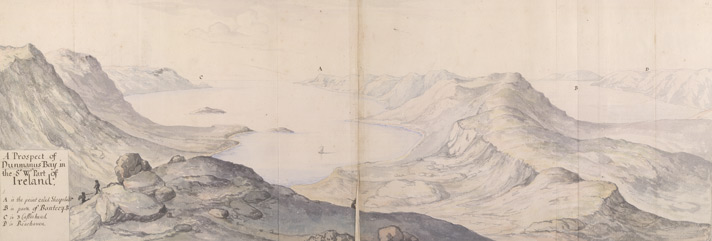
“Of the coming of Spaniards I am no less distracted in my judgments than your Lordship is, for all passengers or merchants that come out of France or Spain do still assure their coming, and that very shortly. The rebels stand assured of their coming before this month is expired, and the hope thereof keeps Tyrrell and William Bourke my neighbours, who otherwise would quit this province; for they are heartily afraid of treason in the provincials, and wish themselves gone… They lie in such incredible strengths of huge mountains and ugly glynns of bog and wood, as I think no place of the world yields the like, and the ways of such advantage unto them as an 100 men may forbid an army of 5,000 to march from Bantry to Donboye, which is but 24 miles; and if there were no enemy to resist us, nor any baggage in our army, the ways in themselves are so difficult as in less time than eight days I cannot come thither, for three miles a day is the most we can march; and for horse or garrons to carry victuals and munitions no possibility of passage. Wherefore I have resolved by boats and shipping to cross the Bay of Bantry, and to land within seven miles of the castle, which is a reasonable way (though mountainous), yet indifferent as well for us as the enemy. I would not have believed any man’s report if my own eyes had not seen the mountains and glynns which here I find…
“If the Queen’s fleet were not upon the coast of Spain, I do confidently believe that we should within a few days see another Spanish army in Munster. But my hope is that the fleet will enforce their stay; which moved me to make the greater haste to Beerehaven to win the castle of Donboye before their coming; the which (as I understand) is, by the advice of the Spaniards that were there, strongly re-enforced with hugh earthy-works able to withstand a great battery. But howsoever I hope in God to carry it, but am much afraid that I shall be enforced to send unto Corke for a supply of munitions, which is the cause I have directed the clerk of the munition to reserve five last of powder, if extremity did enforce me, and also that these parts might not altogether be left bare to answer foreign occasions.
“But I hope the store is such as that the ten last written for may be sent unto you, and five last remaining. If not, to supply your army in Connaght which goes to Ballyshennan there is five lasts of powder with lead and match at Lymericke, which by water with a guard to Athlone may be carried safely from thence. But if Corke cannot yield your Lordship the ten lasts demanded, what lacks of the same (if your Lordship do send for it) I will presently send it unto Dublyn, not meaning to dispute but to obey all your Lordship’s commandments… The strength of the magazine.. is better known to the master of the ordnance there, who before his departure from hence did sundry ways dispose the same; and my particular notes are in Shandon… Of all the other things in that note comprised, if they be in the store at Corke, they shall be presently sent unto your Lordship, though I am sorry to depart with pioneers’ tools, having so great occasion to use them in the work intended.
“If the munition at Lymericke might come safely unto me by sea, I would not care how bare the store.. at Corke were left; but this summer time there is not so little as twenty galleys swarming upon this coast, and within these ten days they have taken two merchants, one of Gallwaye and an Englishman, both of them loaden with corn and wines, which goods is now in possession of the rebels, which is a great relief to the Buonies, who before lived only upon beef and water, and wanted bread, for want whereof they grew into such discontent as they were ready to break.
“According your Lordship’s commandment, Cormocke and John Barry shall be discharged, but [I] do humbly pray your Lordship (not for any love I bear them, but for the service’ sake,) that they may be continued in pay until I return;.. for.. they being now with their companies in the camp with me, it is an inconvenient time to cast them, lest at my back they may work some disturbance, and at Cormocke’s hands I expect no better, which they dare not do when I am returned. Besides the better part of my army is Irish; whom for the present I dare not discontent… But then no man [is] more glad of cashiering Irish companies than myself.
“The copies of letters and other notes your Lordship writes for are in my cabinet at Shandon, but as soon as I return I will send them unto you. I have written unto my wife to deliver unto your servant Pavye 400l. in Spanish silver, which I am sure he shall receive. In your Lordship’s next.. signify.. the receipt of it. 200l. Apsley had; the rest your Lordship may easily judge where it remains; a particular note I will send you at my return, for now I cannot do it.
“I will write often unto you, and.. pray your Lordship to do the like, being unto me a good light how to direct my ways in Munster, besides the comfort I receive in your Lordship’s good successes, which I beseech the Almighty to bless you in, that your works were ended, and both of us in England, to have the society of our friends, and to enjoy part of their ease.”
Camp near the Abbey of Bantry, 13th May 1602.
Copy.
“Your letters by your servant Pavye, bearing date the 19th and 20th of April, I received the 12th of this instant; being sorry in my heart that I was gone from Corke before his coming, that I might have more fully answered every point of them.. and more precisely have obeyed your Lordship’s directions… Upon the messenger I can lay no blame, for he departed Dublin the 20th, and I rose from Corke the 23rd of April, whereby it was impossible for him to overtake me; and to follow me by land he could not, and by sea, before the wind served, he could not budge out of Kynsale…
“The general letter from your Lordship and the Council I have answered at large… By reason of the want of my papers and the officers of the munitions and victuals (.. one in Corke and the other in England) I am ignorant of the magazines of either of them, but.. have taken such a course as I hope will be pleasing to you, and, if your Lordship shall not so think it, I will at my return from Donboye accomplish your commandments to the uttermost I may…
“For the fortifications in the river of Corke.. I cannot give any directions in them until my return; and in the meantime Paul Ive will be sufficiently employed at Kynsale.”
I thank you for imparting the Lords’ letters to me, and do hope they “will redress the error in victualling, and give order for our payments in money since the contract for clothes is broken,.. for the soldier in the meantime both in back and belly is pinched.”
“Of the coming of Spaniards I am no less distracted in my judgments than your Lordship is, for all passengers or merchants that come out of France or Spain do still assure their coming, and that very shortly. The rebels stand assured of their coming before this month is expired, and the hope thereof keeps Tyrrell and William Bourke my neighbours, who otherwise would quit this province; for they are heartily afraid of treason in the provincials, and wish themselves gone… They lie in such incredible strengths of huge mountains and ugly glynns of bog and wood, as I think no place of the world yields the like, and the ways of such advantage unto them as an 100 men may forbid an army of 5,000 to march from Bantry to Donboye, which is but 24 miles; and if there were no enemy to resist us, nor any baggage in our army, the ways in themselves are so difficult as in less time than eight days I cannot come thither, for three miles a day is the most we can march; and for horse or garrons to carry victuals and munitions no possibility of passage. Wherefore I have resolved by boats and shipping to cross the Bay of Bantry, and to land within seven miles of the castle, which is a reasonable way (though mountainous), yet indifferent as well for us as the enemy. I would not have believed any man’s report if my own eyes had not seen the mountains and glynns which here I find…
“If the Queen’s fleet were not upon the coast of Spain, I do confidently believe that we should within a few days see another Spanish army in Munster. But my hope is that the fleet will enforce their stay; which moved me to make the greater haste to Beerehaven to win the castle of Donboye before their coming; the which (as I understand) is, by the advice of the Spaniards that were there, strongly re-enforced with hugh earthy-works able to withstand a great battery. But howsoever I hope in God to carry it, but am much afraid that I shall be enforced to send unto Corke for a supply of munitions, which is the cause I have directed the clerk of the munition to reserve five last of powder, if extremity did enforce me, and also that these parts might not altogether be left bare to answer foreign occasions.
“But I hope the store is such as that the ten last written for may be sent unto you, and five last remaining. If not, to supply your army in Connaght which goes to Ballyshennan there is five lasts of powder with lead and match at Lymericke, which by water with a guard to Athlone may be carried safely from thence. But if Corke cannot yield your Lordship the ten lasts demanded, what lacks of the same (if your Lordship do send for it) I will presently send it unto Dublyn, not meaning to dispute but to obey all your Lordship’s commandments… The strength of the magazine.. is better known to the master of the ordnance there, who before his departure from hence did sundry ways dispose the same; and my particular notes are in Shandon… Of all the other things in that note comprised, if they be in the store at Corke, they shall be presently sent unto your Lordship, though I am sorry to depart with pioneers’ tools, having so great occasion to use them in the work intended.
“If the munition at Lymericke might come safely unto me by sea, I would not care how bare the store.. at Corke were left; but this summer time there is not so little as twenty galleys swarming upon this coast, and within these ten days they have taken two merchants, one of Gallwaye and an Englishman, both of them loaden with corn and wines, which goods is now in possession of the rebels, which is a great relief to the Buonies, who before lived only upon beef and water, and wanted bread, for want whereof they grew into such discontent as they were ready to break.
“According your Lordship’s commandment, Cormocke and John Barry shall be discharged, but [I] do humbly pray your Lordship (not for any love I bear them, but for the service’ sake,) that they may be continued in pay until I return;.. for.. they being now with their companies in the camp with me, it is an inconvenient time to cast them, lest at my back they may work some disturbance, and at Cormocke’s hands I expect no better, which they dare not do when I am returned. Besides the better part of my army is Irish; whom for the present I dare not discontent… But then no man [is] more glad of cashiering Irish companies than myself.
“The copies of letters and other notes your Lordship writes for are in my cabinet at Shandon, but as soon as I return I will send them unto you. I have written unto my wife to deliver unto your servant Pavye 400l. in Spanish silver, which I am sure he shall receive. In your Lordship’s next.. signify.. the receipt of it. 200l. Apsley had; the rest your Lordship may easily judge where it remains; a particular note I will send you at my return, for now I cannot do it.
“I will write often unto you, and.. pray your Lordship to do the like, being unto me a good light how to direct my ways in Munster, besides the comfort I receive in your Lordship’s good successes, which I beseech the Almighty to bless you in, that your works were ended, and both of us in England, to have the society of our friends, and to enjoy part of their ease.”
Camp near the Abbey of Bantry, 13th May 1602.
Copy.



 West Cork History