
19 Friday Jan 2024
Posted in Uncategorized
18 Thursday Jan 2024
Posted in Uncategorized
.

..
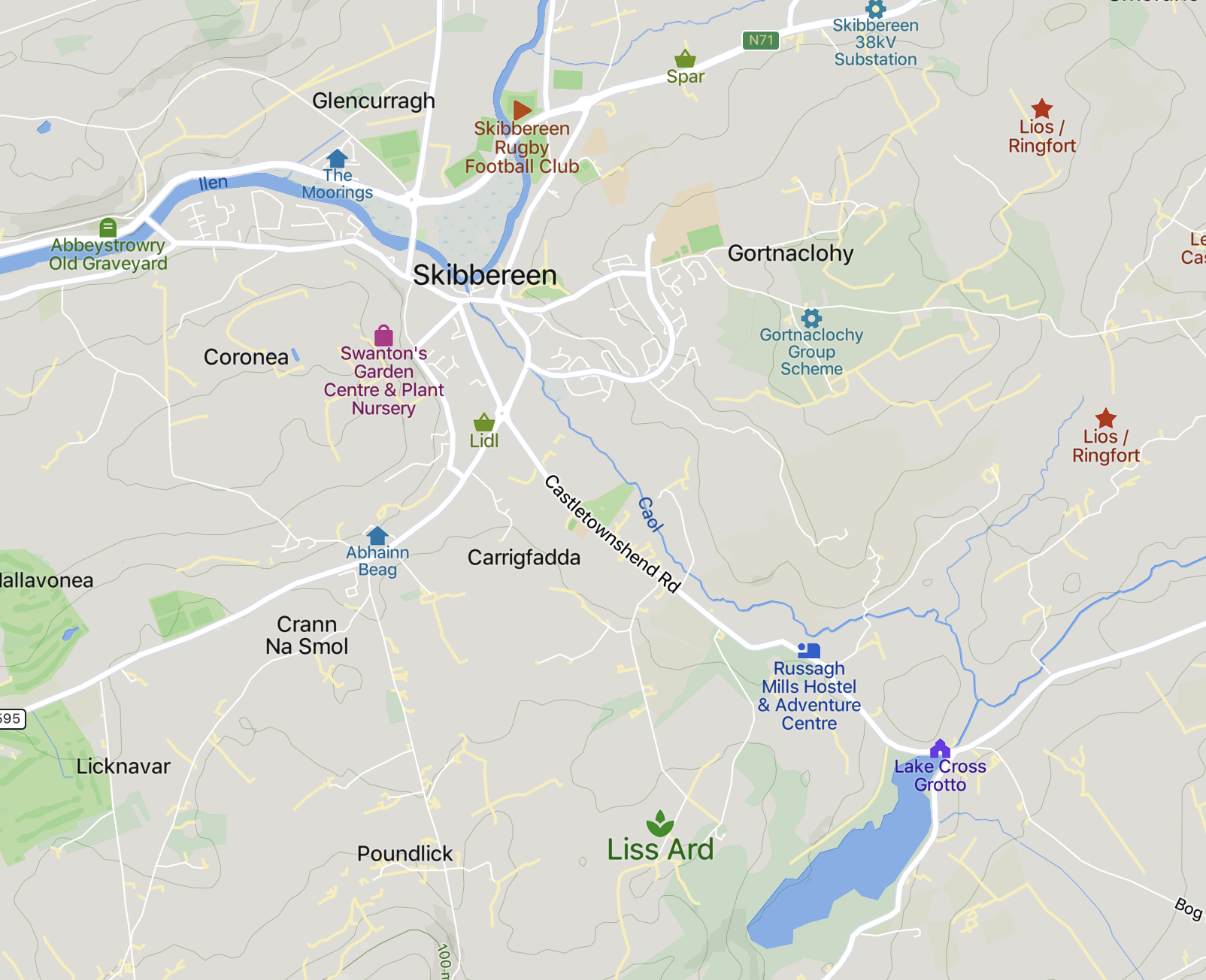
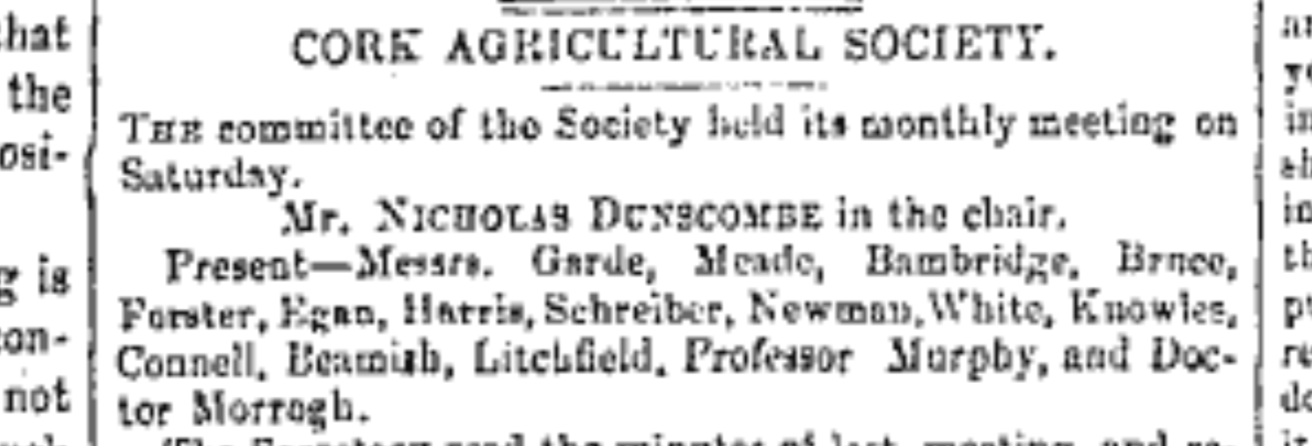
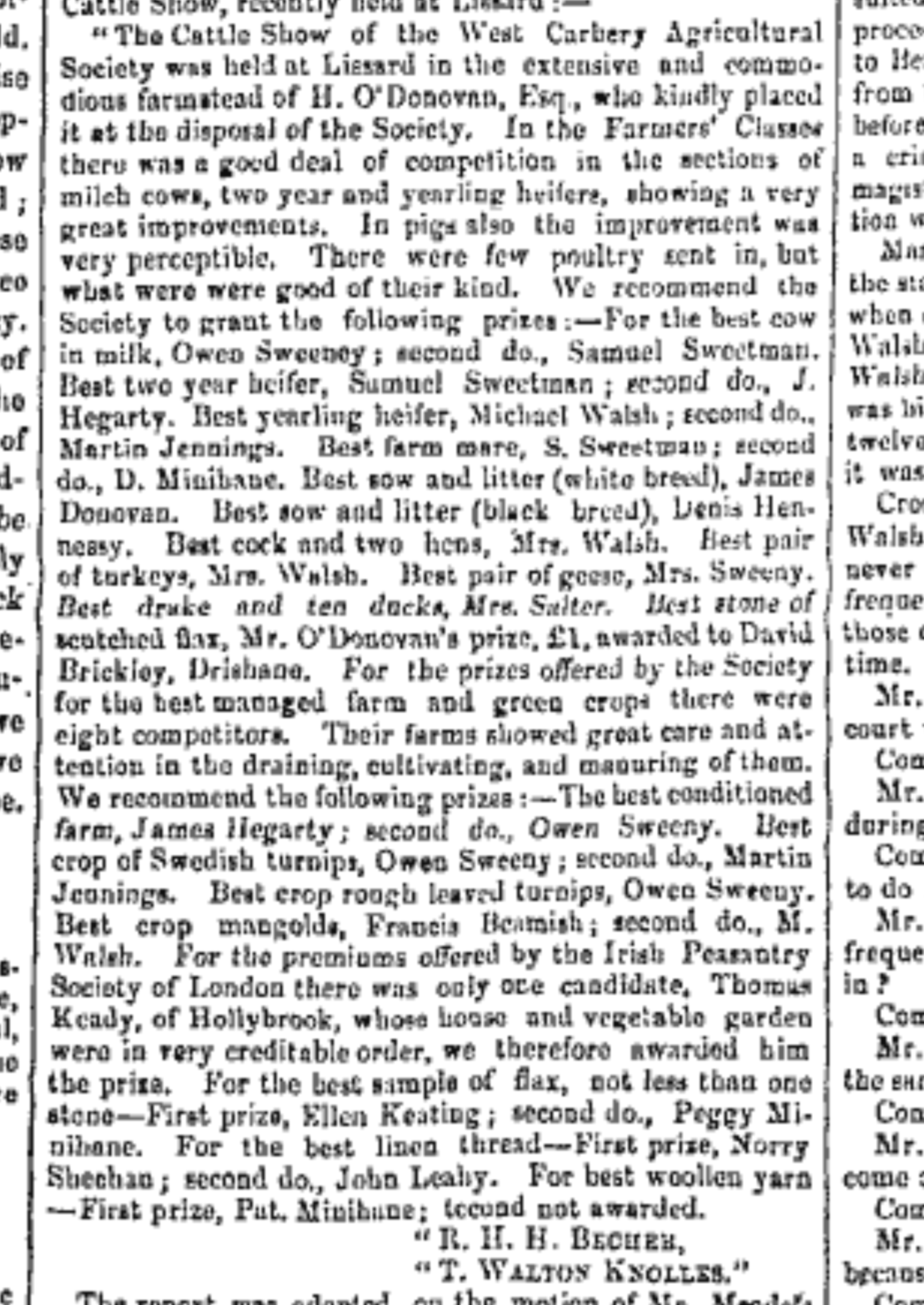
Henry Wintrop ‘The O’Donovan’ (1812-1890), TCD, MA, DL. Pre 1910, Clann Cathal, Lis Ard, Skibbereen, son Rev. Morgan, Cork ed Dr. Coughlan, m Amelia d ‘The O’Grady’, Courcy O’Grady, Kilbollyowne, Co.Limerick. Son Colonel Morgan William MA, J.P., ‘The O’Donovan’ and Alicia Jones. 1864 Cattle Show West Carbery Agricultural Society, Lissard, Skibbereen held in his grounds. Attending 17 Grand Jury presentments. Supporter Nicholas Leader, Conservative, 1865 County Cork Election. Interest in antiquities. Donor to the church bell fund, 1869, St. Nicholas, Cork. (Cork Daily Southern Reporter 26th March 1869). 1884, signed a protest against the dismissal of Lord Rossmore, head of Orange Order, Monaghan. Probate to Morgan O’Donovan, Lissard, Bishop Gregg, Cork, John Carson, Fellow Trinity College Dublin, £30,292.
Richard Henry Hedges Beecher Esq., (1799-1882), Pre 1838, listed 1838, Hollybrook, Skibbereen, sitting Skibbereen, 1835, Came into possession pre 1833 very neglected set about improving. In re organising compensated tenants according to Ulster Custom. Engaged in road building. Abolished rundale system. Grand Jury Presentment Sessions Schull, 1834. Subscriber Lewis Topographical Dictionary of Ireland 1837. Attending Protestant Conservative Society meeting 1832. Bandon Brunswick Constitutional Club 1828. Non resident Freeman voting in Cork 1837 election. Attending Dunmanway Conservative and anti Repeal Meeting 1845. 1845 promoter Bandon to Bantry Railway. 1843 Freemason, Skibbereen. Anti-Repeal Meeting, Dunmanway 1845. Skibbereen 1847 distress meeting. Presentment sessions Ballydehob 1845. Signed ‘No Popery Petition 1851’. 1866 Freemason Skibbereen 15th Lodge. Long litigation with Lord Bandon added to financial woes over the townland of Rathooragh near Mount Gabriel. Imprisoned but later freed by his creditors 1848. The Hollybrook estate was sold in the Encumbered Estates Court in 1851, 17,000 acres, 42 townlands, 8 parishes, debts in 52 charges amounting to £52,275. The sale realised £52,080. It was estimated that the rent of £4,500 per annum represents only 25% of the value of market rents but two thirds were given long leases on low rents with a capital sum in 1794 to families such as the Ballydehob Swantons. 1839 Freeman’s Journal 15 Feb 1839 “Marriages~On Tuesday last, in Cork, Richard H H Becher, Esq of Hollybrook in that Co., to Melian, daughter of the Rev Morgan O’Donovan of Montpelier (Ronayne’s Court, Douglas, Cork). Freeman of Cork. Melian, daughter of the Rev Morgan O’Donovan of Montpelier (Ronayne’s Court, Douglas, Cork). Freeman of Cork. He became the O’Donovan as did his son Henry Winthrop. 1864 officiated Cattle Show West Carbery Agricultural Society, Lissard, Skibbereen. He became the O’Donovan as did his son Henry Winthrop. Niece Susan Emily Becher Hungerford, informant of death, probate to Richard Becher Hungerford, £217.
1836-1970 West Cork Agricultural Societies and Shows
https://docs.google.com/document/d/1yoNjmDNQKT_pk3nvlCsT72YWYoDENcs–uaJxh2ber8/edit
16 Tuesday Jan 2024
Posted in Uncategorized
Click here:
https://docs.google.com/spreadsheets/d/193TpfHYRXIBQb0nzVLTs_Cl-oebYYnFAebmtxvDiYzY/edit#gid=0
This is only scratching the surface.
Over 90,000https://docs.google.com/spreadsheets/d/193TpfHYRXIBQb0nzVLTs_Cl-oebYYnFAebmtxvDiYzY/edit#gid=0
Over 90,000 Irish people served in the RIC. Mostly Catholic although the senior ranks were mostly but not exclusively Protestants. The pay was not great but the pension arrangement suited a lot of men who could retire early maybe from their lump sum buy a farm or a business. Men were allowed to go out with a girl after 5 years service and marry after 7 years.
The personnel files before photography contained a sketch letter of recommendation, family background and confirman from a priest or minister of birth, Prior to marriage the bride’s famu was checked out.
After independence more the 90,000 personnel files were removed to Ealing in West London. They were used to deal with pension queries and all but 4 were shredded in 1938.
07 Sunday Jan 2024
Posted in Uncategorized
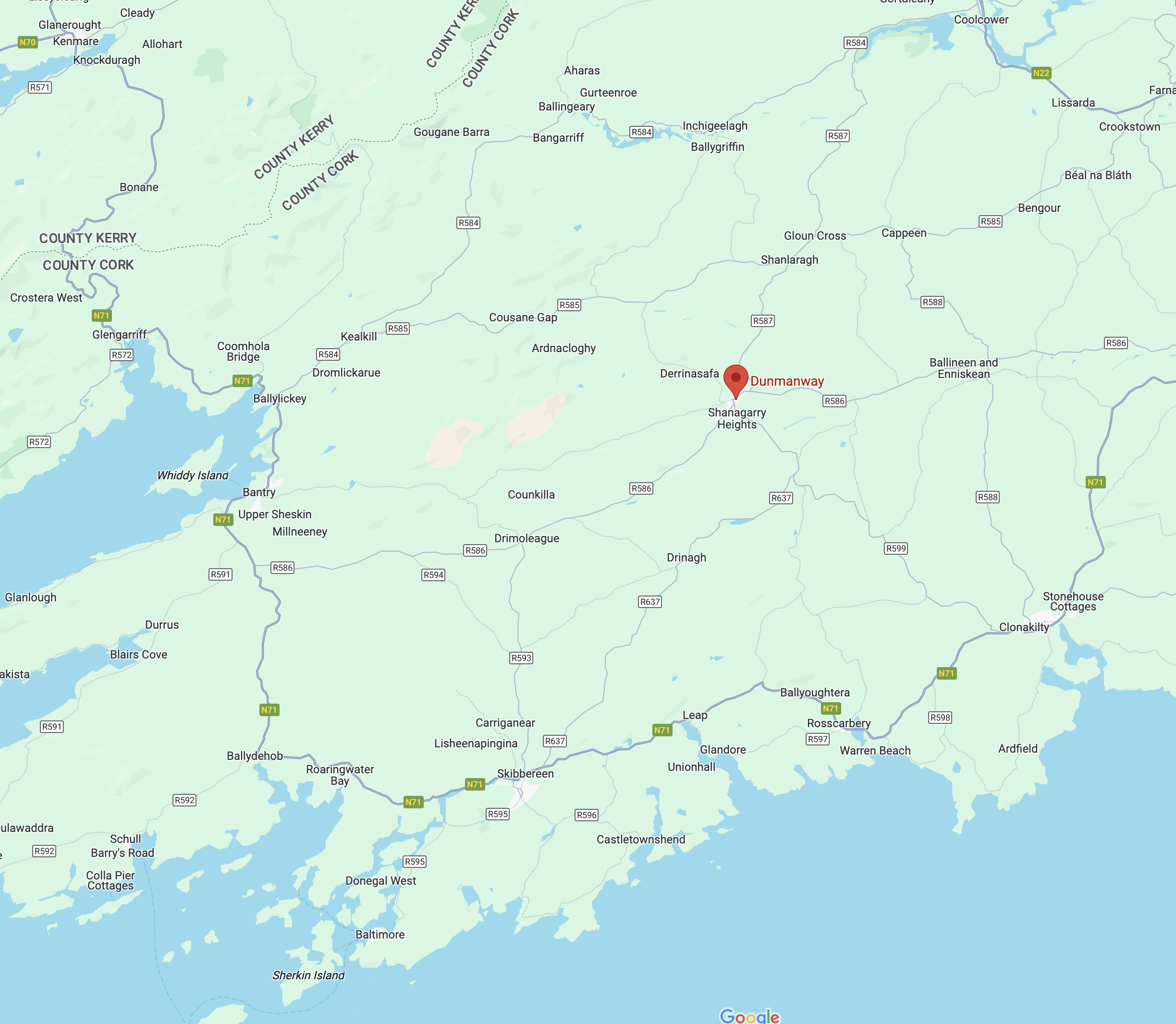
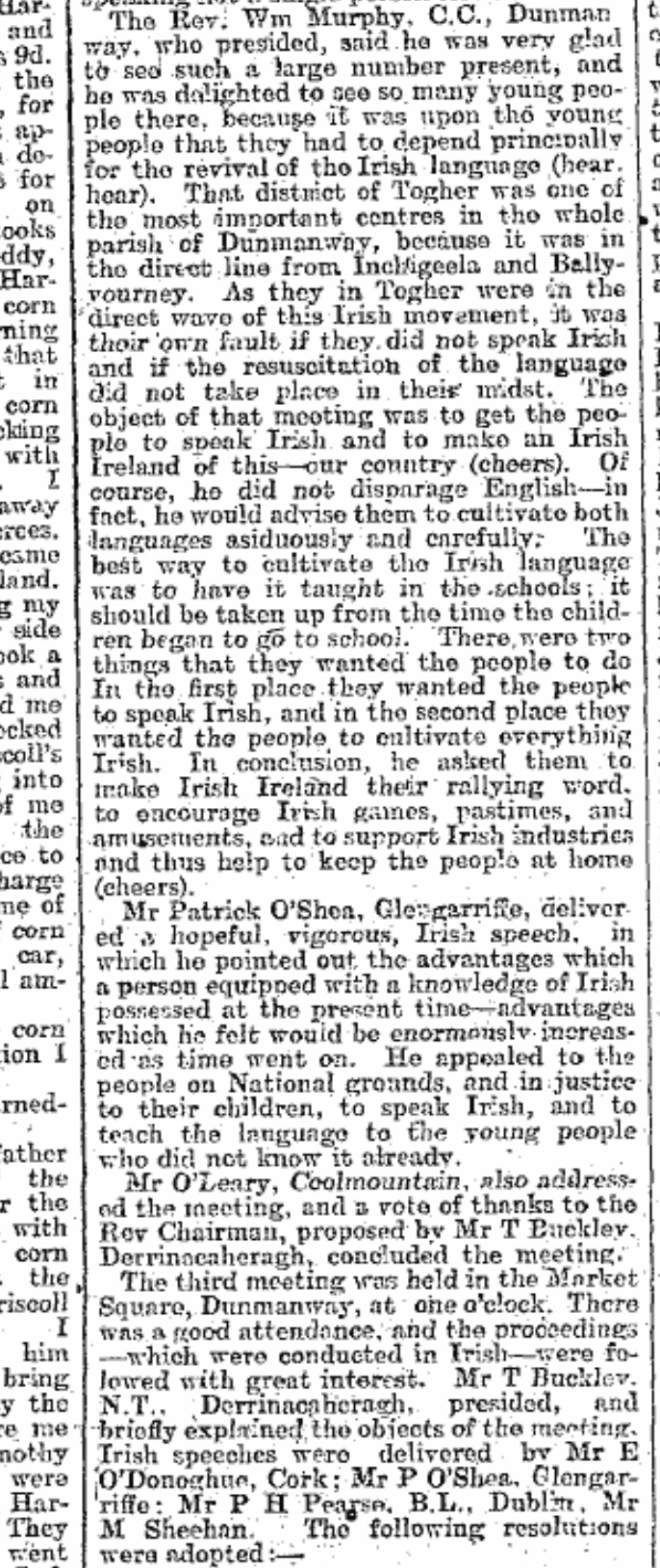
In 1902 it is likely that a fair proportion of the older people west and north of Dunmanway were either Irish speakers or bi lingual
1902 Irish Day Dunmanway addressed by Pádraig Pearse
https://docs.google.com/document/d/1epwrrLWqweGO7gQJF-xycNKqqBwaeD9a2B6wFShhqfU/edit
Born in Dublin to an English father and an Irish mother, Padraig Pearse was a teacher, barrister, poet, writer, nationalist and political activist who was one of the leaders of the Easter Rising in 1916. Pearse joined the Gaelic League in its third year, in 1896, and between 1903 and 1909 served as editor of the League’s journal, An Claidheamh Soluis. He held a degree in Modern Languages and a B.L. from the King’s Inns. He worked as a teacher in various colleges until he and his brother Willie founded St Enda’s in 1908, a bilingual secondary school for boys. Pearse published several didactic short story collections in Irish as well as poems, plays and political pamphlets. These include Poll an Piobaire (The Piper’s Cave), 1905, Iosagan agus Sgealta Eile (Little Jesus and other Stories), 1907, and the play, An Rí (The King), which was produced in 1912. Pearse was a member both of the Irish Volunteers and of the secret Irish Republican Brotherhood, which he joined in 1913. As a member of the IRB’s Supreme Council, and its secret Military Council,he was involved in the planning for a rising during the First World War. On Easter Monday, 24 April, 1916, members of the Irish Volunteers, led by Pearse, and of the smaller Irish Citizen Army of James Connolly seized key locations in Dublin and proclaimed an Irish Republic from the steps of the General Post Office. The Rising was suppressed by the British military after six days of fighting, and Pearse as one of its fourteen leaders was court-martialled. He was shot at dawn on 3 May in the stonebreaker’s yard in Kilmainham Jail.
04 Thursday Jan 2024
Posted in Uncategorized
,
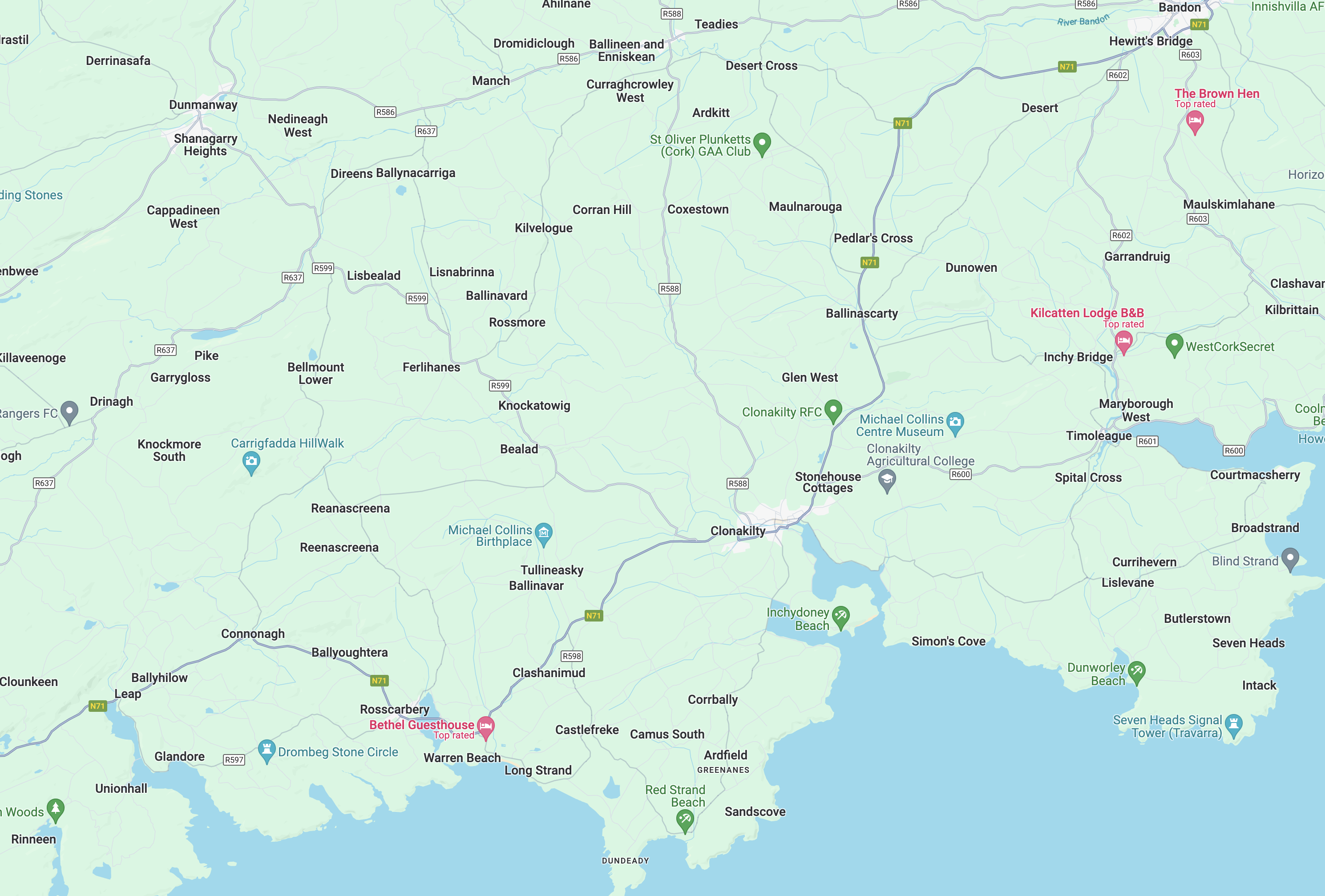

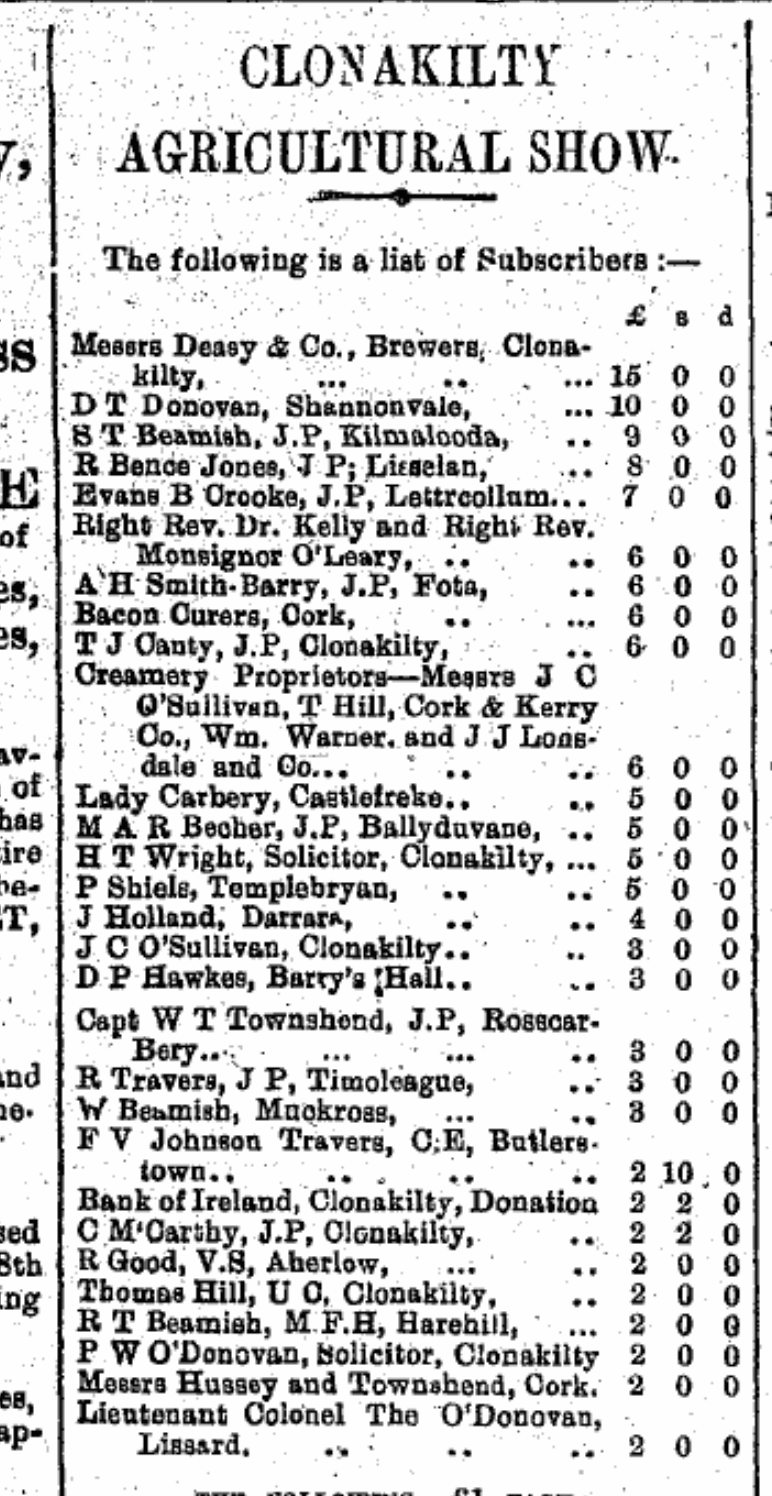
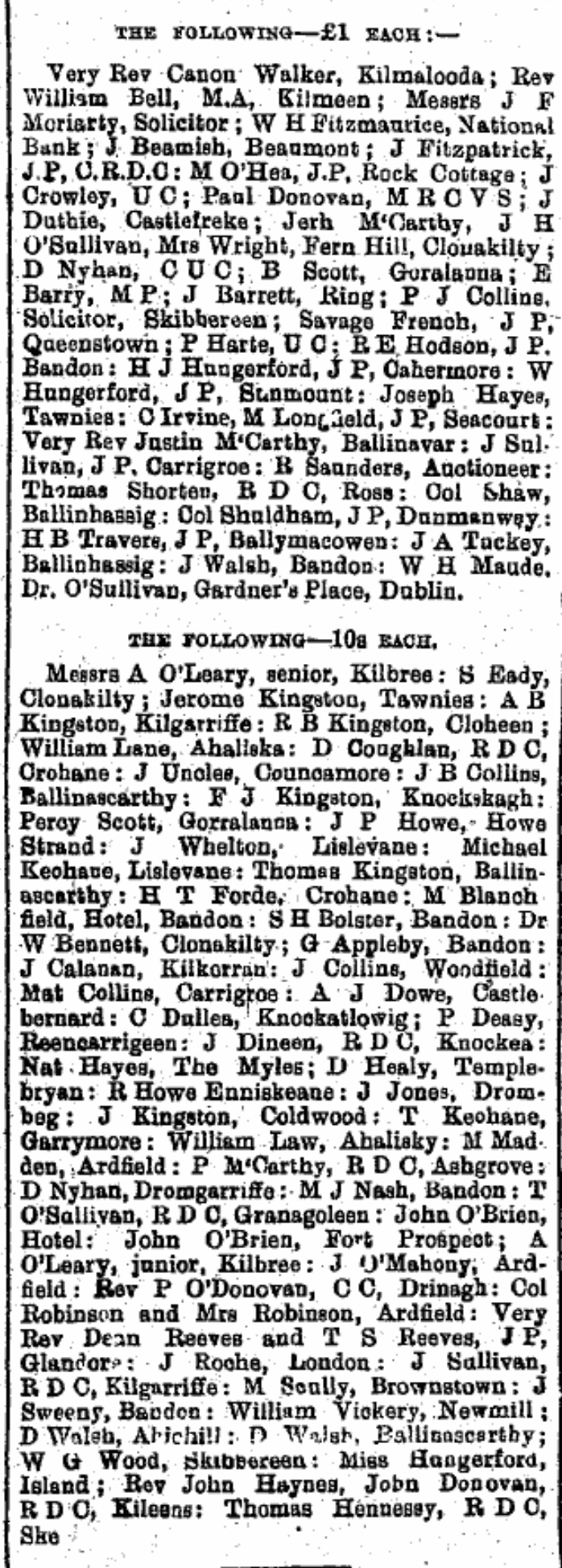
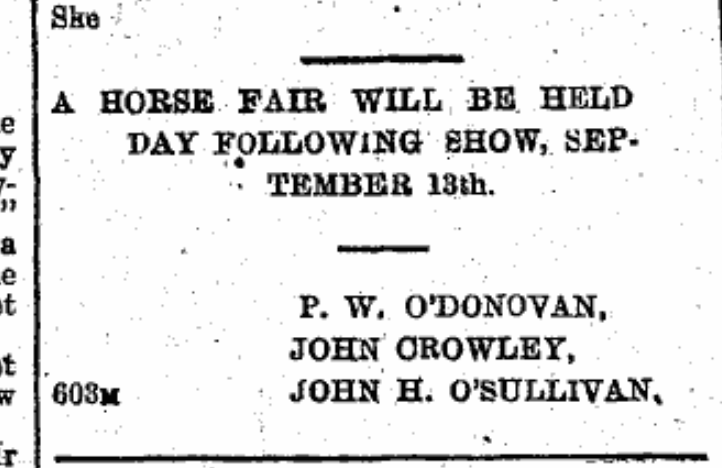
1836-1970 West Cork Agricultural Societies and Shows
https://docs.google.com/document/d/1yoNjmDNQKT_pk3nvlCsT72YWYoDENcs–uaJxh2ber8/edit
03 Wednesday Jan 2024
Posted in Uncategorized

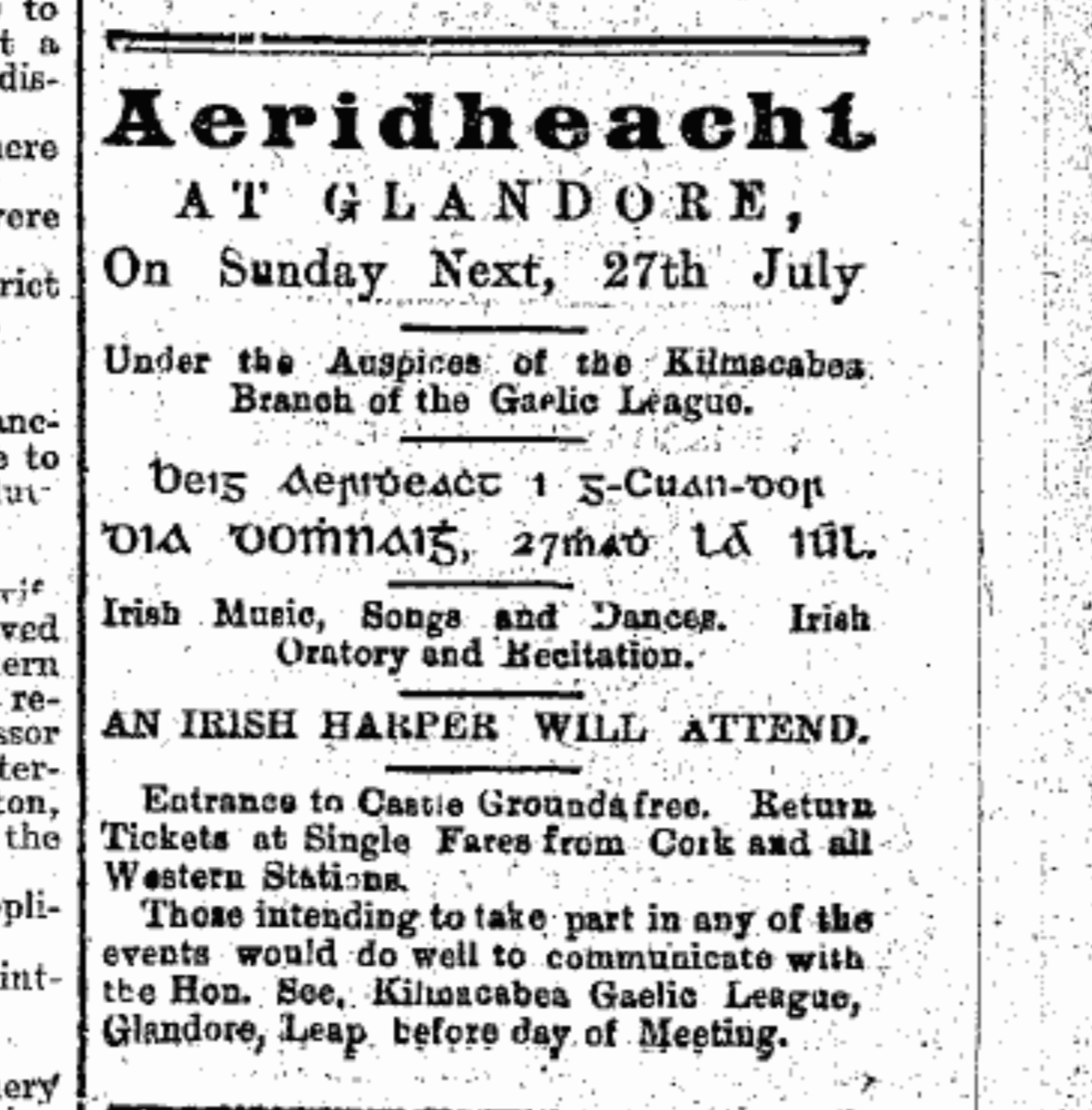
Ms. Carrie (Caroline Mary) Townshend, (1859 -1951). West Cork and Dublin. Popularity of the Irish Harp. Teacher of Irish. Giving evidence in America of British Brutality During Troubles in Ireland. Member Christian Science Church. 1915 Aeridheacht at Glandore with Madeline Townshend. The name Caroline Townshend is known to only a handful of people in Ireland but if any deserves to be a household name, surely it is hers, for it almost entirely due to her efforts that the ancient Irish harping tradition became firmly re-established.
23 Saturday Dec 2023
Posted in Uncategorized


When the larger past of the Island of Ireland became independent in 1922 there were no more redcoats and the land issue had been settled. In contrast in many European countries even in the 1930s a tiny minority owned most of the land as in Hungary.
This eviction was in Co. Clare note partly reroofed house
Re the transfer of Land, the Irish Land commission transferred nearly 14.5 million acres from the Landed Estates to the tenant almost 70% of the landmass of the Island of Ireland.
As an aside many literary figures such as Hugh Leonard worked there.
By my reckoning this was probably the largest voluntary land transfer in world history. It was motivated by the concept of killing Home Rule by Kindness.
From around 1895 if the Estate was willing to sell the Land Commission offered market value with a premium of 25% for selling on a voluntary basis. By that time most estates were distressed and they were only too willing to sell.
They had to produce legal title to the satisfaction of the Land Commission Law Officer. As a consequence there are 8.5 million documents stored in a warehouse in Portlaoise. The denial of access to the public is a national scandal. Many of these are certified copies of records the originals of which were destroyed in the Public Records Office in 1922.
Extract enclosed from submission to Dr. Robert Watt, then Secretary General D/Public Expenditure and Reform. He called me to come and meet him with good vibes but no sign of progress.
Landed Estates
Fior anyone interested there is a really good online site maintained by UCG on the landed esta and families.
Popularly the land struggle is remembered as grasoi landlords and evicted tenants. The reality was different with many nuances.
In the West Cork area which am familia what the various estates say the Beecher family in 1780 had 50,000 acres admittedly some of it mountain and bog. The family ran up significant debts maintaining a house in London, William Wrixon Beecher married the celebrated Irish actress Miss Elizabeth O’Neill in 1819.
It was funded from the 1790s by granting leases for 3 lives and 21 years for a capital sum. Usually a few townlanads were involved. Those who got them were the middlemen and included well to do Church of Ireland and Methodist farmers as well as a significant cohort of well to do local Catholics some being of the old Gaelic Gentry. Acting in a logical fashion they extracted as much as they could l knowing that when their lease would expire there wouldn’t be compensation unlike in Ulster.
The Beecher estate was insolvent and ended up in the Landed Estate Court in the 1850s it was stated that the middlemens rent was three times that received by the Beechers.
Some of the purchase of the Beecher and other local estates included
Timothy McCarthy Downing, Nationalist MP and solicitor had 7,000 acres
Samuel Levis (family of Huguenot extraction, Skibbereen, merchant and baronial constable (Tax Collector)
Wright family, Claonakilty, land agents and solicitors.
1898. Bantry Petty Session Court. Stirring Days if the Land League Recalled. Intimidation, Eviction, Boycott, Cattle Maiming.
1886 Attempted Eviction and Siege at Tim Hurley’s Castle (Mill and Farm) , Castleview, Clonakilty. Landlord Francis Evans Bennett, (1824-1888), Cregan Manor, Rosscarbery.
Collections for Evicted Tenants, Castlehaven/Myross, Myross, Ardfield, Rathbarry. 1892 Collection Ballyroe. 1893, Clonakilty Evicted Tenants Fund. Like a Mini Census. Fiery address of James Gilhooley, M.P., in Goleen on Evictions. Gilhooley ‘The Irish People Have Never Acknowledged this Right of Any Nation In the World To Govern Them.
Eviction on Wright Holding, Coolculaghta, Durrus, May 1883.
Re the transfer of Land, the Irish Land commission transferred nearly 14.5 million acres from the Landed Estates to the tenant almost 70% of the landmass of the Island of Ireland.
As an aside many literary figures such as Hugh Leonard worked there.
By my reckoning this was probably the largest voluntary land transfer in world history. It was motivated by the concept of killing Home Rule by Kindness.
From around 1895 if the Estate was willing to sell the Land Commission offered market value with a premium of 25% for selling on a voluntary basis. By that time most estates were distressed and they were only too willing to sell.
They had to produce legal title to the satisfaction of the Land Commission Law Officer. As a consequence there are 8.5 million documents stored in a warehouse in Portlaoise. Many of these are certified copies of records the originals of which were destroyed in the Public Records Office in 1922.
Landed Estates
Fior anyone interested there is a really good online site maintained by UCG on the landed esta and families.
Popularly the land struggle is remembered as grasoi landlords and evicted tenants. The reality was different with many nuances.
In the West Cork area which am familia what the various estates say the Beecher family in 1780 had 50,000 acres admittedly some of it mountain and bog. The family ran up significant debts maintaining a house in London, William Wrixon Beecher married the celebrated Irish actress Miss Elizabeth O’Neill in 1819.
It was funded from the 1790s by granting leases for 3 lives and 21 years for a capital sum. Usually a few townlanads were involved. Those who got them were the middlemen and included well to do Church of Ireland and Methodist farmers as well as a significant cohort of well to do local Catholics some being of the old Gaelic Gentry. Acting in a logical fashion they extracted as much as they could l knowing that when their lease would expire there wouldn’t be compensation unlike in Ulster.
The Beecher estate was insolvent and ended up in the Landed Estate Court in the 1850s it was stated that the middlemens rent was three times that received by the Beechers.
Some of the purchase of the Beecher and other local estates included
Timothy McCarthy Downing, Nationalist MP and solicitor had 7,000 acres
Samuel Levis (family of Huguenot extraction, Skibbereen, merchant and baronial constable (Tax Collector)
Wright family, Claonakilty, land agents and solicitors. etc
22 Friday Dec 2023
Posted in Uncategorized
1835 Tidal Harbours Commission. Railway from Dublin to Bantry. A vessel Leaving Berehaven Would command the Coasts of Spain. Portugal and the Coast of the Mediterranean as well as the most desirable spot for the West Indies or America.
..

Click here:
https://www.dippam.ac.uk/eppi/documents/12068/pages/287863

21 Thursday Dec 2023
Posted in Uncategorized
11 Monday Dec 2023
Posted in Uncategorized
Sad Case. Eugene Downing 1837-1879. Allegedly a Member of Tem Hill Whiskey Club Skibbereen
..
Allegedly a Member of Tem Hill Whiskey Club Skibbereen
..
Death Cert Probate


..
Click here:
https://docs.google.com/document/d/1mAUKSrzQOqx-WsYXOQRs8YgRz-sv59P3yKs07TOxbgg/edit
Probate suit

…
..
Election Committee of McCarthy Downing, Solicitor and landlord, Skibbereen, West Cork . He was a very influential figure in West Cork mid 19th century. It was reported that he was angling to be elevated to the House of Lords. A major purchased of distressed estates post famine.


 West Cork History