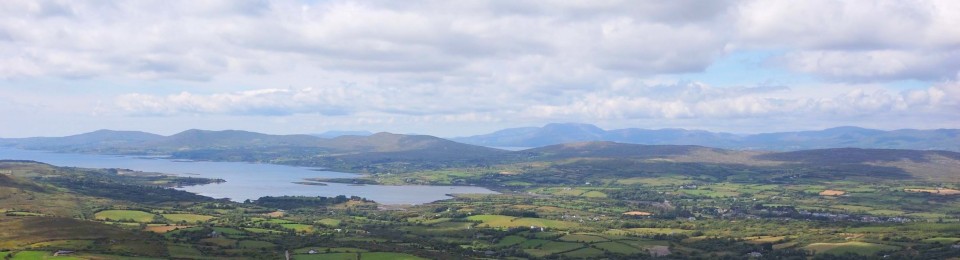
From:
Continuing our journey around Ireland, this blog from Dr Stephen Ball, of our House of Commons 1832-68 project, looks at politics in the small boroughs of county Cork, where competition between the rival parties encouraged a vibrant political culture, but also prompted sectarianism, bribery, violence and coercion.

The county of Cork was widely referred to as ‘the Yorkshire of Ireland’, due to its extent, wealth and resources. However, under the Irish Reform Act of 1832, Ireland’s largest county returned just eight MPs, compared to Yorkshire’s 37, although the latter was barely twice as populous. Half of Cork’s parliamentary representatives were elected by the four single-member boroughs of Youghal, Bandon, Kinsale and Mallow. The principle that the reformed House of Commons was designed to represent specific and distinctive ‘interests’, rather than numbers, is amply demonstrated by the fact that whereas in 1831 the population of the two-member County Cork constituency was 700,366, and that of the city of Cork, which also returned two MPs, was 107,000, the population of Youghal was only 9,820, that of Bandon, 9,608, Mallow, 7,100 and Kinsale, 6,897. While the county boasted 13,351 electors in 1851, Kinsale had only 139, and Youghal, the largest of the one-member boroughs, 261. However, defenders of the reformed system argued that the continued enfranchisement of such boroughs was justified because they each represented distinct social, economic and political interests, and allowed a diverse mixture of oligarchic and popular influences to decide their own representation in Parliament.

Regarded as the county’s second town, Youghal was a busy seaport on the estuary of the river Blackwater. The pre-reform constituency had been controlled by the corporation and freemen under the influence of the town’s main landowner, the Duke of Devonshire. The Irish Reform Act expanded the electorate and consequently increased the influence of the town’s merchants, shopkeepers, artisans and publicans, making the constituency a hotbed of local politics. The curbing of the duke’s Whig influence after 1832 created opportunities for the Irish popular interest, but also raised the possibility of electoral success for organised popular Conservatism. Consequently, sectarian rivalry, intimidation and corruption were features of the borough’s seven contested elections. Daniel O’Connell’s son, John, defeated the Conservatives on the Repeal interest at the 1832 and 1835 elections, during which the town was, according to the future Chartist leader, Feargus O’Connor, frequently in ‘a state of siege’. His father’s compact with the Whigs meant that O’Connell stood aside in 1837 and at the next two general elections the duke’s nominee held off Conservative challengers before suffering defeat at the hands of another Repealer in 1847. The collapse of the repeal campaign and a loss of confidence in the Whig ministry allowed Isaac Butt to win the seat for the Conservatives in 1852. Despite moving away from orthodox Conservatism as he became increasingly critical of Ireland’s fate under the Union, Butt held Youghal until 1865, when he was easily beaten by a wealthy Liberal banker, who in 1868 was defeated by an ‘heroically corrupt’ London merchant.
Known as the ‘Derry of the South’, Bandon was Cork’s next largest borough. A handsome market town founded by the first Earl of Cork as a plantation settlement in 1610, it had served as a rallying point for Williamite forces in 1689. Its once thriving linen industry had declined by the 1820s, but the town still contained leather works, flour mills and distilleries. A ‘rotten borough’, it had been controlled by a close corporation under the Earl of Bandon before the Irish Reform Act increased its electorate from 13 to 266. Of these 70 were resident freemen who propped up the Conservative interest. Despite being only one third of the population by the 1860s, Protestants, including a substantial number of Orangemen, made up almost three-quarters of the electorate. They were efficiently organised, and the Whig influence of the absentee Duke of Devonshire could not compete with that of the staunchly Protestant and constantly resident Earl of Bandon, whose family dominated the representation until 1868. The Liberals contested six often disorderly and violent elections but could make no headway against the Bandon interest, whose agents were was not above plying Devonshire’s tenants with drink to secure their votes, as some of them were polled with the fumes of the previous night’s ‘debauch still thick upon them’.
 West Cork History