
• About
  • Customs Report 1821-2 (and Miscellaneous Petitions to Government 1820-5) and some Earlier Customs Data, including staffing, salaries, duties including, Cork, Kinsale, Youghal, Baltimore, with mention of Bantry, Crookhaven, Glandore, Berehaven, Castletownsend, Enniskeane, Passage, Crosshaven, Cove, Clonakilty, Cortmacsherry.
  • Eoghan O’Keeffe 1656-1723, Glenville, Co. Cork later Parish Priest, Doneralie 1723 Lament in old Irish
  • Historic maps from Cork City and County from 1600
  • Horsehair, animal blood an early 18th century Stone House in West Cork and Castles.
  • Interesting Links
  • Jack Dukelow, 1866-1953 Wit and Historian, Rossmore, Durrus, West Cork. Charlie Dennis, Batt The Fiddler.
  • Kilcoe Church, West Cork, built by Father Jimmy O’Sullivan, 1905 with glass by Sarah Purser, A. E. Childs (An Túr Gloine) and Harry Clarke Stained Glass Limited
  • Late 18th/Early 19th century house, Ahagouna (Áth Gamhna: Crossing Place of the Calves/Spriplings) Clashadoo, Durrus, West Cork, Ireland
  • Letter from Lord Carbery, 1826 re Destitution and Emigration in West Cork and Eddy Letters, Tradesmen going to the USA and Labourers to New Brunswick
  • Marriage early 1700s of Cormac McCarthy son of Florence McCarthy Mór, to Dela Welply (family originally from Wales) where he took the name Welply from whom many West Cork Welplys descend.
  • Online Archive New Brunswick, Canada, many Cork connections
  • Origin Dukelow family, including Coughlan, Baker, Kingston and Williamson ancestors
  • Return of Yeomanry, Co. Cork, 1817
  • Richard Townsend, Durrus, 1829-1912, Ireland’s oldest Magistrate and Timothy O’Donovan, Catholic Magistrate from 1818 as were his two brothers Dr. Daniel and Richard, Rev Arminger Sealy, Bandon, Magistrate died Bandon aged 95, 1855
  • School Folklore Project 1937-8, Durrus, Co. Cork, Schools Church of Ireland, Catholic.
  • Sean Nós Tradition re emerges in Lidl and Aldi
  • Some Cork and Kerry families such as Galwey, Roches, Atkins, O’Connells, McCarthys, St. Ledgers, Orpen, Skiddy, in John Burkes 1833 Commoners of Great Britain and Ireland:
  • Statement of Ted (Ríoch) O’Sullivan (1899-1971), Barytes Miner at Derriganocht, Lough Bofinne with Ned Cotter, later Fianna Fáil T.D. Later Fianna Fáil TD and Senator, Gortycloona, Bantry, Co. Cork, to Bureau of Military History, Alleged Torture by Hammer and Rifle at Castletownbere by Free State Forces, Denied by William T Cosgrave who Alleged ‘He Tried to Escape’.
  • The Rabbit trade in the 1950s before Myxomatosis in the 1950s snaring, ferrets.

West Cork History

~ History of Durrus/Muintervara

West Cork History

Monthly Archives: February 2024

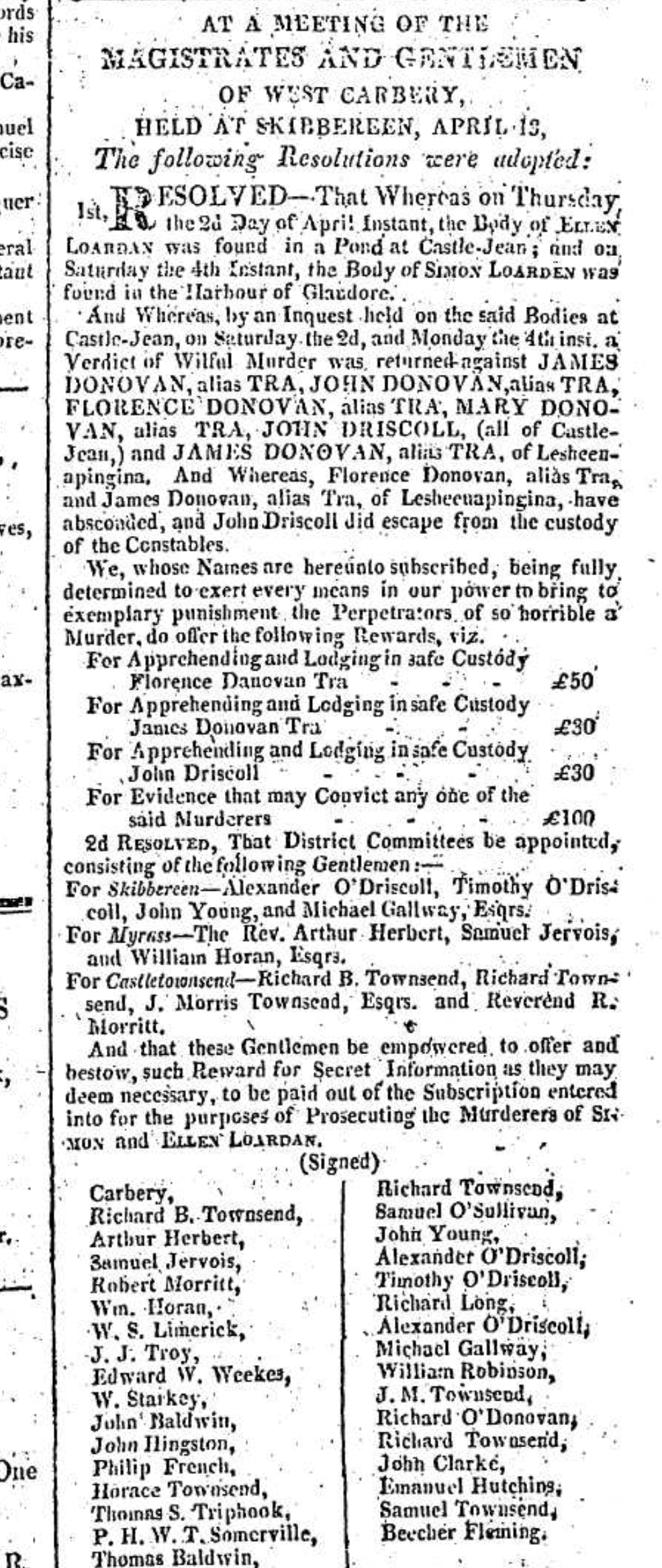
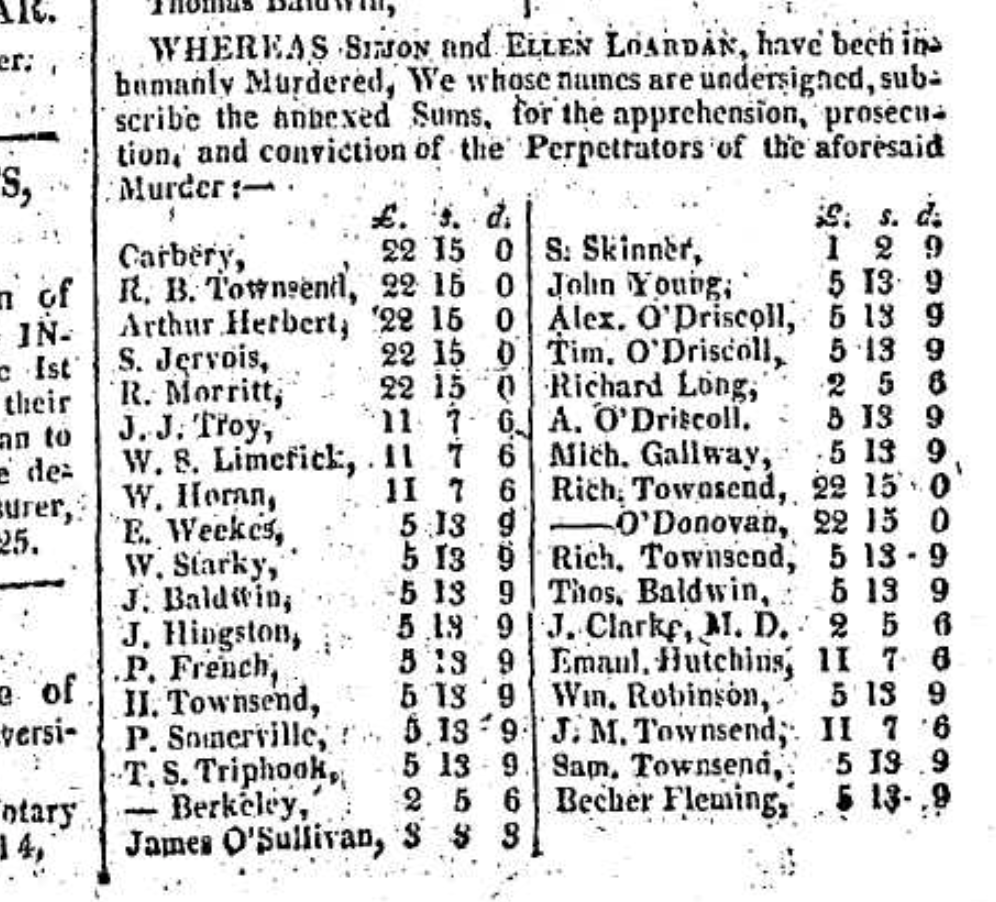
1812 Meeting of Magistrates in Skibbereen Offering a Reward for the Apprehension of Persons (Florence adn James Donovan Trá and John Driscoll) Against whom a Verdict of Wilful Murder was Recorded but Absconded. A Fund Available for Informers. 1812 Meeting of Magistrates in Skibbereen Offering a Reward for the Apprehension of Persons (Florence and James Donovan Trá and John Driscoll of Lisín na Pingine) Against whom a Verdict of Wilful Murder of Simon Lourdan allegedly a Landoords Agent and his mother) was Recorded but Absconded.  A Fund Available for Informers.

24 Saturday Feb 2024

Posted by durrushistory in Uncategorized

≈ 1 Comment


See the enclosed from 1812 Skibbereen, after 2 bodies were discovered the inquest recorded a verdict of wilful murder and some of the suspects escaped.   Presumably this verdict would only be the start of a process culminating in a criminal trial?   There is provision her for payment ot informers a favoured tactic of irish 19th century criminal law.   There is probably more to this then the 2 murders looking at the massed number of Magistrates offering rewards but we will probably never get the full story.

All of the fugitives are aka Trá. I wonder what that means? It surely can’t have anything to do with trá as in strand.

Most likely a sub branch of the O’Donovan of which there are numerous branches.   Trá is probably a strand most likely this branch originated near the coast.

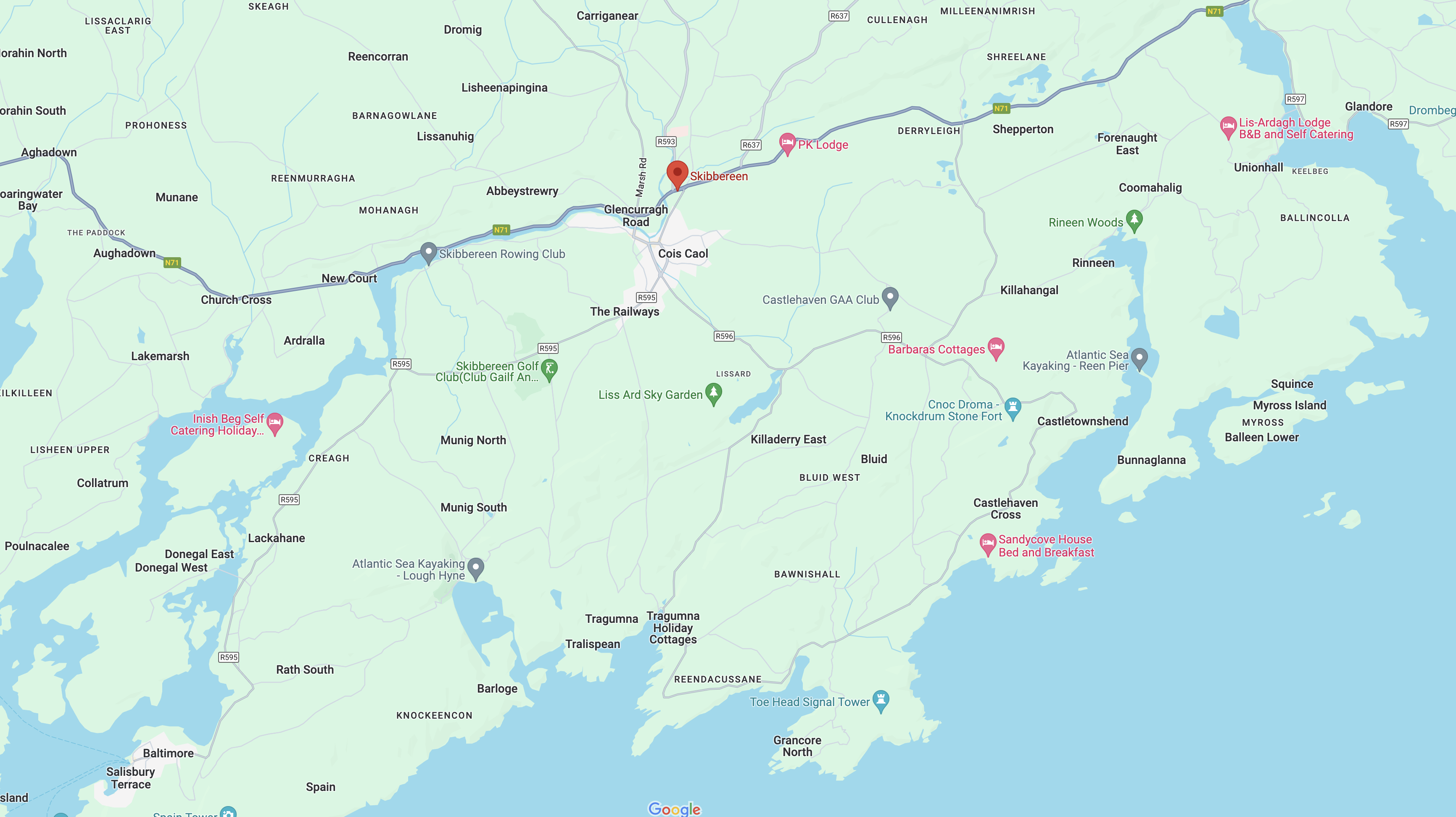
The lake at Castle Jean (Jane) probably Bawnlahan ancestral home of The O’Donovan. The O’Donovan in the mid 18th century a widower in his 60s contracted a second marriage to Jane Beecher either 14, 15 or 16 depending on the version and had a 2nd family. He renamed the Estate Castle Jane but the name never stuck.


1812 Meeting of Magistrates in Skibbereen Offering a Reward for the Apprehension of Persons (Florence and James Donovan Trá and John Driscoll) Against whom a Verdict of Wilful Murder was Recorded but Absconded

https://docs.google.com/document/d/1_HjvNcjcUWnxsaZVEhduPgLEv3Ov9-NRb4z9Cze-TM8/edit?pli=1


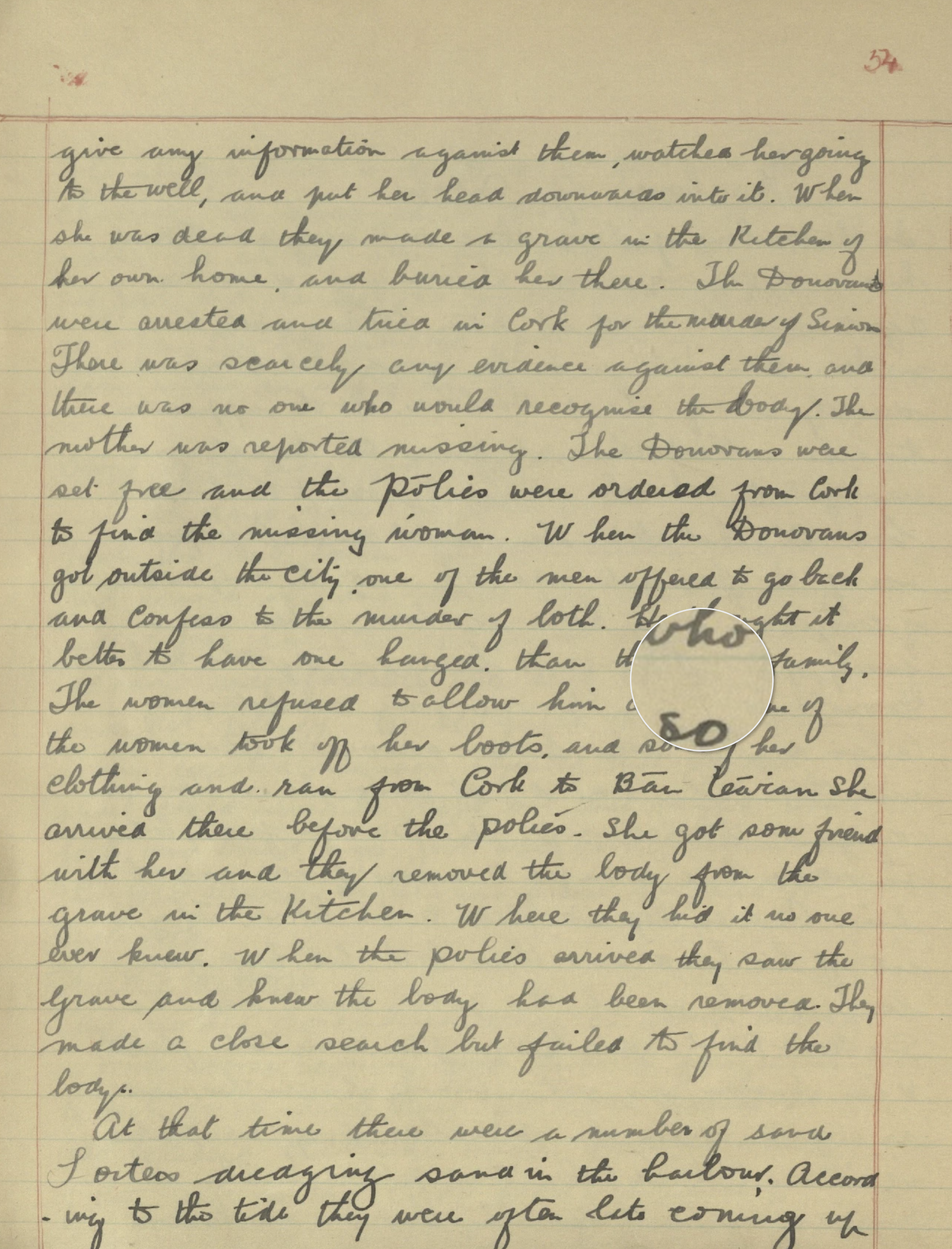
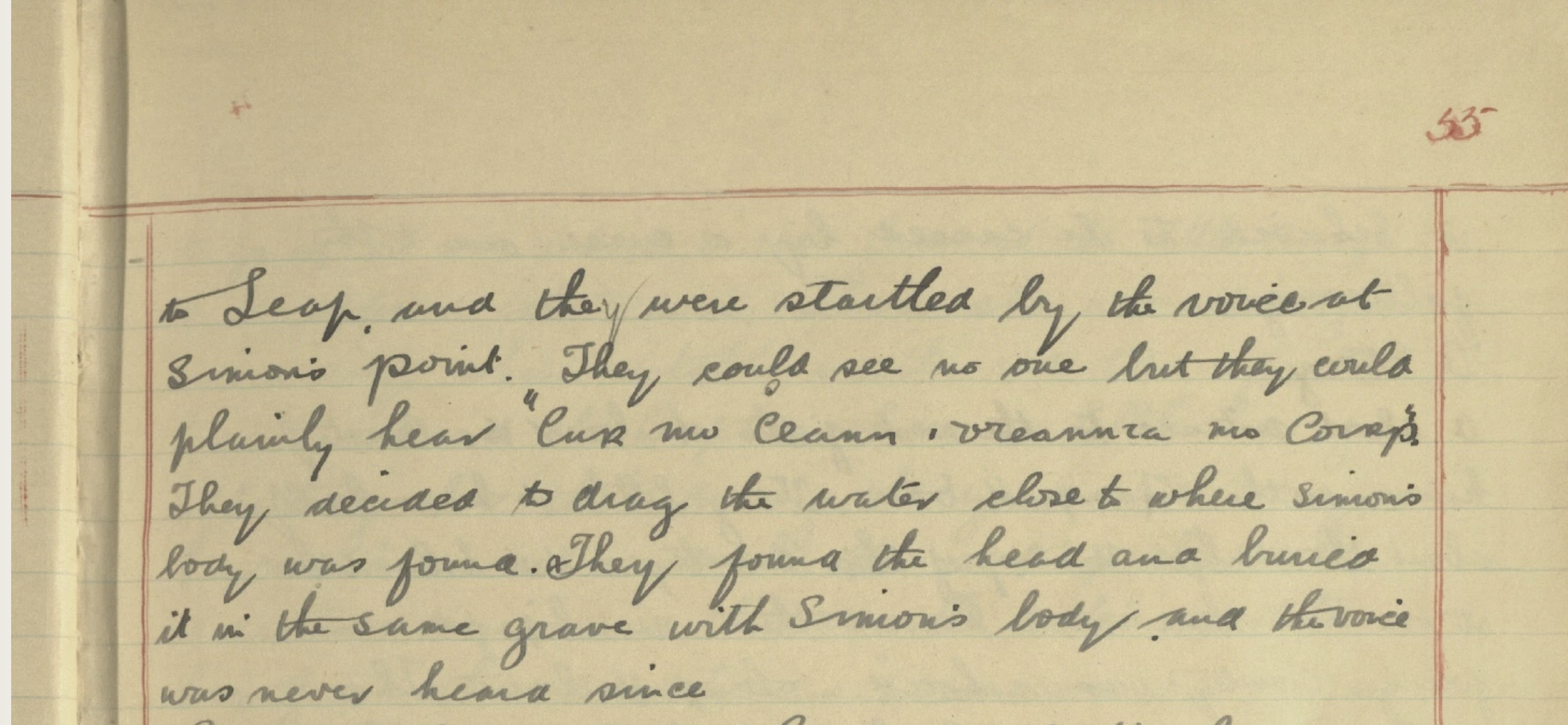
From the School Folklore collection:

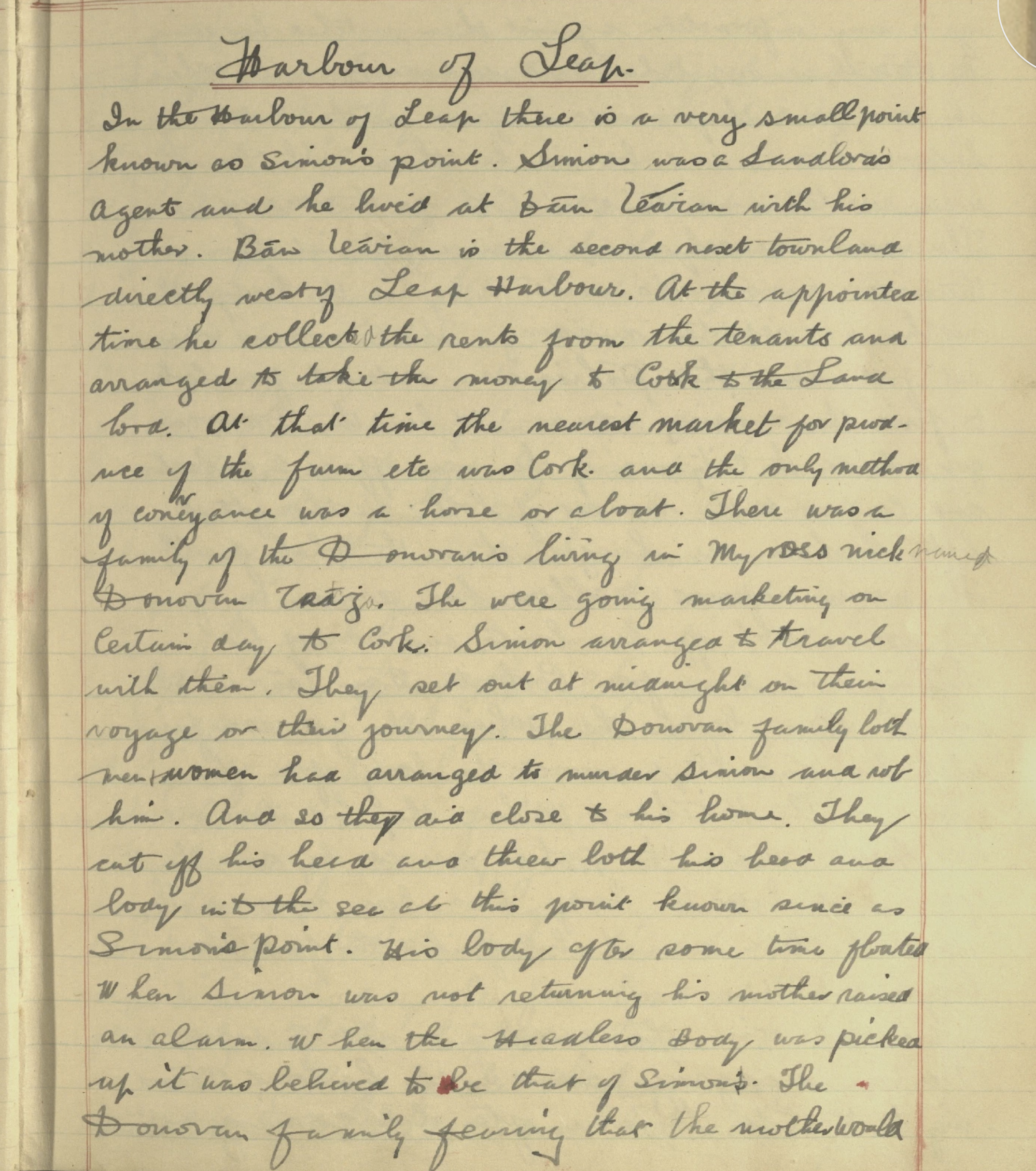
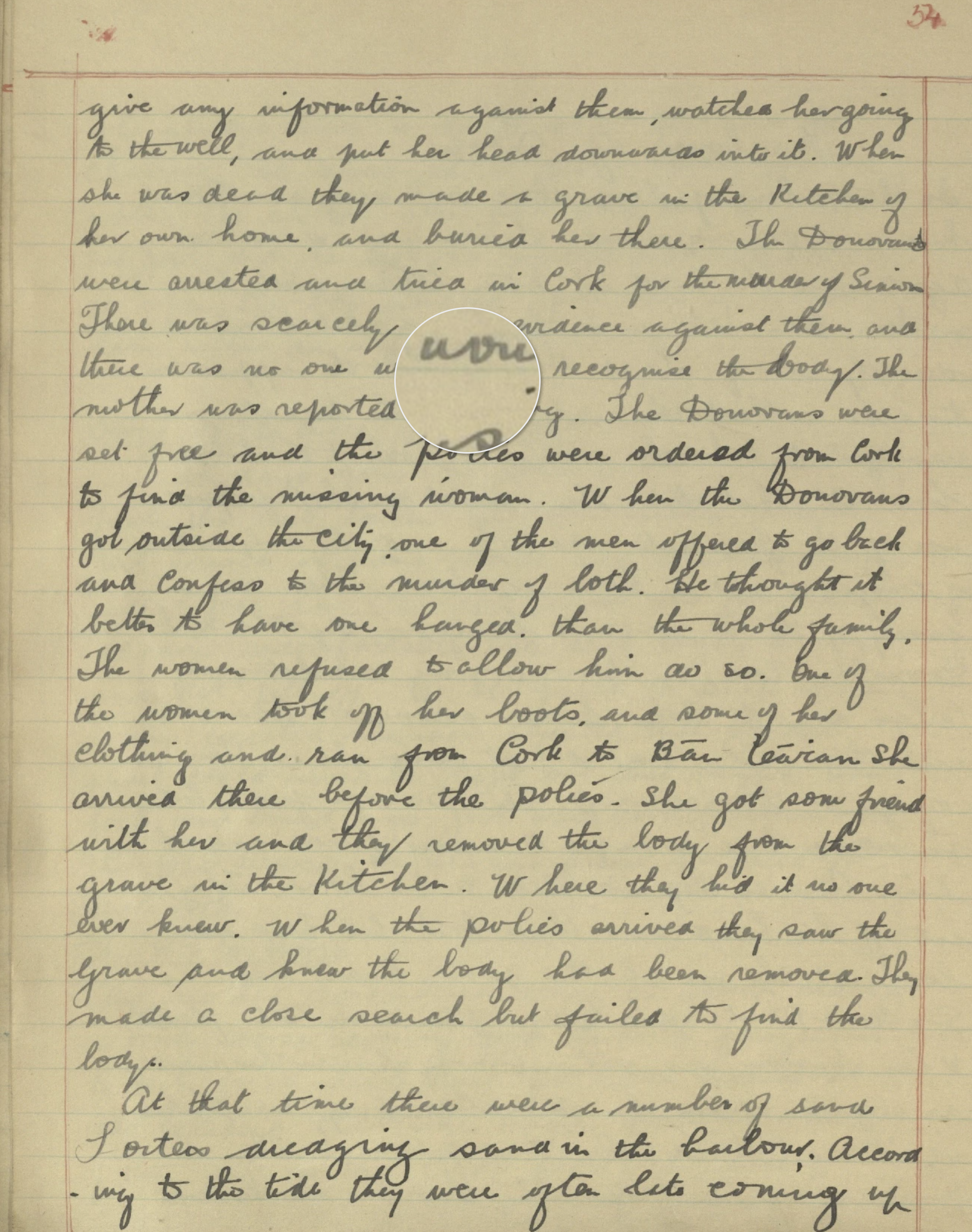
In the Harbour of Leap there is a very small point known as Simon’s point. Simon was a Landlord’s Agent and he lived at Bán Leáthan with his mother. Bán Leáthan is the second next townland directly west of Leap Harbour. At the appointed time he collected the rents from the tenants and arranged to take the money to Cork to the Land Lord. At that time the nearest market for produce of the farm etc was Cork and the only method of conveyance was a horse or boat. There was a family of the Donvan’s living in Myross Mick [?] Donovan Trágha. The were going marketing on Certain day to Cork. Simon arranged to travel with them. They set out at midnight on their voyage or their journey. The Donovan family both men and women had arranged to murder Simon and rob him. And so they did close to his home. They cut off his head and threw both his head and body into the sea at this point known since as Simon’s Point. His body after some time floated When Simon was not returning his mother raised an alarm. When the Headless Body was picked up it was believed to be that of Simon. The Donovan family fearing that the mother would give any information against them, watched her going to the well, and put her head downwards into it. When she was dead they made a grave in the Kitchen of her own home, and buried her there. The Donovan’s were arrested and tried in Cork for the murder of Simon. There was scarcely any evidence against them, and there was no one would would recognise the body. The mother was reported missing. The Donovans were set free and the Pólies were ordered from Cork to find the missing woman. When the Donovans got outside the city, one of the men offered to go back and confess to the murder of both. He thought it better to have one hanged, than the whole family. The women refused to allow him to do so. One of the women took off her boots, and some of her clothing and ran from Cork to Bán Leáthan She arrived there before the Polies. She got some friend with her and they removed the body from the grave in the kitchen. Where they hid it us one ever knew. When the polies arrived they saw the Grave and knew the body had been removed. They made a close search but failed to find the body.At that time there were a number of sand Loitess[?] dredging sand in the harbour. According to the tide they were often late coming up give any information against them, watched her going to the well, and put her head downwards into it. When she was dead they made a grave in the Kitchen of her own home, and buried her there. The Donovan’s were arrested and tried in Cork for the murder of Simon. There was scarcely any evidence against them, and there was no one would would recognise the body. The mother was reported missing. The Donovans were set free and the Pólies were ordered from Cork to find the missing woman. When the Donovans got outside the city, one of the men offered to go back and confess to the murder of both. He thought it better to have one hanged, than the whole family. The women refused to allow him to do so. One of the women took off her boots, and

some of her clothing and ran from Cork to Bán Leáthan She arrived there before the Polies. She got some friend with her and they removed the body from the grave in the kitchen. Where they hid it us one ever knew. When the polies arrived they saw the Grave and knew the body had been removed. They made a close search but failed to find the body.

At that time there were a number of sand Loitess[?] dredging sand in the harbour. According to the tide they were often late coming up.  o Leap, and they were startled by the voice at Simon’s point. They could see no one but they could plainly hear “Cur mo Ceann i dteannta mo Coirp”. They decided to drag the water close to where Simon’s body was found. They found the head and buried it in the same grave with Simon’s body and the voice was never heard since
 

Extensions

Help

Normal text

Arial

Editing
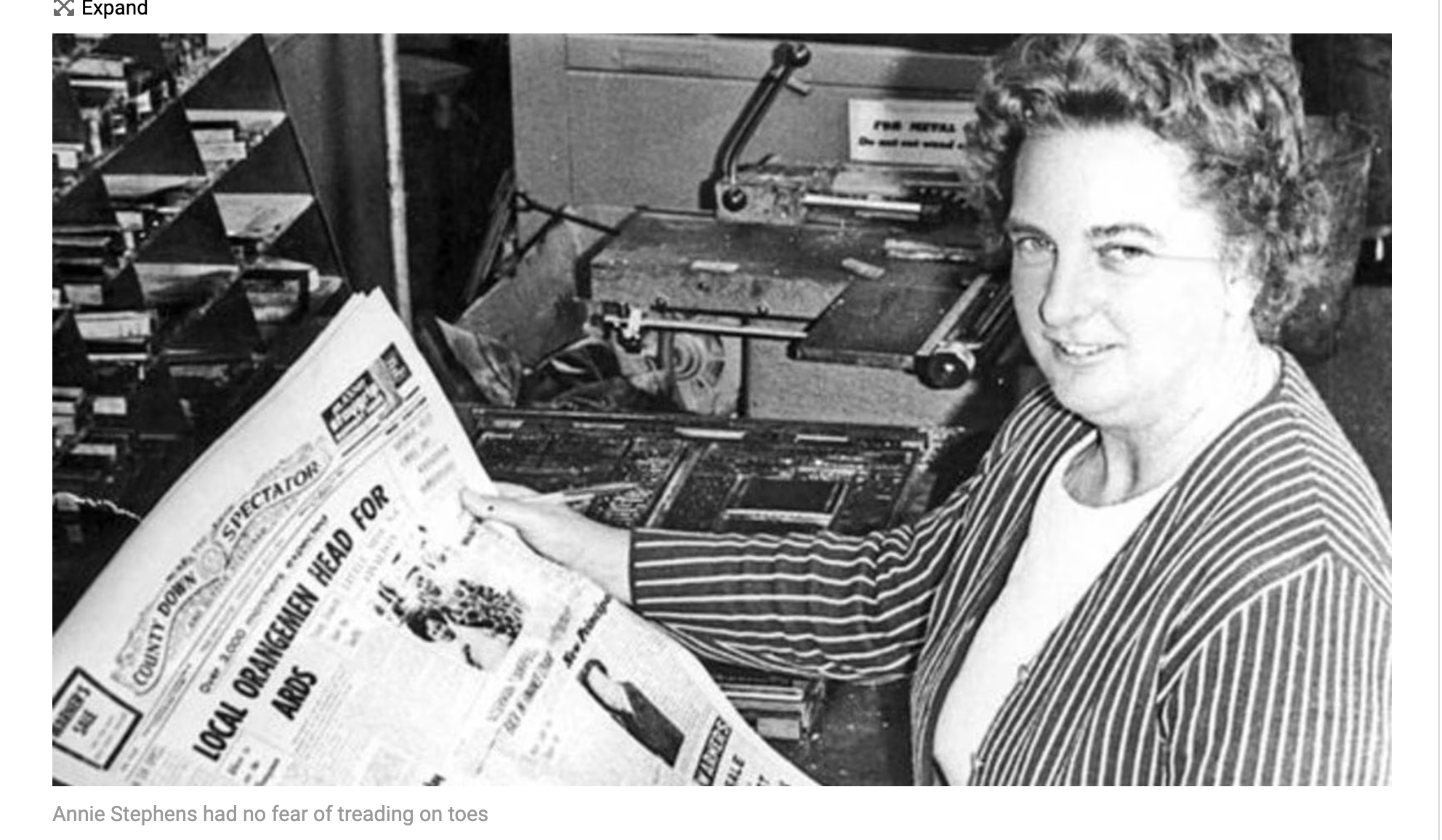
Annie Stephens/Roycroft. 1926 -2019. One of Irelands Early Women Newspaper Editors. Roycroft/Johnson/Connell Ancestors, Roycroft, Connell (Quesnell) Ardravinna, Goleen. Other Roycroft ancestries, including late High Court Judge Kevin Feeney.

23 Friday Feb 2024

Posted by durrushistory in Uncategorized

≈ Leave a comment


Courtesy Irish Times:

https://www.irishtimes.com/life-and-style/people/annie-stephens-obituary-one-of-ireland-s-first-female-newspaper-editors-1.3795193

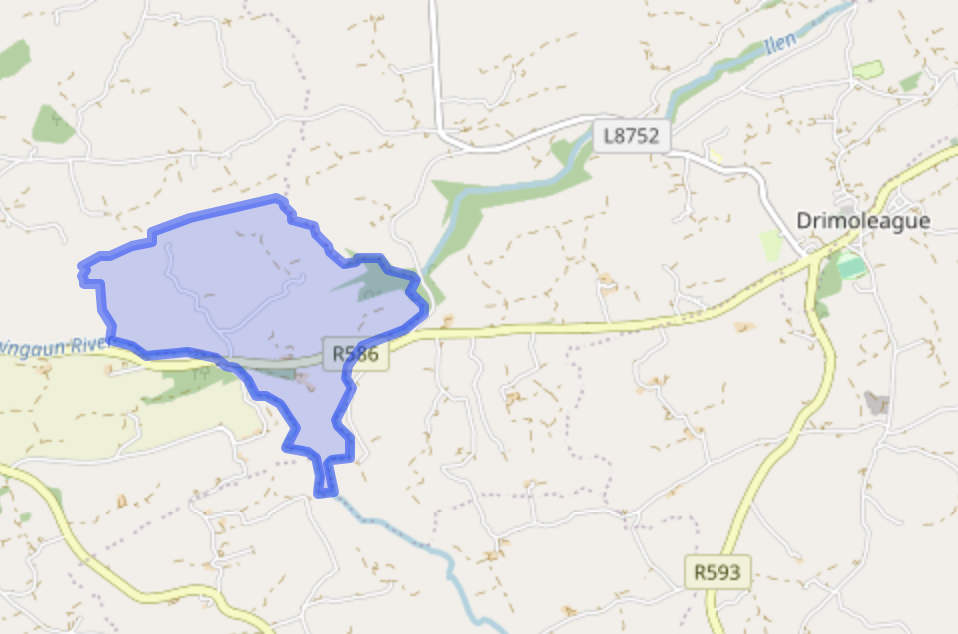
Her fathers homeplace:

Re: Annie Roycroft, this is what I have regarding her family line:

GG-Grandfather: John Roycroft of Ardravinna.

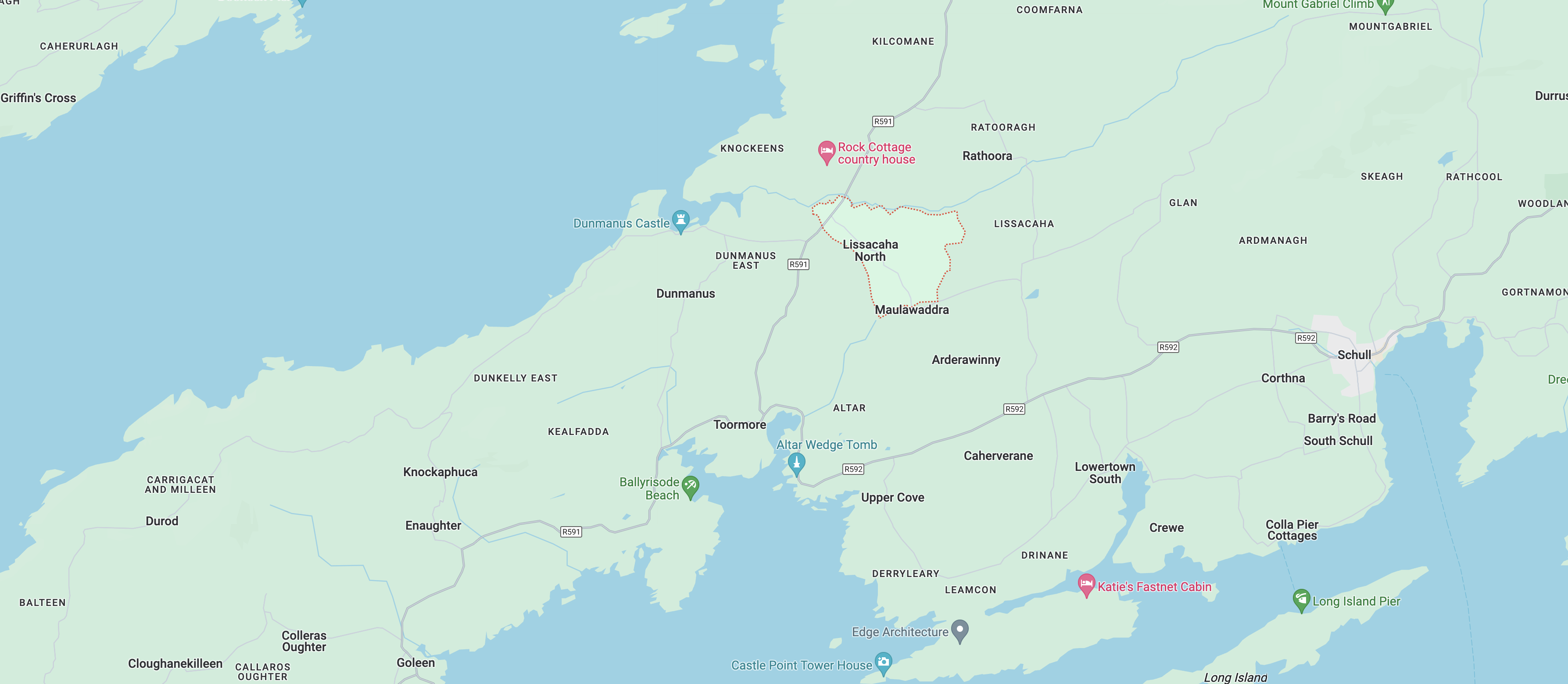
>G-Grandparents: Thomas Roycroft (b. Jan. 11, 1824 in Ardravinna; d. Oct. 17, 1898 in Ardravinna) m. Elizabeth Roycroft  (b. 1827 in Lissacaha; d. bef. 1898). They were married Feb. 5, 1852 in Schull Parish Church. Elizabeth Roycroft’s parents were William Roycroft (b. abt. 1800 in Lissacaha) and Mary (or Margaret) Connell.

>>Grandparents: John Roycroft (b. Nov. 7, 1853 in Ardravinna, Schull; d. Feb. 18, 1941 in Ardravinna) m. Sarah Johnson of Ardravinna in 1877.

>>>Parents: Thomas Roycroft (b. March 15, 1881 in Schull; d. Dec. 29, 1962) and Annie Stephens (b. Aug. 31, 1891, from Milltown, Co. Kerry; d. Dec. 29, 1977). Thomas enlisted in the R.I.C. in 1906, and settled in Bangor, Co. Down in the 1920s.

>>>>Annie Roslyn Roycroft m. Joseph Stephens

Grandmothers homeplace

1907, Evidence of Councillor Ned Roycroft, Mount Gabriel Schull to The Royal Commission On Congestion in Ireland.

https://docs.google.com/document/d/1oFxY_yQmV2Vf2xp4Jh2TY67R4Ue-47uQyT3JtWmfGQE/edit

Roycroft Wills

https://docs.google.com/document/d/19vqQffa3YQZuXOjCw8gTa44dxK_KL082bLOVIzLnGdQ/edit

Roycroft Magistrate, both Catholic

Charles Racraft/Raycroft (Roycroft), (1824-1900), Possible relatives. 1857 stamp distributor, Macroom.  1878, Gurteenroe House, Macroom, Resident, £21. Native Bountenagh, Bantry. Attending the funeral of his sister Mrs. Thomas Dillon Bantry 1892. Started in Welplys Drapery, Macroom then went to Dublin but on the death of his former boss he took over and expanded the business.   Married to the daughter of Dr. Barrett, Macroom, he is a Landlord 1890s in the greater Bantry area probably from his brother Edward Barrett whose wife inherited a substantial amount of her father’s property; he was William O’Sullivan, Esq., Carriganass Castle, Kealkil. Director Cork to Macroom Railway. Ex-Officio Poor Law Guardian, Macroom. Uncle of the Catholic Bishop of Waterford,  Dr. Sheehan. Probate to son in law Henry B. Minihear, Bank Manager, £7,457.

..

Edward (Ned) Roycroft (1850-1937), 1894, Mount Gabriel, Schull, farmer, listed 1913. 1892 Poor Law Guardian.  Attending the funeral, Bantry Jane Dillon nee Roycroft (1843-1892). 1899 Chairman Schull Board of Guardian and District Council. Farmer 1901 has one servant. One of the first to be elected to Cork County Council. Signed Requisition   1905. Cork Junction Railway Bill.  Requisition to the Right Honourable The Earl of Bandon K.P., to Call a meeting for the purpose of Approving the Cork Junctions Railway Bill. 1907 Evidence Of Ned Roycroft, Mount Gabriel, County Councillor, Magistrate, Merchant at Schull to Royal Commission on Congestion in Ireland.  Widespread Congestion and Poverty, Fisheries, Half Cottiers Half Fishermen, Minerals and Mines, The Rev Hinks, Landlord cut Down 100 acres of Forestry before he Sold to the Land Commission, Proposes Central Bacon Curing Station for West Cork.  1911 executive committee Carbery Show.    1913 attending funeral of  Mrs. Mary O’Sullivan nee O’Driscoll, Kilthomane, Crottees, Durrus. 1914 County Council election assentors Dr. John Shipsey and Rev. G.B. Fairbrother. Vice President Carbery Show 1915.  Married Kate McCarthy associated with the Irish Parliamentary Party, probably ancestor of spouse of Michael Pat Murphy, TD, and spouse of John O’Donoghue, TD and former Cathaoirleach Dáil, Co. Council 1910, listed 1921.  West Cork Roycrofts according to family lore descend from two Cromwellian brothers who came to Bandon.  His son William who succeeded him on the Co. Council.  Quite a number of the extended Roycroft family were employed at the workhouse or Union.  Chairman Schull Board of Guardians, Skibbereen to Schull Railway, Committee member Cork Mental Hospital. Supported Treaty, nominated and supported Jasper Wolfe as a TD.  Partner with his son in a drapery shop in Schull.  Huge funeral.

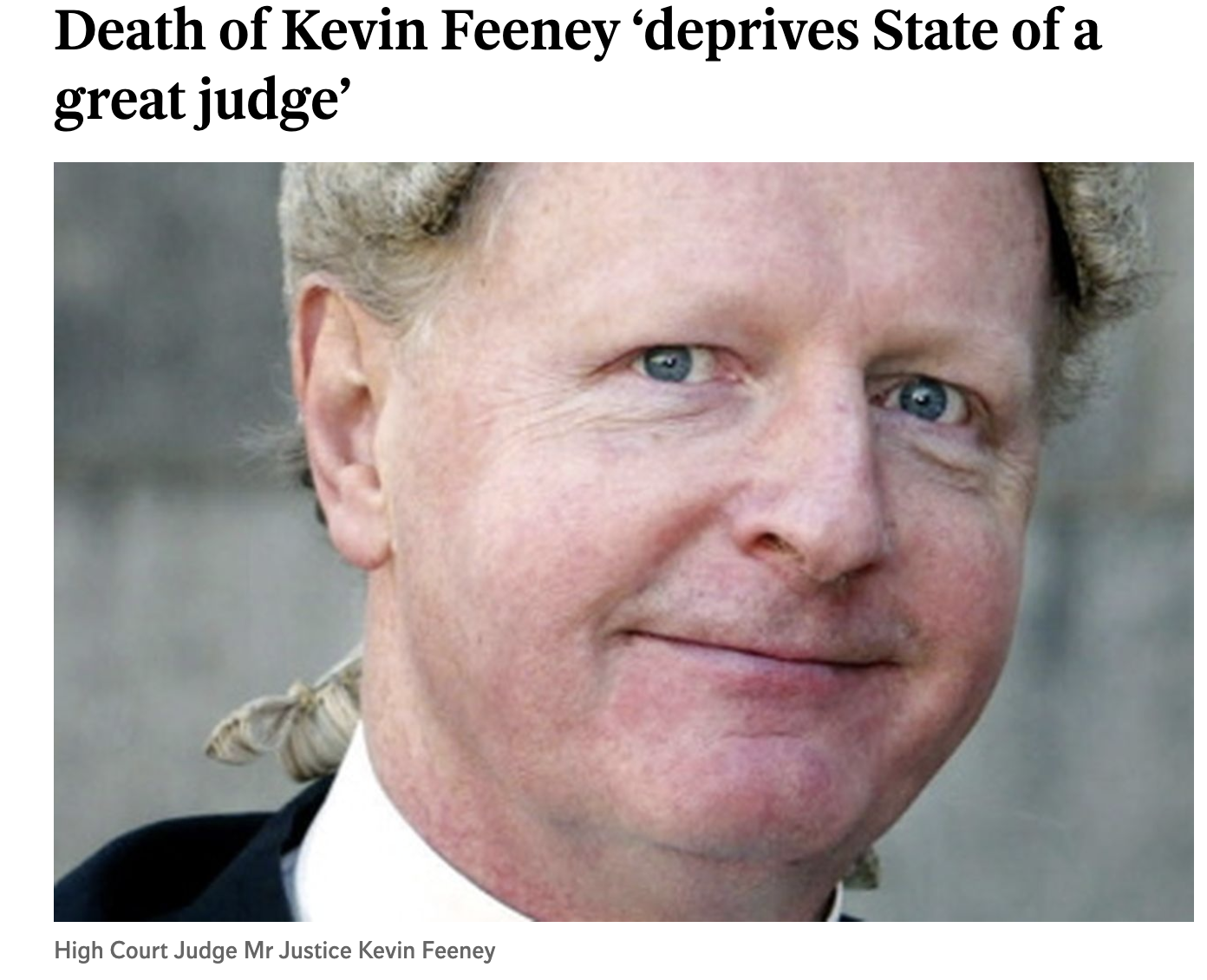
Roycroft County Surveyor Bantry 1920s probably of Mount Gabriel.Schull line, among his grandchildren, the late Kevin Feeny, High Court Judge:

https://www.independent.ie/irish-news/death-of-kevin-feeney-deprives-state-of-a-great-judge/29510170.html

His brother John, journalist, died in an aircrash 1984:

http://www.ricorso.net/rx/az-data/authors/f/Feeney_J/life.htm

Funerals West Cork, Roycrofts included here:

https://docs.google.com/document/d/1A8vkAzsRVEhpiP2EOryWiYcEryJw0ic4DmnKe6vZEqI/edit

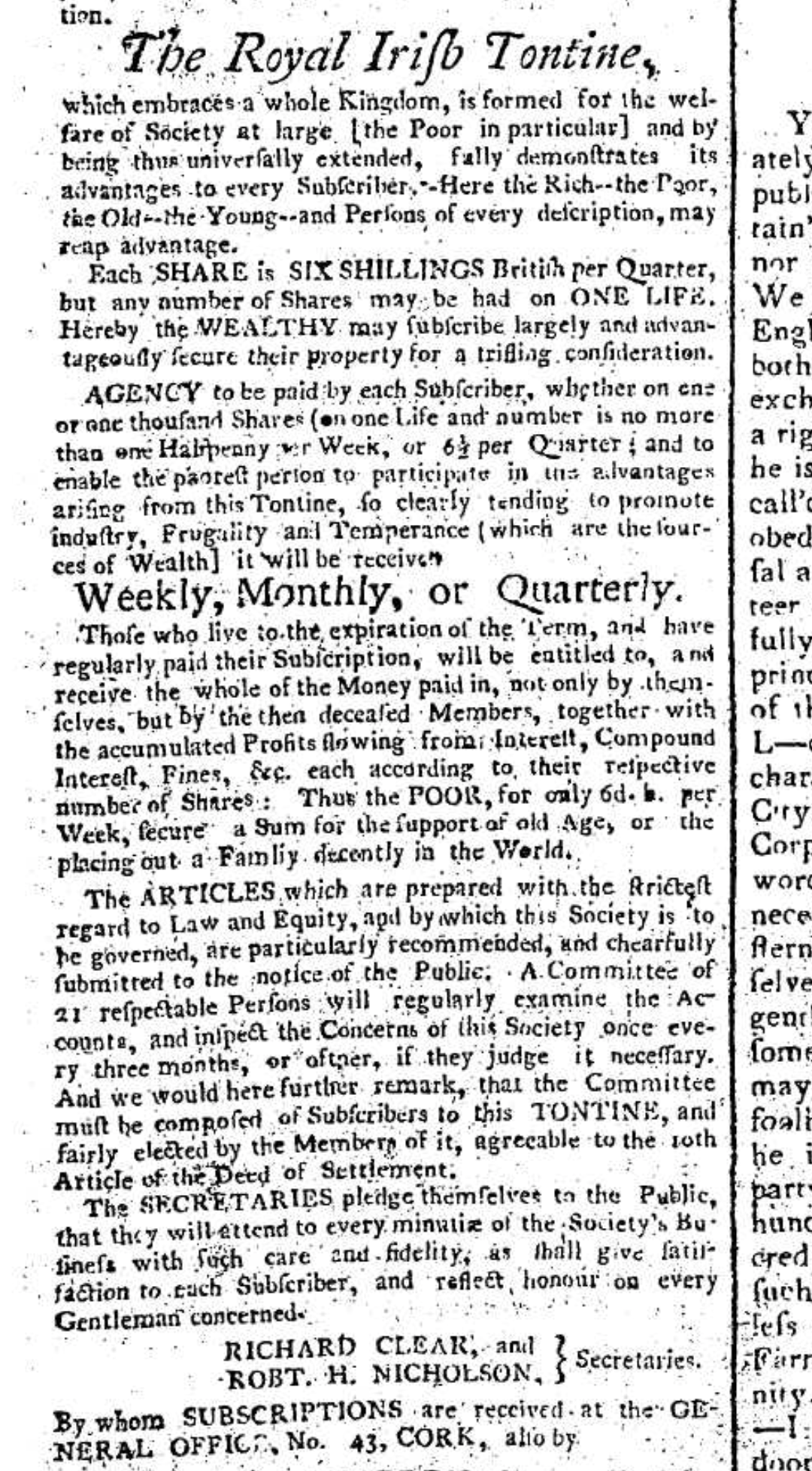
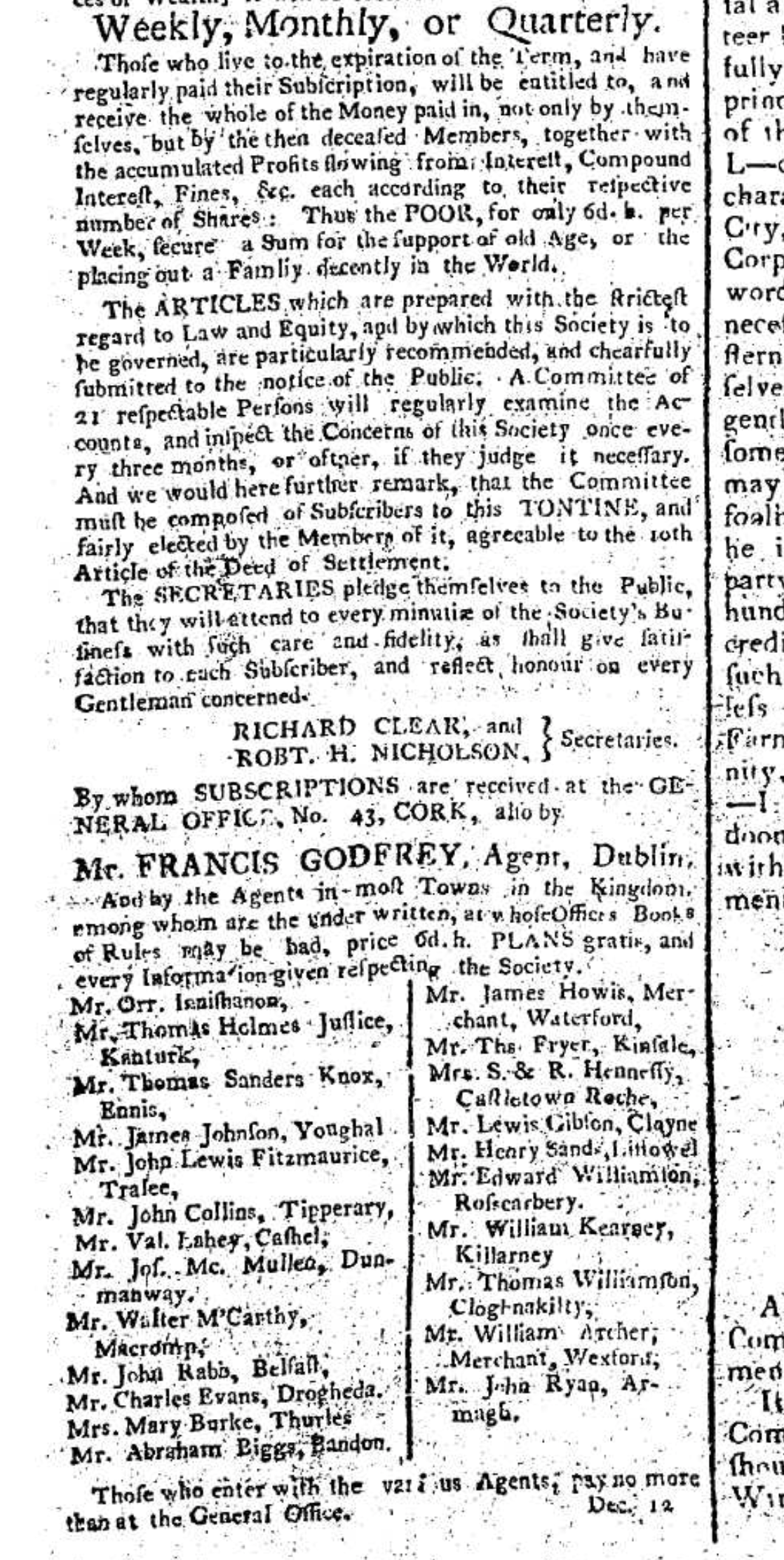
1792 Royal Irish Tontine.  West Cork Agents:  Messrs Orr, Innishannon, Joseph McMullen, Dunmanway, Walter McCarthy, Macroom, Abraham Biggs, Bandon, Thomas Fryer, Kinsale, Edward Williamson, Rosscarbery, Thomas Williamson, Clonakilty.

21 Wednesday Feb 2024

Posted by durrushistory in Uncategorized

≈ Leave a comment


The Holmes Justice of Kanturk may have West Cork roots. The Secretary Nicholson of Cork may be of the family that controlled Woodford Bourne’s wine merchants.

What Is a Tontine?

Tontine is the name of an early system for raising capital in which individuals pay into a common pool of money and receive dividends based on their share of returns from investments made with the pooled money.

As members of the group died, they were not replaced with new investors so the proceeds were divided among fewer and fewer members. The surviving investors profited from the deaths of people they knew, a feature that many considered macabre.

KEY TAKEAWAYS

  • Tontine is the name of an early system for raising capital where individuals pay into a common pool of money.
  • In the U.S., tontines were popular in the 1700s and 1800s, then faded in the early 1900s.
  • Tontine investors paid lump sums upon joining and received annual dividend-like payments until death.
  • Shares of a deceased tontine investor were divided among the surviving members, and the shares for remaining members increase as more members die.

Understanding a Tontine

Although they seem alien today, tontines have a storied pedigree that reaches back at least half a millennium. The name comes from a 17th-century Italian financier, Lorenzo de Tonti.1 It is not clear whether he actually invented the tontine, but Tonti did famously pitch a tontine scheme to the French government in the 17th century as a way for King Louis XIV to raise money.

For this reason, historians suggest that Tonti’s idea originated with the financial folkways of his native Italy. The idea didn’t catch on at first, and Tonti eventually landed in the Bastille.

A few decades later, in the late Middle Ages tontines became widespread in Europe as a financing tool for the royal courts. Because levying taxes was often out of the question, European monarchs borrowed, predominantly via tontines, to fund their internecine wars.

At the height of their popularity in the 1900s, tontines represented almost two-thirds of the insurance market in the United States and accounted for more than 7.5% of the nation’s wealth. By 1905, there were an estimated nine million active tontine policies in the U.S., in a country of only 18 million households.2

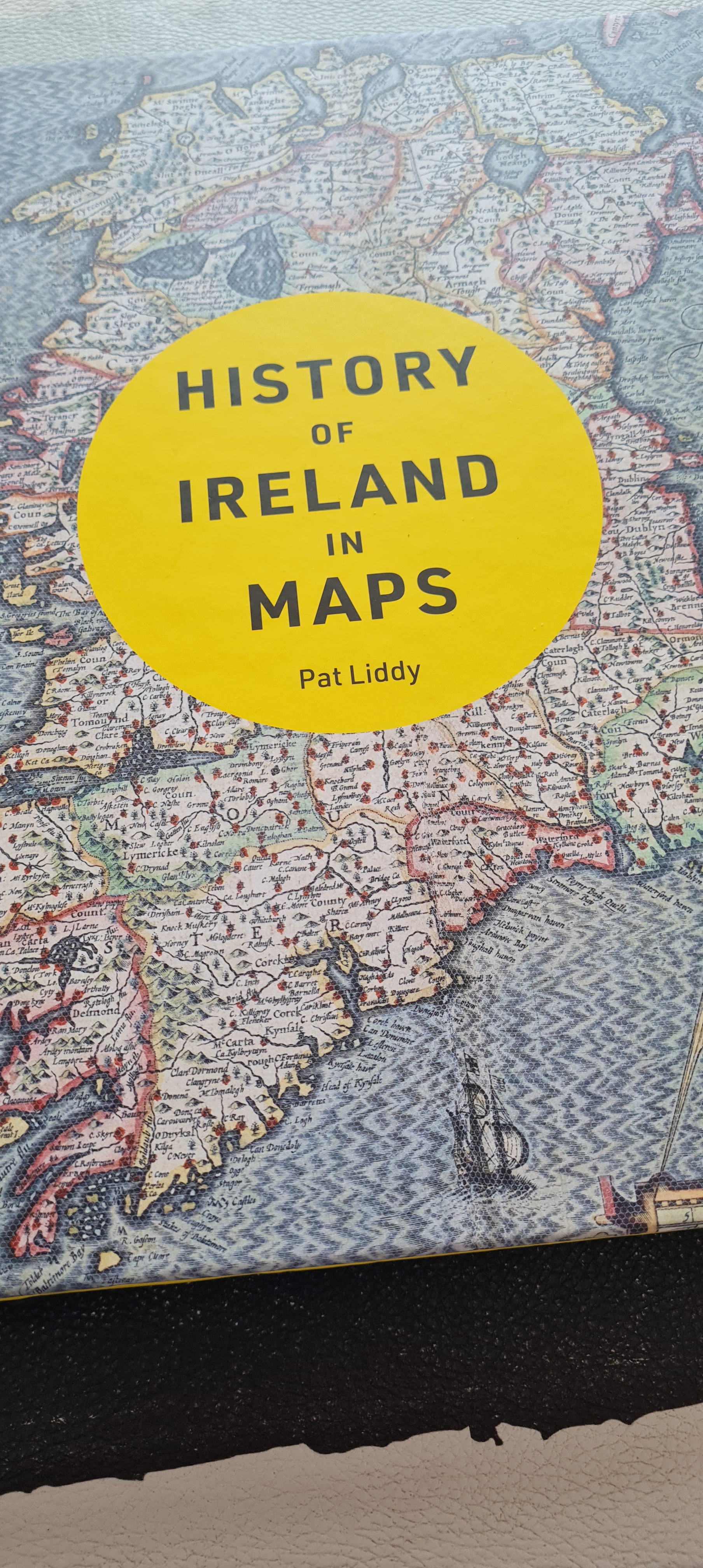
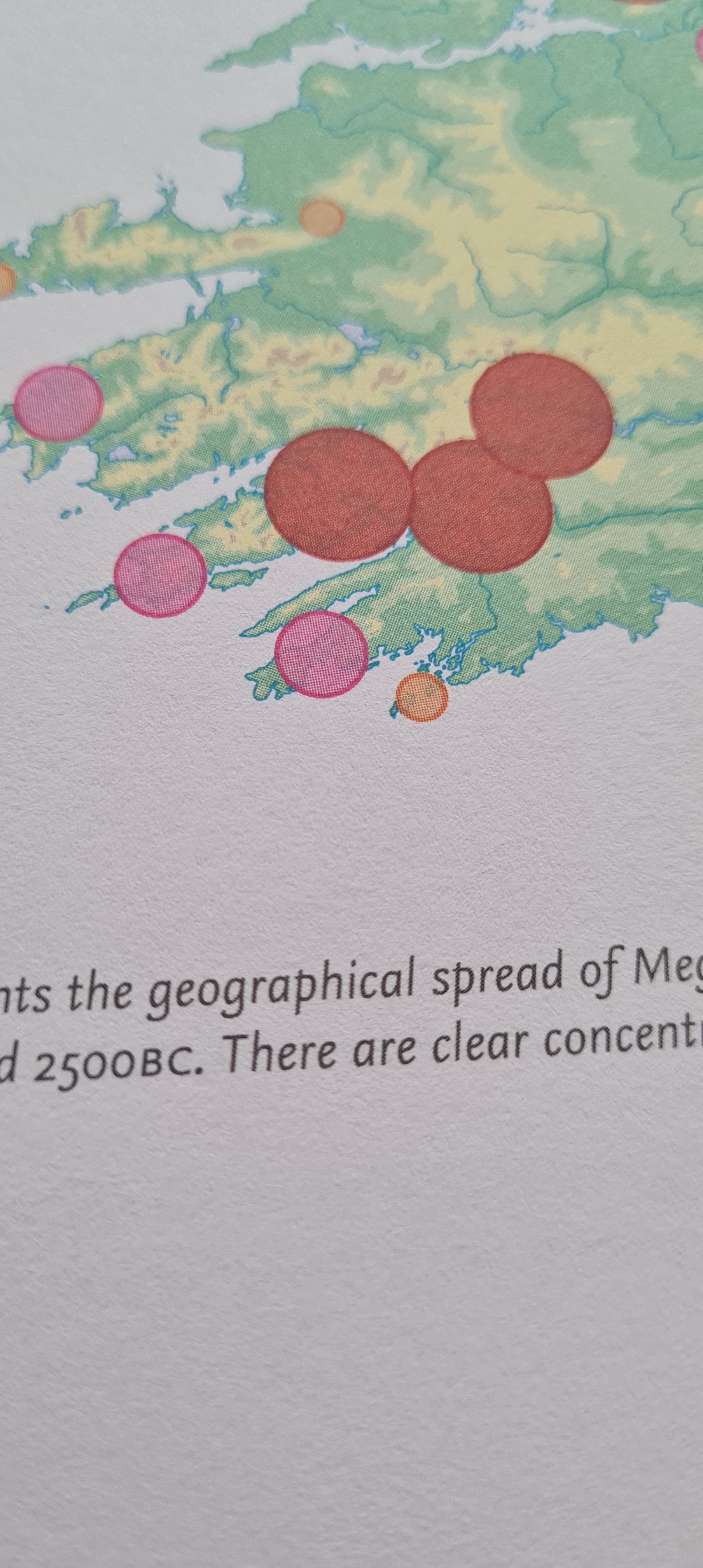
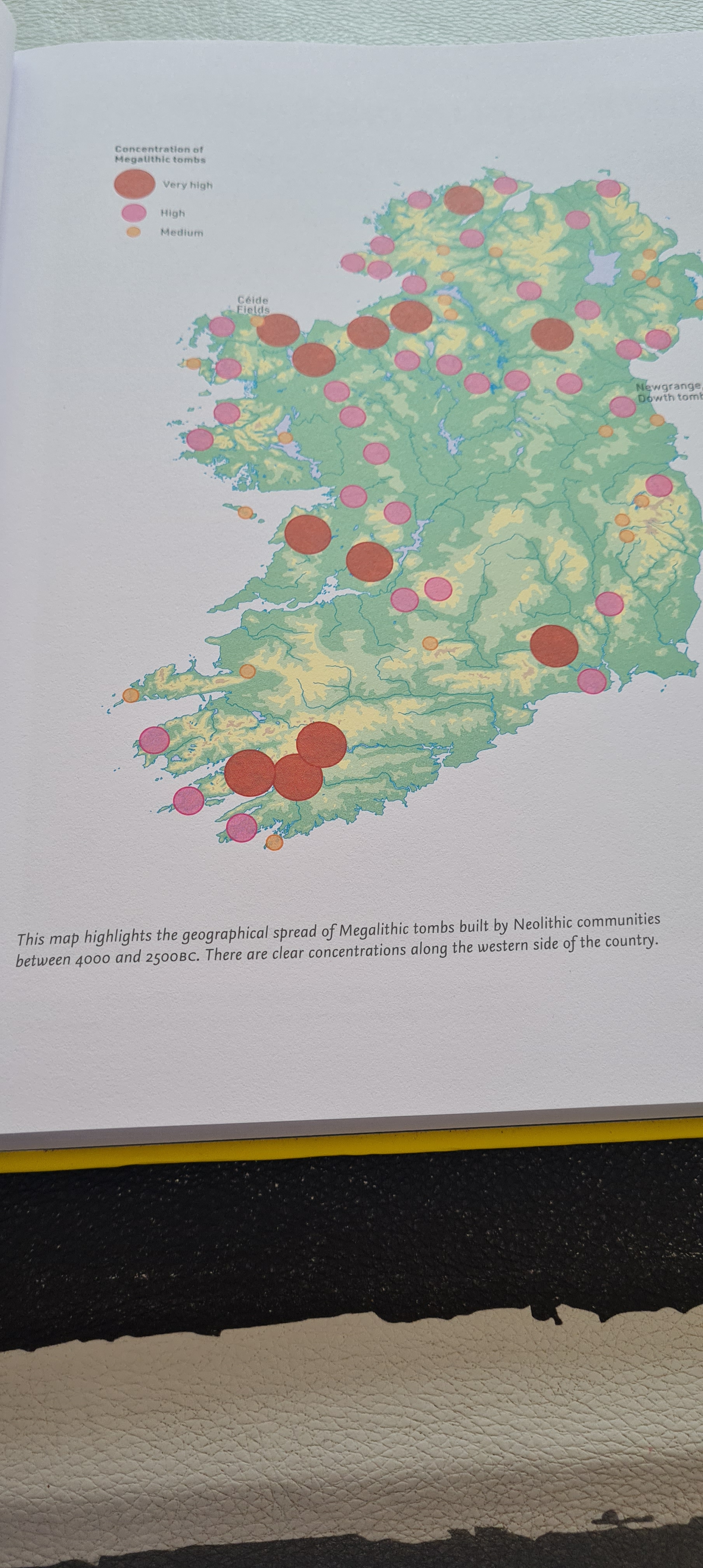
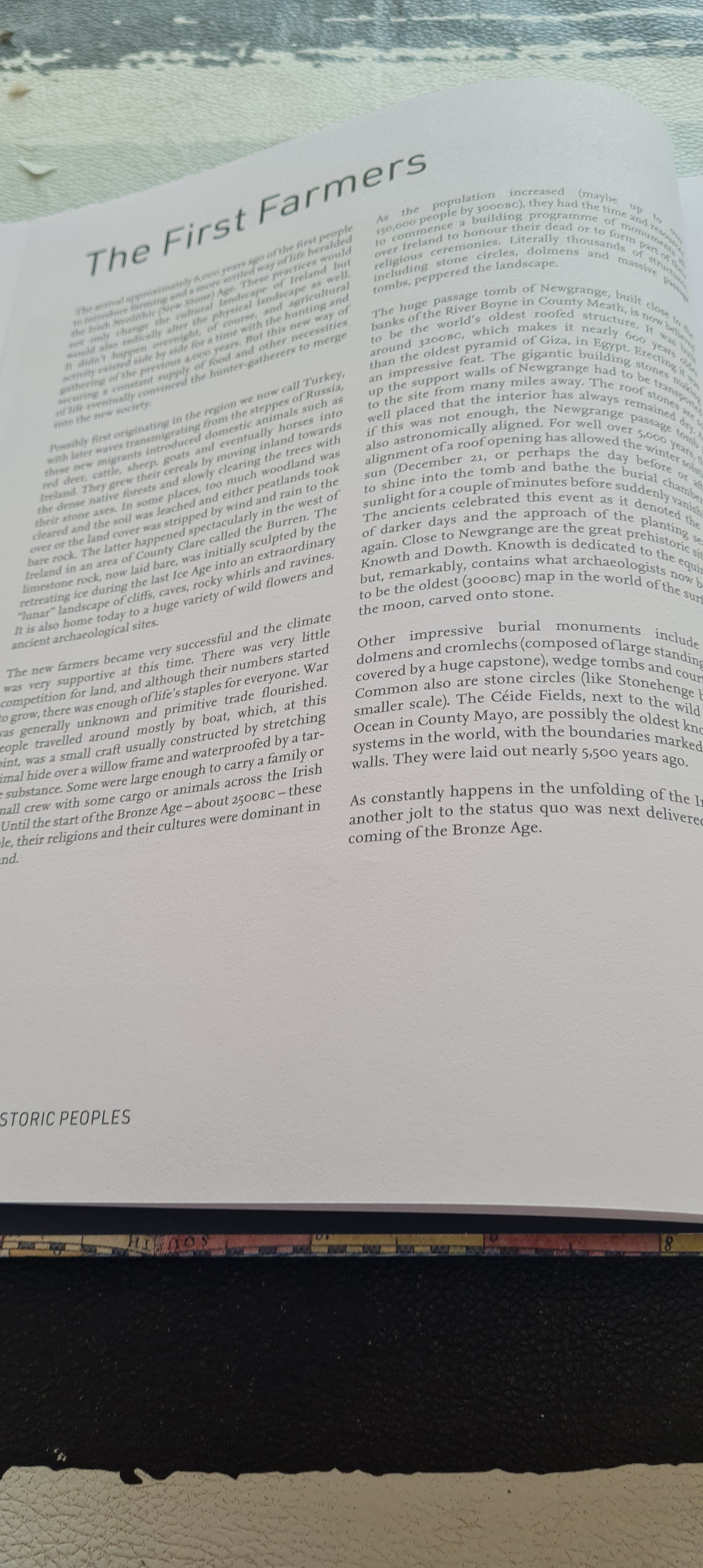
Megalithic Tombs West Cork. 4,000 to 2,500 BC.

07 Wednesday Feb 2024

Posted by durrushistory in Uncategorized

≈ Leave a comment


courtesy pat liddy.

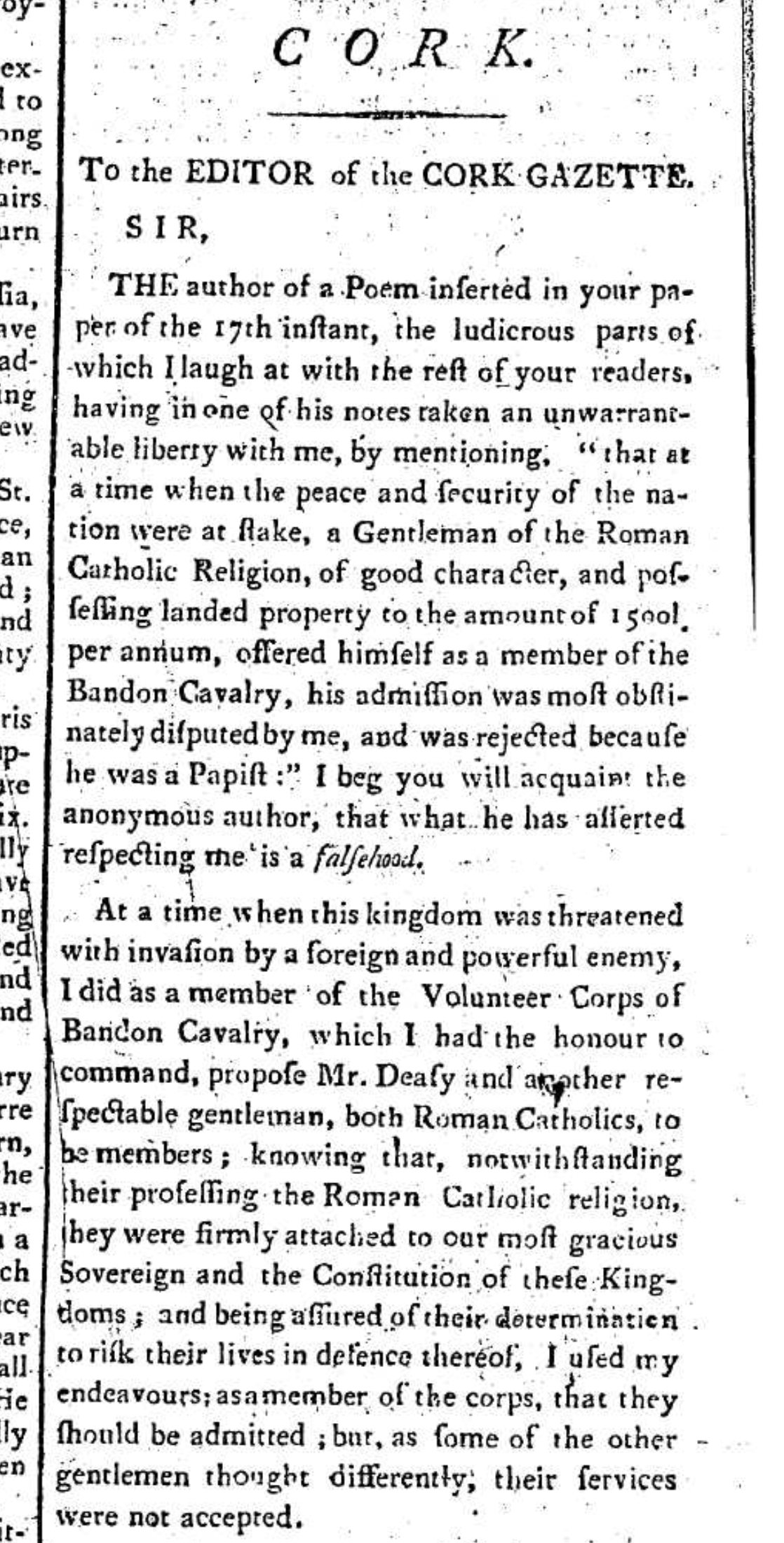
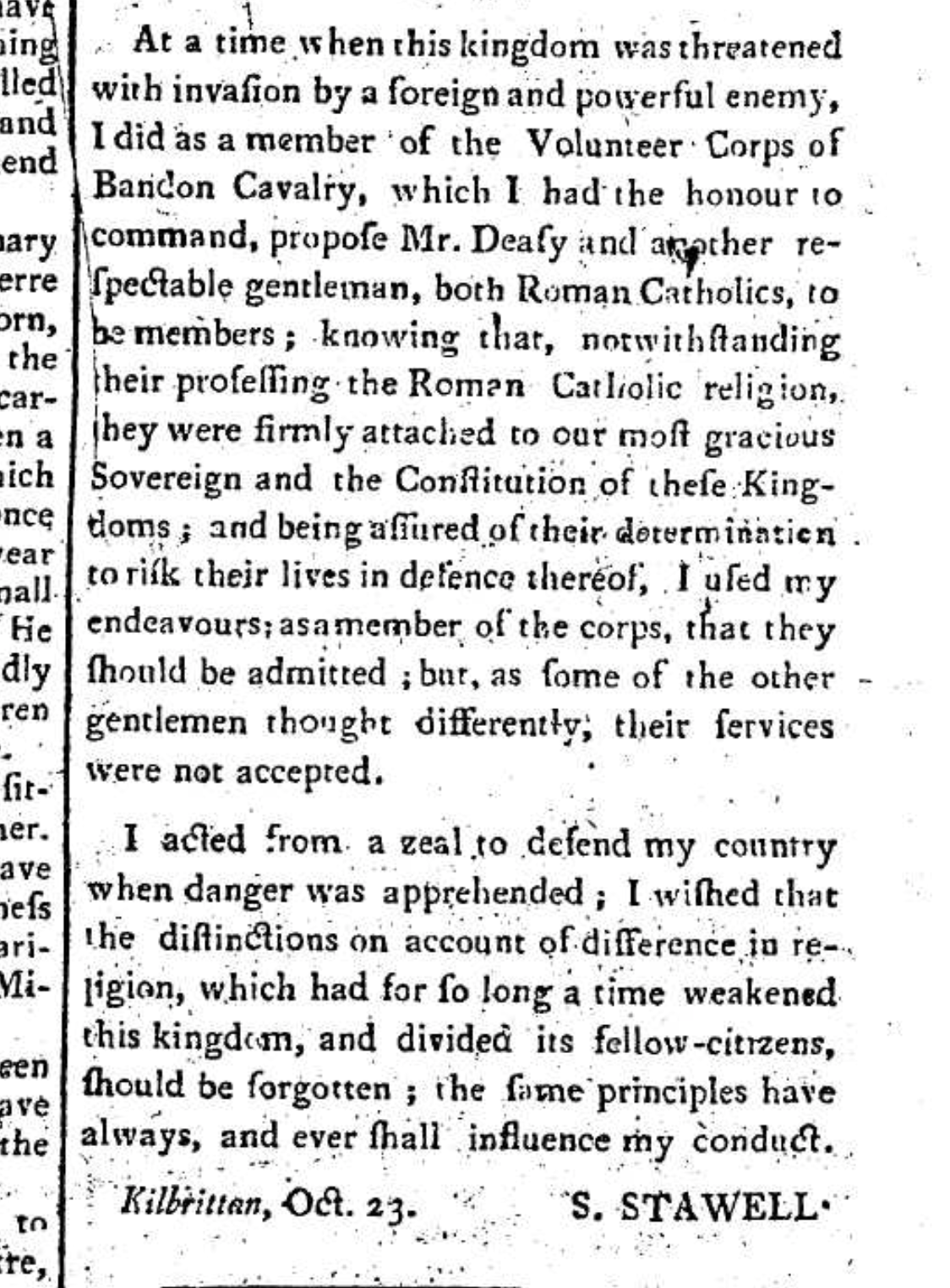
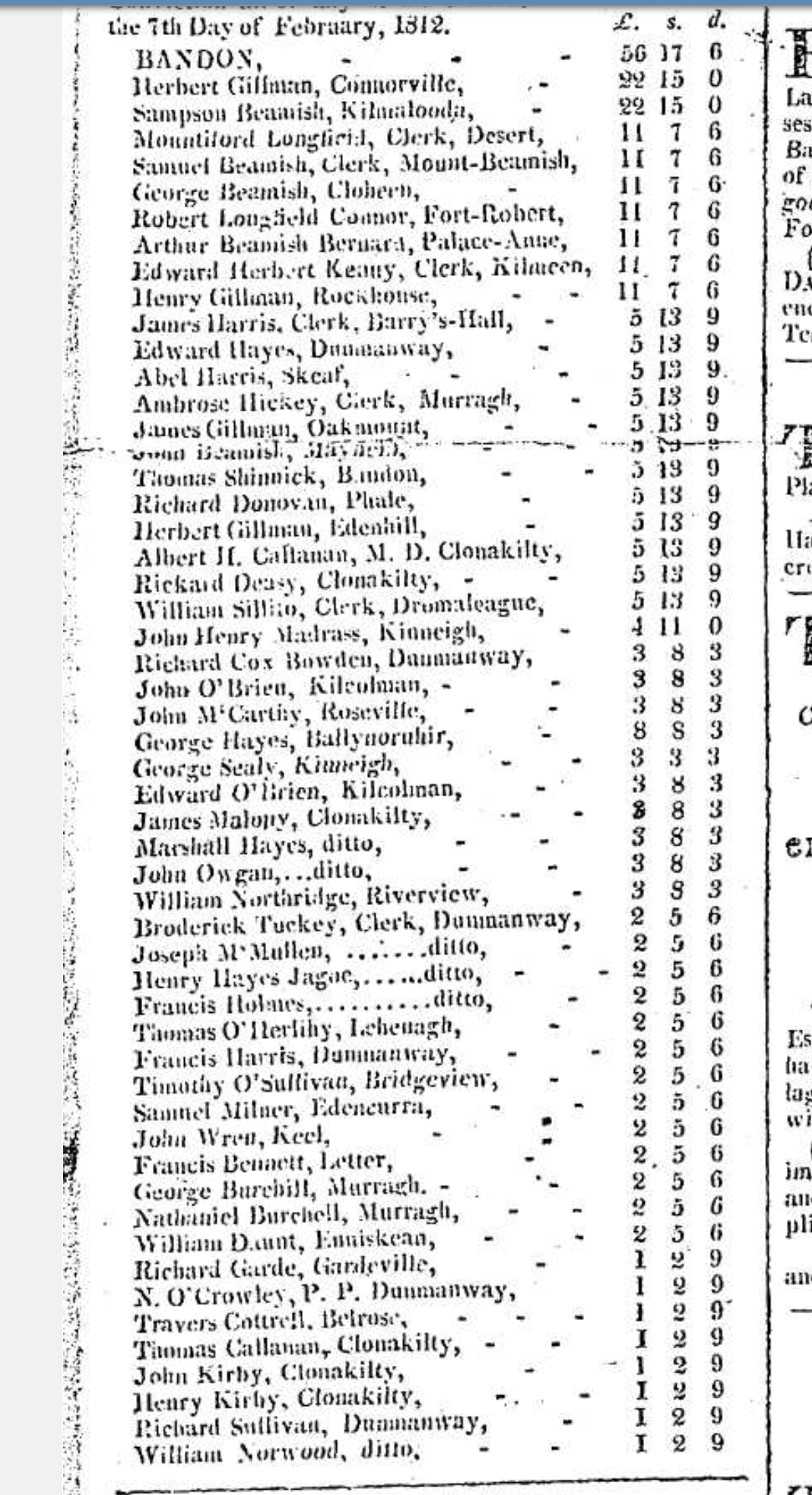
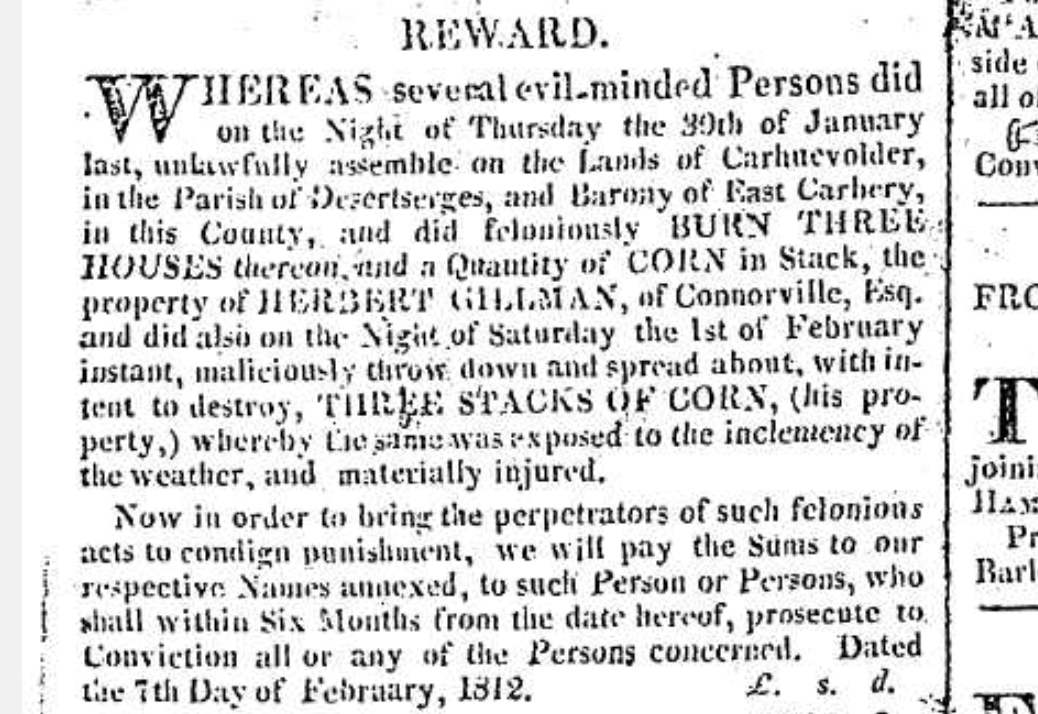
1792 Deasys Services Declined Bandon Yeomanry Because He Was A Papist. 1812. All forgotten.  One of a Group Including the Earl of Bandon Offering a Reward  for the Apprehension of Those Responsible for House Burnings at Desertserges.

01 Thursday Feb 2024

Posted by durrushistory in Uncategorized

≈ Leave a comment


Proposer probably

Sampson Stawell (1741-1819), 1768, Kilbrittain, m. Hester Bernard, Castle Bernard, Bandon.  Freeman of Cork 1768.Probably Timothy

Timothy Deasy The Elder (c 1739-), 1793, Barry’s Hall, Timoleague, 1793, Son Timothy and Ann Donovan m Honoria O’Donovan d Cornelius 1759, she had been housekeeper to her brother Rev. Daniel O’Donovn Parish Priest of Clonakilty their grandfather was Daniel O’Donovn of Glandore Castle who in the reign of King James 2 was an MP for Baltimore. His father held lands at Aghamonister, Lissycremin in the Parish of Lislee under the Earl of Shannon,  when he was convicted of possessing arms around 1745 and jailed at the South Gate Prison in Cork.  His lease was forfeit and the family moved to Clonakilty.  Shown 1788 as owner of Pookeen townland, Parish of Drimoleague, adjoining lands Carbery Estate map of Sir John Freke, Bart. Listed supporter of Act of Union, 1799 Son Morgan Deasy Doctor of Physic joint owner of brewery concern with brother Richard his executor Dr. James Donovan M.D. Barry Hall.  First Catholics to be J.P.s since the Treaty of Limerick.  Family fortune is reputed to be based on smuggling. Daughter Ann married Dr. James Donovan son of Alexander of Squince head of the Clann Lochlann branch second in seniority to the Clann Cathal Sept.  Founded brewery in 1807 at Shannon Square, Clonakilty.   Superseded 1810-30. Author unpublished memoir re atrocities in Clonakilty in 1798 in particular Captain Hungerford of The Island, Clonakilty..  Son Timothy the Younger 1792 party of pre marriage deed with Anna Maria Barry of Leamara, Tim Deasy, the younger  of London and Barry’s Hall, witness Charles McCarthy, Gortnascreena. Related to O’Donovans of Squince, Skibbereen, O’Donovans, O’Donovan’s Cove, Durrus

Rickard Deasy, Superseded 1822, Clonakilty, Brewing family.  Deasy, Rickart, Esq., of Clonakilty, to Miss Cotter, at Millstreet – (CMC 8/9/1802).  Father Collins, PP Bantry evidence to Parliamentary Enquiry that he had £2,000 per annum when half pay Protestant Officers on £40 per annum were preferred for Quarter Assizes Juries in Bantry. 1828 seeking reform of the House of Commons. Reinstatement supported by Dr John Richard  Elmore, Clonakilty. 1822 local fishery committee.  1822 insisted that inquest be held into the killing of Patrick Buckley on a poteen raid commanded by Lieutenant Hungerford of Clonakilty later Yeomanry Sergeant acquitted.  1822 with Dr. Elmore and John Molony seeking Chief Secretary; support for harbour works for poor relief at Ring. Attending dinner Devonshire Arms Hotel for Daniel O’Connell 1839 listed as J.P. Chairman of meeting of Independent Liberal Electors thanking electoral personnel for Impartiality in 1835 elections.  The Reformers of the West Riding of Cork to Daniel O’Connell MP to Dinner in Bandon, Co Cork, with 200 Liberals in attendance including, Francis Bernard Beamish MP (1802-1868), Rickard Deasy (1766-1852) Brewer Clonakilty, James Clugston Allman Distiller Bandon, James Redmond Barry J.P., Commissioner for Fisheries, Edward O’Brien, Masonic Lodge Bandon, John Hurley Brewer, Major E. Broderick, Henry Owen Beecher Townsend (1775-1847), Major Mathew Scott J.P. (1779-1844), Philip Harding, Carrigafooka, Macroom, Richard Dowden (1794-1861) Unitarian, Frances Coppinger Esq., Parkview, Bandon.  1849 Dunmanway Union publicly notified that he did not avail of a grant under Land Improvement and Drainage Act 1847 to improve his townlands at Pookeen, Gurrane, Inch and Cilleraine with over 200 paupers.

1812. All forgotten.  One of a Group Including the Earl of Bandon Offering a Reward  for the Apprehension of Those Responsible for House Burnings at Desertserges. Probably Timothy’s son Rickard.

Blog Stats

  • 840,561 hits

16th Regiment of Foot assisted female emigration australia ballyclough bantry bay caithness legion cavan regiment of militia cheshire fencibles coppinger's court inbhear na mbearc Irish words in use 1930s lord lansdowne's regiment mallow melbourne ned kelly new brunswick O'Dalys Bardic Family. o'regan Personal Memoirs rosscarbery schull sir redmond barry sir walter coppinger st. johns sydney Townlands treaty of limerick Uncategorized university of Melbourne victoria

16th Regiment of Foot assisted female emigration australia ballyclough bantry bay caithness legion cavan regiment of militia cheshire fencibles coppinger's court inbhear na mbearc Irish words in use 1930s lord lansdowne's regiment mallow melbourne ned kelly new brunswick O'Dalys Bardic Family. o'regan Personal Memoirs rosscarbery schull sir redmond barry sir walter coppinger st. johns sydney Townlands treaty of limerick Uncategorized university of Melbourne victoria
Follow West Cork History on WordPress.com

Enter your email address to follow this blog and receive notifications of new posts by email.

Join 518 other subscribers

Feedjit

  • durrushistory's avatar durrushistory

Archives

  • December 2025
  • November 2025
  • October 2025
  • September 2025
  • August 2025
  • July 2025
  • June 2025
  • May 2025
  • April 2025
  • March 2025
  • February 2025
  • January 2025
  • December 2024
  • November 2024
  • October 2024
  • September 2024
  • August 2024
  • July 2024
  • June 2024
  • May 2024
  • April 2024
  • March 2024
  • February 2024
  • January 2024
  • December 2023
  • November 2023
  • October 2023
  • September 2023
  • August 2023
  • July 2023
  • June 2023
  • May 2023
  • April 2023
  • March 2023
  • February 2023
  • January 2023
  • December 2022
  • November 2022
  • October 2022
  • September 2022
  • August 2022
  • July 2022
  • June 2022
  • May 2022
  • April 2022
  • March 2022
  • February 2022
  • January 2022
  • December 2021
  • November 2021
  • October 2021
  • September 2021
  • August 2021
  • July 2021
  • June 2021
  • May 2021
  • April 2021
  • March 2021
  • February 2021
  • January 2021
  • December 2020
  • November 2020
  • October 2020
  • September 2020
  • August 2020
  • July 2020
  • June 2020
  • May 2020
  • April 2020
  • March 2020
  • February 2020
  • January 2020
  • December 2019
  • November 2019
  • October 2019
  • September 2019
  • August 2019
  • July 2019
  • June 2019
  • May 2019
  • April 2019
  • March 2019
  • February 2019
  • January 2019
  • December 2018
  • November 2018
  • October 2018
  • September 2018
  • August 2018
  • July 2018
  • June 2018
  • May 2018
  • April 2018
  • March 2018
  • February 2018
  • January 2018
  • December 2017
  • November 2017
  • October 2017
  • September 2017
  • August 2017
  • July 2017
  • June 2017
  • May 2017
  • April 2017
  • March 2017
  • February 2017
  • January 2017
  • December 2016
  • November 2016
  • October 2016
  • September 2016
  • August 2016
  • July 2016
  • June 2016
  • May 2016
  • April 2016
  • March 2016
  • February 2016
  • January 2016
  • December 2015
  • November 2015
  • October 2015
  • September 2015
  • August 2015
  • July 2015
  • June 2015
  • May 2015
  • April 2015
  • March 2015
  • February 2015
  • January 2015
  • December 2014
  • November 2014
  • October 2014
  • September 2014
  • August 2014
  • July 2014
  • June 2014
  • May 2014
  • April 2014
  • March 2014
  • February 2014
  • January 2014
  • December 2013
  • November 2013
  • October 2013
  • September 2013
  • August 2013
  • July 2013
  • June 2013
  • May 2013
  • April 2013
  • March 2013
  • February 2013
  • January 2013
  • November 2012
  • October 2012
  • September 2012
  • August 2012
  • July 2012
  • June 2012
  • May 2012
  • April 2012
  • March 2012
  • February 2012
  • January 2012
  • December 2011
  • November 2011
  • October 2011

Blog at WordPress.com.

  • Subscribe Subscribed
    • West Cork History
    • Join 518 other subscribers
    • Already have a WordPress.com account? Log in now.
    • West Cork History
    • Subscribe Subscribed
    • Sign up
    • Log in
    • Report this content
    • View site in Reader
    • Manage subscriptions
    • Collapse this bar
 

Loading Comments...