https://docs.google.com/document/d/16VJptRac8CKsG_ylR0Zm78DLE-rPwWHJ_q2n4HKpW5s/edit
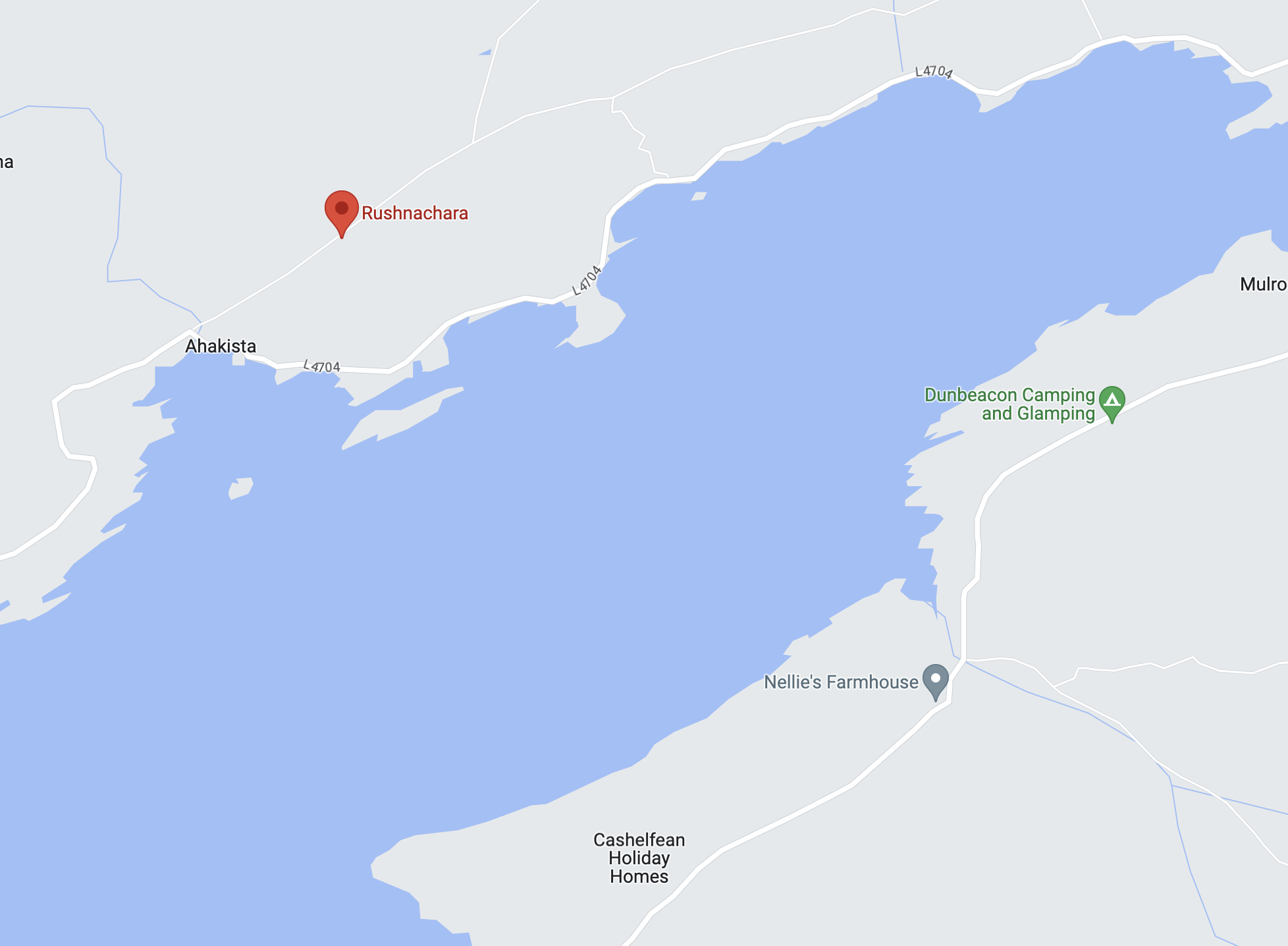
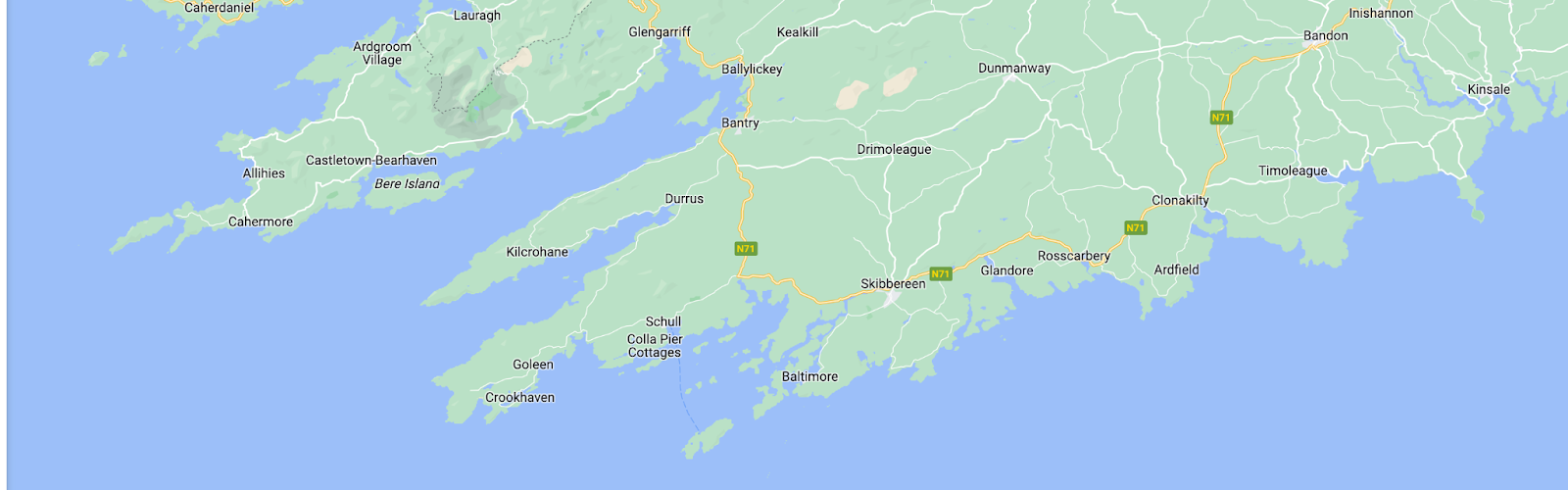
Location of Timothy O’Donovan’s house and estate no nothing remains save walls and a gate.
Slightly edited letters to Dr. John O’Donovan, Scholar.
Timothy O’Donovan (1790-1874), 1818, O’Donovan’s Cove, in ruins 1875, Durrus, listed 1823, son of Richard Esq. and Jane d Alexander O’Donovan, Squince. 1820. Memorial to Lord Lieutenant William Swanton, Gortnagrough, Ballydehob, West Cork. High Constable (Rate and Tax Collector), Barony of West Carbery For Relief on Losses Caused to Him in Banking Collapse when He had transmitted Due Amount to Co. Treasurer, Leslies, Stephen and Roches Bank, Supported by Lord Bantry and Magistrates Timothy O’Donovan (Durrus), William Hull (Schull), Richard Townsend (Skibbereen), Rev. Edward Jones Alcock (Durrus), Nathaniel Evanson (Durrus), Robert Kenny (Bantry). In 1823 he applied for relief of the poor of Ballydehob, which he had founded. Present at enquiry Skibbereen 1823 into enquiry into fatal affray at Castlehaven caused by Rev. Morritt’s tithe extraction. Correspondent with Antiquarian Dr. John O’Donovan re O’Donovans of Carbery. Brother of Dr O’Donovan and Richard O’Donovan J.P. and uncle of Richard O’Donovan J.P.. His son’s wife is the granddaughter of Daniel O’Connell, the mother of his wife was Miss Lavellan, Co. Limerick, a daughter of Philip Lavellin of Water Park, Carrigaline. in the Co. of Cork. Her sister was married to Mr. Puxley of Dunboy Branch. The grandson the present (1860) Mr. Puxley is a man of immense wealth and the principal owner of the famous Allihies Mines in the Barony of Bere. Signed public declaration in Skibbereen to Alexander O’Driscoll on his removal as Magistrate 1835 with Lord Bantry, Simon White, John Puxley, Arthur Hutchins, Thomas Baldwin, Samuel Townsend Junior and Senior, Thomas Somerville, Richard Townsend Senior, Rev. Alleyn Evanson, Richard Townsend, Lyttleton Lyster. 1835 Subscriber Lewis Topographical Dictionary of Ireland 1837. In 1838 in the Liberal interest where at Bantry voter registration 15 were registered as opposed to 6 ‘Orangemen’ the tenants of Timothy O’Donovan J.P. were chiefly among those who registered. Among these were probably McCarthys of Tulig later prominent in Nationalist politics of whom John McCarthy (1859-1931) became a leading politician in Nebraska and wrote a poem in praise of Timothy O’Donovan. Attended Great Meeting in Bantry 1840 re Poor Laws. Chaired 1846 distress meeting Bantry on the proposition of Father Michael Barry PP Bantry. Landlord and political organiser. Member Election Committee, Rickard Deasy, Clonakilty (later Attorney General) 1855 Member election committee McCarthy Downing, Skibbereen. 1857 Vice Chairman of Bantry Union. Juror Cork Spring Assizes 1863. Land record, 1870, Kate O’Donovan, O’Donovan’s Cove, 1,940 acres and Reps Timothy O’Donovan 1,940 acres. 1874, Death at 85 of Timothy O’Donovan, J.P., Esq, O’Donovan Cove, Durrus, West Cork, The Last Survivor of the Ancient House of O’Donovan Bawn or Clann Cahill, Justice of the Peace since 1818 Probate to daughter Mrs Anne Barry, widow, effects £2,000, attended 8, Grand Jury Presentments
Bishop Graves Collection:
Graves, Charles Contributed by Byrne, Patricia M. Graves, Charles (1812–99), clergyman, mathematician, and antiquarian, was born 6 November 1812 at 12 Fitzwilliam Square, Dublin, youngest child among four sons and one daughter of John Crosbie Graves, chief police magistrate of Dublin, and his wife Helena, daughter of the Rev. Charles Percival, rector of Bruhenny, Co. Cork. The poet Helena Clarissa von Ranke (née Graves) (qv) was his eldest sister. John Thomas Graves (qv), mathematician, was his brother. His early education was at a private school near Bristol. He entered TCD (1829) and went on to receive a classical scholarship (1832). As a student he played cricket for the university and became one of the founders of Phoenix cricket club (1830). His original intention was a military career, and so he became an accomplished rider and swordsman. However, his interest and ability in mathematics may have prompted him to change his mind; he obtained a gold medal in mathematics and mathematical physics (1834) and was elected a fellow (1836–66). Later he was appointed Erasmus Smith’s professor of mathematics (1843–62), in succession to James MacCullagh (qv), who moved from mathematics to physics. At the time the vibrant mathematical community at TCD included William Rowan Hamilton (qv), James McCullough, and Humphrey Lloyd (qv), with Graves the younger colleague. Many of their discoveries were read before the RIA and published in its Proceedings. Those of Graves related to several areas of mathematics: the theory of linear differential equations, the coefficients in the binomial theorem, and the solution of the equation of Laplace’s functions. After Hamilton’s discovery of quaternions other mathematicians attempted to devise similar systems. Graves brought out his own system of algebraic triplets, which, though curious, never amounted to much. The one mathematical book he published (1841) was a translation from French of M. Chasles, On the general properties of cones of the second degree and of spherical conics, to which he appended a number of new theorems, including his extension of the construction of an ellipse. As well as mathematics, he was interested in archaeology and became an authority on Irish ogham inscriptions, for which he devised a key. His proposal (1851) to publish the old Irish brehon laws was adopted by the government, and he remained until his death a member of the commission set up to do this. A list of his mathematical and archaeological papers are found in RIA Minutes of Proceedings, xxii (Oct. 1900) (appendix), 332–5. He was elected MRIA (1837), and served as secretary of the council (1846), secretary of the academy (1856), and president (1861). Other honours were FRS (1880), and an honorary DCL (1881) from the university of Oxford. The deaths in 1865 of his friends and colleagues William Rowan Hamilton and George Petrie (qv) occurred during his RIA presidency and he delivered separate éloges (tributes) to both men, published in the RIA Proceedings, attesting to their scientific and archaeological work respectively. His brother Robert Percival Graves went on to write a three-volume biography of Hamilton. In 1860 he was made dean of Castle Chapel, Dublin, and in 1864 dean of Clonfert. Two years later he resigned his senior fellowship and gave up academic work to become bishop of Limerick, Ardfert, and Aghadoe (1866). He was one of the last bishops appointed before the disestablishment of the Irish church. According to his grandson Robert Graves, he got on well with his catholic counterpart in Limerick: ‘they cracked Latin jokes. . ., discussed fine points of scholarship, and were unclerical enough not to take their religious differences too seriously’ (Graves, 1957). The catholic bishop, Edward O’Dwyer (qv) (whom Robert Graves wrongly calls ‘O’Connell’), teased him once on the size of his family; Graves replied with the text about the blessedness of having one’s quiver full of arrows, to which ‘O’Connell’ replied: ‘The ancient Jewish quiver only held six’ (ibid.). Graves married (1840) Selina, daughter of Dr John Cheyne (qv), physician general to the forces in Ireland. They had five sons and four daughters. His second son was the writer, folklorist, and schools inspector Alfred Percival Graves (qv). Arnold Felix Graves (qv), his third son, was an early promoter of technical education in Ireland. During the 1850s Charles took the lease of the Bland residence in Parknasilla, Co. Kerry, as a summer holiday home. It remained the summer focus of the Graves clan for four decades before he bought the lease of the house and 114 acres of land, including islands (1892). Two years later he sold it, and Parknasilla became in 1895 the first hotel of the Southern Hotels Company (acquired by the Great Southern and Western Railway). The hotel staff used to refer to it as ‘the bishop’s house’. A courteous and genial man, with a liberal outlook, he had a reputation for being calm, even-tempered, but (according to Robert Graves) far from generous. Outside academia and religious matters, he was a keen and reputedly expert angler. He died in Dublin on 17 July 1899. His funeral procession was said to have been the longest ever seen in Limerick. A Latin inscription to his memory, written by R. Y. Tyrell, is found in Limerick cathedral, with English translation by his son Alfred and Irish translation by Douglas Hyde (qv). His portrait hangs in TCD, and he donated another to the RIA. As bishop of Limerick he presented a stained-glass window for the Fagel library, Long Room, TCD. Sources Henry Cotton, Fasti ecclesiae Hibernicae: the succession of the prelates and members of the cathedral bodies of Ireland, supp. (1878); Ir. Builder, xxxii, no. 727 (Apr. 1890); RIA Minutes of Proceedings (Oct. 1900), xxii (app.), 332–5; DNB; Royal Society Obituary Notices (1904–5), 90–92; Kenneth C. Bailey, A history of Trinity College Dublin 1892–1845 (1947); IHS, ix (1954–5), 2; Robert Graves, Goodbye to all that (1957 ed.), ch. 1; R. B. Mc Dowell and D. A. Webb, Trinity College Dublin 1592–1957: an academic history (1982) PUBLISHING INFORMATION DOI: https://doi.org/10.3318/dib.003584.v1 Originally published October 2009 as part of the Dictionary of Irish Biography Last revised October 2009




Family History 24039/JOD/278/(iii)
O’Donovan’s Cove,
February 1st, 1841
Sir,
Your letter of the 18th last should not have remained unanswered for so long but I was waiting to obtain some additional information on the query pertaining to the family of O’Donovan, The late General Richard O’Donovan, Lieutenant Colonel of the Enniskillen Dragoons, was undoubtedly the Chieftain of the Clann or Sept of O’Donovan. He died at the family seat of Bawnlahan, Barony of Carbery, County of Cork about 11 or 12 years ago. He was married to a Welch lady her name was Powell by whom he had no issue, he left his estate to his wife and upon her death which happened soon after she bequeathed it to her brother a Major Powell a Welch man in whom possession it is at the moment and this ancient seat and property is now in the possession of a Welsh man.
The title of “O’Donovan” was after the General’s death affected by a Protestant Clergyman, Morgan O’Donovan, but the claim was not recognised by the members of the O’Donovan family.
I am myself descended from a branch of the House of O’Donovan, who were obliged to fly the County Cork in the Civil wars of 1641 who took refuge in Co. Limerick, a considerable tract of property was preserved through the intervention of Protestant “Nominees’ who behaved in those olden days with great and fidelity honour to my ancestors.
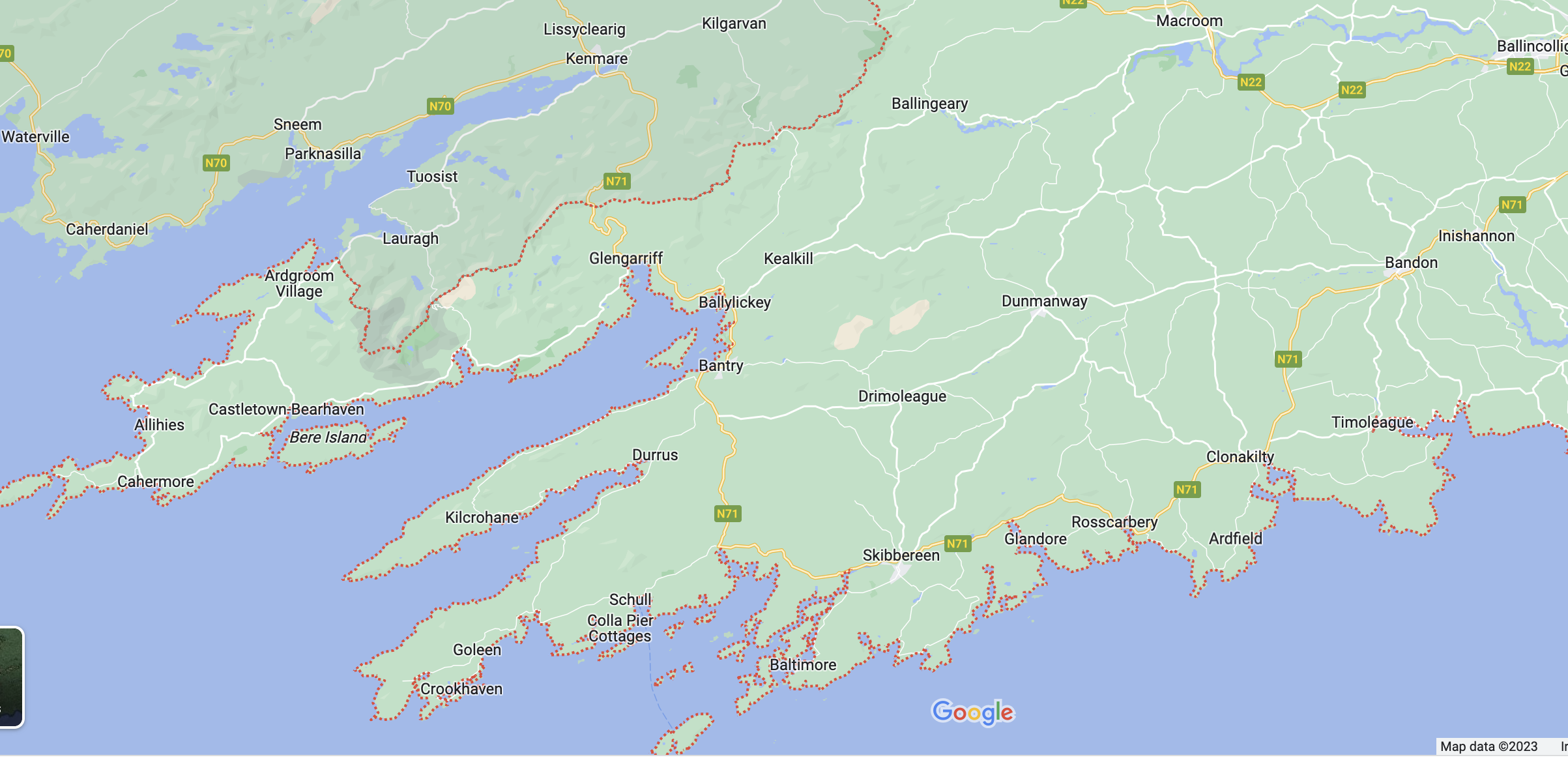
This seat of O’Donovan’s Cove stands in the Parish of Kilcrohane in the Barony of West Carbery and County of Cork. It is my property by inheritance, my younger brother, Doctor O’Donovan who has an independent estate resides at Norton Cottage, Skibbereen and we are both in the Commission of The Peace for the County.
There are several respectable families of the name who do not affix the “‘O” to the name.
I believe we are the two of the Sept of O’Donovan here with the largest landed property in respect of the west of the county.
The most ancient documents were in the hands of the late James Donovan, Esq., M.D., of Clonakilty, I know not if they are in the possession of his sons, one of whom is a barrister in London the other is the Clerk of the Crown for Co. Cork, they are my first cousins.
Bawnlahan the family seat of the Chief O’Donovan, is near Skibbereen and is a respectable old seat and demesne.
With respect of the information as to who is the Senior or head of the O’Donovan family at present, I cannot inform you. It is of little import as a matter of courtesy it would be conceded to me by the great majority of of the representative of the Clan but I am not satisfied as to the strict right of my claim, and therefore I would not assume it.

 .
. .
. .
. .
.



 West Cork History